Description
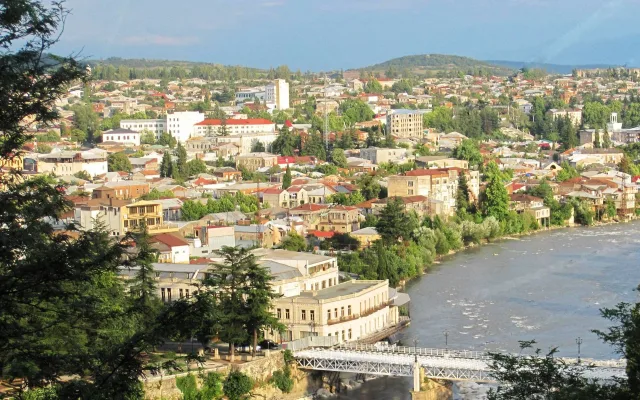
Kutaisi is Georgia's second-largest city, known for historical and natural attractions such as Gelati Monastery, Prometheus Cave and Sataplia.
Wiki
Kutaisi is Georgia's second most important city and the main air gateway for backpackers: low-cost carriers, Wizz Air above all, land at Kopitnari Airport, within easy reach of Tbilisi, Batumi and all of Imereti. The city itself is small and cosy, but it's valued above all as a convenient base for trips to the caves, canyons and monasteries around it.
Why go, and how much time to budget
Two days are enough to see the highlights. The logic is simple: one day for the city itself plus the nearby monasteries (Gelati, Motsameta, Bagrati), the second for a trip into nature (Prometheus Cave and Sataplia along one road, or the Okatse and Martvili canyons in the other direction). If you want to see both the caves and the canyons without rushing, add a third day.
Kutaisi is often used as a stopover: fly in, spend the night, move on. That works, but it's worth staying an extra couple of days — the concentration of UNESCO sites and natural wonders within a 20–60 km radius here is higher than almost anywhere else in Georgia.
Getting there and getting around
Airport → city centre. Kopitnari is about 20 km from town. Transfer buses (Georgian Bus and similar operators) are timed to low-cost flights — book a ticket online in advance; some go to central Kutaisi, others straight to Tbilisi or Batumi. Taxis cost more but are handy for a night flight; agree on the price before getting in the car.
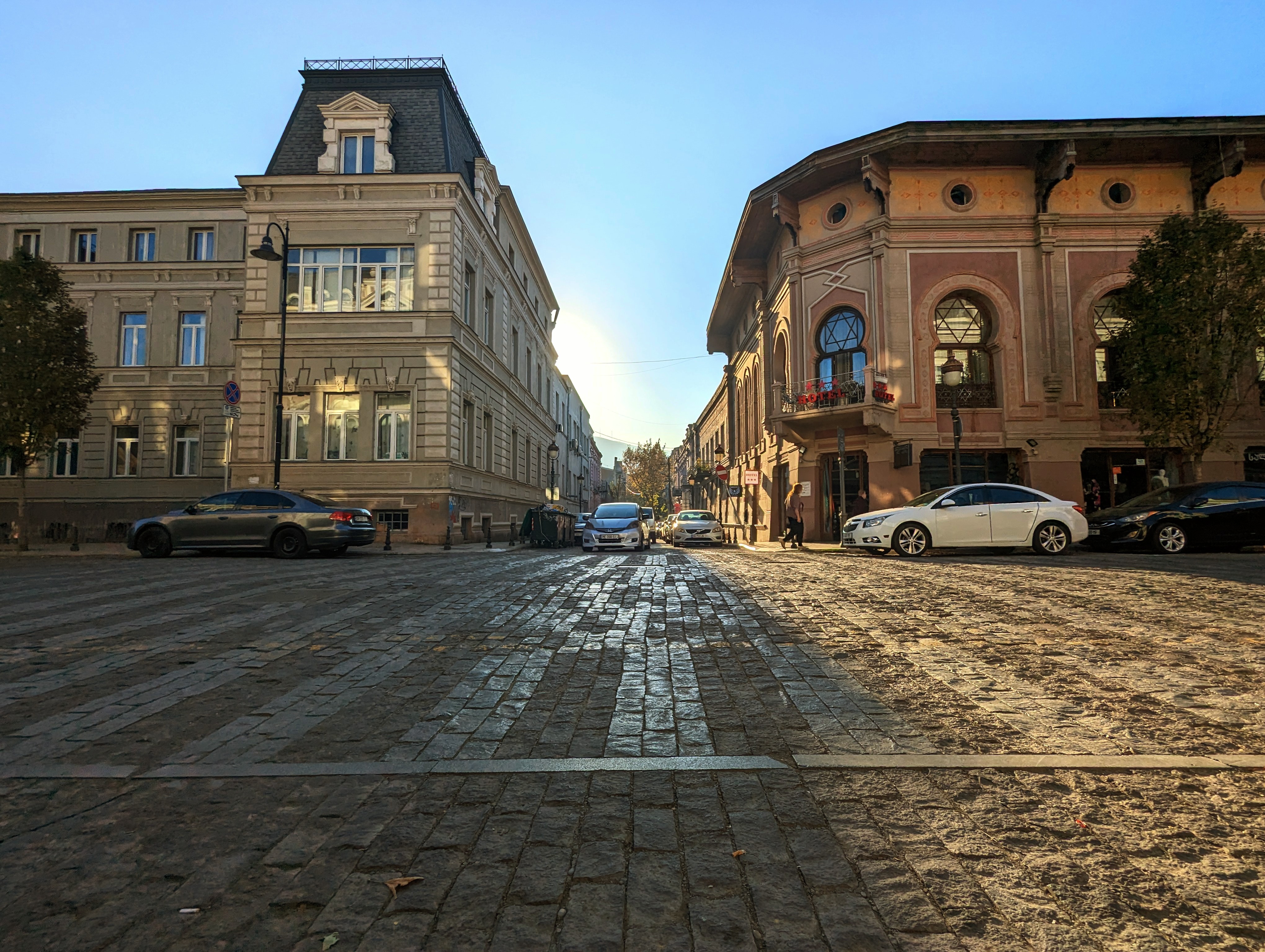
Within the city, everything is walkable: the historic centre is compact, and it's just minutes on foot from the White Bridge and the central square to the market and the Rioni riverside. For trips to the monasteries and caves, use taxis, Bolt (which operates in the city) or marshrutkas (shared minibuses) from the bus station.
Getting to the sights. Gelati and Motsameta lie along the same road to the east, so it makes sense to combine them in half a day with one taxi. Prometheus Cave and Sataplia are to the north and pair up the same way. The most practical option for an independent traveller without a car is to hire a taxi for several stops with waiting time — it works out cheaper than catching transport for each leg separately, and it saves hours.
Where to stay
The best base is the historic centre around the central square and the White Bridge: guesthouses, hostels and cafés are all within walking distance, and it's convenient to head out in any direction from here. Accommodation in Kutaisi is noticeably cheaper than in Tbilisi or Batumi, and the choice of guesthouses is large. If you're landing late and leaving early, it's worth considering a place near the airport, but it's usually simpler just to head into the centre.
What's actually worth seeing
- Gelati — the must-see. A medieval academy and monastery, with mosaics and frescoes good enough to justify the trip on their own. Budget real time here — this isn't a 15-minute stop.
- Motsameta — near Gelati, an active monastery perched on a cliff above a canyon; the views are more striking than the church itself. Pairs well with Gelati.
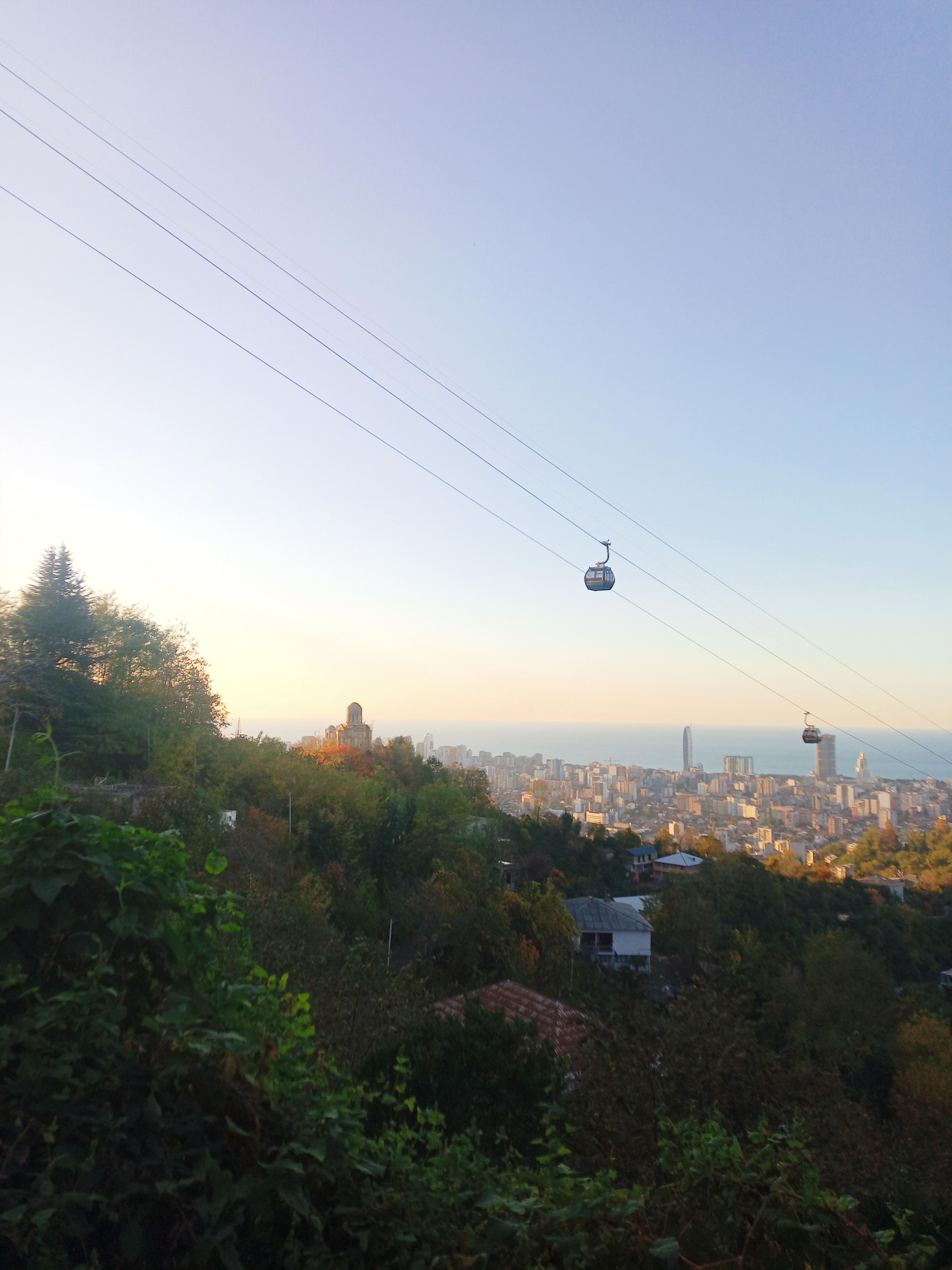
- Bagrati Cathedral — on a hill above the city, Kutaisi's dominant landmark. The interior feels new after restoration, but the climb up rewards you with the best panorama of the city.
- Prometheus Cave — Georgia's most popular cave: lighting, paved walkways, and the option to float part of the route by boat. It's cool inside year-round, so bring a sweater. Visits are only in groups, on a schedule.
- Sataplia — a compact nature reserve with dinosaur footprints and a glass observation deck over a cliff; easy to combine with Prometheus Cave, since they're close together.
- Okatse and Martvili canyons — farther from the city (Okatse has a hanging walkway over the gorge; Martvili offers a boat ride on turquoise water). A proper half-day-to-full-day trip, best done as a separate outing.
- Colchis (Green) Market — not an obligatory tourist stop but a genuinely useful tip: come here for Imeretian cheese, churchkhela, spices and gifts at local prices.
Food and money
Imeretian cuisine is one reason to come. Try khachapuri imeruli (the flat version with cheese baked inside — this is its home region), Imeretian cheese, ghomi with sulguni, khinkali and kharcho. Lunch at a simple café is inexpensive, and dinner with wine is easy on the wallet too — Kutaisi is cheaper than resort-town Batumi.
Imereti is a wine region — qvevri wine is poured in guesthouses and at the market, often homemade and noticeably cheaper than store-bought. Ways to save: eat where locals eat (away from the main square), buy food at the market, and group sights into single-taxi routes.
When to go and what to watch out for
The best time to visit is May–June and September–October: warm but without the summer heat, and the countryside is green. Summer is hot, though the caves offer welcome relief. In winter, some canyon routes close or become less pleasant.
- The caves and canyons operate on set schedules and have closing days — check before heading out so you don't arrive at locked gates.
- Modest dress is required for the monasteries: shoulders and knees covered, and a headscarf for women (usually available to borrow at the entrance).
- Kutaisi is safe, with practically no crime risk for tourists; the main hazards are broken pavements and traffic. Cross streets carefully.
- A common mistake is trying to cram all the caves and all the canyons into one day: they're in different directions, so you'll wear yourself out and rush through half of it. Pick one per day.