Description
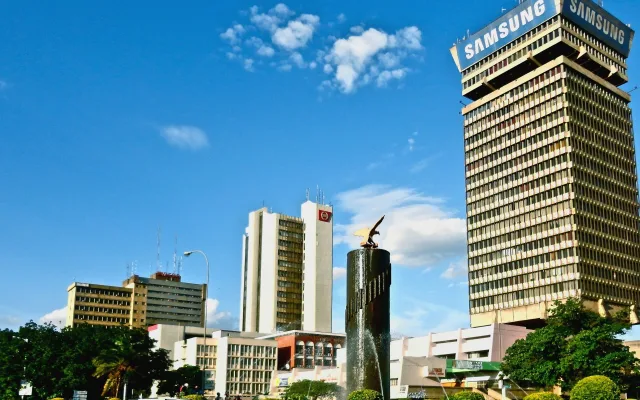
Lusaka is the capital of Zambia, home to the National Museum and the Kamwala market. Many trips to South Luangwa and Lower Zambezi national parks begin here.
Wiki
Lusaka is not the city you come to Zambia for, but almost every route through the country passes through it. This is the junction where flights, buses and domestic hops to the main parks connect, so a day or two here is usually unavoidable — and worth spending well.
Is it worth staying
Honestly: Lusaka is an ordinary African capital without postcard views. Allow one or two days at most: enough for a couple of museums, a market for souvenirs and stocking up before a safari. Give the rest of your time to the parks. Treat the city as a staging post rather than a destination.
Getting there and getting around
- The airport. Kenneth Kaunda International Airport is about 25-30 km north-east of the centre. There is essentially no public transport from it, so people take taxis; agree the fare in advance or use the ride-hailing apps that work here — cheaper, and no haggling.
- In the city. The main popular transport is the minibus, leaving from several large stations: cheap, but with no timetables and no logic a newcomer can follow. For specific journeys it is simpler to call a car through an app.
- On foot. The centre around Cairo Road and Independence Avenue is compact and walkable by day. In the evening it is better to stop walking.
- Onward. Intercity buses leave from the stations in the centre for Livingstone (Victoria Falls), Chipata (the gateway to South Luangwa) and other destinations. Buses to the parks are economical but slow; for South Luangwa many people take the domestic flight to Mfuwe.
What to see in a couple of days
- Day one — the centre. The Zambia National Museum for context on the country, then the Cathedral of the Holy Cross, the Freedom Statue and a walk along Independence Avenue. Towards evening, the Kabwata Cultural Village: craftspeople, carving and textiles, and a calmer place to buy souvenirs than the big market.
- Day two — markets and greenery. Kamwala and City Market for chitenge cloth, spices and baskets. Soweto Market is huge and chaotic — go light, without valuables, and ideally with someone local. If you want animals, there is Munda Wanga on the edge of town.
Where to stay
- The centre, around Cairo Road — convenient for transport and the markets, but noisy and unsafe in the evening.
- Kabulonga and the north-eastern suburbs — quiet green districts with guest houses and hostels, and easy to call a car from. A good compromise for a transit night.
- Look for accommodation with parking or a wall and an airport transfer — here that is normal rather than a luxury.
Safety
Lusaka calls for everyday caution. By day, in busy places, it is calm, but:
- in the markets, and especially Soweto, keep valuables on you, and better still leave your passport and spare cash where you are staying;
- do not walk in the evening; travel by car;
- do not display electronics or cash in the street;
- photograph with care — government buildings and military sites are off limits.
When to go
The practicalities follow the safari calendar. The dry season, roughly May to October, is the best time: the park roads are passable, the animals stay near water and the weather is comfortable. The wet season, November to April, is hot and humid, some park lodges close and the dirt roads wash out. For Lusaka itself the season hardly matters, but if the city is only a staging post for the Luangwa or the Zambezi, plan around the dry months.
Food and prices
Zambian cooking is simple and filling: nshima (the stiff maize porridge at the centre of the table), ifisashi (vegetables and greens in a peanut sauce), stewed meat and river fish. It is eaten by hand, rolling the nshima into a ball. You can eat cheaply and properly at local eating houses and in the markets; restaurants in the shopping centres cost noticeably more and lean international.
Lusaka feels inexpensive for food and transport but expensive for everything touristic — safaris, flights and lodges eat the budget. The currency is the Zambian kwacha; carry cash, as cards are not accepted everywhere outside the large malls. Change money at banks or official bureaux, never on the street.
Common mistakes
- Planning many days for the city itself — you will waste them.
- Heading to the parks in the wet season without checking whether the lodges are open.
- Going to the big markets with a rucksack, an expensive camera and your passport.
- Relying on cards and carrying little cash — you will be caught out.
- Flagging a taxi in the street without agreeing a price, instead of using an app.