Description
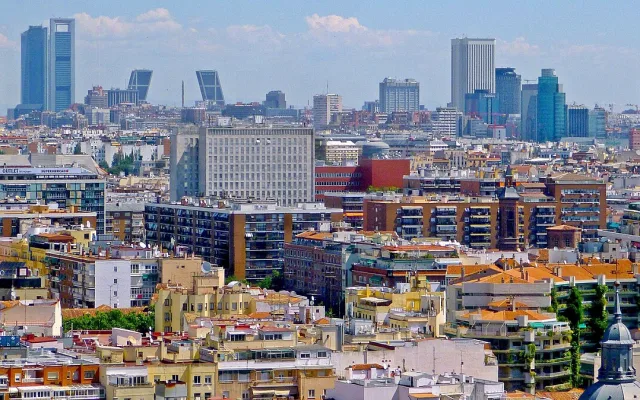
Madrid is the capital of Spain, known for museums such as the Prado, for parks such as the Retiro, and for its many tapas bars.
Wiki
Madrid is the heart of Spain, sitting almost at the geographical centre of the Iberian peninsula on the high Meseta plateau. The city combines its status as political and financial capital with an immensely rich artistic inheritance, busy streets and a food tradition that draws enthusiasts from all over the world.
General character
Madrid is the largest city in Spain, with a population of around 3.3 million (more than 6.5 million in the metropolitan area). Standing at an altitude of around 660 metres, it is one of the highest-lying capitals in Europe, which gives it a sharply continental climate: hot dry summers and cool winters. The city was made the capital by King Philip II in 1561, and since then the royal court, the government and the country's main institutions have been concentrated here. Madrid lives at its own rhythm: places open late, dinner comes after nine in the evening, and the nightlife does not die down until dawn.
Main sights
- The Prado Museum — one of the greatest picture galleries on the planet. The collection includes Velazquez's "Las Meninas", Goya's "Naked Maja" and his "black paintings", Bosch's "Garden of Earthly Delights", and canvases by El Greco, Rubens and Titian. Tickets are about €15 ($17), with free entry on weekdays from 18:00 to 20:00 and on Sundays from 17:00 to 19:00.
- The Reina Sofia — the centre for 20th-century art, home to Picasso's "Guernica" as well as works by Dali and Miro. Tickets about €12 ($14).
- The Thyssen-Bornemisza Museum — a private collection covering the road from the Renaissance to pop art. Tickets about €13 ($15). All three museums form the "Golden Triangle of Art" along the Paseo del Prado.
- The Royal Palace (Palacio Real) — the largest working royal residence in western Europe by floor area, with more than 3,400 rooms. It is used for ceremonies; part of the state apartments is open to visitors. Tickets about €14 ($16).
- The Retiro park — a green oasis of 118 hectares with a boating lake and the elegant glass-and-iron Crystal Palace. It is on the UNESCO list together with the Paseo del Prado.
- Puerta del Sol — the symbolic square from which "kilometre zero" of the Spanish road network is measured; this is where people see in the New Year to the chiming of the clock.
Districts and street life
The historic core is the Barrio de los Austrias, around the stately arcaded Plaza Mayor. Next to it lies colourful La Latina, with its narrow streets and the Sunday El Rastro flea market. Bohemian Malasana keeps the spirit of the youth movement of the 1980s, the movida, while neighbouring Chueca is known as a centre of LGBT culture and fashionable shops. The literary quarter of Huertas is tied to the names of Cervantes and Lope de Vega. The broad Gran Via, with its theatres and early 20th-century buildings, counts as the city's ceremonial artery.
Food and tapas
Madrid is the ideal place to immerse yourself in snack culture: in some bars a glass of wine or beer comes with a small free tapa, though unlike Granada or Leon this is the exception rather than the rule in Madrid. Here it is worth trying cocido madrileno, a substantial stew of chickpeas, meat and vegetables, callos a la madrilena (tripe in a spicy sauce) and the famous bocadillo de calamares, a roll filled with fried squid. For breakfast, or in the evening, people order churros with thick hot chocolate. The gastronomic landmarks are the covered San Miguel market with its dozens of stalls and the busy tapas bars of La Latina. An average lunch costs from about €13 ($15). Prices are as of 2026.
Flamenco and cultural life
Although flamenco was born in Andalusia, the best performers in the country appear in Madrid. Classic tablaos such as the Corral de la Moreria put on professional shows (from €45, about $52, with dinner or a drink). A more intimate atmosphere can be found in the small venues of the Lavapies district. Beyond dance, the city is famous for the Teatro Real opera house, for zarzuela — Spanish musical comedy — and for a packed programme of exhibitions.
Practicalities
Three days are enough to see the "Golden Triangle of Art", the Royal Palace and the central quarters, leaving time for walking and for food. Madrid is served by the large Adolfo Suarez Barajas airport and by an extensive metro, one of the longest in Europe. The centre is compact and easy to cover on foot. The best seasons are spring and autumn, when the summer heat is absent. Many museums offer free visiting hours, so it is worth planning the route in advance.