Description
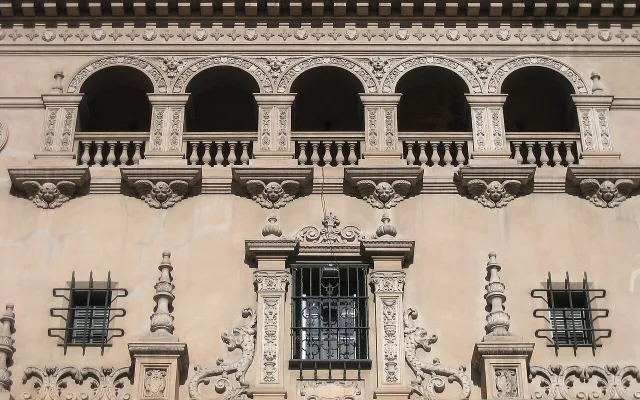
Mendoza is a city in Argentina, known as the wine capital of the country. It is home to the vineyards of Maipú and Luján de Cuyo, where the famous Malbec grape is grown.
Wiki
Mendoza is the largest city in western Argentina and the undisputed wine capital of the country, stretching along the eastern foothills of the Andes at an elevation of around 750 metres. Capital of the province of the same name, it combines the role of an industrial and agricultural hub with the appearance of a green oasis in the middle of semi-desert — a landscape made habitable by an elaborate irrigation network first laid out by the Huarpe people and expanded under Spanish rule.
History and character
Founded in 1561, the city was almost entirely destroyed by the earthquake of 1861, which claimed thousands of lives. During reconstruction, engineers and architects deliberately designed a new layout: wide boulevards, numerous plazas and open spaces were intended to reduce the risk from future tremors. It was then that acequias — open water channels feeding rows of plane trees — were extended along the pavements, creating dense shade. These man-made tree-lined channels transformed an arid landscape into one of the most verdant cities in Argentina.
What to see in the city
The heart of Mendoza is Plaza Independencia, a spacious central square with fountains and an underground museum. Arranged symmetrically around it are four smaller plazas: the elegant Plaza España, decorated with Andalusian tilework celebrating the friendship between the two nations, as well as the plazas of Italia, Chile and San Martín. This "square of squares" layout makes for pleasant, unhurried walking.
The vast Parque General San Martín deserves an evening to itself — over 300 hectares with a lake that hosts rowing regattas, a rose garden, a zoo and monumental wrought-iron gates. On its edge rises the hill of Cerro de la Gloria, topped with a monument to the Army of the Andes; the views from here take in tiled rooftops, vineyards and the snow-capped mountain range on the horizon. Also worth a visit is the pedestrian street of Sarmiento with its cafés, and local sweets such as dulce de leche and quince paste.
Wine routes
The main reason to come to the region is the famous Ruta del Vino. In the departments of Maipú and Luján de Cuyo, as well as in the higher-altitude Uco Valley, dozens of bodegas welcome visitors. This is where Argentina's signature grape is produced — the rich, velvety Malbec — alongside Cabernet Sauvignon, Bonarda and the white Torrontés.
- Maipú — the district closest to the city, where vineyards sit alongside olive groves. Many travellers tour the estates on a rented bicycle.
- Luján de Cuyo — the historic birthplace of Argentine Malbec, celebrated for its premium wineries and some of the country's oldest vines.
- Uco Valley — the fashionable destination of recent decades, with vineyards at over 1,000 metres and sweeping views of the Andes.
Tastings are typically combined with a cellar tour and lunch among the vines; visits to popular bodegas are best booked in advance.
Nearby
Mendoza is the gateway to the high mountains. Along the highway towards the Chilean border lies Puente del Inca — a natural ochre-coloured stone bridge spanning a river, surrounded by thermal springs and mineral deposits. The road continues to viewpoints in Aconcagua National Park: the highest peak in both the Western and Southern hemispheres rises to 6,961 metres and draws mountaineers from around the world. Adventure travellers head out for white-water rafting on mountain rivers, while in winter the nearby ski slopes come into their own.
Getting there and when to go
The city is served by Francisco Gabrielli International Airport (El Plumerillo) with flights from Buenos Aires and neighbouring countries. Overland travel is also popular: comfortable overnight buses make the journey from Buenos Aires in roughly 13–15 hours — a widely used way to travel long distances in Argentina.
The climate is dry and sunny. The most scenic months are autumn (March–April), when the vines turn crimson, the harvest is under way and the colourful Grape Harvest Festival (Fiesta de la Vendimia) takes place. Summers can be hot, winters are mild, and mountain passes are sometimes closed due to snowfall.
How long to allow
Three days is the ideal amount of time: spend the first on the city centre and Parque San Martín, the second at the wineries of Maipú or Luján de Cuyo, and the third on a day trip into the Andes to Aconcagua and Puente del Inca. If time allows, add a visit to the Uco Valley.