Description
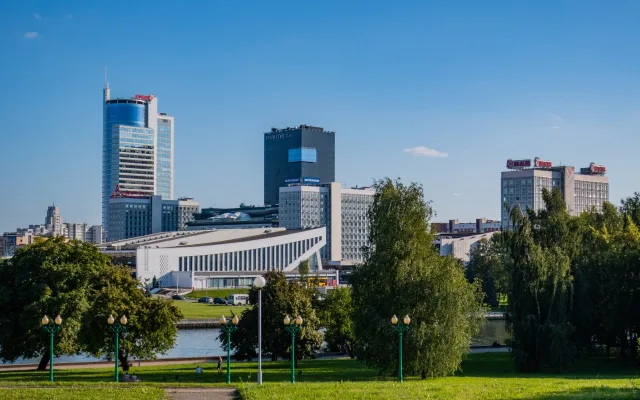
Minsk is the capital of Belarus, a city of monumental Stalin-era avenues, the rebuilt Upper Town and Trinity Suburb, and the National Art Museum.
Wiki
Minsk is the capital of Belarus and its largest city, with a population of around two million, the administrative, cultural and economic centre of the country, standing on the river Svislach. Almost completely destroyed during the Second World War, it was rebuilt from scratch and is now considered one of the most coherent examples of post-war Soviet town planning in Europe.
History
Minsk first appears in the record in 1067, in an account of the battle on the river Nemiga between the princes of Polotsk and Kyiv. Over the centuries the city belonged to the Principality of Polotsk, the Grand Duchy of Lithuania and the Polish-Lithuanian Commonwealth, and from the end of the eighteenth century to the Russian Empire. The medieval core grew up around the castle site and the trading quarter on the Nemiga.
The most tragic chapter is the German occupation. Between 1941 and 1944 more than 80 per cent of Minsk was destroyed and its population fell several times over. In the post-war decades, from 1944 into the 1960s, the centre was rebuilt in the Stalinist Empire style to a single master plan, and that is what gives the capital its present appearance.
Architecture and the main sights
The city's signature is Independence Avenue (known at various times as Sovetskaya Street, Stalin Avenue, Lenin Avenue and Francysk Skaryna Avenue). The avenue runs for about 15 kilometres, and its ceremonial Stalin-era section covers the first three: a single ensemble of mid-twentieth-century monumental architecture, unusual for both its length and its state of preservation.
- Independence Square — one of the largest squares in Europe. Around it stand the Government House, the main building of Belarusian State University and the neo-Gothic Church of Saints Simon and Helena, known as the Red Church. A shopping centre, Stolitsa, is hidden beneath the square.
- Victory Square — a memorial ensemble with a tall granite obelisk and an eternal flame in memory of those who defended the country.
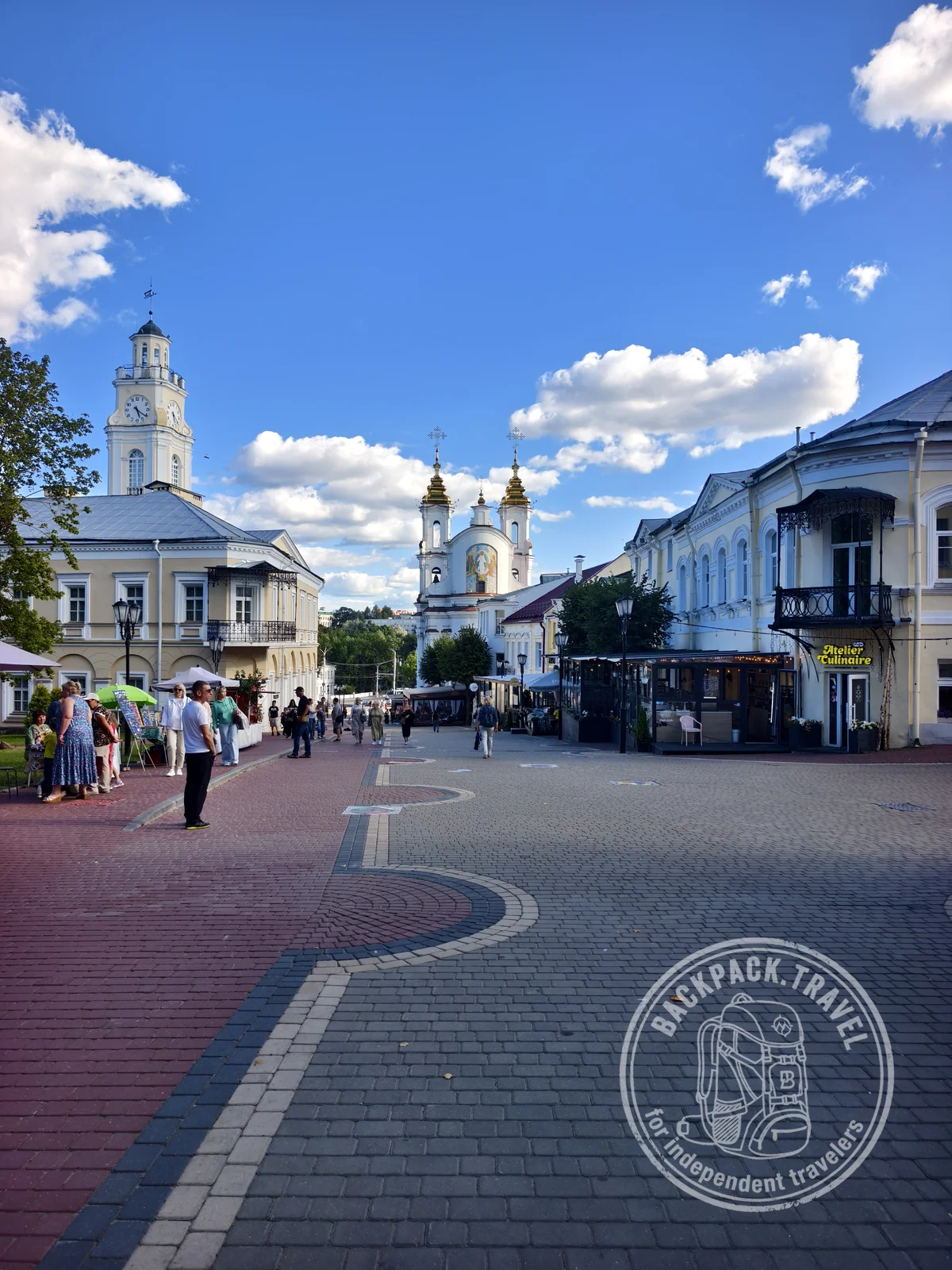
- The Upper Town — the restored historic core, with the town hall, the merchants' arcade, cathedrals and pleasant cobbled lanes.
- Trinity Suburb — a restored nineteenth-century quarter on the bank of the Svislach, with brightly coloured tiled-roof houses; the most picture-postcard corner of the capital.
- The Island of Tears (the Island of Courage and Sorrow) — a small river island with a memorial chapel to soldiers killed in Afghanistan.
- The National Art Museum — the country's largest art collection: Belarusian icon painting, Russian and Western European painting, and works by artists born in these lands.
Remembering the war
The war occupies a particular place in the city. The Belarusian State Museum of the History of the Great Patriotic War, rebuilt in 2014 and topped by a glass dome, is the country's central memorial institution. Outside the city are the Stalin Line with its reconstructed pillboxes and military hardware (about 30 km away), the open-air museum of Dudutki (about 40 km) and Khatyn (about 50 km), the piercing memorial to a village burned by punitive troops and one of the most powerful monuments of its kind anywhere.
Food
Belarusian cooking is plain and filling. The staples are draniki (potato pancakes), machanka, kolduny dumplings, cold beetroot soup, home-made sausage and bread. Restaurants in the capital offer both traditional dishes and contemporary cooking, and prices remain noticeably lower than in Western Europe.
Practical information
- Transport. The city has a three-line metro and an extensive network of buses, trolleybuses and trams. Minsk National Airport links the capital with destinations abroad.
- Parks and open space. Chelyuskintsev Park, the Botanical Garden, Gorky Park and the embankments of the Svislach are all good for walking. Outside the city lies the Zaslawye reservoir, which locals call the Minsk Sea.
- Atmosphere. Minsk is known for its cleanliness, wide green streets and calm, safe feel.
How much time to allow
Three days suits a first visit. Give the first to the centre — Independence Avenue, Independence and Victory squares, the Upper Town and Trinity Suburb. Give the second to the museums and the war memorials. The third works well outside the city, at Khatyn, Dudutki or the Stalin Line.