Description
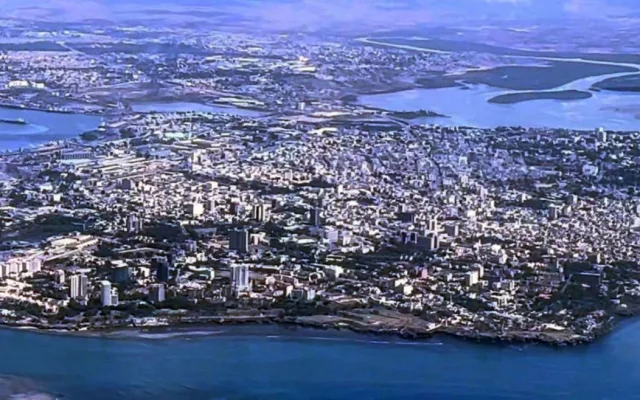
Mombasa is a port city on the Indian Ocean. Its sights include UNESCO-listed Fort Jesus, the beaches at Diani and the coral reefs, along with Swahili culture.
Wiki
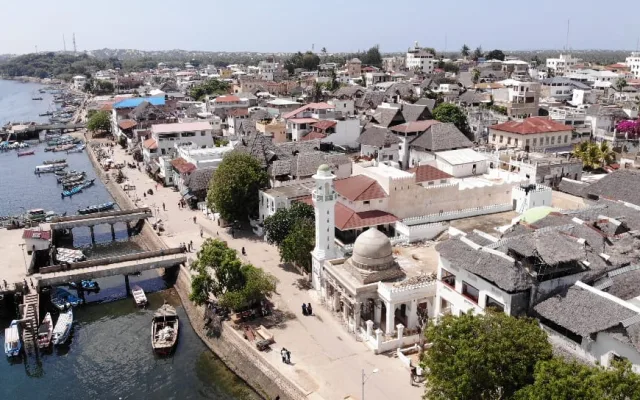
Kenya's main port and second city — around 1.2 million people on a coral island and the mainland shore of the Indian Ocean. It is the oldest trading port in East Africa, mentioned from the 7th century. Fort Jesus is a UNESCO World Heritage Site. The city is multicultural, carrying Swahili, Arab, Indian, Portuguese and British inheritance, and it is the most Indian in flavour of Kenya's cities. It is the gateway to the beaches of the Kenyan coast.
Main sights
- Fort Jesus — a UNESCO site, the Portuguese fort of 1593-1596 and the symbol of the city. The museum holds ethnographic collections and cannon taken in the fighting over the town.
- Mombasa Old Town — a maze of lanes with carved doors from the 15th to 19th centuries, mosques and overhanging balconies.
- The Mombasa Tusks — the emblem of the city, two crossing "tusks" over Moi Avenue, built for the visit of Queen Elizabeth II in 1952.
- Mama Ngina Drive — the seafront promenade, where the older generation walks on Sundays.
- Bombolulu Workshops — a social project employing people with disabilities, with crafts and a cultural centre.
- The Akamba Handicraft Cooperative — the largest craft cooperative in East Africa.
- Diani Beach — Kenya's leading beach, 35 km to the south: 12 km of white sand and colobus monkeys.
- Watamu Beach — 110 km to the north, with a marine park and diving among turtles.
- Malindi Marine National Park — the oldest marine park in Africa, established in 1968.
- Shimba Hills Reserve — 30 km away, the only place in Kenya with sable antelope.
- Tsavo East and Tsavo West — national parks four hours away, and the setting of the legendary man-eaters of Tsavo in 1898.
Food and prices
The cooking is Swahili and Indian: pilau (spiced rice), biryani, samosas, mishkaki skewers, mandazi and kachori. The Indian inheritance in the food is strong. Lunch at a local place is 780-1,550 KES ($6-12), dinner in a restaurant 2,300-4,500 KES ($18-35). Fresh seafood at Tamarind on the Old Port runs 3,200-6,500 KES ($25-50). A litre of petrol is 170 KES ($1.30), a taxi or Bolt across town 650-1,900 KES ($5-15), and a tuk-tuk 130-390 KES ($1-3). Prices are as of 2026.
Getting there and getting around
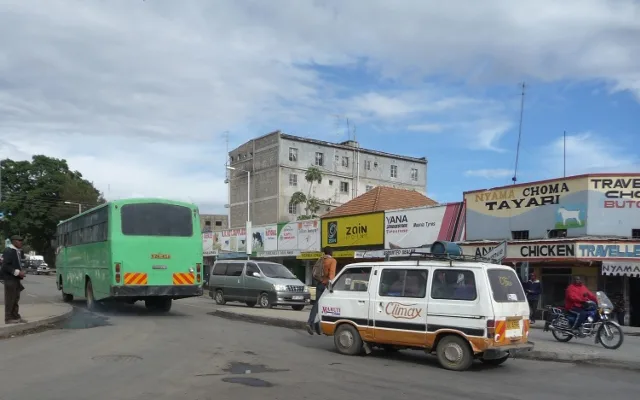
Moi International Airport (MBA) is served by Kenya Airways, Lufthansa, Edelweiss, Condor and charters. The SGR, the new Nairobi-Mombasa railway, takes four to five hours and costs 1,900-6,500 KES ($15-50). From Nairobi the flight is an hour, 6,500-13,000 KES ($50-100). Around the city there are Bolt taxis, matatu minibuses (for the experienced) and tuk-tuks. For Diani, take the Likoni ferry and a taxi, one to one and a half hours.
When to go
June to October is dry at 22-29°C and ideal. December to March is the short dry season. The long rains (April and May) are extremely humid. Check safety advice before travelling: Lamu county and the northern coast carry travel advisories.