Description
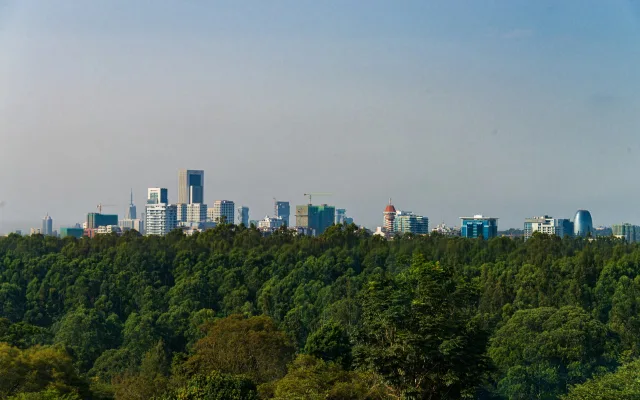
Nairobi is the capital of Kenya, where a safari can begin in the national park as soon as you land; there is also the giraffe centre, and the city is a base for trips to the Masai Mara.
Wiki
The capital of Kenya and the leading metropolis of East Africa — around 4.4 million people in the city proper and nine million across the wider area. The "Green City in the Sun" stands at 1,795 m and is the only capital in the world with a genuine national park within its boundaries. It is the main base for safaris in the Masai Mara and for connections onward across East Africa. Check safety advice for particular districts before travelling.
Main sights
- Nairobi National Park — the only national park inside a capital city, 117 km² with more than a hundred mammal species (lion, rhino, giraffe, zebra) and skyscrapers on the horizon. A separate ticket costs 6,500 KES ($50).
- The David Sheldrick Wildlife Trust — the orphanage for baby elephants, open to visitors only from 11:00 to 12:00, when the calves are fed and bathed.
- The Giraffe Centre — a sanctuary for the rare Rothschild's giraffe, which you can feed at close quarters.
- The Karen Blixen Museum — the house of the Danish writer (Out of Africa), with the original furniture.
- Bomas of Kenya — an ethnographic complex of traditional homesteads from eleven Kenyan peoples, with daily dance performances.
- The Maasai Market — the largest market for Maasai crafts, rotating between six locations through the week.
- The National Museum of Kenya — the country's principal museum, covering human evolution (the Nariokotome Boy) and the ethnography of its 42 peoples.
- Westgate, Karen and Lavington — the safe visitor districts, with hotels and restaurants.
- Kibera — the vast informal settlement, visited on tours with licensed guides; the ethics of such visits are debated.
- Mount Longonot and Lake Naivasha — day trips into the Great Rift Valley.
Food and prices
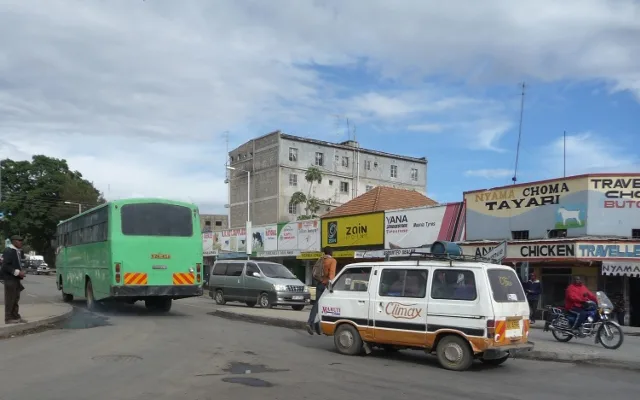
The cooking is Kenyan: nyama choma (meat over coals), ugali, sukuma wiki, samosas, mandazi and ginger tea. Carnivore, the legendary grilled meat buffet with ostrich and crocodile, is an obligatory stop. Lunch in a café is 780-1,550 KES ($6-12), dinner in a restaurant 2,600-5,200 KES ($20-40), and Carnivore 4,500-6,500 KES ($35-50). A litre of petrol is 170 KES ($1.30), a Bolt or Uber ride 650-1,900 KES ($5-15), and a matatu minibus 65-130 KES ($0.50-1), for the experienced. Prices are as of 2026.
Getting there and getting around
Jomo Kenyatta International Airport (NBO) is served by KLM, Lufthansa, British Airways, Emirates, Qatar, Turkish, Ethiopian and Kenya Airways. Wilson Airport (WIL) handles light aircraft to the Masai Mara and Laikipia. A taxi or Bolt into the centre is 1,900-3,200 KES ($15-25). Around the city, use Bolt and Uber or hire a car. From Nairobi to Mombasa the SGR train takes four to five hours (1,900-6,500 KES / $15-50).
When to go
June to September is the main dry season and the best for safari, with the Great Migration in the Masai Mara from July to October. January and February are the short dry season. During the long rains (March to May) and the short rains (November) lodges close or discount. At 1,800 m the climate is mild, with cool nights and warm days.