Description
Mykonos is a famous Greek island known for its glamorous atmosphere, windmills, dazzling white Cycladic lanes, and legendary beach parties.
Wiki
Mykonos is one of Greece's most recognisable islands — the showpiece of the Cycladic archipelago and a byword for Mediterranean luxury. Travellers come for a combination hard to find elsewhere: gleaming white Cycladic architecture, turquoise Aegean waters, the ancient history of neighbouring Delos, and nightlife that thunders on until dawn.
Geography and character
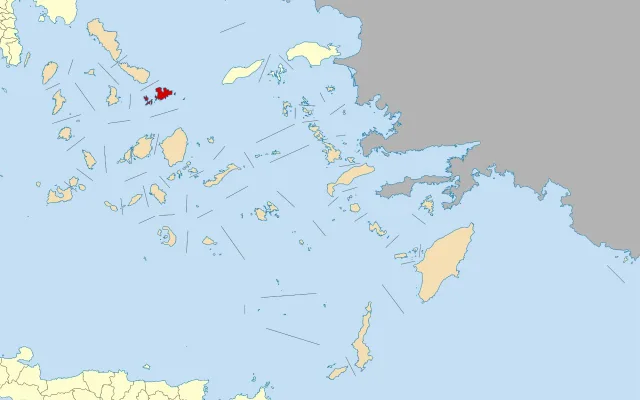
The island sits at the centre of the Cyclades, between Tinos and Naxos, and covers around 85 km². The landscape is dry and rocky, with almost no forest: low hills, granite boulders, scattered olive trees and scrub. In winter the permanent population is around 11,000; in peak summer that figure multiplies several times over with visitors. The persistent northerly winds — the meltemi — explain both the abundance of old windmills and the refreshing breeze that persists even in the hottest months.
Chora and Cycladic architecture
The heart of the island is the main town, Chora (Mykonos Town). Its labyrinth of narrow cobbled lanes is deliberately bewildering — legend has it the crooked streets were designed to disorient pirates. Houses are whitewashed with lime, doors, shutters and church domes are painted blue, and cascades of bougainvillea spill from balconies. A stroll through the Matogianni quarter and the lanes around it takes in jewellery shops, galleries, cafés and countless white chapels.
Key landmarks in the historic centre:
- Kato Mili windmills — seven surviving 16th-century mills on the hill above town, the defining visual symbol of Mykonos.
- Little Venice — a row of merchants' houses built right at the water's edge, their wooden balconies hanging over the waves; the sunset view from here is considered the finest on the island.
- Panagia Paraportiani — a snow-white complex of five interlocking chapels dating from the 15th–17th centuries, one of the most photographed churches in Greece.
- The Archaeological and Maritime Museums, and the Folklore Museum in an old sea-captain's house — compact collections covering Cycladic history and seafaring.
Delos — birthplace of Apollo
A thirty-minute boat ride away lies tiny, uninhabited Delos — an entire city turned museum and a UNESCO World Heritage Site. Myth holds that Apollo and Artemis were born here; in antiquity the island was one of the Aegean's most important religious and commercial centres. Among the ruins today you can see the Terrace of the Lions, the remains of a theatre, sanctuaries, mosaic-floored houses and an agora. Excursion boats leave from the old port in Chora; the island is closed for overnight stays, so plan your visit for the morning.
Beaches and the sea
The south coast is sheltered from the wind and holds the island's most celebrated beaches, each with its own character:
- Paradise and Super Paradise — the epicentre of daytime parties, with DJs and beach clubs.
- Psarou — the most exclusive beach, where yachts anchor, with legendary waterside tavernas.
- Platis Gialos and Ornos — calmer options suited to families, with shallow water and regular transport links.
- Elia, Kalafatis and Agios Sostis — quieter alternatives for those seeking space and solitude.
Water taxis and buses run between the beaches, making it easy to visit several coves in a single day.
Nightlife
Mykonos has earned its reputation as a world-class clubbing destination. The bars of Little Venice send the sun off with cocktails; the clubs of Chora and the beach venues in the south take over from there. The island has a long history of welcoming LGBTQ+ visitors and remains one of the most open resorts in the Mediterranean.
Food
Local gastronomy is rooted in the Cycladic tradition. Worth seeking out: kopanisti (a sharp, aged cheese), louza (cured pork loin), local sausages, mostra — barley rusks topped with tomato and cheese — fresh fish and seafood. For something sweet, try amygdalota almond cookies. Tavernas inland, in the village of Ano Mera, tend to be cheaper and more authentic than waterfront establishments.
Getting there and getting around
Mykonos is served by air (the airport has connections to Athens and several European cities) and by ferry from Piraeus and Rafina, as well as from neighbouring Cycladic islands. Three days is enough to explore Chora, make a day trip to Delos and spend time at two or three beaches. High season runs from June to September; prices here run noticeably above the Greek average. KTEL buses, taxis and hired quad bikes all work well for getting around. May–June and September offer gentler weather and smaller crowds while the sea is still warm.