 Города и дороги
Description
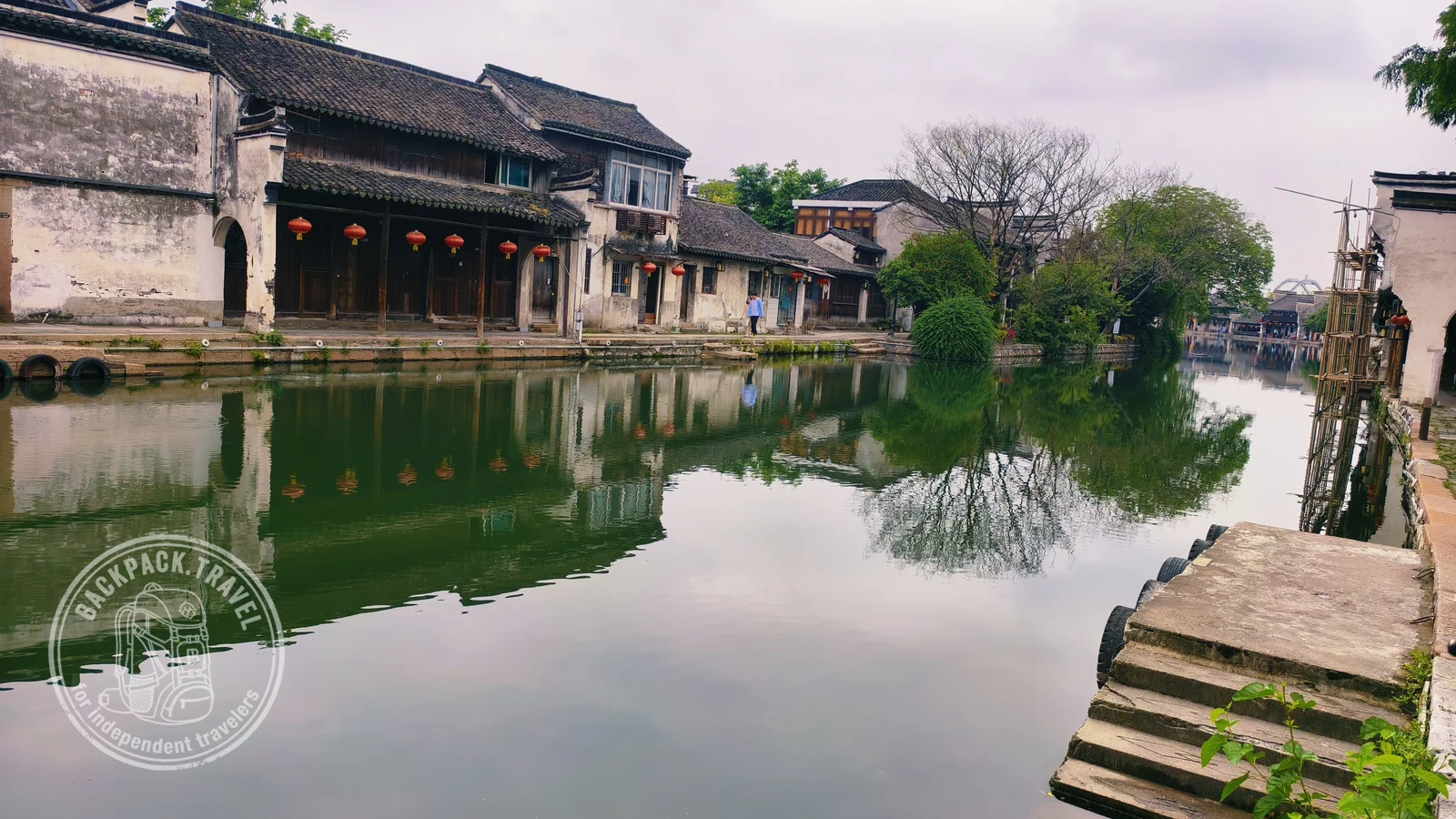
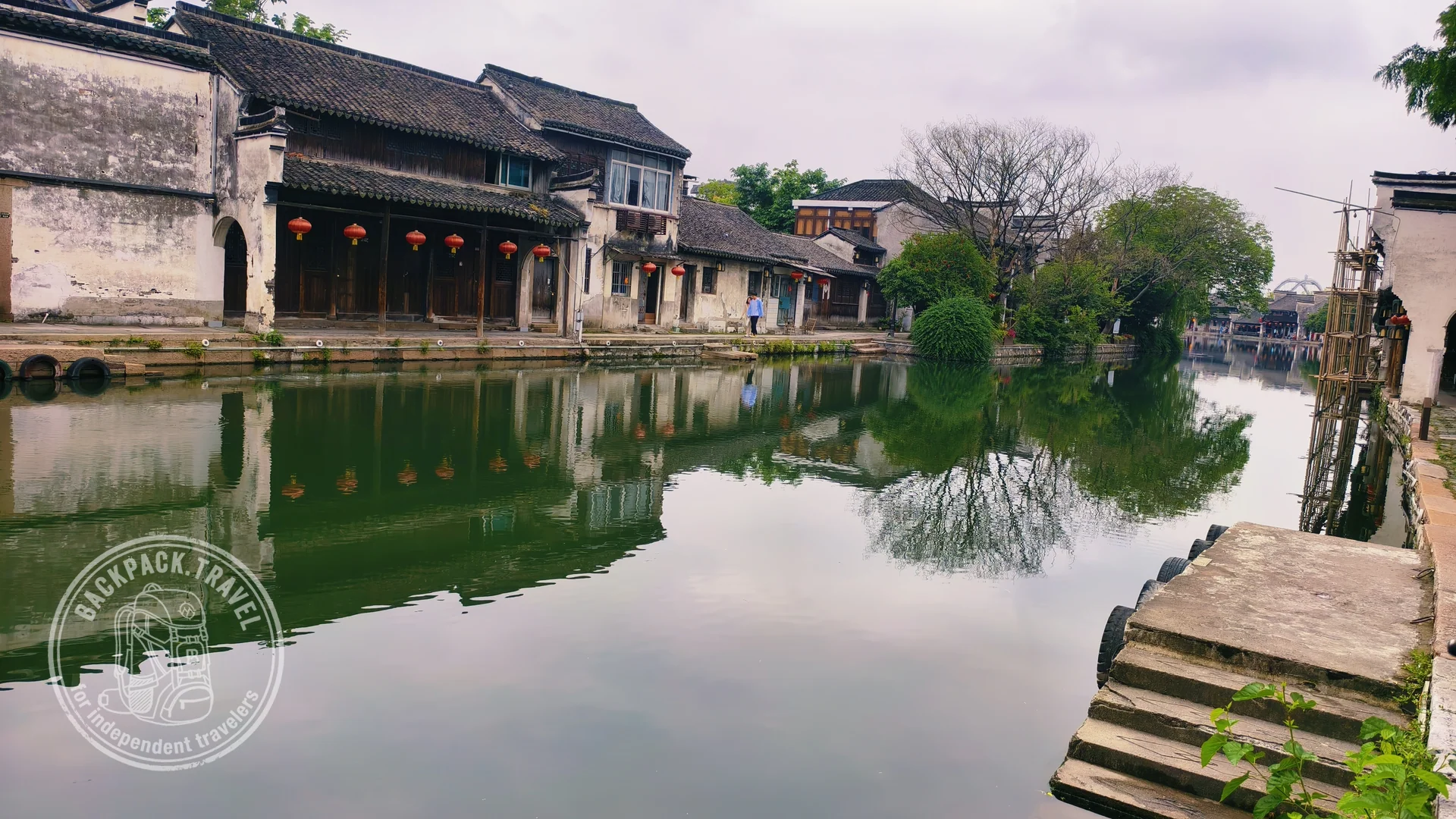
A water town near Huzhou that grew rich on silk: canals with stone bridges, merchant mansions with European wings and the Jiaye Library, one of the oldest private libraries in China.
Wiki
Nanxun is a water town in the north of Zhejiang, administratively one of the districts of Huzhou, standing on the canal right at the border with Jiangsu. In the 19th century it grew rich on raw silk: European traders bought up the locally reeled thread through Shanghai, and on that money the families here built mansions of a kind other water towns simply do not have. Nanxun is noticeably quieter than Wuzhen and Zhouzhuang, and it remains half residential to this day.
What to see
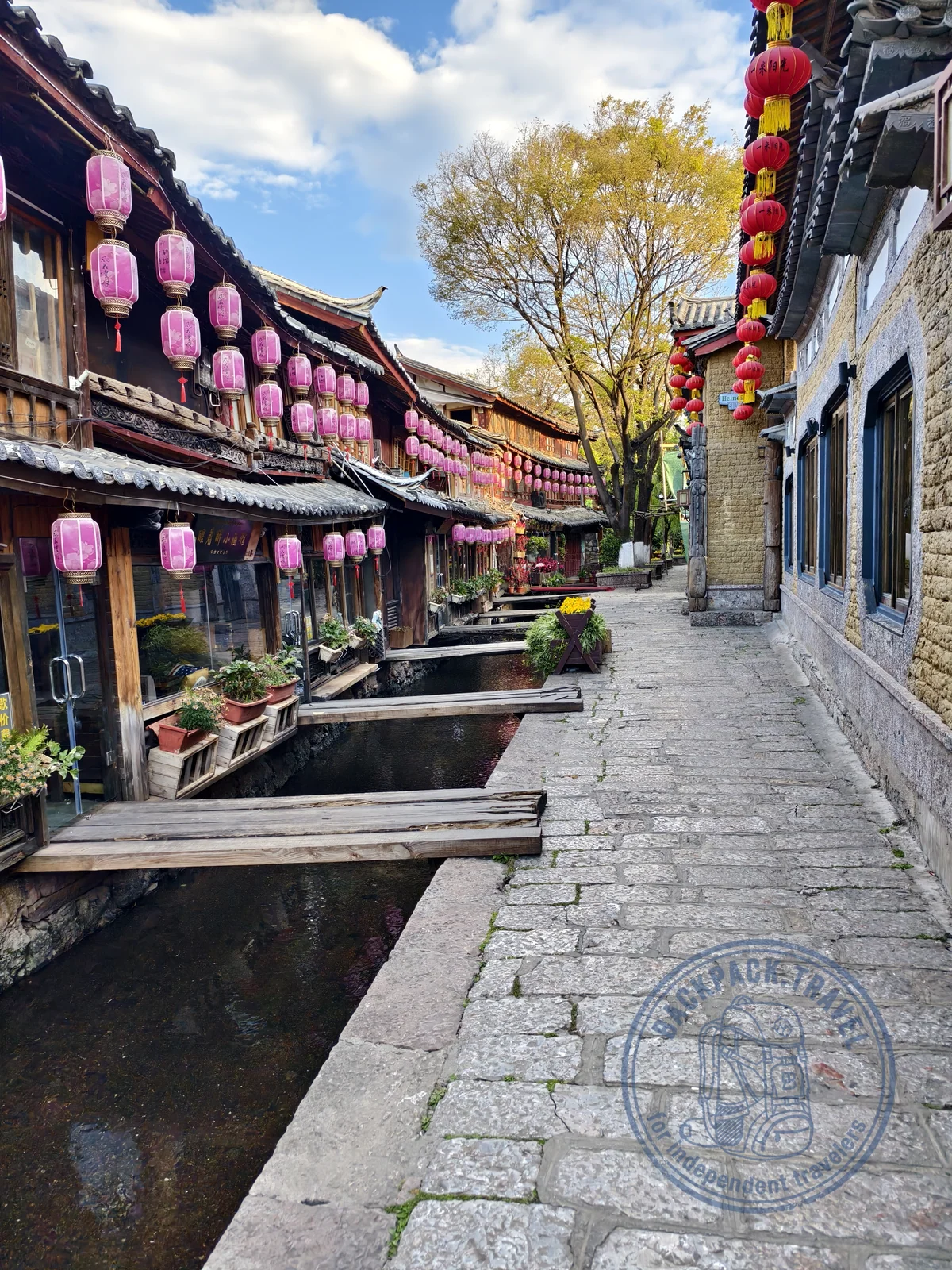
- Baijianlou (the Hundred Rooms) is an inhabited canal frontage, an unbroken arcade beneath overhanging upper storeys. People still live here, hanging out washing above the water, rinsing vegetables from the steps and playing cards in the shade of the galleries. It is the most genuine part of the town, entry is free, and the best time to come is early in the morning.
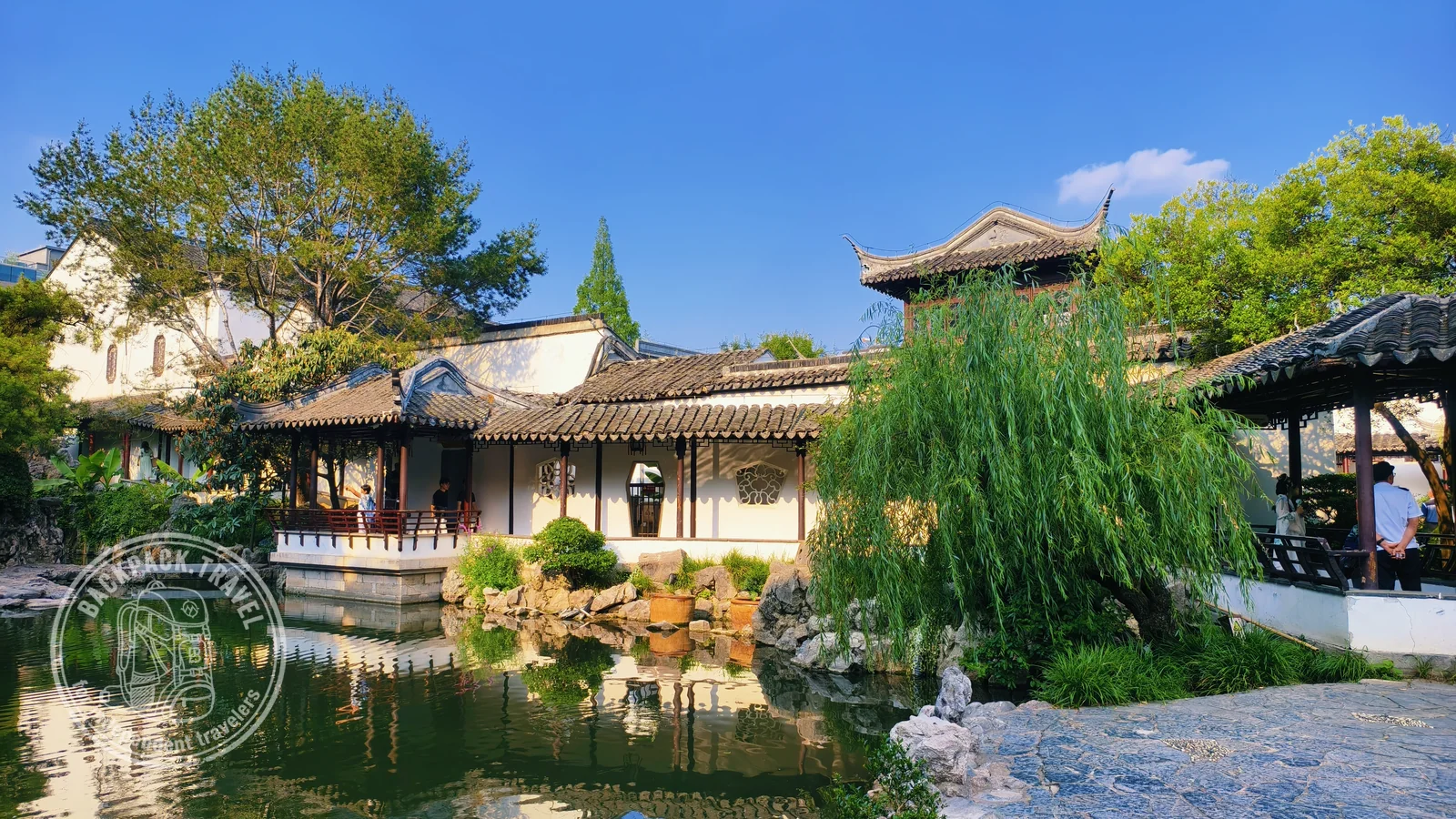
- Xiaolianzhuang Garden is the estate garden of the Liu family, the wealthiest in Nanxun. A pond covered with lotuses in summer, an ancestral temple, stone honorific arches and a covered gallery along the bank make it up; the garden is small but coherent and free of bustle.
- The Zhang Shiming mansion has around two hundred and forty rooms, and the main thing in it happens deep inside. Beyond a succession of ordinary Chinese courtyards a French ballroom suddenly opens up, with stained glass, imported tiles and stucco, as though the house had been glued together out of two different buildings.
- The house of Zhang Jingjiang is the estate of an associate of Sun Yat-sen who financed the revolution out of his own silk fortune. Inside are documents, photographs and furnishings from the beginning of the century.
- The bridges over the canals are Tongjin Bridge and the humpbacked crossings beside it, with their steep steps. It is from them that people take that picture-postcard perspective with the boats and the reflections.
The Jiaye Library
The Jiaye Library was built in the first half of the twenties by Liu Chenggan, heir to a silk fortune. It is a square of two-storey ranges around an inner courtyard, with a garden, a pond and a pile of decorative rocks alongside. In its best years the collection ran to hundreds of thousands of volumes, including rare Ming and Qing editions; a significant part of it was dispersed and perished in the war, while the main body was later handed over to the provincial book depository.
What is worth looking at here is not the empty shelves but something else. In the open halls tens of thousands of carved printing blocks are stacked in piles, whole books cut in mirror image into wood, page after page. The technology of woodblock printing is visible in its entirety, from the block to the impression, and such a quantity of authentic blocks has survived in hardly any other single place. There are usually few people about, and this is a rare case in a Chinese tourist town where you can stand in silence.
Fees and entry
The town works on a single ticket that covers the garden, the library, both mansions and the smaller displays; the order of the price is around a hundred yuan, though it has changed over recent years and the exact sum is best checked before a trip. Baijianlou, the embankments and part of the lanes are open freely, so an evening walk can be arranged without a ticket at all. After dark a separate cheap entry to the illuminated part is often in operation.
How much time to allow
Nanxun is a full day at an unhurried pace or half a day at a run. The main mansions, the garden and the library fit into four or five hours if you do not read your way through every caption, and another hour or hour and a half goes on Baijianlou and the canals beyond the paid zone. An overnight stay changes the impression more than you would expect in advance, because the daytime coach groups drive away by about five and in the evening the embankments empty almost completely, which is exactly what people go to water towns for. Two full days here are excessive unless you use Nanxun as a base for trips around the area, to Wuzhen say or to Taihu Lake. On a compressed schedule a run out from Shanghai and back on the same day is possible as well, but then the main thing goes out of the trip, namely the empty town early in the morning and late in the evening.
What to combine it with
Nanxun sits conveniently between Shanghai, Hangzhou and Suzhou, each of them an hour and a half to two hours away, and with the opening of the new high-speed line through Huzhou at the end of 2024 the journey from Shanghai grew markedly shorter. Roughly an hour away lies Wuzhen, a far more heavily promoted and crowded water town, and comparing the two on one trip is interesting in itself. To the north begins Taihu Lake, while Huzhou itself is known for making calligraphy brushes.
When to go
April and May, then September to November, give the best combination of weather and light. The lotuses in Xiaolianzhuang flower in July and August, but those are also the hardest months, with over thirty-five degrees at high humidity. June falls in the plum rains, when it pours for weeks on end. Winter is damp and raw, the old houses have no heating, and yet in those months the town is almost empty.
Who won't enjoy it
To anyone who has already seen two or three water towns, Nanxun will look like a repetition: canals, humpbacked bridges, arcades and boatmen are arranged in much the same way everywhere. Its difference lies in the interiors of the mansions and the history of the silk families, but that calls for an interest in the context, otherwise the houses merge into an endless succession of rooms with identical furniture. The town itself is not large and is walked round faster than you expect, while the commercial part by the entrance grows from year to year and fills up with identical souvenir shops. Evening life is meagre, since almost everything closes after eight, restaurants are few and the choice in them is plain. In the rain and in winter it is genuinely comfortless here, damp and cold, with nowhere much to take shelter.