Description
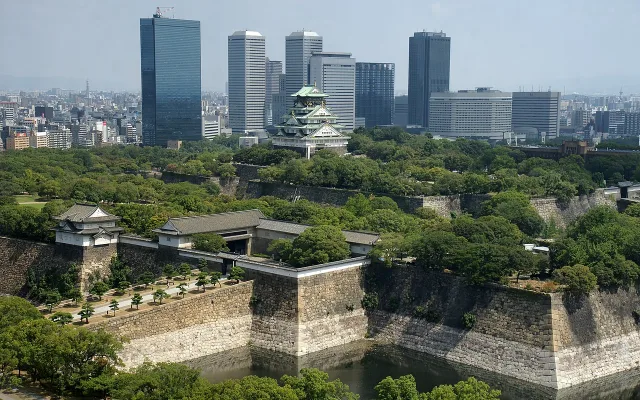
Japan's food capital, with a castle, the neon-lit Dotonbori canal and the best street eating in the country.
Wiki
Osaka is Japan's third-largest city and the main economic centre of the Kansai region, on the island of Honshu at the mouth of the Yodo River. Historically a city of merchants and traders, it is today the acknowledged food capital of the country, known for the bustling Dotonbori quarter, its old castle and the liveliest street cooking in Japan. As locals joke: "In Tokyo you spend your money on clothes, in Osaka you spend it on food."
Districts
Osaka divides into areas of strong and distinct character, each worth a walk of its own.
- Dotonbori — the neon heart of the city along the canal of the same name. Here the famous Glico Runner sign glows, giant mechanical crabs loom over the restaurants, and takoyaki and okonomiyaki are sold at every step.
- Namba — the shopping and entertainment hub in the south (Minami). From here run the covered Shinsaibashi-suji arcades and Amerika-mura, the fashionable quarter of youth culture.
- Umeda — the business and transport centre in the north (Kita), with skyscrapers, big department stores and the Umeda Sky Building observatory, whose "floating garden" bridges two towers.
- Tennoji — the old part of town, with a zoo, a large park and the characterful Shinsekai district beneath the Tsutenkaku tower. Nearby stands Shitenno-ji, one of the oldest Buddhist temples in the country.
Main sights
- Osaka Castle — the symbol of the city, raised in the 16th century on the orders of Toyotomi Hideyoshi. Destroyed and rebuilt many times; the present concrete keep houses a history museum, and the surrounding park is at its best in cherry blossom season.
- Kaiyukan Aquarium — one of the largest in the world, built around a giant central "Pacific Ocean" tank that holds whale sharks and manta rays. It stands in the Tempozan waterfront area next to the Ferris wheel.
- Universal Studios Japan — a world-class theme park with the Wizarding World of Harry Potter, zones based on popular franchises and high-tech rides.
- Shinsekai and Tsutenkaku — an atmospheric retro quarter from the early 20th century, once conceived in imitation of Paris and New York; today it is a kingdom of cheap eateries and nostalgic aesthetics.
History and culture
Osaka grew out of the port settlement of Naniwa, which in the early era served as one of Japan's first capitals. In the Edo period the city became "the nation's kitchen": rice flowed here from all over Japan to be traded, weighed and priced. That merchant spirit shaped the direct, lively character of the locals and the distinctive Kansai-ben dialect, which sounds softer and warmer than the speech of the capital. Osaka is considered the birthplace of manzai, the two-hander comedy routine, and its citizens are famous for their openness and love of noisy feasting.
Food
Food is the main reason to come to Osaka. The philosophy of local eating is caught in the word kuidaore — "eat yourself into ruin".
- Takoyaki — fried batter balls with pieces of octopus, drenched in sauce and scattered with bonito flakes.
- Okonomiyaki — a hearty "Japanese pancake" with cabbage and a wide choice of fillings, cooked on a hotplate in front of you.
- Kushikatsu — skewers of meat, vegetables and seafood in breadcrumbs, deep-fried; local places enforce a strict rule against dipping a skewer in the communal sauce twice.
Osaka is a convenient base for day trips: ancient Nara with its tame deer and Great Buddha, the port city of Kobe with its famous marbled beef, and Kyoto with its imperial temples are all close by.
Practicalities
Three days are enough to see the castle and the central quarters, spend a day at Universal Studios or the Kaiyukan, and still leave time for unhurried eating around Dotonbori. The city is well served by the metro and JR lines; a rechargeable ICOCA transport card is useful. Kansai International Airport, built on an artificial island in the bay, connects Osaka with the world and is linked to the centre by express trains.
When to go
The best seasons are April, when cherry blossom wraps the castle in a pink cloud, and October to November, with mild weather and autumn colour. Summer is hot and humid, but 25 July brings Tenjin Matsuri, one of Japan's three greatest festivals, with a boat procession along the river and fireworks.