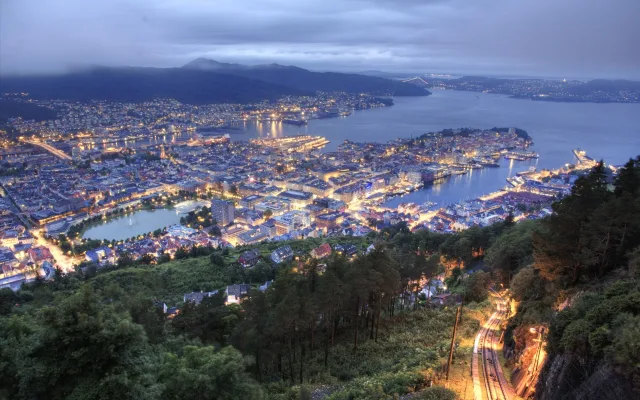
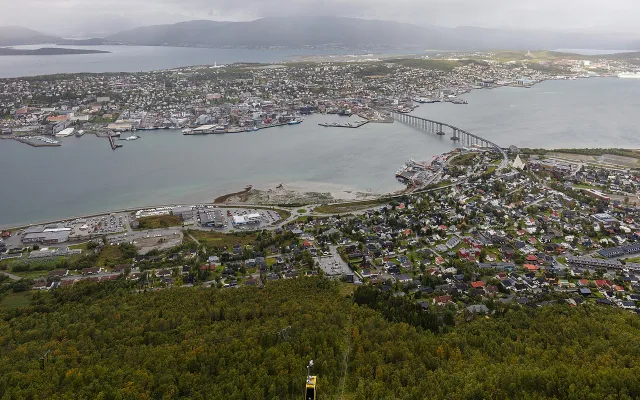
Description
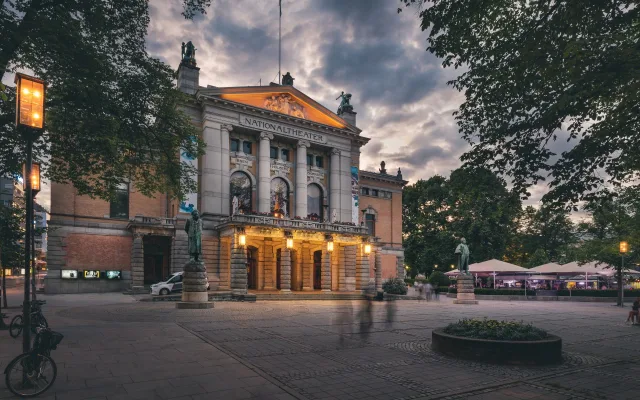
Norway's capital — the National Museum with Munch's *The Scream*, the Opera House, Aker Brygge waterfront, and Holmenkollen.
Wiki
Norway's capital and one of Europe's most expensive cities, home to around 700,000 people on the shores of the Oslofjord. The world's greenest capital (60% of its area is forest and parkland), and one of the fastest-growing cities by wealth (Norway's oil fund is the world's largest sovereign wealth fund). A car-free city centre (private cars banned since 2024), a strong architectural scene, and the main gateway to Norway's fjords.
Top Sights
- Vigeland Park (Vigelandsparken) — the world's largest sculpture installation by a single artist. 212 bronze and granite sculptures by Gustav Vigeland; the centrepiece is the Monolith, a 16-metre column of 121 intertwined human figures.
- Munch Museum (new building, 2021) — the world's largest single-artist museum, 13 floors in the Bjørvika district. Houses all four versions of The Scream.
- Akershus Fortress (Akershus Festning) — a 13th-century castle, former royal residence, now home to a military museum and the Museum of the Norwegian Resistance.
- Royal Palace — the summer residence; open for guided tours, with the changing of the guard at 13:30.
- Oslo Opera House (Operahuset) — striking contemporary building (2008) by Snøhetta; visitors can walk across the sloping roof.
- Holmenkollen — Oslo's landmark ski jump and the world's oldest ski museum (since 1923).
- Bygdøy Peninsula — a peninsula of museums: Vikingskipshuset (Viking ships), the Norwegian Folk Museum (Norsk Folkemuseum), the Fram Museum (polar expedition ship), and the Kon-Tiki Museum.
- Astrup Fearnley Museum — contemporary art in a striking Renzo Piano building.
- Aker Brygge — a restored harbour area lined with bars and restaurants.
- Tjuvholmen — the adjacent upscale neighbourhood, known for galleries.
- Nordmarka — Oslo's city forests: cross-country skiing in winter, hiking in summer; reachable for free on the T-bane.
Food and Prices
Norwegian cuisine: gravlaks (cured salmon), rakfisk (fermented fish — an acquired taste), reindeer, brunost (brown whey cheese), and waffles. New Nordic cooking has a strong presence here. Lunch at a café runs 250–350 NOK (about $25–35); dinner at a restaurant 600–1,300 NOK ($60–130); a tasting menu at Maaemo (three Michelin stars) starts at around 4,000 NOK ($400). A 0.5 l beer costs 100–120 NOK ($10–12). A litre of petrol is around 20 NOK ($2) — electric vehicles account for 40% of all new cars. Metro or tram: around 40 NOK ($4); taxi: 250–500 NOK ($25–50). Prices are as of 2026.
Getting Around
Oslo Airport Gardermoen (OSL), 50 km from the city, is served by SAS, Norwegian, Lufthansa, KLM and other carriers. The Flytoget airport express reaches the centre in 22 minutes for around 220 NOK ($22). Within the city, the T-bane (metro, 6 lines), trams and buses all operate under the single Ruter network. Bygdøy is accessible by ferry or bus 30.
When to Go
May–September brings temperatures of 14–22°C and, in June–July, the midnight sun. December sees the Nobel Peace Prize ceremony (10 December) and a Christmas market. Winter (December–March) is cold (0 to −10°C) with short days (roughly 09:00 to 15:30), but skiing is on offer at Holmenkollen and Tryvann. Key events: Norway's National Day (17 May, the country's biggest celebration) and the Holmenkollen Ski Festival (March).