Description
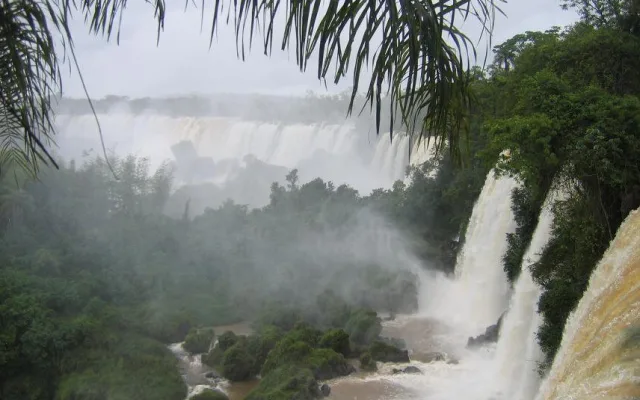
Puerto Iguazú is a town on the Brazilian border, known as the main gateway to Iguazú Falls on the Argentine side.
Wiki
Puerto Iguazú is a small town in north-eastern Argentina, wedged between the Iguazú and Paraná rivers at the meeting point of three countries. It is modest in itself and thoroughly geared towards tourism, but it is the most convenient base for the main attraction: Iguazú National Park and its waterfalls.
Why come here
For the waterfalls, and that is no exaggeration. On the Argentine side you get right up close to the cascades: a network of walkways (pasarelas) leads you directly over the rushing water. The highlight is the Garganta del Diablo (Devil's Throat), the most powerful and deepest chasm, reached via a long boardwalk stretching out above the river.
The Argentine side puts you inside the falls: the Circuito Superior (upper circuit, views from above) and Circuito Inferior (lower circuit, you approach the base and get drenched in spray). The Brazilian side offers a panoramic view of the whole scene, but the falls feel more distant, seen from across the river. Ideally you visit both banks, but if time allows only one, the Argentine side delivers the more immersive experience.
How many days to allow
Two days is enough:
- Day 1 — the Argentine park in full. Arrive at opening time: by midday the crowds and tour buses pile in, and queues build up on the walkways and at the Devil's Throat. A full day disappears easily.
- Day 2 — if you have a Brazilian visa, cross to the Brazilian side (Foz do Iguaçu park) for the panorama; that takes half a day. Alternatively, use the day for the Paraná river, the trail to the triple-border landmark (Hito Tres Fronteras), or simply to decompress.
A second consecutive day in the Argentine park often comes at a discount — keep your receipt and ask at the ticket window on your way out.
Getting there
- By air. The airport (IGR) is 20–25 minutes from town; there are flights from Buenos Aires — the quickest option given that the capital is over 1,000 km away.
- By bus. Long-distance coaches arrive at the terminal in the town centre. The journey from Buenos Aires takes a night and more (around 16–18 hours), but costs less than flying; book a cama or semi-cama seat so you can sleep.
- Airport to town/park. Transfers and taxis are available; some shuttles go directly to the park without stopping in town.
Getting to the park
Regular public buses (run by Rio Uruguay) connect Puerto Iguazú's bus terminal with the park — about 30–40 minutes and the cheapest option; no car needed. A local bus also crosses the border to the Brazilian side, but pay close attention to passport stamps and visa requirements before boarding.
Inside the park, a free train (Tren Ecológico) runs between the entrance and the Devil's Throat and is the easiest way to move between the trail starting points.
Where to stay
- Town centre — most hostels, cafés and the bus terminal are here; buses to the park leave from nearby. The best option for backpackers: affordable, everything is at hand, and there are places to eat in the evening.
- Closer to the park / along the highway — quieter and greener, but you depend on transport.
The town is compact and the centre is walkable. Staying within easy reach of the terminal saves time on early morning departures.
When to go
The falls run strongly year-round, but there are some nuances:
- Summer (December–February) — hot and very humid, with subtropical heat, plus this is the peak holiday season for Argentines: crowded and more expensive.
- Winter (June–August) — milder temperatures and more comfortable for walking; water levels remain high.
- The shoulder seasons (autumn/spring in the Southern Hemisphere) are a sensible compromise.
After heavy rains the water level surges — more spectacular, but the walkways to the Devil's Throat are sometimes closed due to rising water.
Money and food
- The town has plenty of tourist restaurants; Argentine classics include asado, steaks and empanadas. Prices in the centre are reasonable, but everything is more expensive right by the park.
- Food inside the park is pricey and mediocre — bring your own water and snacks; the saving is noticeable.
- Cash and exchange rates. Keep pesos on you in Argentina; exchanging dollars or euros through informal channels (blue rate) has traditionally been more favourable than paying by card. Check the current situation locally — it changes.
Practical tips and common mistakes
- Arrive at opening time. The most common mistake is turning up at noon and queuing in the heat.
- You will get wet. On the lower circuit and on the boat excursions (Gran Aventura — a speedboat that goes beneath the falls) the spray is serious. Bring a waterproof jacket or a change of clothes, and put your phone in a waterproof bag.
- Sun and heat. Hat, sunscreen, plenty of water: the subtropical sun on the open boardwalks drains you quickly.
- Coatis. These raccoon-like animals steal food and scratch — do not feed them and do not hold food in open view.
- Brazilian visa. Sort this out in advance; you cannot spontaneously cross the border for the panoramic view without the right documents.
- Footwear. The trails add up to several kilometres — proper trainers are essential, not flip-flops.