Description
One of the oldest towns in Russia, with a magnificent white-stone kremlin on the shore of Lake Nero. The famous Rostov bell chimes, finift enamel and monasteries make it unique.
Wiki
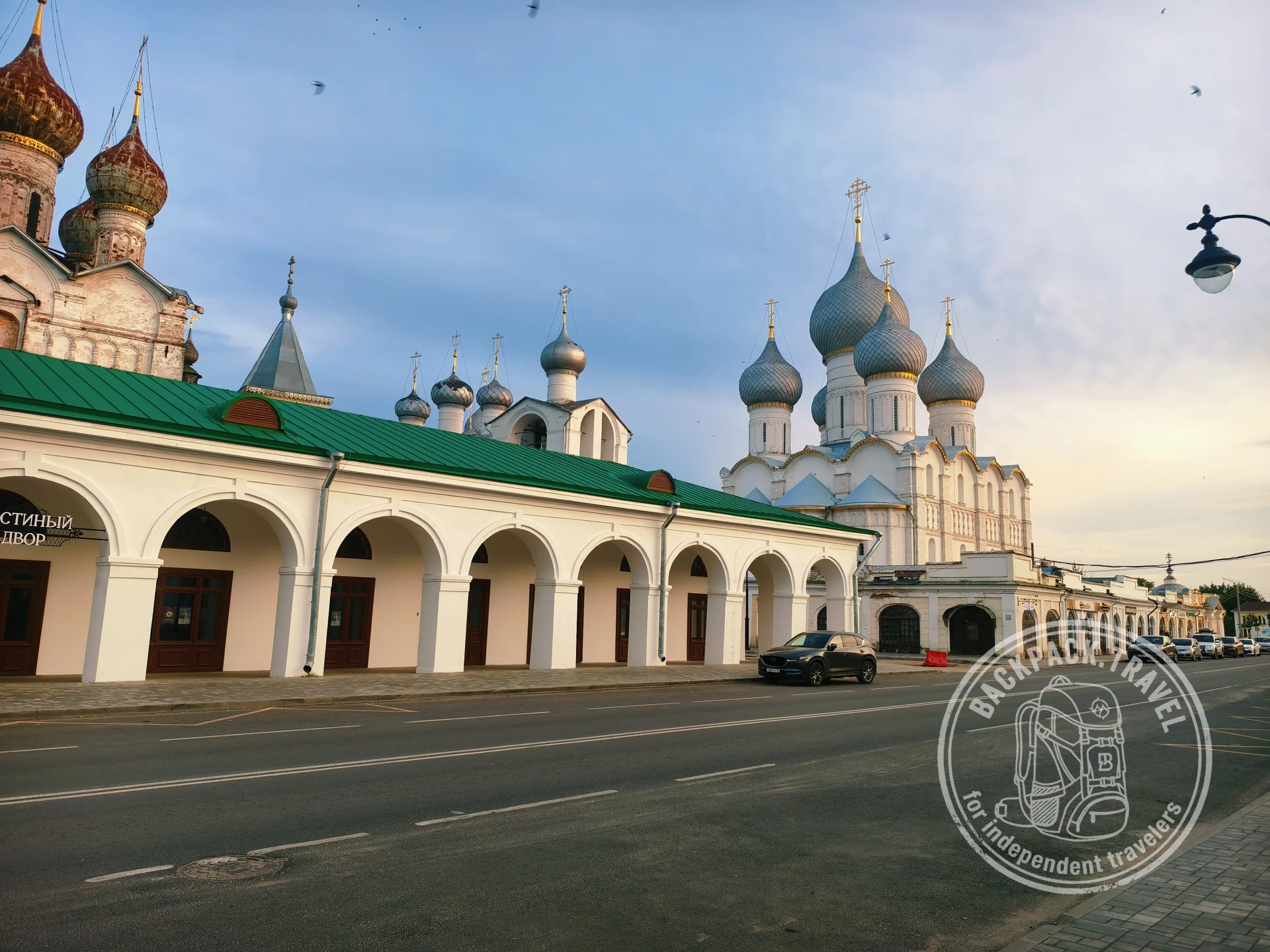
Rostov Veliky ("Rostov the Great") is a compact little town in the Yaroslavl Region where the main attraction stands right on the lakeshore: a white-stone kremlin with towers and walkways along the walls. It is worth coming for a day or two, usually as a destination in its own right on a Golden Ring route — the classic circuit of medieval towns north-east of Moscow — rather than in a rush "between Pereslavl and Yaroslavl".
What is genuinely worth seeing
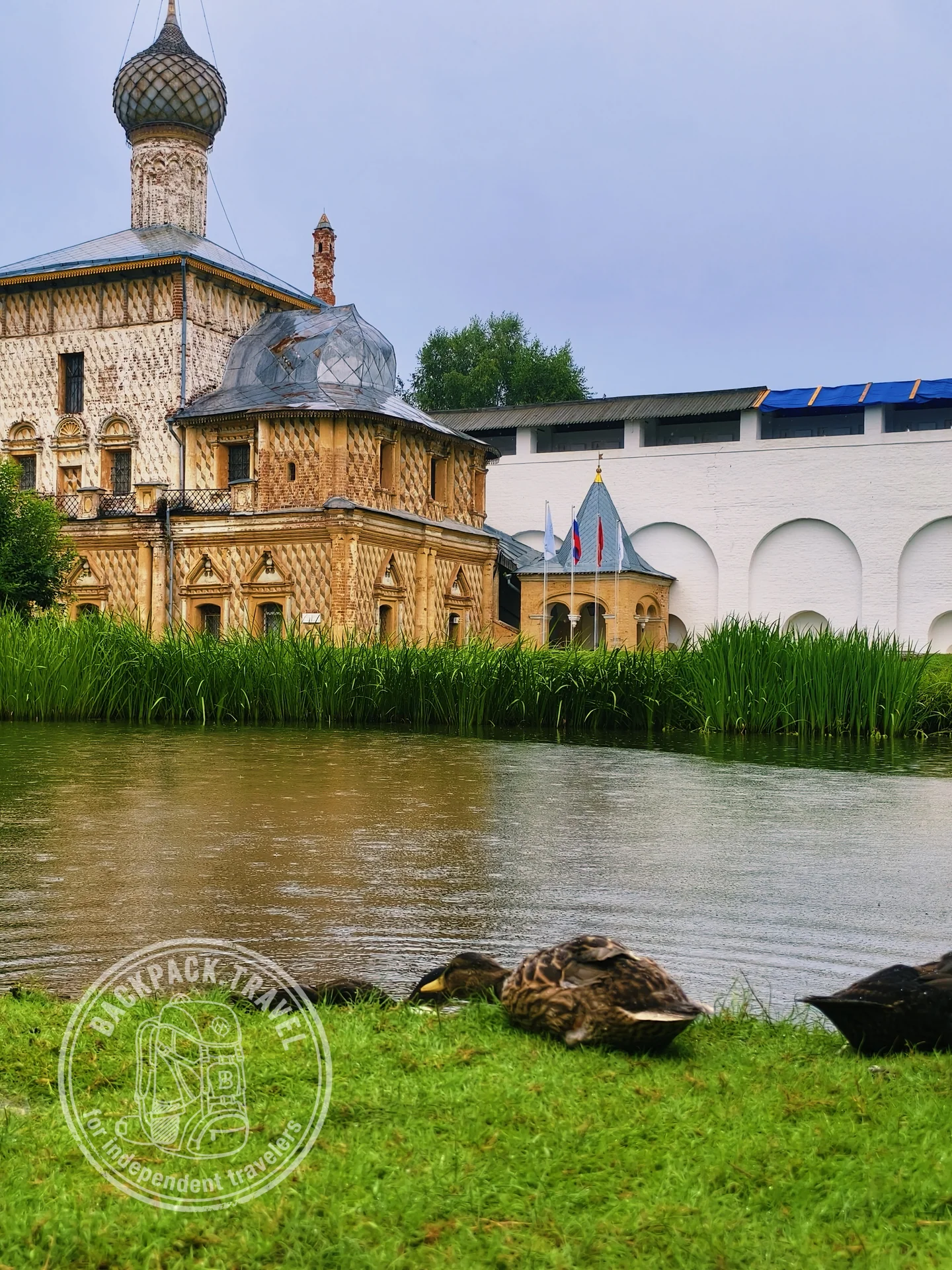
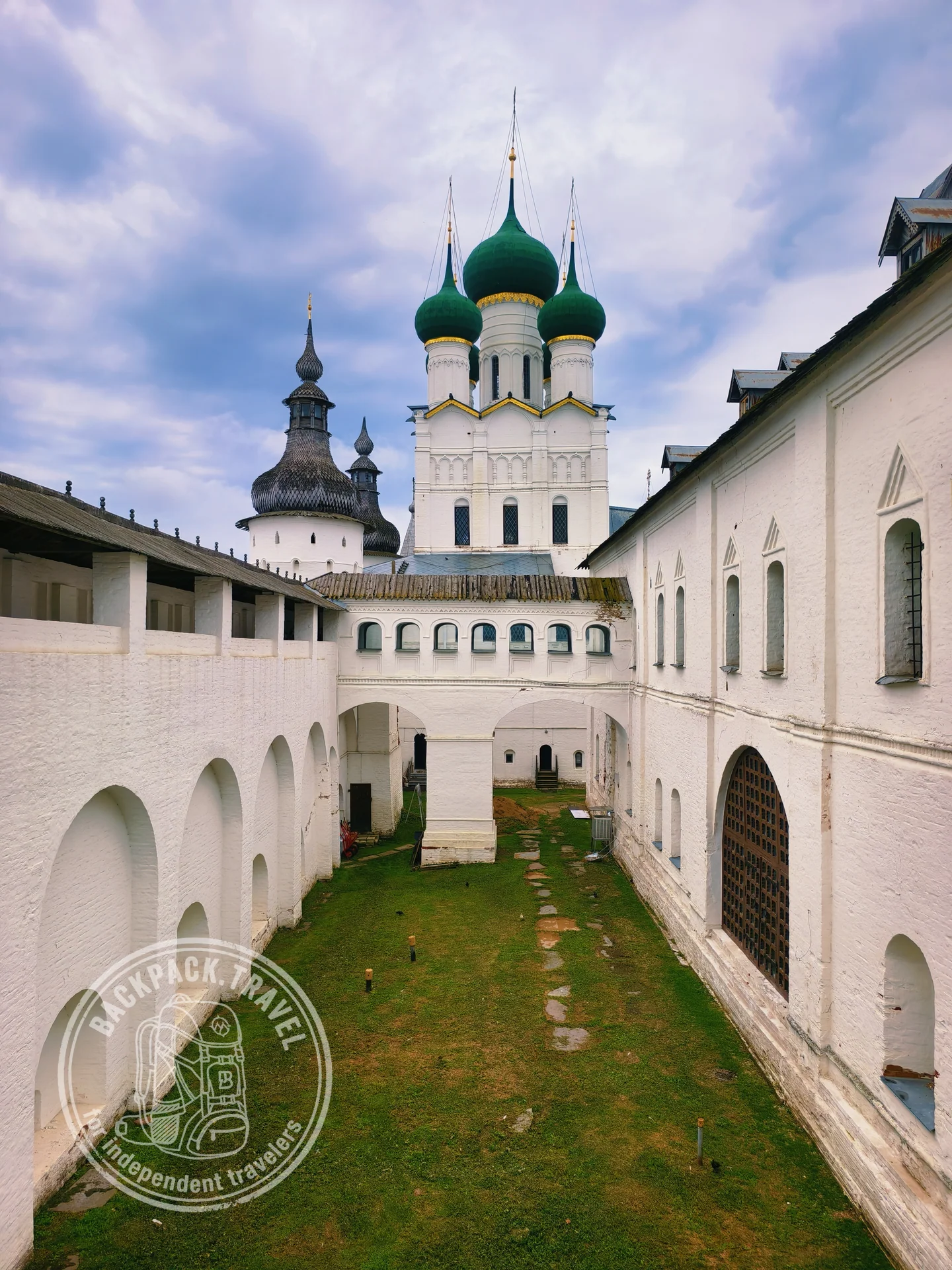
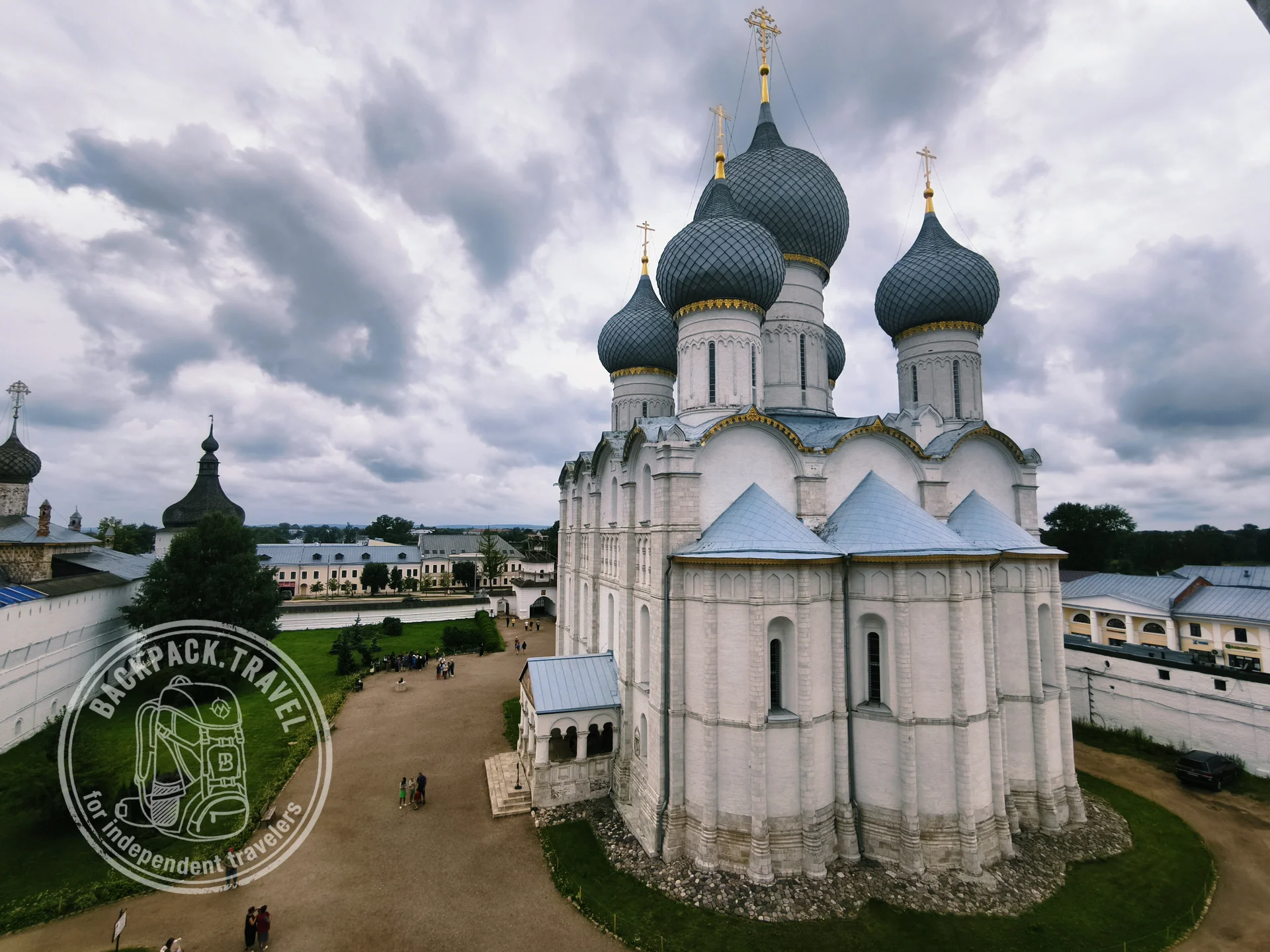
The Rostov Kremlin is what people come for. A kremlin is normally the fortified citadel of an old Russian town, but this is not a fortress in the military sense: it was the residence of the metropolitan bishop, comprising several churches, chambers, a belfry and walls with covered galleries. The key feature is that you can walk the passages between the towers, which give views over the domes and the lake. The 1973 Soviet comedy film Ivan Vasilievich Changes Profession was shot here, and the inner courtyard is instantly recognisable to Russians.
Tickets at the kremlin work on the principle of "each site separately" — there are combined options and separate ones for the displays, the walls and the belfry. If time is short, the priorities are: the walk along the walls, the Dormition Cathedral with its belfry, and the finift museum.
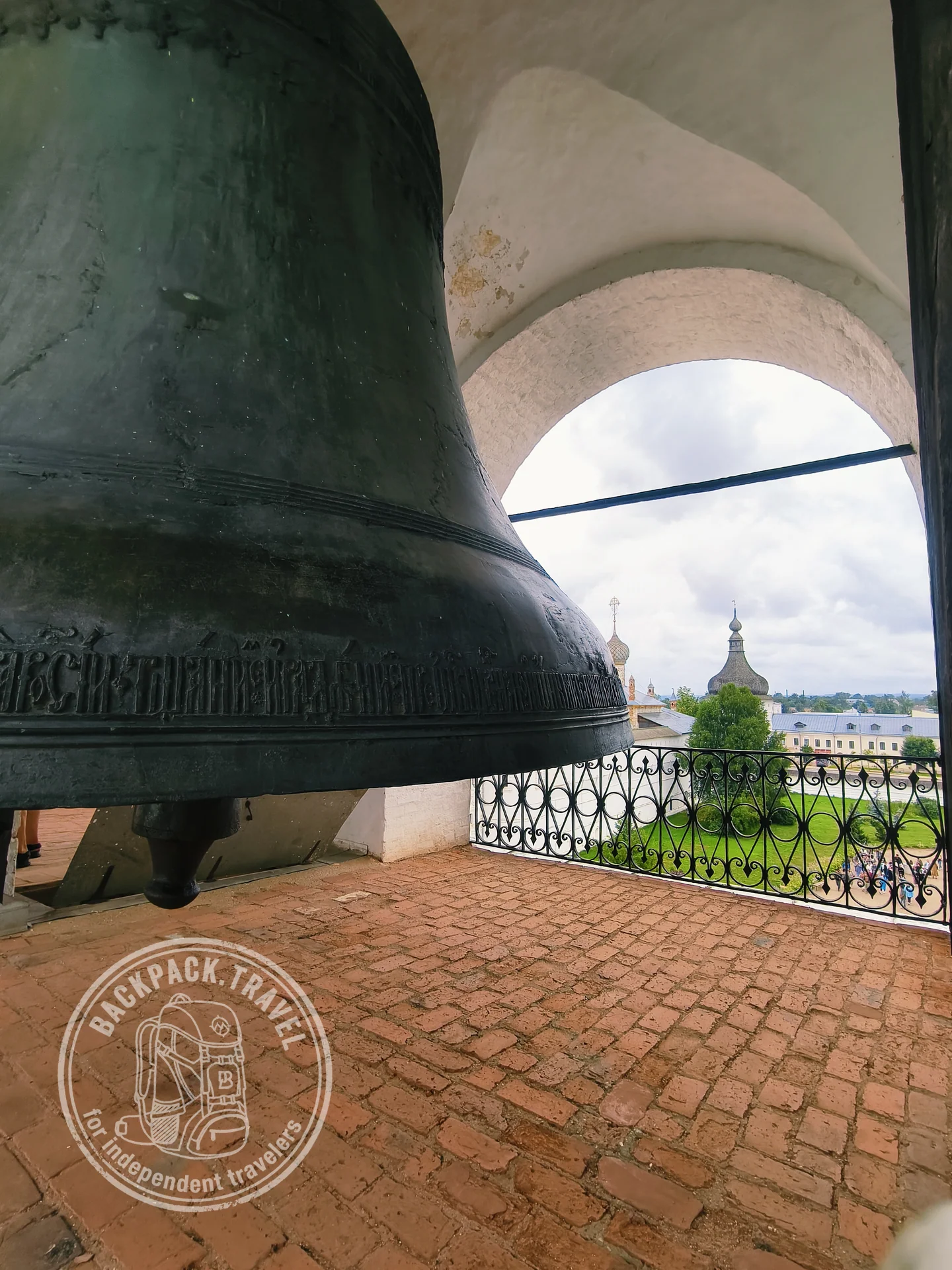
The Rostov chimes. The belfry by the Dormition Cathedral is not decoration: it holds historic bells, each with its own name, the largest being "Sysoy". Chimes are performed to a schedule and on request; check at the ticket office when the next one is. Hearing them live is far more interesting than reading about them.
Finift is the local enamel miniature painting, a craft of applying coloured enamel to metal and painting it by hand. There is a museum collection in the kremlin, and a factory with a shop in the town. This is probably the only souvenir from Rostov Veliky worth carrying home: the rest is standard fridge magnets.
The Spaso-Yakovlevsky Monastery on the lakeshore, a little away from the centre. The ensemble looks more striking from the water, and there are noticeably fewer tourists there than in the kremlin. It is walkable, but a twenty to thirty minute walk.
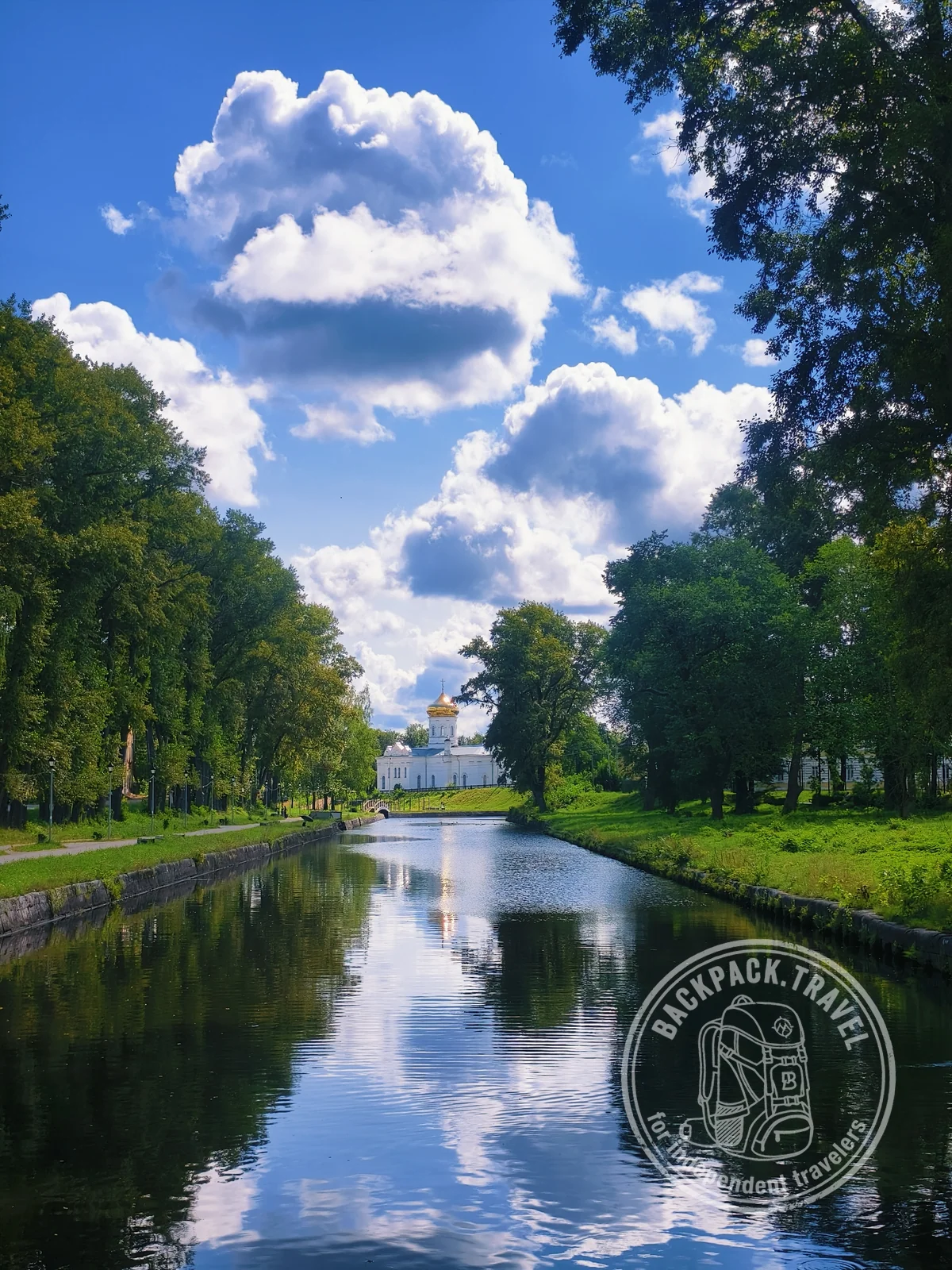
Lake Nero — shallow with a silty bottom, and not suitable for swimming. Its value lies elsewhere: in summer there are boat and launch trips, and the view of the kremlin from the water is the best shot in the town. In winter the shore becomes an ordinary place to walk.
Getting there and getting around
Rostov Veliky is on the Moscow–Yaroslavl railway, and the station is called Rostov-Yaroslavsky. Both long-distance and fast trains run — from Moscow this is the most convenient option, taking about three hours. There are also buses from the Moscow bus terminals, but they depend on traffic on the M-8 highway.
An important point: the station is not in the centre but roughly a couple of kilometres from the kremlin. You can walk it (about half an hour), but with a suitcase it is better to take a local bus or a taxi, which is inexpensive here.
Within the town you barely need transport. The kremlin, the trading rows, the embankment and the main churches all fit into a walk. A taxi is only useful for the Spaso-Yakovlevsky Monastery or the trip back to the station.
How many days, and when to go
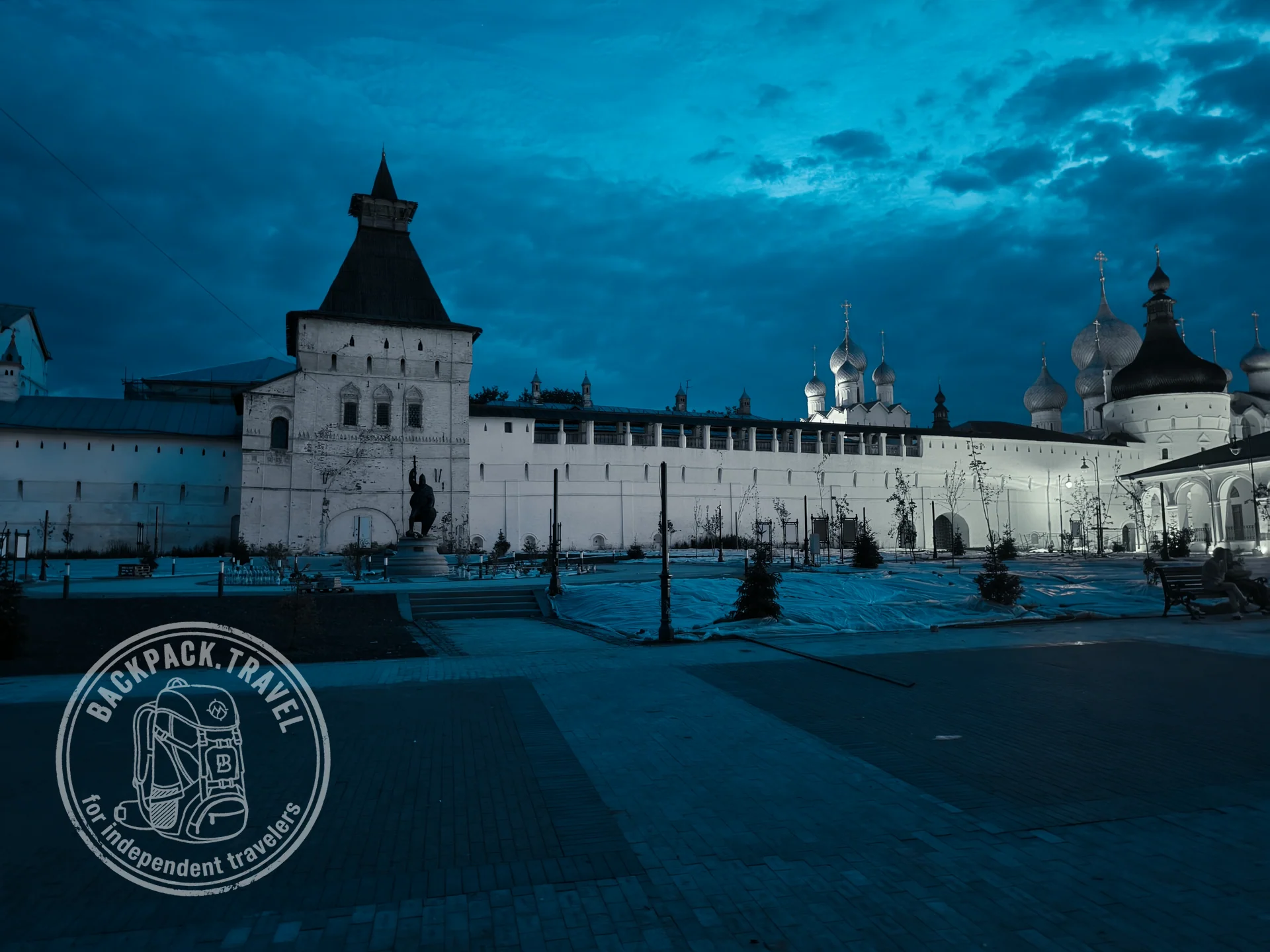
One full day is the minimum to walk the kremlin without rushing, reach the lake and the monastery. Two days with an overnight stay is the comfortable option: in the evening and early morning the town is practically empty, and the photographs come out quite differently from those taken in the daytime crush of coach parties.
A typical mistake is arriving for three hours as part of a day trip from Moscow: you only manage to dash across the kremlin courtyard.
The best time is late May to September: the boats are running, all the wall-top viewing routes are open, and it is warm. Winter is beautiful and uncrowded, but the wall passages may be closed — check in advance, or half the point of the trip is lost. The shoulder seasons (November, March) are the greyest, and not recommended.
Where to stay
The town is small and the logic is simple: the closer to the kremlin the better. There are not many options — small hotels and guesthouses in the centre, including places on the kremlin grounds themselves and next door. There is no point staying by the station: you save a little but lose the evening walks.
Book ahead for weekends and public holidays — the stock of rooms is genuinely small and sells out in high season.
Food and money
There are few restaurants, most of them clustered around the kremlin and the trading rows. The cooking is standard Russian: cabbage soup, pelmeni, fish from the local waters. Prices are noticeably lower than in Moscow, but do not count on much choice in the evening: many places close early, especially on weekdays and out of season.
Where to save:
- take a combined kremlin ticket if you plan more than two sites;
- eat in simple cafés rather than the "taverns" by the main entrance;
- come by suburban or fast train and manage without taxis in the town.
What not to skimp on: the bell chimes and the walk along the walls.
Things to bear in mind
- Better to have cash on you: in the small shops and souvenir stalls cards are not always accepted.
- Museum ticket offices close earlier than the displays themselves — arriving right on closing time is pointless.
- Footwear should be comfortable and suited to the weather: the wall passages have steep stairs, and outside the centre the pavements are uneven.
- Safety raises no questions: the town is quiet and provincial, and visitors practically never have problems.
- Do not expect developed infrastructure — Rostov Veliky is noticeably smaller and plainer than Suzdal or Yaroslavl, which is rather a plus: less tourist gloss.
Where next
Rostov Veliky combines well with Pereslavl-Zalessky (south along the highway) and Yaroslavl (north, an hour by train). The logical route is to travel by rail from Moscow to Yaroslavl with a stop here, rather than trying to fit three towns into one day by car.