Description
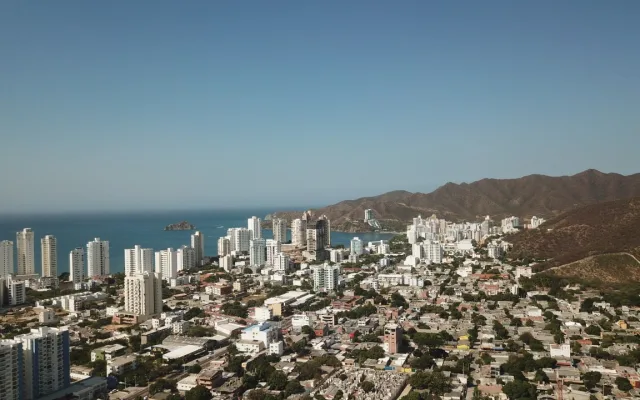
Gateway to the Ciudad Perdida trek and Tayrona National Park, with stunning beaches and daily boat trips on the Caribbean.
Wiki
Santa Marta is the oldest continuously inhabited Spanish city in South America, founded by Rodrigo de Bastidas in 1525. Situated on Colombia's Caribbean coast at the foot of the Sierra Nevada de Santa Marta, it serves as the main gateway to the beaches, rainforests and ancient ruins of the Magdalena region.
Geography and Overview
The city of around half a million people sits in a wide Caribbean bay, hemmed between warm shallow waters and steep mountain slopes. The Sierra Nevada de Santa Marta rises almost from the shoreline to 5,775 metres (peaks Cristóbal Colón and Simón Bolívar) — the highest coastal mountain range in the world. The proximity of sea and snowy peaks creates enormous climatic variety: from hot, arid lowlands to mist-shrouded humid forests at altitude. In the city itself the climate is hot and dry, with noticeable winds from December to March.
Unlike tourist-polished Cartagena, Santa Marta is simpler, cheaper and more alive: a real port and fishing city with a bustling centre, not an open-air museum. The historic core — colonial streets, Parque de los Novios square and a seafront promenade — clusters near the water, while much of the tourist scene has shifted to the nearby fishing village of Taganga.
Main Sights
- Tayrona National Natural Park (Parque Nacional Natural Tayrona) — the region's signature attraction, where rainforest descends directly to turquoise sea. Iconic beaches include Cabo San Juan del Guía with its photogenic rocky headland, the calm cove of La Piscina and Playa Cristal. Entry is paid, visitor numbers are capped, and the park closes periodically to allow ecosystem recovery — check dates before you go.
- Ciudad Perdida ("Lost City") — a complex of stone terraces built by the Tayrona civilisation around the 9th century, rediscovered in the 1970s. It can only be reached by a 4–5-day jungle trek with overnight camps and river crossings; treks are run by licensed operators only.
- Pueblito Chairama — smaller Tayrona ruins inside the national park, reachable on a day hike from the coast.
- Minca — a cool mountain village in the foothills and a hub of coffee and cacao farms. Trails lead to the waterfalls Pozo Azul and Marinca, viewpoints and birdwatching spots; the area is well regarded for birding.
- Quinta de San Pedro Alejandrino — a historic estate where Simón Bolívar died in 1830, now a memorial complex with a botanical garden and art museum.
- Santa Marta Cathedral — one of the oldest churches on the continent, where the remains of Bastidas and Bolívar were kept for a time.
- Museo del Oro Tairona — a museum in the colonial Casa de la Aduana displaying Tayrona gold objects and ceramics.
History and Culture
Before the Spanish arrived, the coast was home to the Tayrona people, who left behind an advanced network of settlements with stone terraces and roads. Their direct descendants — the Kogi, Arhuaco, Wiwa and Kankuamo communities — still live in the mountains and regard the Sierra Nevada as the sacred "heart of the world." Colonial Santa Marta survived pirate raids and decline, ceding primacy to Cartagena, but retained its standing as the first port city. Modern culture blends the Caribbean rhythms of vallenato and cumbia, fishing traditions, and the enduring presence of indigenous peoples whose white garments and woven mochila bags have become an instantly recognisable symbol of the region.
Food and Drink
The cuisine is Caribbean, centred on seafood: whole fried fish (pescado frito) with coconut rice (arroz con coco) and plantain patacones, seafood soup (cazuela de mariscos) and ceviche. Fresh tropical fruits and juices — passion fruit, soursop, lulo, mango — are sold everywhere. Up in the Minca highlands the main draw is locally grown coffee and cacao straight from the plantations.
Practical Information
- Getting there: Simón Bolívar Airport connects the city with Bogotá, Medellín and other Colombian hubs; buses run along the coast from Cartagena and Barranquilla.
- How long to stay: Allow around 4 days — one for the city and the Quinta, one for Tayrona Park, a day trip to Minca, and, if desired as a separate add-on, the multi-day trek to Ciudad Perdida.
- When to go: The dry season (December–March and mid-year) is best for hiking; trails become muddy in the rainy months.
- Things to note: Use sun protection and insect repellent, drink bottled water, respect the rules and territories of indigenous communities, and arrange any mountain or jungle hiking through vetted guides only.