 Города и дороги
Description
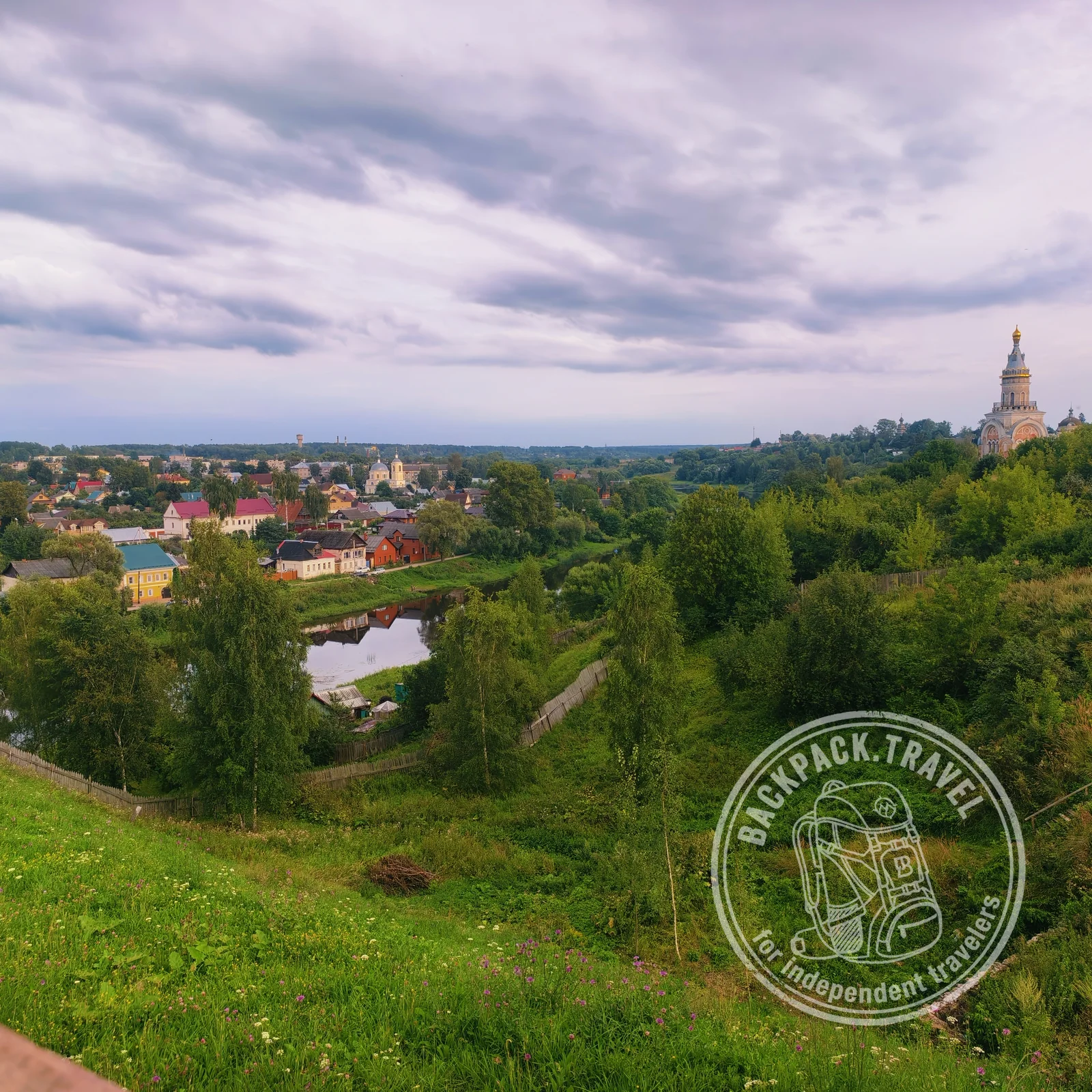
One of the most intact historic towns of Tver Region: the Borisoglebsky Monastery above the Tvertsa, the wooden Tikhvin Church, and the gold embroidery that has been practiced here since the 18th century.
Wiki
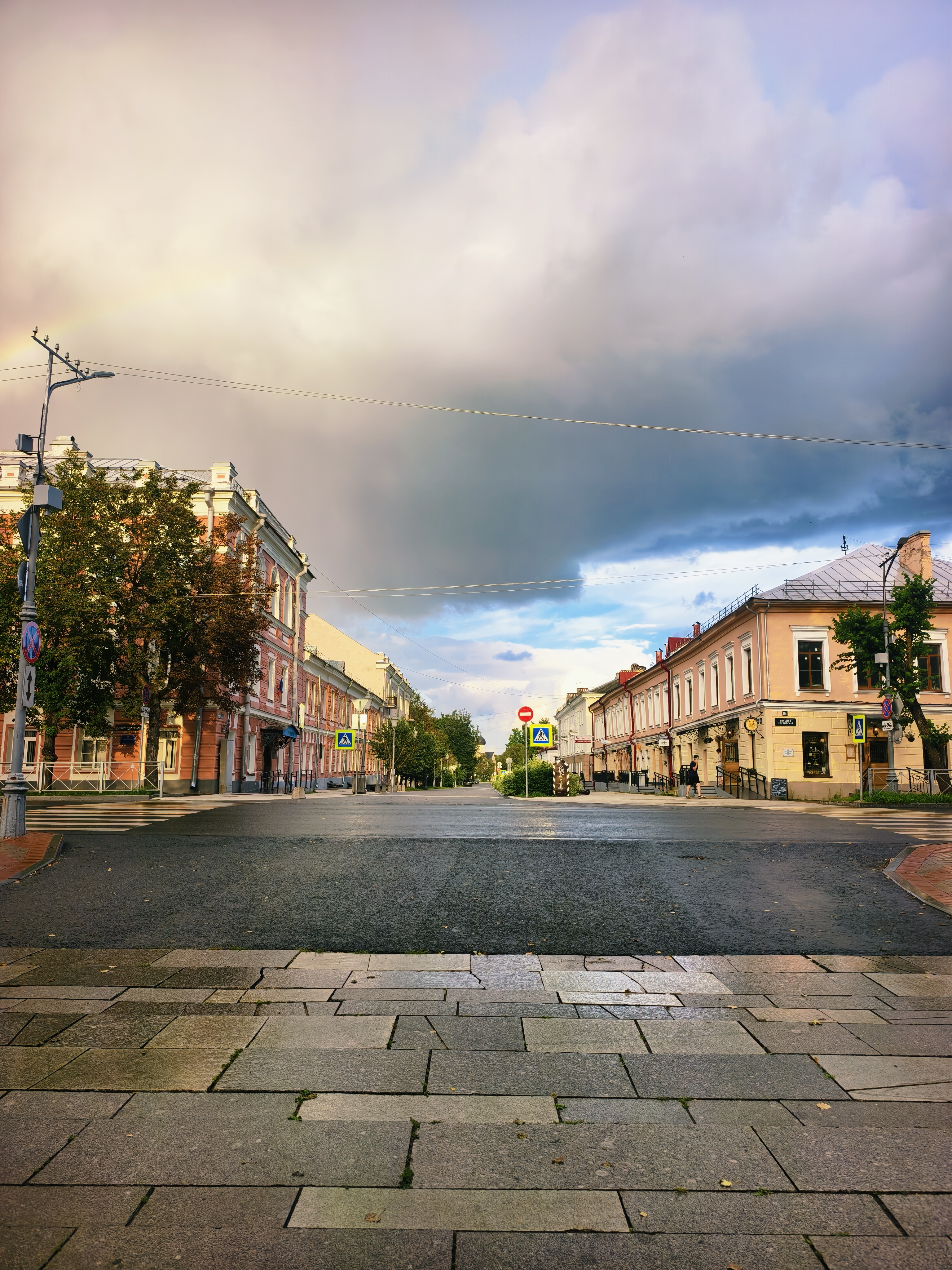
Torzhok is a town on the Tvertsa in Tver Region, with around forty thousand residents, 230 km from Moscow and a little over an hour from Tver. By density of monuments it is one of the richest small towns in Russia, and also one of the most neglected. It is worth coming with both of those facts in mind.
The name comes from Novy Torg, the "new marketplace", and the first mention is dated to 1139. Later the town found itself on the sovereign's road between Moscow and St Petersburg, and the 18th and 19th centuries gave it everything people come here for.
The Borisoglebsky Monastery
This is the main sight, on the high right bank of the Tvertsa. Tradition has it founded in 1038 by Ephraim of Novy Torg, while documents record it from the 16th century.
- The Cathedral of Boris and Gleb — 1785–1796, designed by Nikolai Lvov, the greatest architect of these parts and a local by birth. The foundation stone was laid by Catherine II, and some of the icons were painted by Vladimir Borovikovsky.
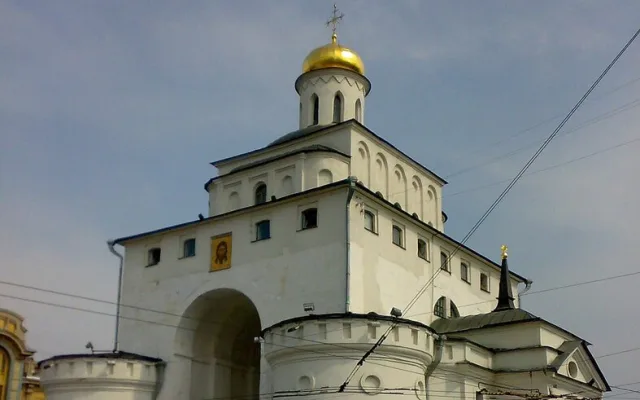
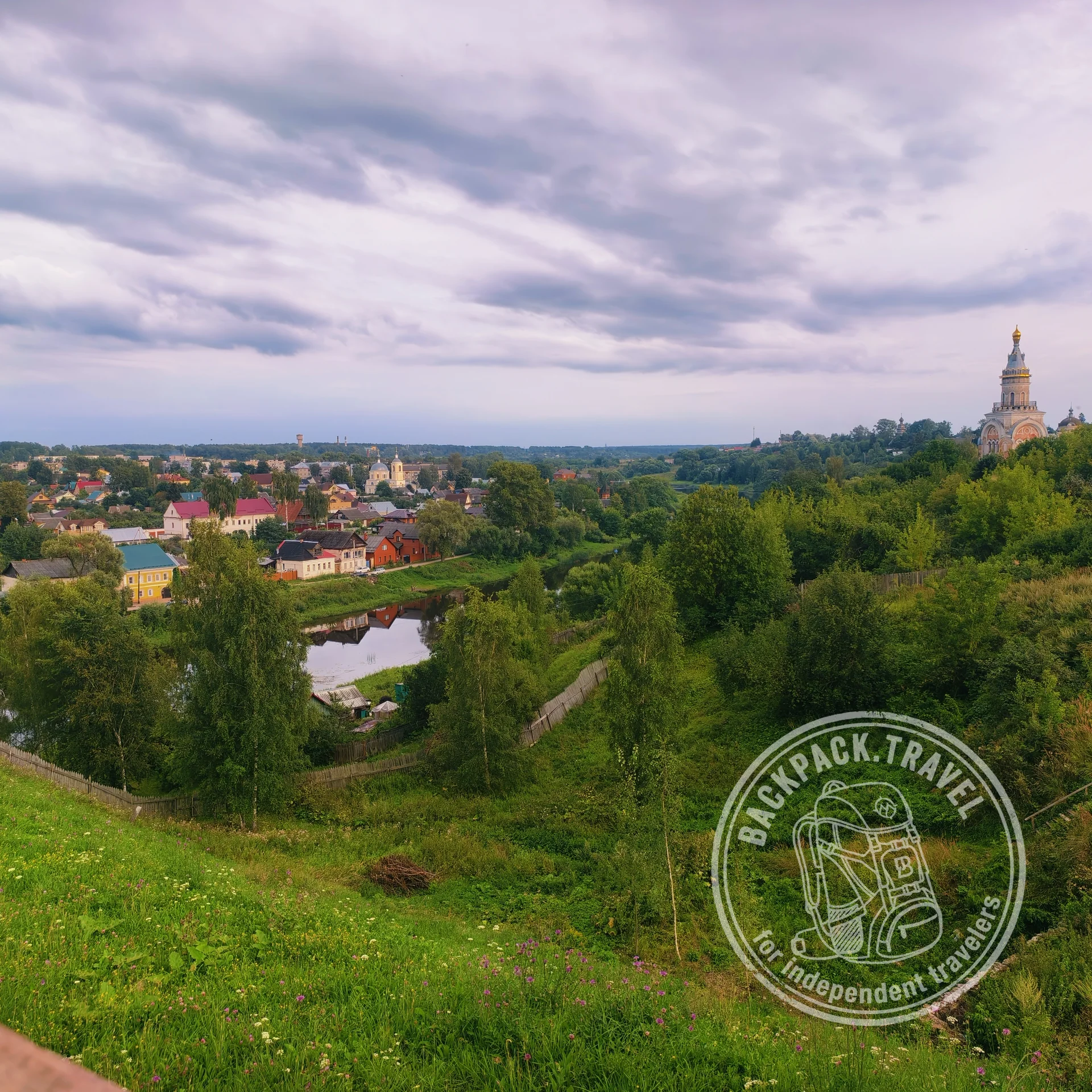
- The gate church and bell tower — 1804–1811, built by Yakov Ananyin, with the design attributed to Lvov. You can go up: this is the best view of the town and the bend of the Tvertsa.
The fate of the monastery is worth knowing in advance: for almost half a century it held a high-security prison, then a health center, and from the 1980s a museum. It was returned to the church in 1993, and the restoration is still under way, with some buildings in scaffolding and others in ruins.
The Novotorzhsky Kremlin
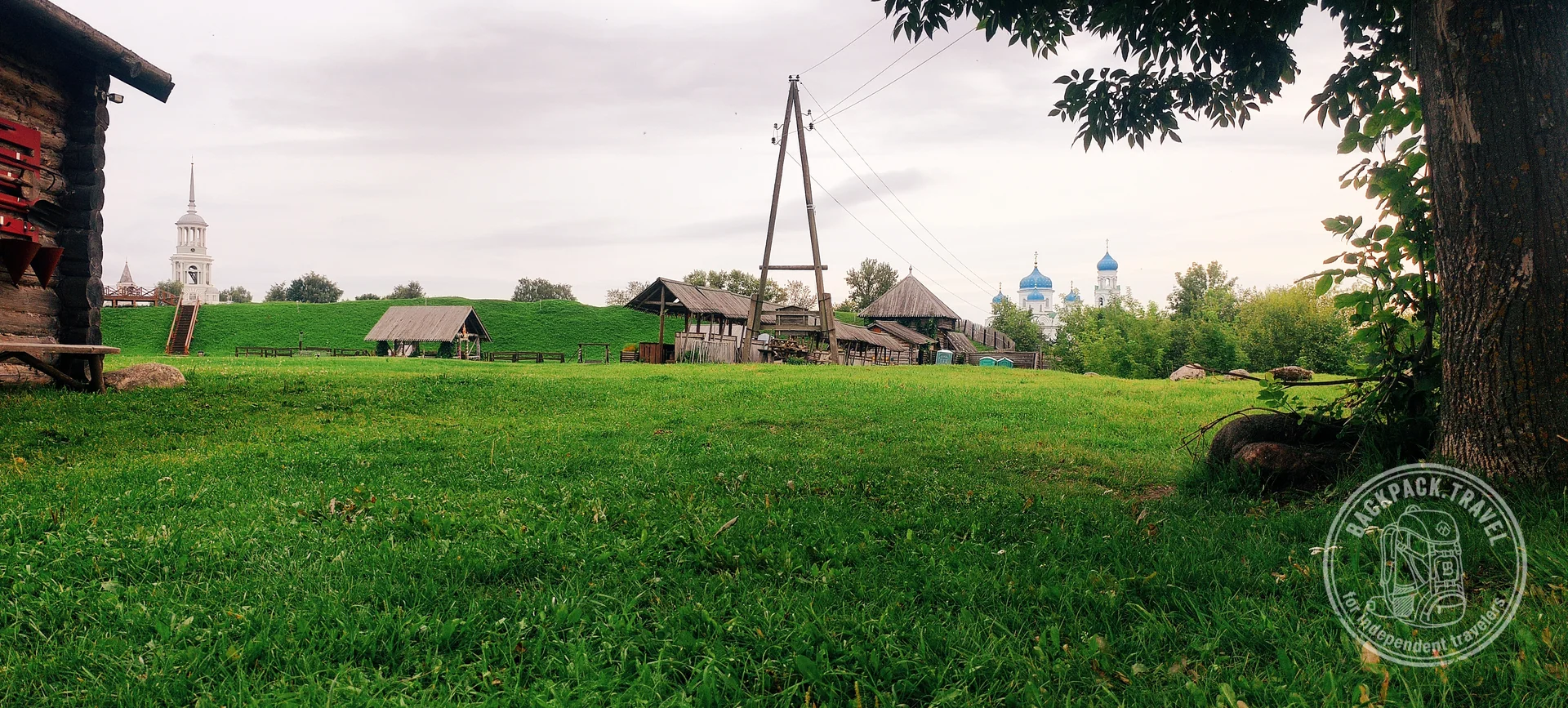
The earthen ramparts of the ancient town survive on the right bank, and an open-air museum has been set up inside them: a reconstruction of the 17th-century Mikhailovskaya gate tower, a cottage full of armor, and a shooting range with models of siege engines. There is no real kremlin here, only an interactive site aimed mostly at children. The value of the place lies in the ramparts and the panorama from them.
The wooden church and views of the Tvertsa
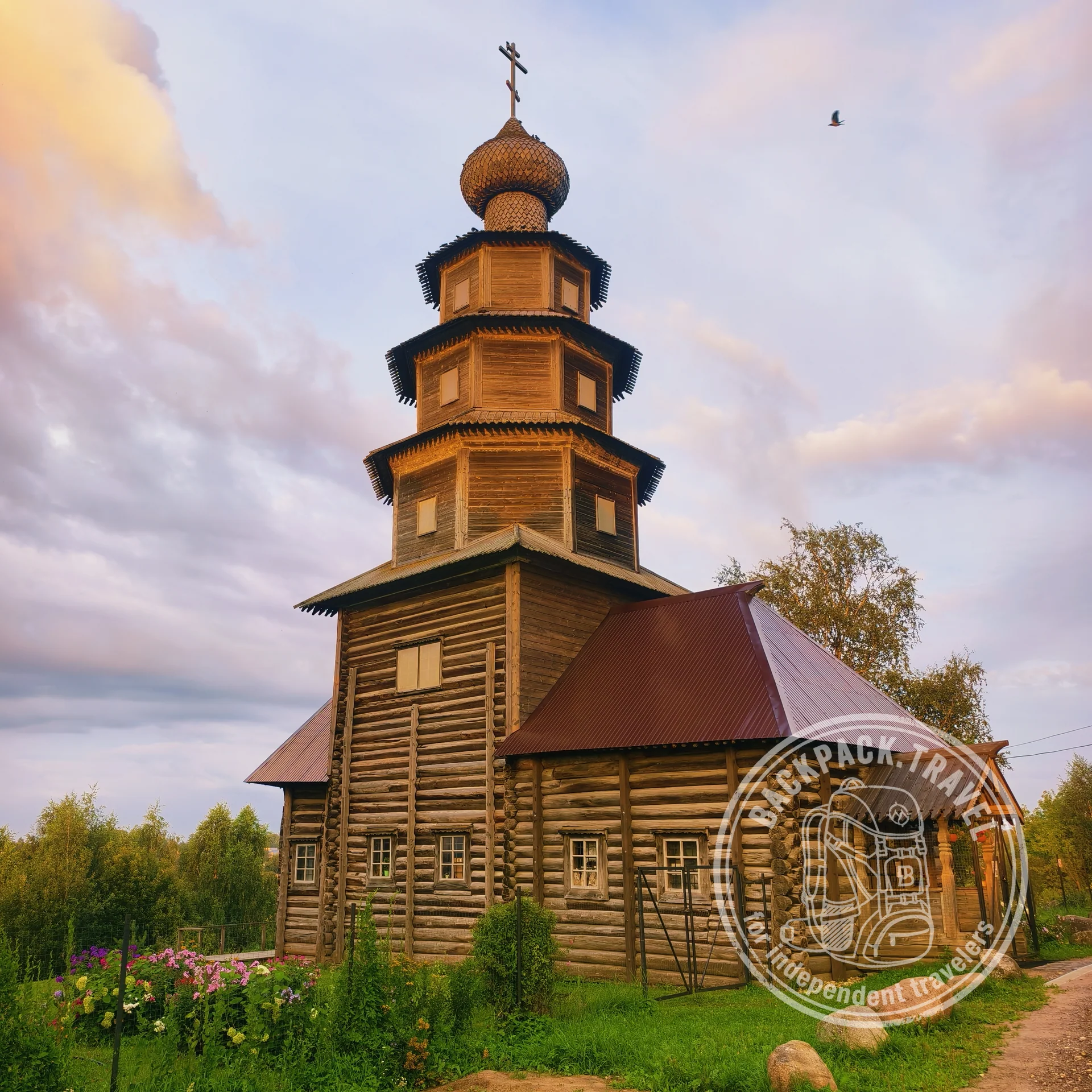
On the southern edge of the right bank stands the Old Ascension (Tikhvin) Church, a wooden tiered building drawn out like a candle. The present log structure is dated to 1653, and the church was rebuilt in 1717 and again in 1883. Services stopped when the stone Ascension Church was put up next door in 1854, and that is exactly what saved it.
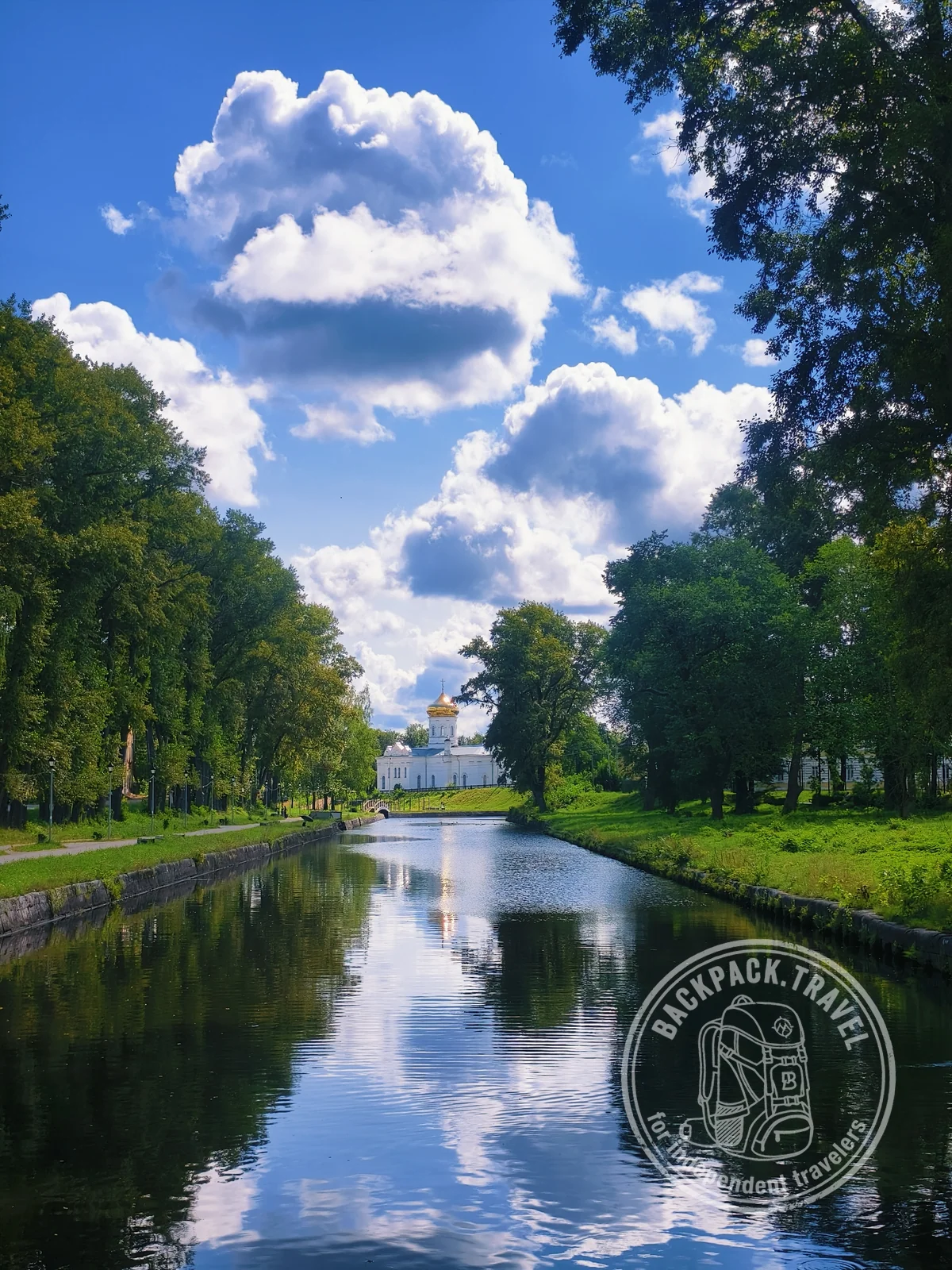
The river is an attraction in its own right: both banks are lined with merchant houses, a footbridge runs between them, and the landmark of the left bank is the Transfiguration Cathedral of 1815–1822.
Gold embroidery and Pozharsky cutlets
Gold embroidery is the Torzhok craft, recorded since the 13th century: hand embroidery in gold and silver thread for boyars, merchants and the court. The Torzhok Gold Embroiderers factory is still working, and attached to it is a museum of gold embroidery founded in 1911, with around a thousand pieces ranging from old icon covers to modern commissions.
Pozharsky cutlets, made of chicken with butter and coated in white breadcrumbs, come from a tavern here. They were served at the Pozharsky inn on Palace Square, owned by Darya Pozharskaya, where Pushkin, Gogol and Zhukovsky all stayed. It was Pushkin's rhymed advice — to dine at leisure at Pozharsky's in Torzhok, taste the fried cutlets and then travel on light — that made the dish famous. The building burned out in 2002, was rebuilt, and now houses a museum.
How much time to allow
The transit minimum is three or four hours for the monastery, the ramparts, the embankments and one museum. A full day lets you do all of the same plus a walk along both banks. Staying overnight is worth it if you add the surroundings: Vasilyovo with its museum of wooden architecture and Lvov's boulder-built Devil's Bridge, and the Znamenskoye-Rayok estate.
There is no direct train from Moscow: people take the Lastochka express to Tver and continue by train or bus, some four hours in all. The logical chain is Tver, Torzhok and Vyshny Volochyok along the old St Petersburg road, or Torzhok and Staritsa to the south.
Who won't enjoy it
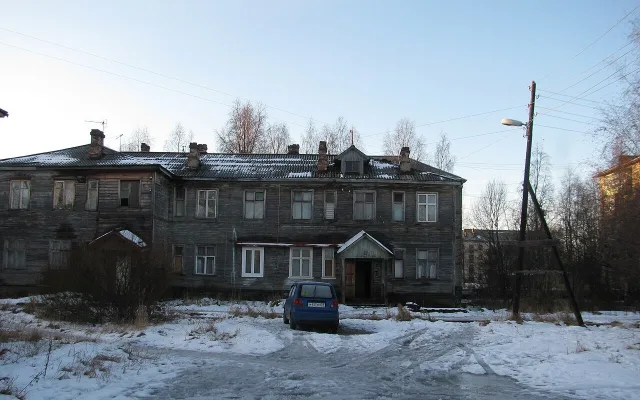
Torzhok is a town of contrast between what was built here and the state it is in. Dozens of monuments stand with broken windows and saplings on their cornices, whole blocks are falling apart, and a walk keeps running into either a fence or a vacant lot. The everyday fabric is poor, with a couple of cafés, minimal signage and empty streets in the evening. This is not the place to come for restored picture-postcard provincial Russia. But if you are content with authenticity in its present state and are ready to read the town through its fragments, Torzhok is one of the most interesting small towns between the two capitals.