Description
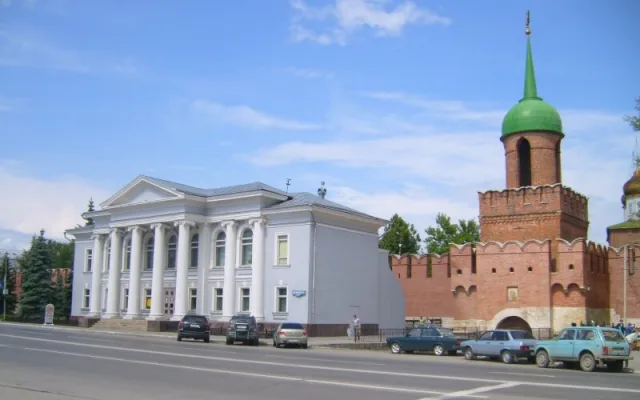
The city of gingerbread, samovars and weapons, 200 km from Moscow. The Tula Kremlin, the State Arms Museum and the famous Tula gingerbread are enduring symbols of Russian culture.
Wiki
Tula is a rare case where "a weekend city from Moscow" genuinely works: two hours on a fast train, a compact centre, and a set of museums that are strong by any standard. It is worth coming not to tick a box but for specific things — the arms collection, the restored riverside and the food.
Getting there and how long it takes
Tula is about 180–200 km due south of Moscow.
- By train — the best option. Fast services from Moscow's Kursky station (and long-distance southbound trains passing through) take about 2–2.5 hours; ordinary suburban trains take longer and involve a change at Serpukhov. Book tickets for the Lastochka (a fast regional express) in advance: weekend seats go quickly.
- By bus — from the southern bus stations of Moscow, cheaper than the train but dependent on traffic on the M-2 "Krym" highway.
- By car — along the M-2, part of which is a toll road. There is parking in central Tula, but finding a space near the kremlin at the weekend is not easy.
Tula-1 station is close to the centre: a short tram or trolleybus ride to the kremlin, or a walk of 30–40 minutes.
Around the city
The centre is compact: the kremlin, the Upa riverside, the Kazanskaya embankment and the pedestrianised Metallistov Street form a single cluster, all walkable without transport. The more distant points (the Arms Museum in its new helmet-shaped building, the samovar and gingerbread museums) are not far either, though it is sometimes easier to ride a couple of stops between them.
Public transport means trams, trolleybuses, buses and shared minibuses. Tula is one of the few cities in Russia where the tram network is alive and genuinely useful. Card payment on board works. Taxis via apps are cheap by Moscow standards.
What is really worth seeing
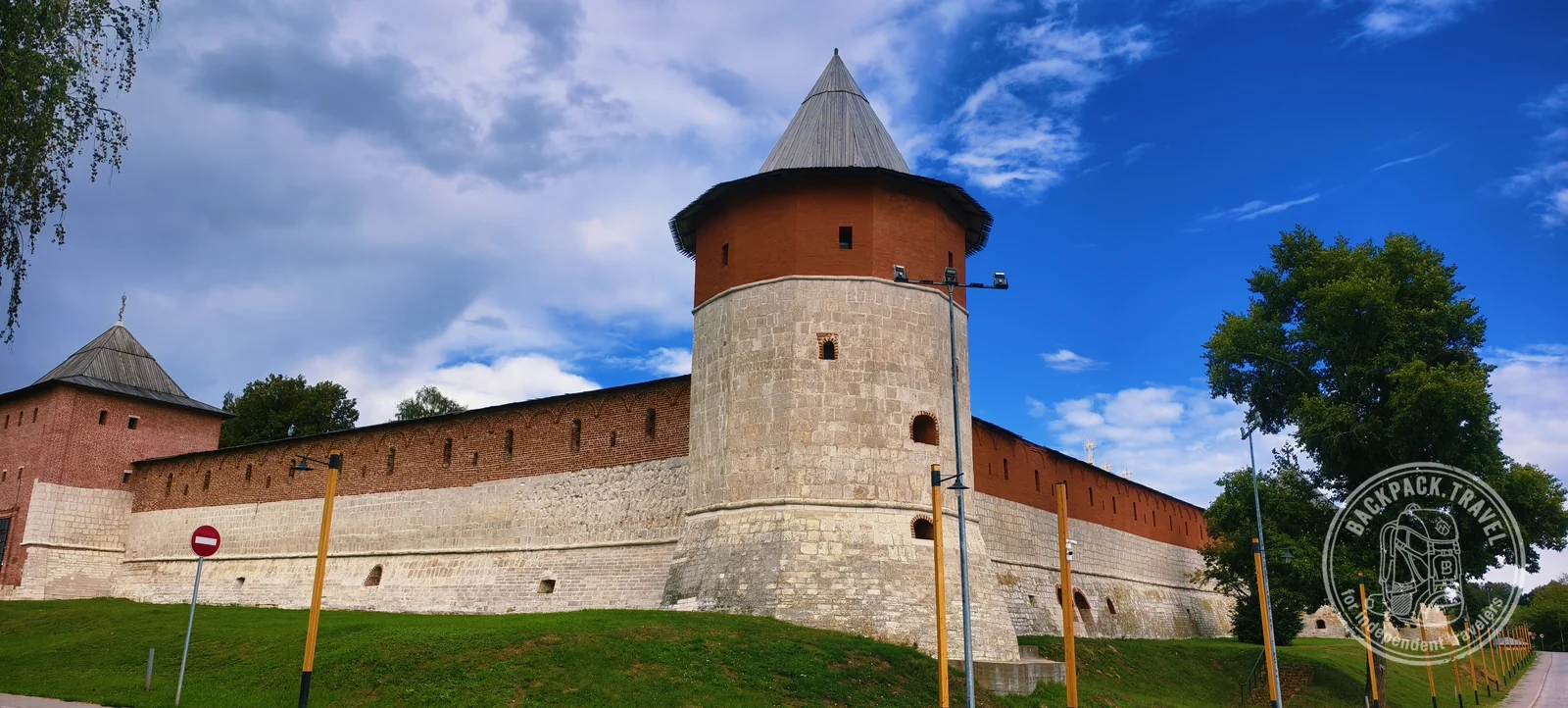
The Tula Kremlin. A kremlin is a fortified citadel, the walled stronghold at the core of an old Russian town; this one dates from the early 16th century and is a rare example of a fortress built not on a hill but on low ground by a river. You can climb onto the walls and walk the fighting gallery — the best viewpoint in the centre. Inside are the Dormition Cathedral with surviving wall paintings, and the old trading rows.
The State Arms Museum. For many people the main reason to come to Tula. The new helmet-shaped building on the far bank of the Upa holds a huge display running from flintlock muskets to modern designs, with interactive and multimedia sections. Allow at least 2–3 hours; children find it no less interesting than adults. The older display, in the former Epiphany Cathedral inside the kremlin, is more compact and more atmospheric.
The Kazanskaya embankment and Metallistov Street. Both were reconstructed recently and done well: wooden decking, cafés, and a view of the kremlin walls from the water. This is where the whole city sits in the evening.
The Samovar Museum and the Gingerbread Museum. Small, and quickly seen. The gingerbread one is worth doing with a guided tour — they explain the technique of the pechatny pryanik, gingerbread stamped in a carved wooden mould, and give you a tasting.
Yasnaya Polyana. The estate of the writer Leo Tolstoy, 14 km from the city — a separate half-day trip by suburban bus or taxi. If you are interested in literature and in Russian country-estate life, it is more powerful than any museum in the city itself. The house museum runs on timed entry, so check the schedule in advance.
How many days to allow
- One day — the kremlin, the riverside and one of the museums. Genuinely achievable arriving on a morning train and leaving on an evening one.
- Two days — plus Yasnaya Polyana and a second or third museum. The optimal format.
- Longer — only if you plan excursions around the region (Polenovo, Bogoroditsk, Kulikovo Field).
Where to stay
Aim for the rectangle between Tula-1 station, Lenin Avenue and the kremlin. Everything is walkable from here and the centre is lively in the evening. Lenin Avenue is the city's main axis, with cafés and shops. Hotels and apartments are noticeably cheaper than in Moscow; there are hostels, but not many. There is no point staying in the outlying residential districts — the saving does not repay the journey.
Food and money
Tula is an inexpensive city: lunch in an ordinary café costs a fraction of the Moscow price. What to try:
- Pryanik (gingerbread) — buy it not from the souvenir stalls by the kremlin but in the branded shops of the local factories: fresher and cheaper. A filled pechatny gingerbread is not the same thing as a souvenir slab in a gift box.
- Belyov pastila — a speciality from nearby Belyov, a dense confection made from whipped baked apple. A good gift, and it travels better than gingerbread.
- Ordinary city dining on Metallistov and the embankment, from burger joints to decent restaurants.
When to go
May to September is the obvious choice: the embankment and the walk along the walls work at full strength. Tula also looks good in winter (the kremlin in snow), but the outdoor part of the programme shrinks and the emphasis shifts to the museums. The shoulder seasons are muddy and grey, the worst option.
Practical details
- Museums are mostly closed on Mondays, and some have a sanitarny den at the end of the month — a scheduled cleaning day when they shut. Check before travelling: coming for a day from Moscow and running into locked doors is a waste.
- There can be queues at the Arms Museum and Yasnaya Polyana at weekends — online tickets save time.
- Safety raises no questions: this is an ordinary, calm regional capital, and the centre is busy in the evening.
- A typical mistake is planning Tula and Yasnaya Polyana in one short day. Either sacrifice the museums in town or stay the night.
- Do not waste time hunting for "authenticity" in the residential districts — the whole point of the city is concentrated within a kilometre of the kremlin.