Description
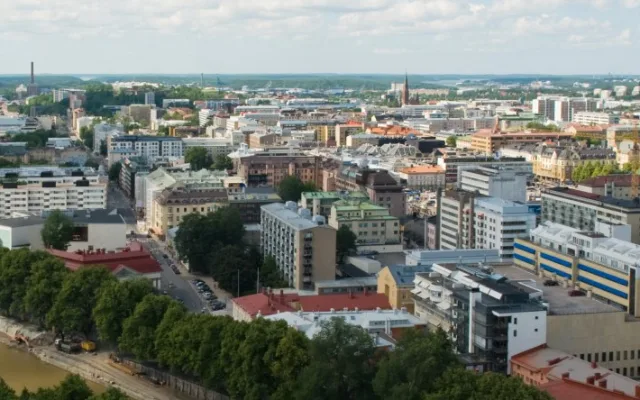
Finland's oldest city — Turku's medieval castle, cathedral, and the charming Aurajoki riverfront.
Wiki
Turku is Finland's former capital and oldest city, home to a medieval castle at the river mouth and the country's main cathedral. For independent travellers it is also a convenient gateway to the Finnish archipelago and the departure port for ferries to Stockholm — two days is enough for the city itself, with time to spare for day trips.
Worth visiting and how long
Turku is more compact and quieter than Helsinki, noticeably less touristy, and everything of note is concentrated along the Aura River. Two days is enough: one for the historic centre (castle, cathedral, riverside, museums), the second for Naantali with Moominworld, a trip into the archipelago, or a leisurely museum day if the weather turns.
If you are heading on to the Åland Islands or Stockholm, Turku is a natural stopover: Viking Line and Silja Line run night and day ferries from here.
Getting there and getting around
- From Helsinki — VR trains take about 2 hours; coaches (OnniBus and others) take a little longer but are cheaper. Tickets are best booked online in advance.
- Turku Airport is small, a few kilometres from the centre; a city bus connects them. It is often cheaper to fly into Helsinki and take the train from there.
- Ferry terminal — at the far end of the river, near the castle; a bus runs from the station and city centre, but you can also walk along the riverside.
You do not need a car in the city. The centre is walkable: the route along the Aura from the cathedral to the castle is about 3 km, a pleasant stroll along either bank. Föli city buses run with a unified ticketing system and a handy app; a city bike-share scheme also operates. The free little ferry Föri crosses the river all year round, carrying pedestrians and cyclists from bank to bank — a local institution in its own right.
What to see
Everything lines up along the river, so the route suggests itself — from the cathedral down to the castle.
- Turku Cathedral — the spiritual centre of the city and of Finland, standing on a rise on the east bank. Entry is usually free.
- Aura riverside (Aurapark) — the heart of the city. In summer, cafés and bar-restaurants operate aboard moored historic vessels on the water; in the evenings locals come out to stroll.
- Turku Castle — right at the river mouth, the largest medieval castle in Finland. Inside are rambling halls and a museum exhibition; allow a couple of hours.
- Aboa Vetus & Ars Nova — excavated medieval streets underground combined with contemporary art; a good option on a rainy day.
- Luostarinmäki — a district of wooden houses that survived the great fire of 1827, preserved as an open-air museum (open in the warm season).
- Forum Marinum and the Sibelius Museum — for those interested in maritime history and music respectively.
The Kauppahalli market hall, built in 1896, is not just an attractive Art Nouveau building but a practical place to eat: local soups, fish, pastries and coffee.
Around Turku
- Naantali, 16 km away — a charming coastal town; the main draw for families is Moominworld, open in summer. Föli buses connect the two.
- The Archipelago — the celebrated Archipelago Trail (Saariston Rengastie): a route through islands linked by bridges and small ferries, ideal by bicycle or car for a full day. Pleasure boats also run from the centre in summer.
When to go
The best time is late May through August: the riverside restaurant boats are open, archipelago ferries run, open-air museums operate, and the days are long. In the shoulder season and winter the city is quieter and cheaper, but much of the seasonal offering is closed and the pleasure boats stop running (the Föri itself operates all year). One winter highlight is the Christmas City tradition: Turku officially proclaims the Christmas Peace in late December.
Accommodation, money and food
Staying in the centre, within walking distance of the cathedral and riverside, means you barely need transport. Hostels and guesthouses exist, but Finland is not cheap overall: budget for Northern European price levels.
Ways to save:
- self-cater from supermarkets (Lidl is noticeably cheaper than the rest) and eat the weekday lunch deal — a hot dish with soup, salad and coffee costs considerably less than dinner;
- drink tap water — it is excellent and free;
- walk and use the Föri instead of paid transport.
Local things worth trying include fish soups, salmon, rye bread and seasonal berries. Water is free in cafés; tipping is not expected — service is included.
Common mistakes
- Visiting in winter expecting the archipelago and riverside bars — all of that is seasonal and closed.
- Underestimating alcohol prices: spirits are sold only at state-run Alko shops with limited hours; supermarkets carry only low-strength beer and cider.
- Trying to explore the archipelago without a plan — distances are significant, ferries run to a timetable; check your route and crossing times in advance.