Description
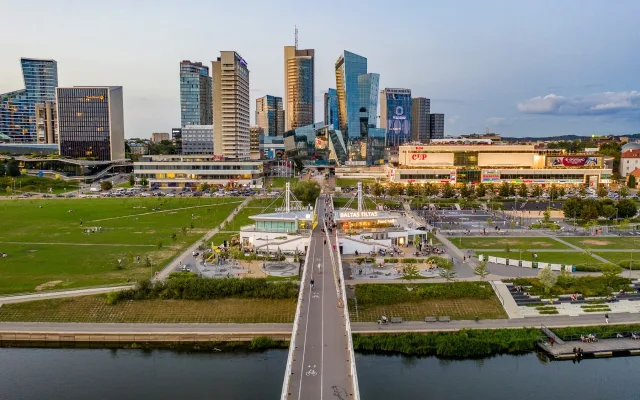
Baroque capital with the largest Old Town in Northern Europe, the Republic of Užupis, and a thriving street-art scene.
Wiki
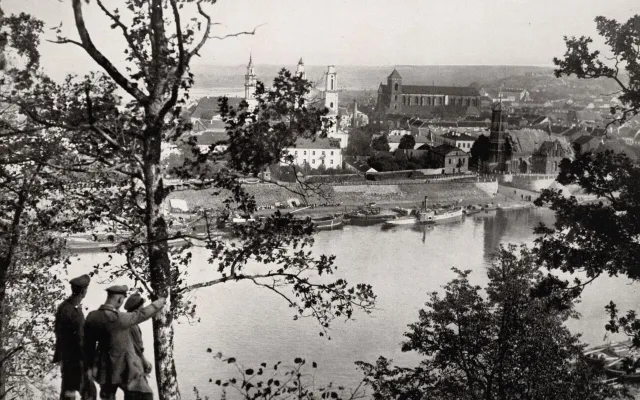
Vilnius is the capital and largest city of Lithuania, spread across a scenic valley at the confluence of the Neris and Vilnia rivers. Baroque splendour, medieval cobblestone streets and the forward-looking energy of a Baltic technology hub all meet here in one place.
Overview
Vilnius has a population of around 590,000, rising to nearly 800,000 in the wider metropolitan area. It is one of the greenest cities in Europe — parks, hills and river embankments make up a remarkable share of the urban area. The historic centre is a UNESCO World Heritage Site and is considered one of the largest surviving Baroque ensembles on the continent, with the Old Town covering more than 350 hectares.
The climate is temperate, transitioning between oceanic and continental. Winters are often frosty and snowy with short days; summers are mild and long, with sunsets well past nine in the evening. The best time to visit is from late spring to early autumn, when pavement cafés open and festivals are in full swing.
History and character
The first written mention of Vilnius dates to 1323, in letters from Grand Duke Gediminas inviting merchants and craftsmen to his capital. From then on the city grew as a multi-faith crossroads: for centuries Lithuanians, Poles, Jews, Russians, Belarusians, Tatars and Karaites lived here side by side. Before the Second World War, Vilnius was one of the greatest centres of Jewish scholarship and earned the name "the Jerusalem of Lithuania." This layered past is legible in the architecture — from Gothic and Renaissance through the Vilnius Baroque school, Classicism and Art Nouveau.
Main sights
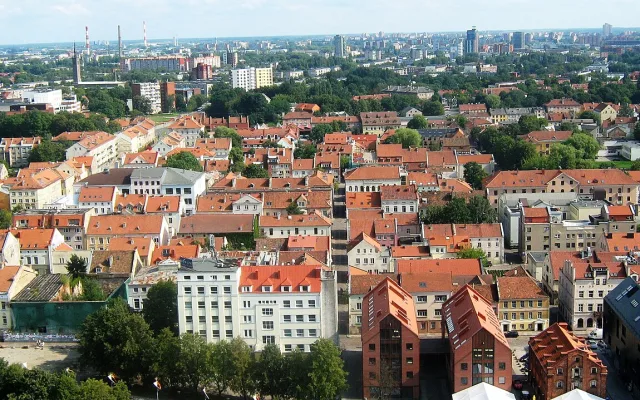
- Gediminas Tower — the surviving remnant of the Upper Castle on Castle Hill; the viewing platform offers a panorama of terracotta rooftops and spires.
- Cathedral Square and the Cathedral of Saints Stanislaus and Vladislaus — a grand neoclassical church with a free-standing bell tower; a tile inscribed Stebuklas ("miracle") is set into the pavement, where visitors traditionally make a wish.
- Užupis — a bohemian quarter across the Vilnia river that has playfully declared itself an independent "republic"; its constitution is engraved on mirrored plaques in dozens of languages, and a bronze Angel serves as its symbol.
- Aušros Vartai (the Gate of Dawn) — the only surviving city gate, topped by a chapel housing the revered icon of Our Lady of the Gate of Dawn, a major site of Catholic pilgrimage.
- St Anne's Church — a jewel of Flamboyant Gothic built from moulded brick, associated with a legend that Napoleon was so struck by it he wished to carry it back to Paris on his palm.
- The Bernardine complex, the Church of Saints Peter and Paul with its thousands of stucco figures, and the Baroque ensemble of Vilnius University — one of the oldest universities in Eastern Europe.
- MO Museum — a museum of modern Lithuanian art housed in a building designed by Studio Libeskind.
A distinct feature of the city is its vibrant street-art scene: murals cover the fire-walls of Užupis, the Šnipiškės district and former industrial quarters.
Day trips
A half-hour away lies Trakai — a former capital of the Grand Duchy with a red-brick island castle from the 14th–15th centuries set in Lake Galvė, arguably the most iconic image in the country. Half a day is enough to see the fortress, walk along the water and discover the culture of the Karaite community.
Food and drink
Lithuanian cuisine is hearty and distinctive. The signature dish is cepelinai — large potato dumplings filled with meat and served with a sauce of fried bacon and sour cream. Also popular are the potato pudding kugelis, the vivid pink cold beetroot soup šaltibarščiai served in summer, and kibinai — Karaite pastries that draw visitors all the way to Trakai. Artisan coffee shops and bakeries sit alongside new-wave gastro bars, and local breweries (Švyturys, Volfas Engelman and many craft labels) uphold a strong beer tradition.
As a rough guide, lunch at a city café costs around 10–15 € (about $12–17), dinner at a restaurant 20–40 € ($23–46), and a glass of beer 3–4 € ($3–5). Prices are as of 2026.
Practical information
Vilnius International Airport (VNO) is served by Ryanair, Wizz Air, Lufthansa, LOT, airBaltic and other carriers; a commuter rail link, buses and taxis connect it to the city centre. The main sights are concentrated in a compact centre that is easy to explore on foot. Buses and trolleybuses share a single ticketing system; a ride costs around 1 € (about $1.15), paid with the Vilniečio kortelė transport card or via a mobile app.
The currency is the euro. EU and Schengen-area citizens enter without a visa; travellers from other countries should check the current rules for their own passport. Three days is enough time to explore the Old Town and Užupis at a relaxed pace, climb to Gediminas Tower, visit a couple of museums and make a day trip to Trakai.