Where to go #
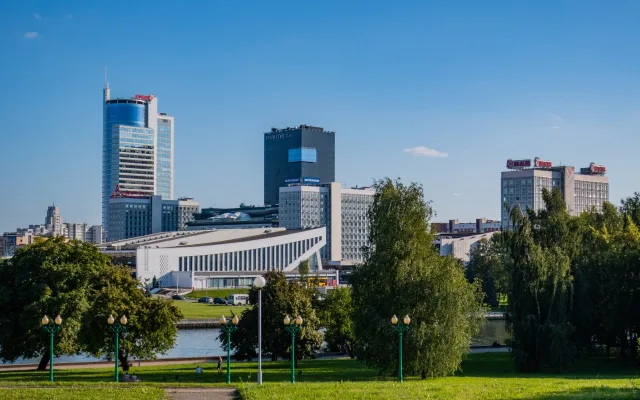
Minsk
Minsk is the capital of Belarus, a city of monumental Stalin-era avenues, the rebuilt Upper Town and Trinity Suburb, and the National Art Museum.
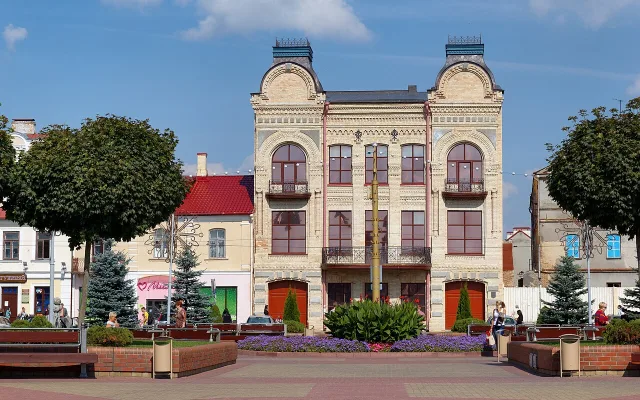
Grodno
Grodno is an ancient city in western Belarus, known for its castles, Catholic churches, and compact historic centre.
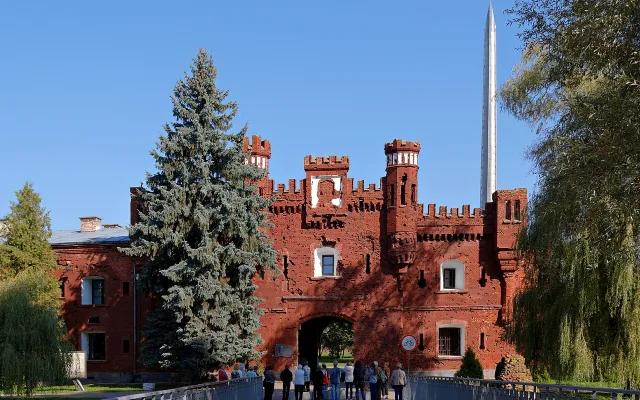
Brest
Brest is a city on the border with Poland, known for the Brest Fortress, its World War II memorial complex, and the pedestrianised Sovetskaya Street.
What to see #
The castles: Mir and Nesvizh are the two headline sights and work best as a single day trip. Mir is a stern brick fortress with corner towers; Nesvizh is closer to a palace, with a vast park behind it.
Brest Fortress: the memorial to the 1941 siege is overwhelming in scale, all colossal concrete and brickwork still pitted with bullet holes. The nearby Fifth Fort lets you climb through the dark casemates legally and unaccompanied.
Bialowieza Forest: the primeval woodland straddling the Polish border, where European bison are kept in large enclosures. You can cycle the forest tracks for a day and, oddly, call in on the local Father Frost.
Minsk Upper Town: the town hall and the churches around it are the historic heart of the capital. For the best view, go to the National Library and up to its observation deck, which looks over the entire city.
Independence Avenue: fifteen kilometres of Stalinist empire-style architecture, and one of the most complete ensembles of its kind anywhere. Trinity Suburb is reconstructed rather than original but conveys the older, tiled-roof Minsk.
Strana Mini: a museum of the country's landmarks in miniature. If your time is short it is a genuinely efficient way to work out what to see on a longer trip.
Prices #
Currency: Belarusian roubles (BYN) only. Paying in foreign currency is prohibited, so everything gets exchanged first. The notes and coins resemble euros closely enough that people misread denominations constantly.
Cards: this is the thing to plan around. Visa and Mastercard issued outside Belarus do not work here, in shops or at cash machines, so your usual card is dead weight. Bring your whole budget in cash.
What to bring: US dollars or euros in clean, undamaged notes. Exchange offices are everywhere in the cities, rates are honest and there are no hidden commissions, which is a pleasant contrast with much of the region.
Where cards do work: essentially nowhere for a foreign visitor. Assume cash for hotels, restaurants, museums, trains and taxis alike, and change money in reasonable amounts as you go rather than all at once.
Small notes: markets and souvenir stalls often cannot break a large bill. Keep coins and small denominations for transport and kiosks.
| Item | Price (USD) |
|---|---|
| Canteen lunch | 4.00 |
| Draniki in a restaurant | 7.00 |
| Coffee to go | 1.50 |
| Metro ride | 0.40 |
| Train ticket (sleeper) | 12.00 |
| Apartment for a night | 35.00 |
| Petrol, per litre | 0.90 |
| Loaf of bread | 0.70 |
| Beer in a bar | 2.50 |
| Castle entry | 6.00 |
| Fridge magnet | 1.20 |
| Taxi across town | 3.00 |
| Bottle of water | 0.50 |
| Apples, per kilo | 1.10 |
Getting around #
Trains: the railway is the most comfortable way between the main cities and absurdly cheap by European standards. The business-class fast services are worth the small premium, and tickets can be bought online through the national operator.
Buses: scheduled coaches and marshrutka minibuses reach even small villages. Booking ahead matters at weekends and holidays, when the popular routes fill.
Minsk metro: three lines, clean and fast, with stations that are worth seeing in their own right. Buy a token or a paper ticket at the counter, since foreign cards will not work at the gate.
Taxis: local ride-hailing apps operate in every regional centre and fares are very low. Register with a local phone number and expect to pay the driver in cash, because a foreign card cannot be linked.
Car hire: available in Minsk with an international driving permit alongside your own licence. A car makes the castle circuit far easier than piecing it together by bus.
Roads: the highways are in excellent condition, though filling stations are more spread out than you might expect. Note that many major routes are tolled for foreign-plated vehicles.
Distances: the country is compact. Minsk to Brest is about four hours by train, Grodno and Vitebsk rather less, so a single base with day trips works well.
Where to stay #
Booking: the big international platforms work poorly or not at all here. Book directly with hotels by email or phone, or through a local agency, and confirm in writing before you fly.
Apartments: short-term flat rental is the most popular option among independent travellers. For a modest sum you get a renovated place with a kitchen in the centre of town.
Hotels: the old state-run hotels have Soviet interiors and correspondingly low prices, which some people enjoy. The newer boutique hotels in Minsk and Grodno cost more and deliver European standards.
Agro-usadby: rural guesthouses with a banya and home cooking, and the most distinctive way to stay in this country. Ideal near Bialowieza or in the lake district in the north.
Location: in the capital, stay near a metro station or on Independence Avenue. In regional cities, the historic centre puts everything within walking distance.
Payment: almost all private hosts want cash in Belarusian roubles, and your card will not save you. Agree the payment method in advance and arrive with the money already changed.
Language: reception staff in Minsk hotels generally speak some English; in smaller towns, rather less. Have your booking details written down in Russian if you can.
What to eat #
Draniki: potato pancakes are the foundation of the cuisine, served a dozen different ways. Order them with machanka, a thick meat gravy you dip the hot pancakes into, which is the version people argue about.
Soups: kholodnik, a cold beetroot soup on kefir, is a summer rescue, and it arrives an alarming shade of pink. In winter there is vereshchaka, rich and heavy. Portions everywhere are large.
Meat: kalduny, stuffed potato dumplings, and hand-stuffed homemade sausages are the hearty end of the menu. Meat baked in a clay pot with mushrooms and sour cream is on every traditional menu.
Where to eat: the Vasilki chain does straightforward home cooking at low prices and is the reliable default. For something more considered, try Kukhmistr or the modern Belarusian places in central Minsk.
Markets: Komarovka in the capital is the place for salo, cheeses and sweets. Only buy dairy and cured meat from proper refrigerated counters, and note that most stalls take cash only.
Drinks: try kvass, birch sap and the herbal spirit krambambulya. Belarusian craft beer is unexpectedly good, particularly in the bars along Oktyabrskaya Street.
Safety #
The general picture: street crime is minimal and walking at any hour feels safe. Stations and the metro have a visible police presence at all times, which is reassuring or not depending on your temperament.
Photography: do not photograph government buildings, military sites, border infrastructure or anyone in uniform. This is taken seriously and can lead to your phone being examined and a long conversation.
Politics: avoid discussing politics with strangers and stay away from any gathering or demonstration. Comments made online can also attract attention, so keep your social media quiet while you are in the country.
Advisories: read your own government's travel advice carefully before booking, since several governments currently advise against travel to Belarus and consular assistance may be limited.
Documents: carry your passport or a good photograph of it. Street checks are uncommon, but foreign nationals are legally required to be able to identify themselves.
Roads: pedestrians are fined for crossing away from a crossing just as readily as drivers are for speeding. Wait for the green man even on an empty street.
In the forest: stay on marked trails in the reserves, and keep your distance from bison, which are large, fast and not remotely tame.
Etiquette and culture #
Character: Belarusians are genuinely hospitable and notably calm. Politeness and quiet are valued, and a loud group in a public place draws visible disapproval.
Cleanliness: the immaculate streets are a point of national pride rather than a myth. Dropping litter earns you a stare, and quite possibly a remark from a passer-by.
The war: memory of the Second World War is sacred, and roughly a quarter of the population died in it. At memorials, keep quiet, dress soberly and do not treat the site as a backdrop.
Religion: Catholic and Orthodox churches often stand on the same square. Behave modestly inside, and women may want a headscarf for Orthodox churches.
Language: Belarusian is melodic and appears on signs and place names everywhere, though Russian dominates in speech. Using a few Belarusian words is noticed and appreciated.
Festivals: folk traditions such as Kupalle are still celebrated seriously, with fire-jumping and fortune-telling on the shortest night of the year. If your trip coincides, go.
Connectivity #
Operators: three networks, MTS, A1 and life:). A foreigner needs a passport to buy a SIM, and registration at an official shop takes about ten minutes.
Data: mobile internet is cheap and good across the country, and all three operators sell tourist bundles with generous allowances and no contract.
Roaming and eSIM: international roaming here is expensive and some home operators exclude Belarus altogether, while eSIM coverage is patchy. A local SIM is the practical answer.
Wi-Fi: free in most cafes, shopping centres and hotels, and available in the Minsk metro, though authentication usually needs a local phone number.
Messaging: the usual apps work and video calls are fine. Locals use Telegram and Viber for everything, including booking a table or an excursion.
Language: English is limited outside Minsk hotels and the main museums. A translation app with Russian downloaded for offline use is worth more here than in most of Europe.
Coverage: signal drops along some rural roads and in the forests, so download offline maps before leaving the cities.
Phrasebook #
| English | Belarusian | Pronunciation |
|---|---|---|
| Good day | Dobry dzen | DOH-bry dzen |
| Thank you | Dziakuj | DZYAH-kooy |
| Please | Kali laska | kah-LEE LAH-skah |
| Sorry | Prabachtse | prah-BAHCH-tseh |
| Goodbye | Da pabachennia | dah pah-bah-CHEN-nya |
| Yes / No | Tak / Nie | tahk / nyeh |
| Good | Dobra | DOH-brah |
| How much is it? | Kolki kashtuye? | KOL-kee kash-TOO-yeh |
| Delicious | Smachna | SMAHCH-nah |
| Where is the station? | Dze vakzal? | dzeh vahk-ZAHL |
| The bill, please | Rakhunak, kali laska | rah-KHOO-nak |
| Beer | Piva | PEE-vah |
| Water | Vada | vah-DAH |
| Bad | Drenna | DREN-nah |
| Help | Dapamazhytse | dah-pah-mah-ZHY-tseh |
| I understand | Razumeyu | rah-zoo-MEH-yoo |
| Bus stop | Prypynak | pry-PY-nak |
| Right now | Zaraz | ZAH-raz |
| Cash, money (slang) | Hroshyk | HROH-shyk |
| Cool (slang) | Fayna | FY-nah |
Good to know #
Getting there: for most foreign visitors the route in is a flight to Minsk National Airport, with connections through Istanbul, Dubai or the Gulf. The land border with Russia has no international checkpoints for third-country nationals, so it cannot be used to enter or leave.
Insurance: medical cover is formally compulsory for foreigners and can be bought at the airport on arrival if you turn up without it. Given that treatment is charged for, have a policy anyway.
Health: pharmacies are plentiful and most familiar medicines are sold without prescription. Minsk tap water is safe but tastes heavily of chlorine, so most people buy bottled.
Plugs: European type C and F sockets at 230 volts. British, American and Australian travellers need an adapter.
Shopping: GUM and TSUM in Minsk sell good local linen and knitwear at prices that seem like a mistake. Straw craft, wooden ware and cranberries in sugar are the classic things to take home.
Post: you can send a postcard from any Belpochta office or from the airport, and the blue postboxes are on most central streets.
When to go: May to September for warmth and long evenings; December for snow and Christmas markets. February is cold enough to reshape your plans.