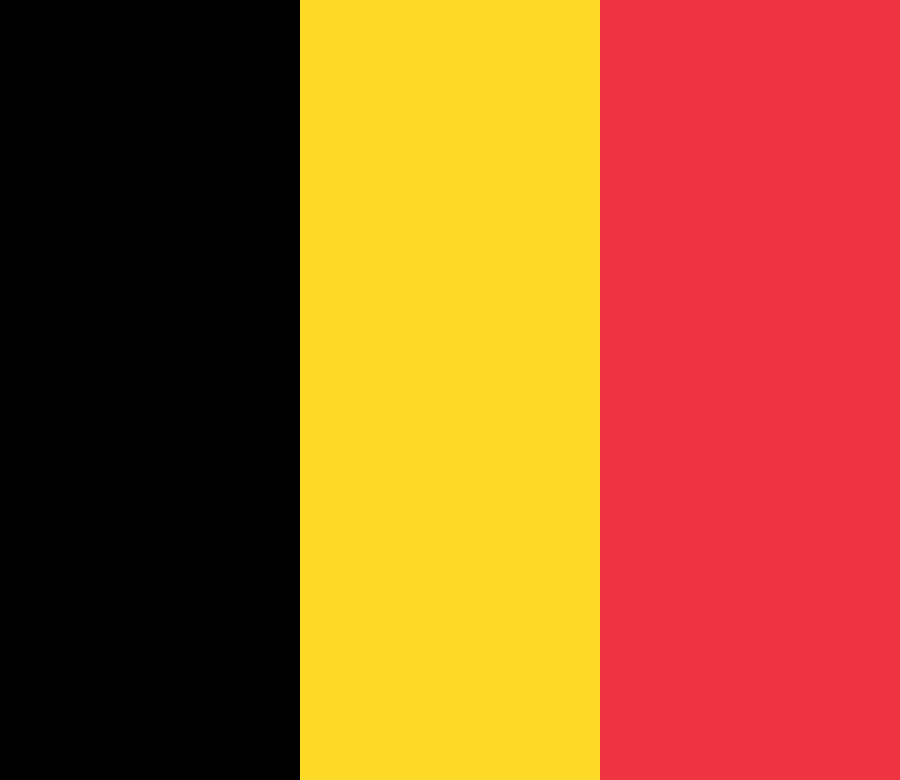
Belgium
BEA small country with a vast appetite — the world capital of chocolate, beer, waffles and chips. Belgium is fairytale Bruges and its canals, cosmopolitan Brussels around the Grand-Place, student Ghent and stylish Antwerp. Four hundred breweries, three language communities and arguably the best food in northern Europe, all packed into 30,500 km².
Where to go #
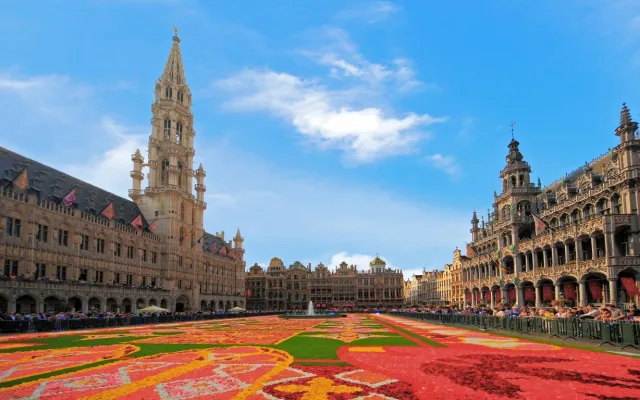
Brussels
Brussels is Europe's de facto capital, home to the UNESCO-listed Grand Place and the iconic Atomium. The city is also celebrated for what many consider the world's finest waffles and chocolate.
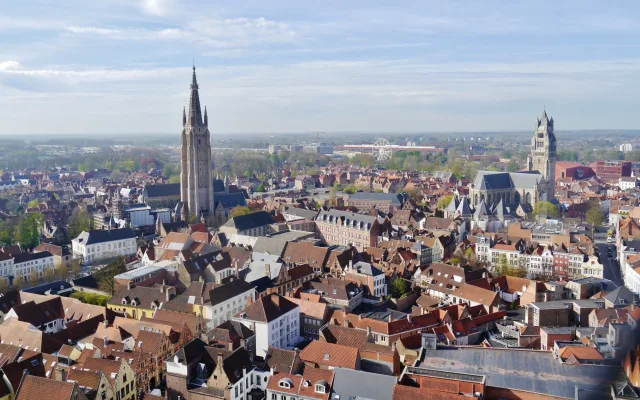
Bruges
Bruges is a medieval UNESCO-listed city where you can explore canals, visit the De Halve Maan brewery, and wander its remarkably preserved historic core.
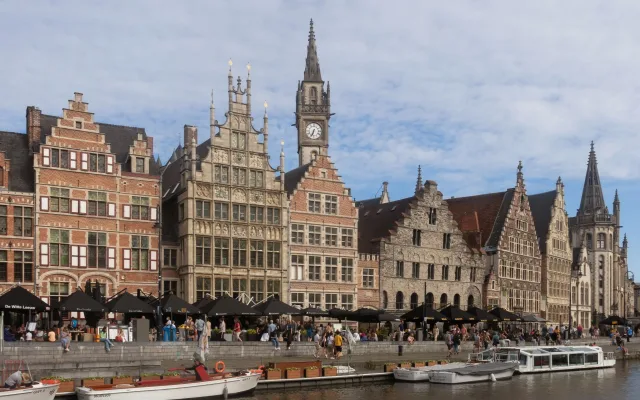
Ghent
Ghent is a city where you can see medieval landmarks such as Gravensteen and the Van Eyck Ghent Altarpiece, along with canals to stroll along — all without the crushing tourist crowds.
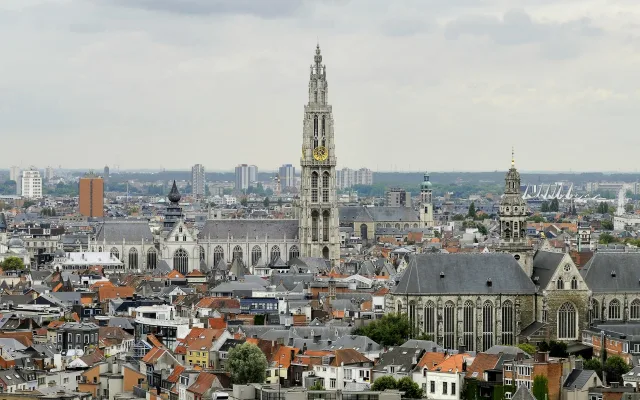
Antwerp
Antwerp is a city in Belgium known as the diamond capital of the world. Visit the Rubenshuis, the Gothic Cathedral of Our Lady, and explore the fashion and design legacy of the Antwerp Six.
What to see #
The main square: the Grand Place in Brussels belongs on every route, with its gilded guildhall facades. Give it a couple of hours to take in the Gothic detail and the archangel on the town hall spire.
The city symbol: the Manneken Pis usually disappoints on size, but seeing whichever of his 900 costumes he is wearing is a local ritual. He stands on the corner of Rue de l'Etuve and Rue du Chene, permanently ringed by visitors.
Medieval Bruges: the Belfort tower and its 366 steps are a good excuse to test your legs for a panorama over Flanders. The Lake of Love is nearby, where you can feed swans away from the market square crush.
The fortress in Ghent: Gravensteen looks exactly as a citadel should, with severe walls and a water-filled moat. Inside are a museum of justice and an armoury that drop you straight into the age of knights.
The world in miniature: Mini-Europe shows the continent's landmarks at one twenty-fifth scale. An hour takes you from the Eiffel Tower to Big Ben with sound effects along the way.
A natural wonder: the Hallerbos forest carpets itself in wild bluebells each spring, turning blue-violet for a few weeks. Several marked routes cross it, and the shortest is easy enough with children.
At the seaside: Ostend has a thermal palace and the open-air Raversyde museum. The beaches come with good infrastructure and the promenade is made for aimless walking under the gulls.
Prices #
Currency: the euro, and Belgium has moved almost entirely to card payment. Visa and Mastercard are accepted everywhere, and some cafes and museums no longer take cash at all.
Cash: keep some euros for markets, small souvenir shops and tips. Avoid 200 and 500 euro notes, which even banks take reluctantly and no cafe will break.
ATMs and fees: cash machines are easy to find, and a Wise or Revolut card removes most of the conversion cost if your account is not in euros. Amex is far less widely accepted than Visa or Mastercard.
Contactless: phone payment works on trains, trams and in shops, and the domestic Bancontact system sits alongside the international networks, so your card still works everywhere it matters.
Tipping: service is normally included, but rounding up or adding about 5% in cash is good manners. In taxis and hotels it is entirely your call, with no fixed convention.
| Item | Price (USD) |
|---|---|
| Lunch in an inexpensive cafe | 23 |
| Dinner for two with wine | 92 |
| Fast food meal | 14 |
| Craft beer 0.5 l | 6 |
| Cappuccino | 4.5 |
| Water 1.5 l | 1.3 |
| Train journey (1 hour) | 20 |
| Museum ticket | 11 |
| Box of chocolates (250 g) | 16 |
| Belgian waffle with topping | 7 |
| Kilo of cheese in a shop | 17 |
| Hostel dorm bed | 38 |
| Car hire per day | 98 |
| Litre of petrol | 1.9 |
| Fridge magnet | 5 |
Getting around #
Getting there. Brussels is one of the easiest cities in Europe to reach: Eurostar from London, high-speed trains from Paris, Amsterdam and Cologne, and flights from everywhere, including direct services from the US and Canada. Budget carriers often land at Charleroi instead, an hour south, from where a dedicated shuttle bus runs to the capital.
Railways. SNCB trains link every major city and make the country feel like a single small place. The station sits directly under Brussels airport, 15 to 20 minutes from the centre.
City transport. Brussels has a metro, trams and buses, paid for with a MOBIB card or contactless. Single paper tickets cost more, so a 24- or 48-hour pass pays off quickly.
Regional buses. In Flanders, De Lijn runs the buses and its app is the easiest way to buy. Wallonia is harder, with sparser services, and in the south a car sometimes becomes necessary.
Cycling. Belgium is built for bicycles, with paths shadowing almost every intercity road. You can buy a used bike for 60-100 euros or rent a city bike at official stands.
Taxis. Airport to city centre runs about 45 euros, which makes sense with heavy luggage. The international ride apps operate in the cities, but fares bite and the tram is a fraction of the price.
Distances. Nothing is far here: Brussels to Bruges is an hour by train, Ghent half that, which is why most visitors base themselves in one city and day-trip.
Where to stay #
What to book. For economy, choose city guesthouses or youth hostels, which run informal and friendly. A dorm bed in Brussels is around 35 euros and a three-star room 80-110 euros.
Location. In the capital look near the stations for convenience, but check the immediate streets before booking. Hotels in central Bruges are overpriced, and experienced travellers base themselves in Ghent, where rooms cost less and the neighbours are twenty minutes away.
Booking. The international platforms all work normally. Belgian hotels usually want card details as a guarantee even when you intend to pay cash on arrival.
Extras. Breakfast in city hotels typically costs an additional 12-15 euros for a standard European spread. Check whether an old Bruges building has a lift, because otherwise the suitcase goes up a narrow staircase.
Abbey stays. A genuinely unusual option is sleeping at a Trappist abbey, which takes guests for a modest donation. Silence is enforced and lights go out early, but it is the only way to see monastic life from inside.
Camping. Cyclists have official sites on the edges of towns for 15-20 euros. Wild camping is illegal in Belgian forests and enforced, so the official pitches are the only route.
Language. English is spoken at every reception desk in the country, so nothing about booking or checking in is difficult.
What to eat #
Waffles. There are two kinds: the dense sugary Liege waffle and the light rectangular Brussels one. Do not buy them from the stalls right beside the Manneken Pis, where they are often dried out and double the price of the next street over.
Frites. Locals call them frit, fry them twice in beef fat and serve them in a paper cone under a mountain of mayonnaise. In Brussels, join the local queue at the Maison Antoine kiosk on Place Jourdan.
Seafood. Mussels steamed in white wine or cream, served in the pot, are the classic of the north and the coast. The season starts in July when the shellfish are big, and they come with frites and a glass of blonde ale.
Chocolate. The country's pralines and truffles set the world standard. Visit Choco-Story to watch them being made and taste different cacao before you spend real money in the boutiques.
Trappist beer. True monastic beer is brewed under the monks' supervision, and Belgium has more such breweries than anywhere. Try the legendary Westvleteren, or the strong beers from Rochefort and Chimay.
Glassware. Every beer here has its own glass, and pouring an ale into the wrong one counts as a crime. Serious bars will refuse an order if the correct glasses are all in use.
Vegetarians. Note that frites are traditionally fried in beef fat, so ask if that matters to you; most cities have plenty of vegetarian kitchens otherwise.
Safety #
The general picture. Belgium is safe, but stay alert in Brussels and Antwerp. Pickpockets work the central squares and the metro, relying on visitors being absorbed by the architecture.
Around the stations. Take care near Brussels Nord and Midi after dark. These areas are run-down, attract noisy groups and feel considerably less comfortable than the rest of the city.
Bicycle theft. This is the national scourge, with bikes stolen in broad daylight. Use two good locks, fix the frame to something immovable and never leave a bike unattended in an unguarded rack.
Scams. In tourist areas you meet fake police and self-appointed helpers offering to work the ticket machines. Use official counters only and do not engage with strangers demanding to see documents.
On the road. Drivers are generally courteous, but cyclists have priority and ride fast. Look properly before stepping onto a bike lane, which is the single most common way visitors get hurt.
Healthcare. The system is excellent, but without insurance any consultation costs hundreds of euros. If you fall ill, call your insurer first so they direct you to the right clinic and confirm payment.
Advisories. Check your own government's travel advice before you go, mostly for anything affecting rail strikes or large events in the capital.
Etiquette and culture #
The cult of beer. Beer here is not a drink but part of national identity, occupying the place wine holds in France. An ordinary cafe's beer list can outweigh its menu, and debating the nuances of a lambic or gueuze over lunch is entirely normal.
Comics. Brussels is the capital of the drawn story, birthplace of Tintin and the Smurfs. Huge comic murals decorate walls across the city, and the Belgian Comic Strip Center is essential for anyone who cares.
The language question. The country divides into Dutch-speaking Flanders and French-speaking Wallonia. Brussels is officially bilingual, but opening in French to a Fleming in Antwerp can get you a cool reception.
Cycle racing. The second sport after football, with fans occupying the hills of the Ardennes at weekends. A group in bright jerseys may well ride seventy kilometres for one beer at a favourite abbey.
Monastic rule. Trappist monasteries run on work, prayer and silence. Visiting one, dress modestly, keep quiet and remember that brewing exists only to cover the community's costs.
Festivals. Belgians love carnivals and flower parades, the most famous being the carpet on the Grand Place. Ghent holds a music festival every decade that draws hundreds of thousands and stops the city entirely.
Connectivity #
Languages. There are three official ones: Dutch, French and German. Northern cities such as Bruges are Flemish-speaking, the south and the capital lean French, and English is understood almost everywhere.
English. Young people and anyone in hospitality speak it well, so ordering food or finding a platform is never a problem. In rural Wallonia, a few French phrases make life considerably easier.
Etiquette. Belgians value politeness and any exchange should open with a greeting in the local language. Say hello entering a shop or cafe and goodbye when you leave, which reads as basic respect.
Conversation. Avoid the political friction between Flanders and Wallonia, which is complicated and sensitive. Chocolate quality and rare beer styles, on the other hand, will win anyone over.
Distance. People here are reserved and value personal space, so do not jump straight to familiarity. Loud conversation on public transport draws disapproving looks.
SIM and data. Free Wi-Fi is in most cafes and stations, but for navigation buy local data. Orange and Proximus sell tourist bundles, and an eSIM from Airalo or a similar provider works just as well.
Roaming. An EU SIM roams here at no extra cost. Plans from the UK, US or Australia usually charge a daily fee, so check the cap before you rely on it.
Phrasebook #
| English | Dutch | Pronunciation |
|---|---|---|
| Hello | Hallo | ha-LOH |
| Bye | Dag | dakh |
| Thank you | Bedankt | buh-DANKT |
| Please, here you go | Alstublieft | AHL-stu-bleeft |
| Beer | Bier | beer |
| A small beer | Pintje | PIN-tyuh (slang) |
| The bill, please | De rekening, alstublieft | duh RAY-kuh-ning |
| Yes | Ja | ya |
| No | Nee | nay |
| Where is the toilet? | Waar is het toilet? | vahr is het twa-LET? |
| Help | Help | help |
| Chip shop | Fritkot | FRIT-kot (slang) |
| Delicious | Lekker | LEK-ker |
| Rotten weather | Kutweer | KUT-vayr (slang) |
| Mate, buddy | Maat | maht (slang) |
| Cool, great | Tof | tof (slang) |
| Sorry | Sorry | SOR-ree |
| Do you speak English? | Spreekt u Engels? | spraykt oo ENG-uls? |
| Chocolate | Chocolade | sho-ko-LAH-duh |
| Exit | Uitgang | OWT-khang |
Good to know #
Apps. Download the official SNCB railway app for tickets and live timetables. For Brussels, STIB-MIVB gives you metro routes and tram arrival times.
Navigation. Maps.me and Google Maps work well in the cities, but for cycling routes use OsmAnd. Every Belgian cycle path is numbered and signposted, so getting lost between towns is almost impossible.
City cards. The Brussels Card covers dozens of museums plus restaurant discounts over 24, 48 or 72 hours. Bruges and Ghent have equivalents, and they pay for themselves after three or four sights.
Beer apps. To avoid choosing badly in a bar, use Untappd or Ratebeer. They help you find rare Trappist ales and read other people's notes before committing to an expensive aged lambic.
Opening hours. Most shops and pharmacies close on Sundays and museums often close on Mondays. Restaurant kitchens shut between lunch and dinner, roughly 14:30 to 18:00, when only drinks are available.
Power. Standard European type C and E sockets at 230 volts. Travellers from the UK, US, Canada or Australia need an adapter.
Weather. It rains in every season, so a compact umbrella or a light waterproof belongs in the day bag regardless of the forecast.