

Botswana
Botswana is among the most stable and safest countries in Africa, home to the Okavango Delta and the largest elephant herds on earth. It has staked everything on exclusive ecotourism: few visitors, untouched wilderness, high prices. The Kalahari, the Makgadikgadi salt pans and Chobe National Park are worth flying halfway round the world for.
Where to go
#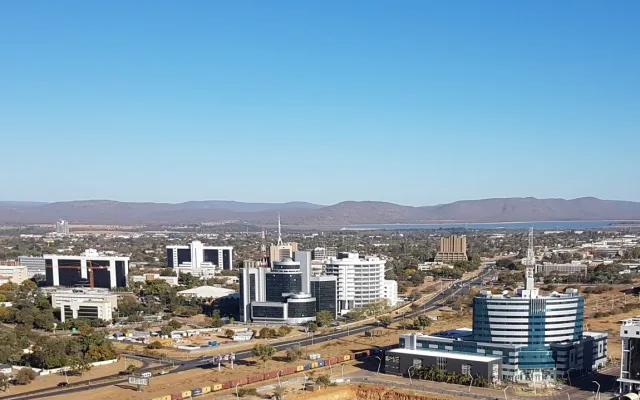
Gaborone
Gaborone is the capital of Botswana, home to the National Museum and the Three Dikgosi Monument. It is also the starting point for journeys to the Okavango Delta.
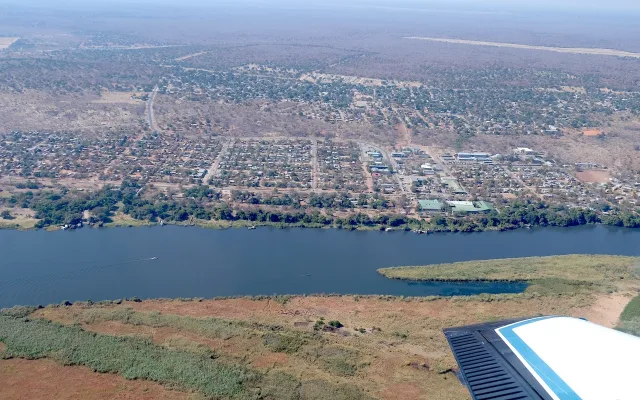
Kasane
Kasane is the town safari routes run through, boat trips included. It sits beside the largest concentration of elephants in the world.
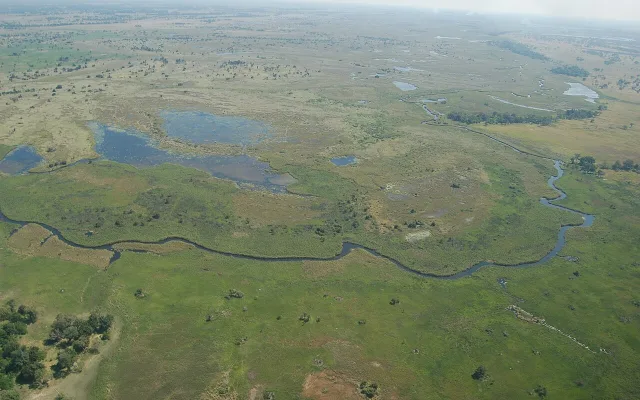
Maun
Maun is a town that serves as the jumping-off point for safari charters and mokoro tours into the Okavango Delta.
What to see
#Where to go first: the Okavango. The delta is the heart of the country, a river that dissolves into the sands of the Kalahari. Take a mokoro excursion so you can glide silently past hippos.
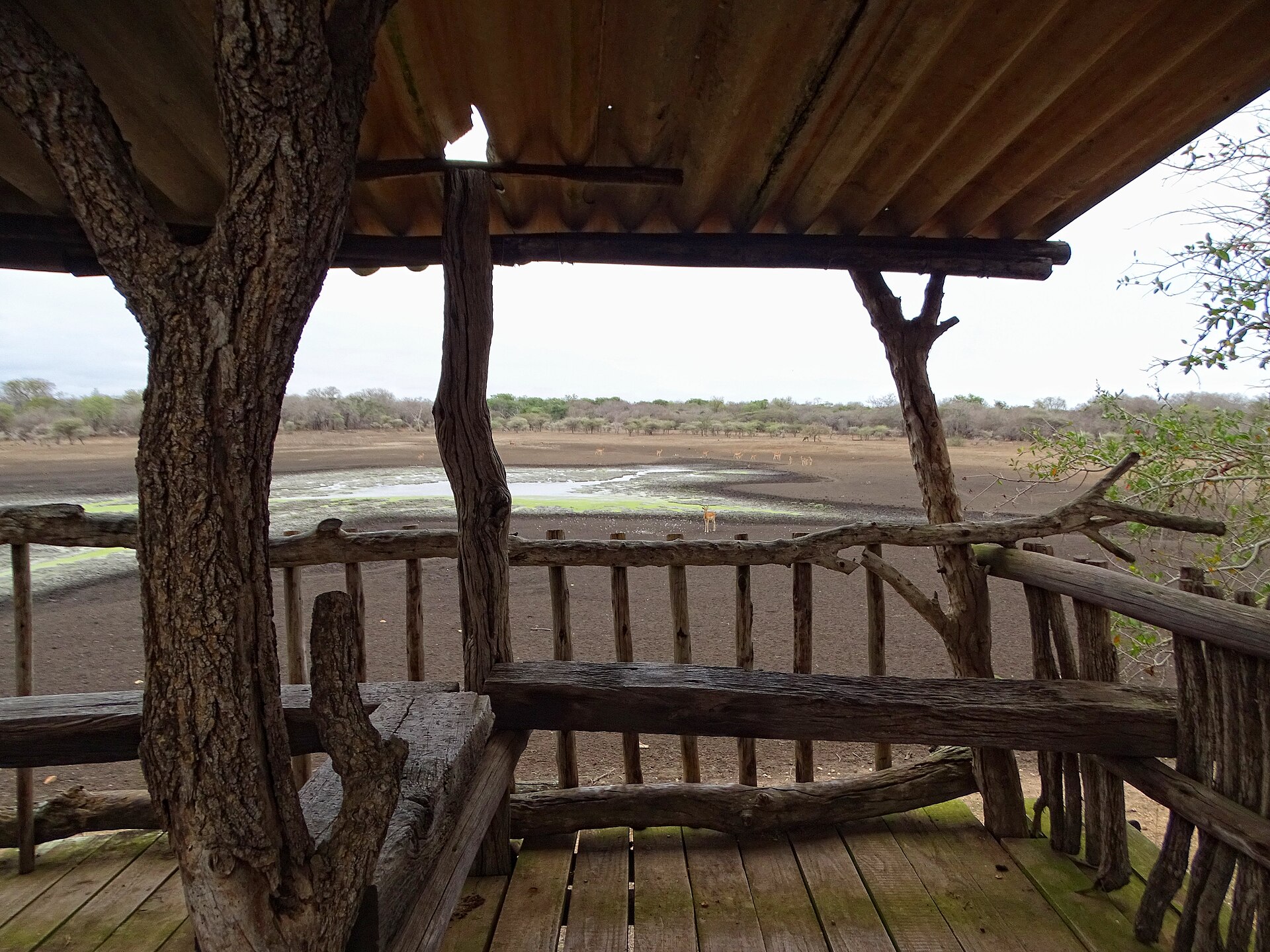
What to see: Chobe National Park. The elephant numbers are hard to believe. On a river safari you watch these giants swim across the channels right in front of the boat.
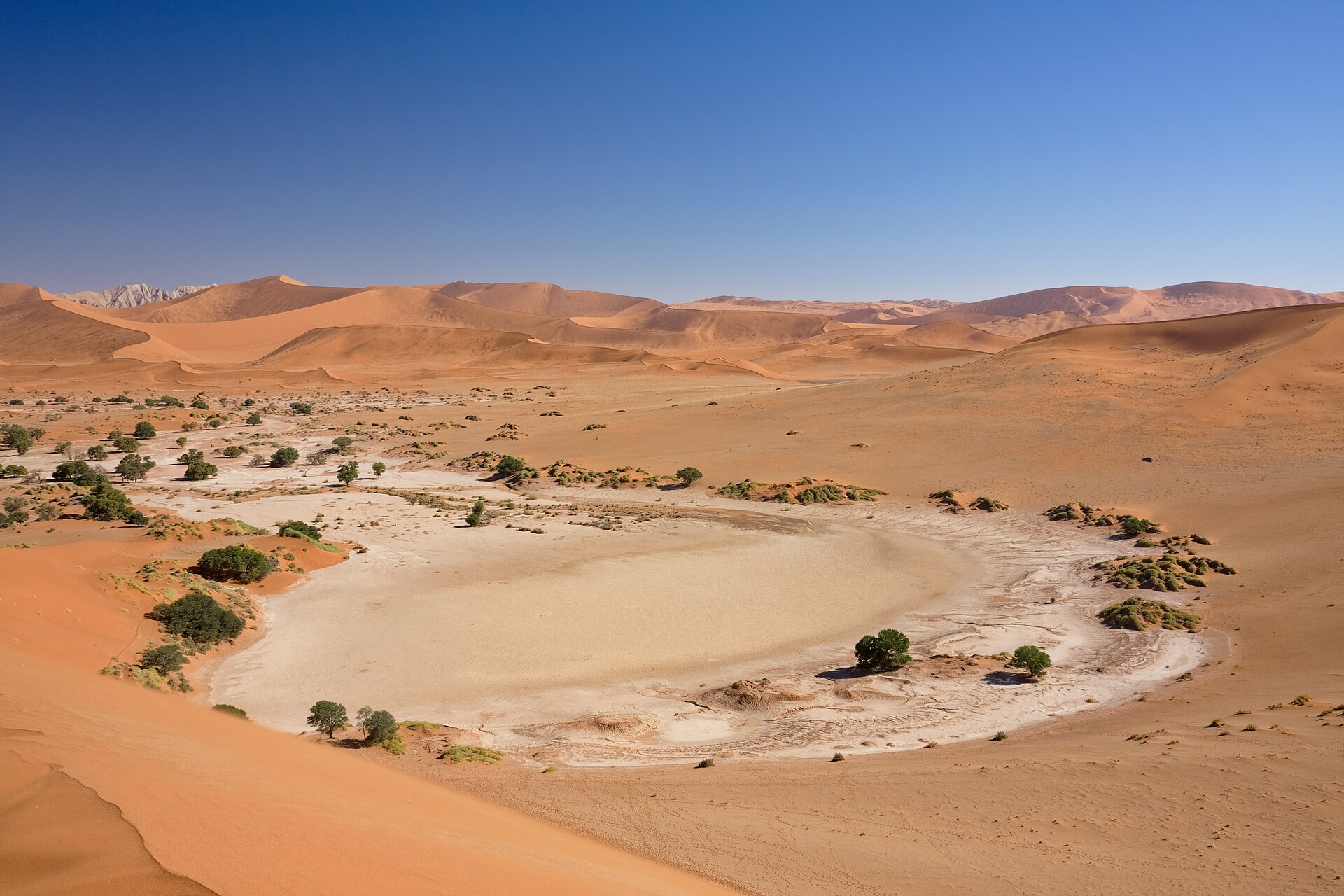
Makgadikgadi salt pans. Surreal white landscape stretching past the horizon. In the dry season the silence is total, and at night the stars look unnaturally close.
Tsodilo Hills rock art. The Louvre of the desert, doable in a day. Four rock faces hold thousands of paintings, some of them more than a hundred thousand years old.
Moremi Game Reserve. Protecting the eastern part of the delta, this is the best area for a self-drive safari in a 4x4, provided you are ready for deep sand and water crossings.
The Central Kalahari. One of the largest reserves in the world, and where to go for black-maned lions and meerkats against an endless savannah.
Baines' Baobabs. Standing on Nxai Pan, these trees look frozen in time. Explorers described them in the nineteenth century and they have barely changed since.
Prices
#Currency: the pula (BWP) is one of the most stable currencies on the continent. One pula is 100 thebe, with notes up to 200 and coins in various denominations.
Cards: in the cities, Visa and Mastercard work almost everywhere from supermarkets to petrol stations. Out in the bush, and to pay park entry fees, you need cash pula every time.
Exchange: bring US dollars, and note that notes printed before 2009 are often refused. Changing at a bank in Gaborone or Maun beats the airport rate comfortably.
ATMs: machines in the towns dispense pula against foreign cards, but they are scarce once you leave the tarred roads, so draw what you need before setting off.
Tipping: about 10% in restaurants. Safari guides and mokoro polers are usually given 10 to 20 dollars a day depending on the service.
| Item | Price (USD) |
|---|---|
| Lunch at a local cafe | 4 |
| Fast food combo | 6 |
| Dinner for two | 30 |
| Cappuccino | 2.5 |
| Beer in a bar (0.5 l) | 2 |
| Litre of petrol | 1.1 |
| Local SIM card | 1 |
| 1 GB of mobile data | 2.5 |
| Short taxi ride | 5 |
| Bus Gaborone to Maun | 18 |
| 4x4 hire per day | 70 |
| Park entry per person per day | 15 |
| Campsite pitch | 10 |
| Mokoro excursion | 50 |
Getting around
#Getting there. Most travellers connect through Johannesburg, which has nonstop flights from London, Frankfurt, Amsterdam and several US cities, then a short hop to Maun or Gaborone. Addis Ababa with Ethiopian Airlines is the other reliable routing, and Dubai works from Asia and Australia.
Intercity buses. A network links every major town, with operators such as Mokoka's or NKK Express running cheap scheduled services.
Combis. Minibuses run within towns and between villages. They are the cheapest way to move and leave when every seat is full, not before.
Domestic flights. Air Botswana connects Gaborone, Maun and Kasane, which saves enormous amounts of time if your route spans different parts of the country.
Taxis. In Gaborone cars have no meters, so agree the price before you get in. A ride within the centre normally costs a few dollars.
Car hire. For the reserves a high-clearance 4x4 is not negotiable. An ordinary car is fine only on the tarred highways.
Driving conditions. Traffic drives on the left, and outside towns wild animals cross the road constantly. Avoid driving after dark, which is genuinely dangerous.
Hitching. In rural areas giving lifts is normal practice. Drivers often expect a small payment, roughly what the combi would have cost.
Where to stay
#Town guesthouses. Maun and Kasane are full of comfortable places run by local owners. It saves money and buys you useful advice you will not find online.
Lodges. Safari lodges are expensive but deliver total immersion in the landscape. There are cheaper options on the fringes of the parks if you skip the luxury.
Camping. For an independent traveller this is the best choice. State campsites inside the parks have toilets and showers, but you must book them six months ahead.
Booking. The big platforms work fine, though in wild areas it is better to email owners directly, since many small lodges never list their rooms on aggregators.
Camp rules. Campsites inside the parks are unfenced. At night elephants or hippos walk between the tents, which is exactly why you do not step outside.
City hotels. Gaborone hotels mostly serve business travellers. They come with dependable internet and breakfast included in the rate.
Short-term rentals. Apartments through the international platforms exist in the capital, which suits a stay of several days in Gaborone.
What to eat
#Seswaa is the national dish. Beef boiled until it falls into strands, served with thick sorghum porridge. Filling, cheap and loved by everyone here.
Braai. The grill tradition arrived from the neighbours and settled in permanently. Juicy boerewors sausage and steaks over coals are a fixture of any Sunday.
For the adventurous. Fried mopane worms count as a delicacy. They are crunchy, high in protein and taste somewhere between nuts and dried meat.
Sides. Almost every meal comes with morogo, a stew of wild spinach and vegetables. It is a genuinely good addition to meat or to bogobe maize porridge.
Game meat. Licensed restaurants serve kudu and impala legally. The meat is very lean and considerably more interesting than beef.
Drinks. The local St Louis beer handles the heat well. For something more traditional, try mubisi, a mildly alcoholic drink made from marula fruit.
Where to eat. Towns have food courts serving familiar things like grilled chicken. In Maun, the cafe by the airport draws the most interesting crowd in town.
Safety
#The general picture. Botswana is rightly considered the calmest country in the region. Hostility towards visitors is minimal and police corruption is essentially absent.
Wildlife is the real hazard. The danger here comes from animals, not people. In the reserves never get out of the vehicle, and never feed monkeys, which can turn nasty fast.
Towns. In Gaborone and Francistown apply normal city sense. Do not leave bags visible in a car, and avoid the areas around bus stations at night.
Water. Tap water in the big towns is fine to drink, but in the bush use bottled only. Always carry far more clean water than you think you will need.
Roads. The main risk is hitting a cow or an elephant. Animals are unbothered by cars and step onto the road in complete darkness without warning.
Insects. In the rainy season mosquitoes are active and carry disease. Use coils in tents, wear covered clothing at dusk and apply a high-DEET repellent.
Getting help. Any police officer will help and they all speak English. Private medical rescue services operate for visitors, and your insurance should cover them.
Etiquette and culture
#Greetings. People greet everyone here. A polite "Dumela, Rra" to a man or "Dumela, Mma" to a woman changes the tone of any encounter instantly.
Gestures. When handing over an object or money, use your right hand while supporting it at the elbow with the left. It reads as deep respect.
Pace. Botswana runs on "go siame", meaning it is all fine. Nobody hurries, so bring patience for waiting on a bill or a bus.
Photography. Always ask before photographing people. Government buildings and military installations are forbidden by law.
The San. The San people are the oldest inhabitants of this land. Visiting their communities shows you ways of surviving in the desert that exist nowhere else.
Dress. Away from the safari zones people dress conservatively. Shorts are fine out in the bush, but somewhere formal calls for something smarter.
Religion. Most people are Christian, so Sunday is a day of rest. Many shops and government offices stay closed.
Connectivity
#SIM cards. Mascom or Orange work reliably in every town. Buy at any operator's office with your passport.
Data. Mobile data is cheap and gigabyte bundles are activated with short codes. 4G in the capital is fast enough to stream video.
Coverage. The moment you leave a town, signal disappears. In the national parks your phone becomes a torch and nothing more.
eSIM. If you would rather not queue on arrival, an eSIM from Airalo or a similar provider covers Botswana, though a local SIM is far cheaper for a long trip.
Wi-Fi. Most guesthouses and cafes have free access. Speeds are modest, but adequate for messaging and email.
WhatsApp. It is the primary communication tool in the country. Locals and tour operators both prefer to arrange everything through it.
Offline maps. Download them before you set off. Do not rely on online services when you are driving gravel between remote villages.
Phrasebook
#| English | Setswana | Pronunciation |
|---|---|---|
| Hello | Dumela | doo-MEH-la |
| How are you? | O tsogile jang? | oh tso-HEE-leh jang? |
| I am fine | Ke tsogile sentle | keh tso-HEE-leh SEN-tleh |
| Thank you | Ke a leboga | keh ah leh-BOH-ha |
| Thanks a lot | Ke a leboga thata | keh ah leh-BOH-ha TA-ta |
| Please | Tswee-tswee | tswee-TSWEE |
| Yes / No | Ee / Nnyaa | eh / n-NYA |
| Sorry | Ntshwarele | n-tshwa-REH-leh |
| How much is it? | Ke bokae? | keh boh-KA-eh? |
| That's too expensive | Go a tura | ho ah TOO-ra |
| Water | Metsi | MEH-tsee |
| Food | Dijo | DEE-joh |
| It's all fine | Go siame | ho see-A-meh |
| Goodbye | Sala sentle | SA-la SEN-tleh |
| Help! | Thusang! | too-SANG! |
| I don't understand | Ga ke tlhaloganye | ha keh tla-lo-HA-nyeh |
| Elephant | Tlou | tloh |
| Friend | Tsala | TSA-la |
| Beautiful | Go ntle | ho n-TLEH |
| All good, sorted | Sharp | sharp (slang) |
Good to know
#Park bookings. Campsites inside the reserves are reserved through the DWNP portal, which also publishes current rules and gate opening times.
iOverlander. Download it. This is the collective knowledge of independent overlanders, with fuel stops, campsites and places nobody signposts.
When to go. May to September is the pleasant window: not too hot, no rain, and animals concentrate around water, which makes them far easier to see.
What to pack. A powerful torch and a large power bank. Campsite electricity is rare and devices drain quickly on safari.
Medical kit. Beyond the standard items, bring antihistamines and rehydration sachets. The Kalahari sun is deceptive and heatstroke arrives fast.
Your embassy. Few countries maintain a mission in Gaborone, and many cover Botswana from Pretoria in South Africa. Find out which one handles your nationality before you fly.
Malaria. Prophylaxis is strongly advised for the north, in the Okavango and Chobe. Talk to a travel clinic well before departure, since some regimens start a week or two ahead.
Frequently asked questions
#Many nationalities receive a free stamp for up to 90 days on arrival, but check your own passport's rules before booking. You need six months of passport validity and at least two blank pages.
The pula is the official currency, and dollars are accepted only by some lodges and safari operators. For everyday spending and park fees you need local cash.
It is one of the safest countries in Africa with very low crime. The real dangers are wild animals in the reserves and driving carelessly on unlit roads at night.
Take the bus from Gaborone to Maun and buy a place on a group mokoro trip from there. Entering the delta independently without a boat or a 4x4 is effectively impossible.
The dry season from May to October, when animals gather at the waterholes. Roads are passable then and the mosquito-borne malaria risk is at its lowest.
In the larger towns the water is treated and considered safe. In remote areas and inside national parks, stick to bottled or filtered water.
No vaccination is compulsory unless you arrive from a yellow fever area. Doctors recommend updating routine vaccines and taking malaria prophylaxis for the north.
Mascom and Orange give the best coverage and speed. Buy at the airport or any shopping centre with your passport for registration.
Effectively no — flying is banned or out of reach for tourists. Flying without government permission is banned and importing requires prior clearance. Rules for other countries are in the drone ranking by country.
Updated
The data on this page goes out of date. Visa rules and permitted stays, border requirements, prices and budgets, transport and local conditions all change fast, and we do not re-check every page every day. We show the date of our last check where we have one, but before you travel, verify with official sources: the country’s consulate, its immigration service, its e-visa portal and your carrier.