

Côte d'Ivoire
Côte d'Ivoire is the economic powerhouse of West Africa and the world's largest cocoa producer. Abidjan, the Paris of West Africa, startles with its towers, its lagoon and its restless nightlife. Yamoussoukro holds the largest Christian church on the planet, the Basilica of Our Lady of Peace. The country offers rainforest, savannah, dark-sand beaches, Dan and Senufo masks and a cuisine loved across the continent — real West Africa without the crowds.
Where to go
#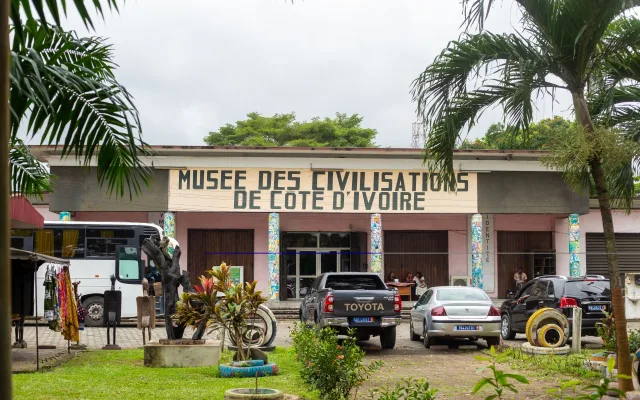
Abidjan
Economic capital of West Africa — the Plateau skyscrapers, Ébrié Lagoon, Treichville market and live jazz.
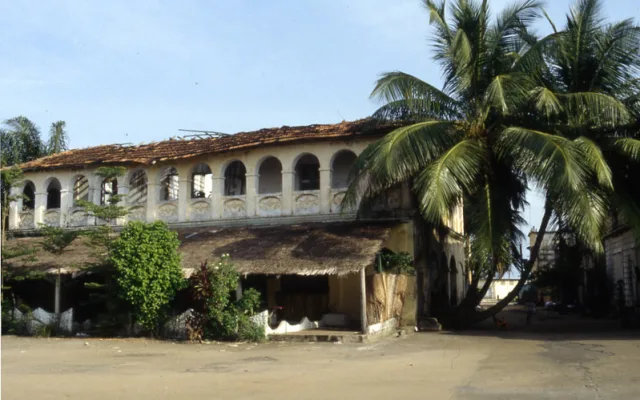
Grand-Bassam
Côte d'Ivoire's first capital and a UNESCO-listed colonial quarter on the Atlantic coast.
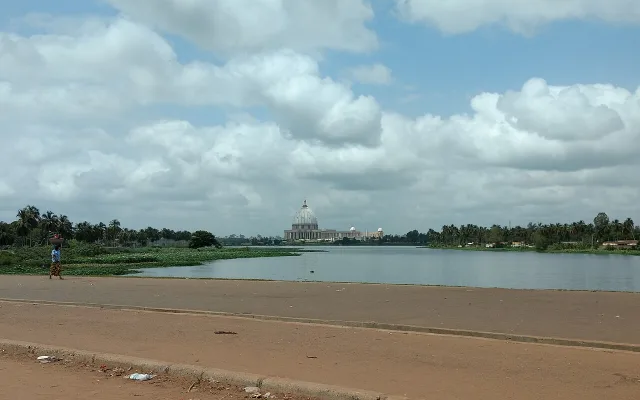
Yamoussoukro
The political capital, home to the Basilica of Our Lady of Peace — a replica of St Peter's and the largest church in the world.
What to see
#St Paul's Cathedral: In Abidjan, this concrete structure looks like a vast figure under a sail. Inside, huge stained-glass panels wash the hall in improbable colour.
The Basilica: If you want a world record, go to Yamoussoukro. Our Lady of Peace is officially the largest church on earth, taller and wider than St Peter's in the Vatican.
Banco Forest: A patch of primary jungle that survived inside the limits of a huge city. Worth a trip to see wild monkeys and rare birds without ever leaving Abidjan.
Grand-Bassam history: You can do the UNESCO-listed Quartier France in a day. Crumbling colonial villas on the Atlantic shore give the place the feel of a town that stopped in about 1910.
The Man region: This is where old West African traditions are still part of ordinary life. People come for the mask dances, the sacred waterfalls, and a test of nerve on the swaying vine bridges.
Taï National Park: One of the last strongholds of chimpanzees and pygmy hippos in Africa. This one is for people who want genuinely wild country and are ready for hard walking in wet forest.
Prices
#Currency: The country uses the West African CFA franc, pegged at a fixed rate to the euro. Bringing euro cash is the smartest move, since the bank rate is fixed and always fair.
Cards: Visa and Mastercard terminals exist only in the pricier chain venues of Abidjan and in the big hotels. Amex is essentially useless. For markets, taxis and provincial guesthouses you will need local cash every time.
ATMs: Ecobank and Société Générale machines accept international cards. Note that the per-transaction limit is often no more than 400 dollars, and the fee is noticeable.
Wise and Revolut: Worth carrying as a backup card, though remember this is a cash economy and a fintech card mostly helps you withdraw cheaply rather than pay directly.
Tipping: In street maquis nobody leaves anything extra, but 10% in a city restaurant is good manners. Always keep small notes for public transport.
| Item | Price (USD) |
|---|---|
| Lunch in a maquis | 4 |
| Bottled water 1.5l | 0.5 |
| Flag beer 0.5l | 1.5 |
| Portion of alloco | 1 |
| Taxi across town | 3 |
| Local SIM card | 2 |
| 5 GB data package | 4 |
| Coffee in a café | 2 |
| Litre of petrol | 1.2 |
| Intercity bus ticket | 12 |
| Museum entry | 5 |
| Attiéké with tuna | 2 |
| Kilo of mango at market | 1 |
| Night in a budget hotel | 25 |
Getting around
#Buses: Between major cities, the state operator UTB is the most reliable option. The coaches usually have working air conditioning and tickets sell at a fixed price from the station desk.
Shared taxis: Gbakas and the old "sept-place" cars are for the thrifty and the patient. They leave only when every seat is full, which upcountry can mean hours of waiting.
City taxis: In Abidjan use the Yango or Bolt apps and skip the haggling. It is safer, and the fare is visible before you get in and does not change at the end.
Lagoon boats: Ferries and water taxis are the fastest way to cross between Abidjan's districts at rush hour. For very little money you skip the bridge jams and see the city from the water.
Domestic flights: Air Côte d'Ivoire connects the bigger cities such as San-Pédro and Man, which saves a whole day compared with the road.
Getting there: Abidjan is well connected to Europe, with direct services from Paris, Brussels and Istanbul, and onward links via Casablanca or Addis Ababa. From North America the usual routing is a European or Moroccan connection.
Timing: Plan road journeys for daylight. Night driving means checkpoints, poor lighting and no easy way to fix a breakdown.
Where to stay
#What is available: The range runs from very basic city rooms to modern business complexes. On the coast at Grand-Bassam and Assinie, small eco-lodges built from natural materials are the popular choice.
Booking: Online platforms work fine for Abidjan, but upcountry it is better to message owners directly on WhatsApp. Plenty of decent guesthouses simply have no listing anywhere global.
Check before you pay: In cheap places, always confirm there is a mosquito net and that the fan actually works. In this humidity, still air makes sleep close to impossible.
Where to stay in Abidjan: Cocody and Marcory are the safer, easier districts. Plateau is the business centre, empty in the evenings but convenient for the museums and administrative buildings.
Prices: A decent room with air conditioning and a private shower runs around 30-40 dollars a night. The simplest shared-bathroom rooms cost less, but hygiene can be poor.
Internet: Stable Wi-Fi in cheap hotels is rare, and often it only reaches the reception area. For working, rely on mobile data with a generous local package.
What to eat
#Maquis: These open-air grill cafés are the soul of Ivorian cooking. Look for the ones full of locals, where the fish is freshest and the meat is priced for people who live here.
Attiéké: The national side of fermented cassava, which looks a lot like couscous. It comes with almost everything, usually grilled tuna, raw onion and a very sharp chilli.
Alloco: Fried sweet plantain, the country's favourite snack, sold on every corner. Eat it hot, dipped in spicy tomato sauce, or alongside chicken.
Kedjenou: A slow-cooked chicken or fish stew sealed in a clay pot. It cooks in its own juices with vegetables, which makes the flavour remarkably deep.
Drinks: Try bissap made from hibiscus flowers, or the sharp ginger juice. Local Flag and Bock beers are cheap and exactly right in equatorial heat.
Chocolate: The country is the world's biggest cocoa producer and the chocolate is excellent. Markets are also piled with cheap ripe pineapple, mango and papaya, but wash fruit in bottled water before eating.
Safety
#Regions: The tourist south and the centre are broadly fine, but avoid travel towards the northern frontier. Armed group activity in the border zones with Mali and Burkina Faso makes the risk there too high.
In the city: Do not walk alone after dark in poorer quarters such as Adjamé. Street theft and bag snatching happen, so keep valuables and expensive electronics close.
Checkpoints: Rural highways have regular police document checks. Always carry your original passport with a valid entry stamp and stay polite and unhurried with officials.
Malaria: This is a serious risk here. Sort out a prophylaxis plan before you travel, use repellent from dusk onwards and sleep under a net.
Water: Do not drink from the tap or wash fruit in it. Buy sealed bottled water and skip ice in street cafés.
Hustles: Ignore anyone who latches on at a station offering to carry bags or find you a room. Agree the final price of any service or taxi ride before it starts.
Advisories: Conditions in the north shift, so check your own government's travel advisory shortly before departure.
Etiquette and culture
#Language: French is the tool that solves problems and gets you better prices. Locals are formal and polite, and value a long greeting with questions about health and family before you get to the point.
Religion: The country splits into a Muslim north and a Christian south. In the north, dress more conservatively with shoulders and knees covered.
Masks: Dan and Senufo wooden masks are sacred objects, not decoration. Never handle ritual items in a village or photograph a closed ceremony without permission.
Football: The national team and Didier Drogba are instant common ground with anyone. Talking about the Elephants' last match is the fastest route to a friendly conversation.
Photography: Always ask before pointing a camera at a person or their shop. Photographing bridges, telecom towers and government buildings is firmly prohibited.
English: Outside international hotels in Abidjan, English is rarely spoken. A little French, or a translation app downloaded for offline use, makes an enormous difference.
Pace: Life moves slowly and the local sense of time is not the one you brought with you. Do not get wound up about a late bus or unhurried service.
Connectivity
#SIM cards: Buy an Orange or MTN card at the airport on arrival and save yourself trouble later. Registration needs your passport and takes a few minutes.
Coverage: 4G is fast and stable in Abidjan and Yamoussoukro, which makes navigation easy. In remote western villages the signal drops away entirely, so download offline maps first.
eSIM: If your phone supports it, activate an Airalo or Orange Travel profile before you fly. That way you can order a taxi through an app the moment you walk out of the terminal.
Orange Money: Mobile money is everywhere and works even in tiny shops. You top up at any kiosk carrying the operator's logo, and there are hundreds of them in every city.
Wi-Fi: Free public Wi-Fi is genuinely rare here, and even good cafés sometimes charge for it. The dependable answer is a local data bundle of 5 GB or more.
Apps: Install Yango before you arrive for getting around Abidjan. Social networks and messengers all work normally with no workarounds needed.
Phrasebook
#| English | French | Pronunciation |
|---|---|---|
| Hello | Bonjour | bon-ZHOOR |
| How's it going? | Ça va? | sa VA |
| Thank you | Merci | mer-SEE |
| Please | S'il vous plaît | seel voo PLEH |
| How much is it? | C'est combien? | say kom-BYAN |
| That's too expensive | C'est trop cher | say tro SHEHR |
| Lower the price | Diminuez le prix | dee-mee-NWAY luh pree |
| Where is the toilet? | Où sont les toilettes? | oo son lay twa-LET |
| Help! | Aidez-moi! | eh-day MWA |
| I don't understand | Je ne comprends pas | zhuh nuh kom-PRON pa |
| Water | Eau | oh |
| It's good | C'est bon | say BON |
| Mate (slang) | Vieux père | vyuh PEHR |
| Grub (slang) | La bouffe | la BOOF |
| Let's go! (slang) | On y va! | on-ee-VA |
| Foreigner (slang) | Toubabou | too-ba-BOO |
| Market | Marché | mar-SHAY |
| Excuse me | Excusez-moi | ex-kew-zay MWA |
| Goodbye | Au revoir | oh ruh-VWAR |
| OK | D'accord | da-KOR |
Good to know
#Your embassy: Most missions sit in Abidjan, many in the Riviera district. Save the address and phone number of your own country's embassy before you travel, in case documents go missing.
Power: Sockets are European types C and E, so most European plugs fit directly. Voltage is standard, but provincial outages are frequent, so bring a power bank.
Health: At any sign of fever, get a rapid malaria test at the nearest pharmacy immediately. It costs very little and early diagnosis avoids serious complications.
Water brands: Stick to sealed bottled water from known brands such as Awa or Celeste, sold everywhere. Check the cap seal is intact before you pay.
Time: The country runs on GMT year-round, the same as London in winter. Tropical daylight is short and the sun drops fast around six in the evening, so plan anything important for the morning.
Shopping: The best things to take home are local coffee beans, raw cocoa and bright pagne fabric. For quality masks and crafts, head to the CAVA artisan market in Abidjan.
Frequently asked questions
#Most nationalities need a visa, and the simplest route is the official online pre-approval before you fly. On arrival at Abidjan airport, that document is converted into a full biometric visa in your passport, with fingerprints taken at the counter.
Yes, an international vaccination certificate is compulsory for every arriving traveller. Get the shot at least ten days before departure, otherwise you may be refused boarding.
The dry season from November to March is the most comfortable window. Rain is scarce and humidity drops, though January can bring a dusty haze from the harmattan wind.
Bring euro cash, since the CFA franc is pegged to the euro at a fixed rate. Dollars are exchangeable in banks, but the rate is less favourable and the process takes longer.
By day, central districts such as Cocody and Plateau are fine with ordinary caution. After dark, move by taxi and avoid walking on quiet streets.
The easiest and cheapest option is a UTB coach, which runs several times a day. The trip along the modern motorway takes about three hours, and it is worth buying tickets ahead at the station.
Orange leads on both coverage and mobile internet quality. MTN offers competitive rates, but in remote regions Orange usually holds a signal better.
Order attiéké with grilled fish, the country's most popular everyday dish, made from cassava. Also try alloco, the sweet fried plantain, and kedjenou chicken slow-cooked in a clay pot.
Yes, but with restrictions. Registration is mandatory for a drone of any weight. You need ANAC authorisation and drone registration, but a foreigner can only register through a local sponsor — a company or resident. Rules for other countries are in the drone ranking by country.
Updated
The data on this page goes out of date. Visa rules and permitted stays, border requirements, prices and budgets, transport and local conditions all change fast, and we do not re-check every page every day. We show the date of our last check where we have one, but before you travel, verify with official sources: the country’s consulate, its immigration service, its e-visa portal and your carrier.