
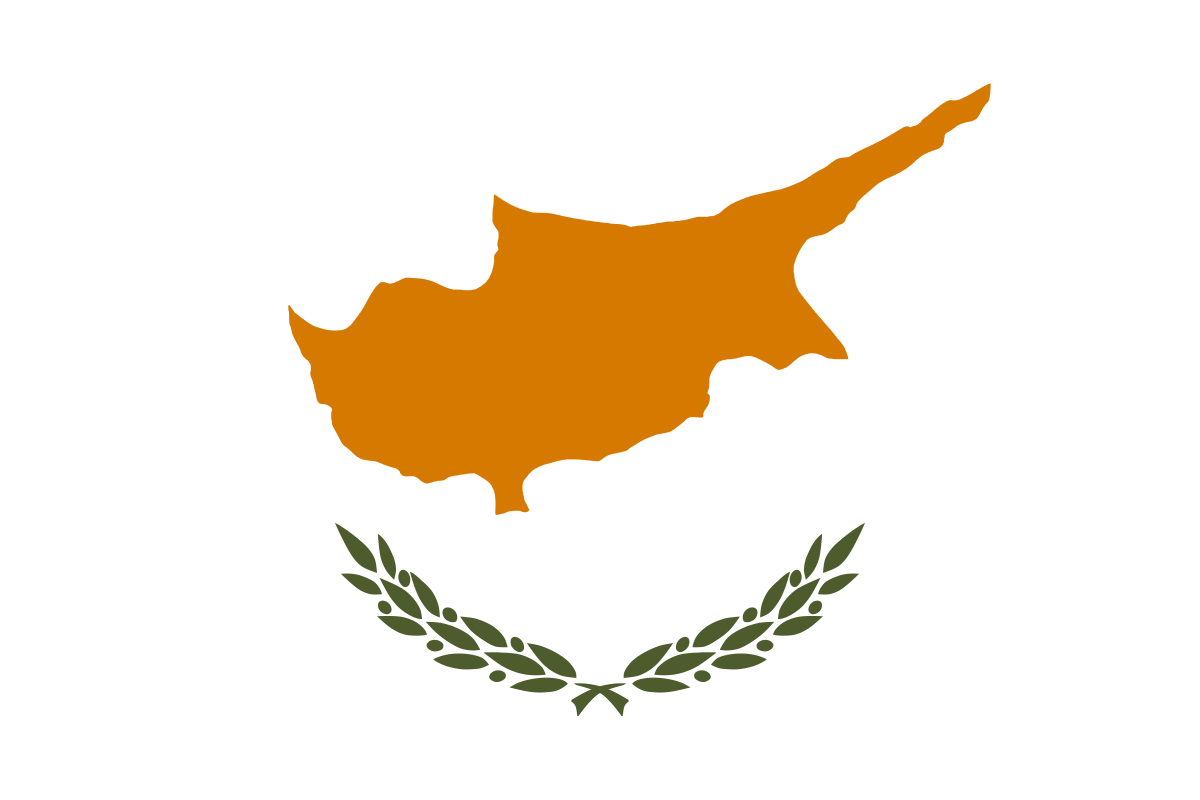
Cyprus
A Mediterranean island where Europe, Asia and Africa meet — the birthplace of Aphrodite, with 340 days of sunshine a year. Cyprus pairs classical ruins and medieval castles with turquoise coves and the Troodos mountains. A large international expat community in Limassol makes settling in unusually easy. The island is divided between the Greek south (the Republic of Cyprus, in the EU) and the Turkish north.
Where to go
#Limassol
Chosen most often for its infrastructure and its large international community, which makes settling in painless. Walk the Molos promenade and look into the old port to catch the rhythm of what is really a business city with beaches attached.
Paphos
Worth a trip for the classical atmosphere and for archaeological zones that sit inside the town itself rather than out in a field. The resort feels more restrained and grown-up, and its rocky shoreline produces the best sunsets on the island.
Larnaca
Where to go if the budget is tight: rooms and food around the church of St Lazarus cost noticeably less. It is a practical base next to the airport, with green intercity buses running from here to everywhere else.
Ayia Napa
This is where you can genuinely do the best white-sand beaches in a single day, working from Nissi Beach along to Makronissos. It is the epicentre of the island's nightlife and still loud, cheerful and very crowded at peak season.
Nicosia
People come to the world's only divided capital for the history and for the chance to step across a border on foot in the middle of a city. The old town inside the Venetian walls keeps its narrow lanes, in sharp contrast with the modern business districts.
Protaras
If you want a quiet stay with a faultless sea, this small resort village is the answer. Fig Tree Bay is here, widely treated as the benchmark for clean water and easy swimming, and it works well for families.
What to see
#Kato Paphos Archaeological Park: The first thing to see, with Roman mosaics that survive in remarkable condition. Entry is 4.50 euros and it will fill a whole day of walking under a hard Mediterranean sun.
Petra tou Romiou: Worth a trip to see the legendary birthplace of Aphrodite rising from the surf. Swimming is awkward here because of the coarse pebbles and the current, but for photographs it is unmatched.
Kourion: Where to go for ancient drama. The amphitheatre still hosts performances against a backdrop of open sea. Easiest by rental car, taking in Kolossi Castle on the way.
The Troodos mountains: You can do a day here and find old monasteries and villages such as Lefkara in the forest. It stays cool even in August, and the village tavernas serve meat slow-cooked for hours in clay ovens.
Cape Greco: A natural park on the east coast, with sea caves and the turquoise water of Konnos Bay. The clifftop walking trails are spectacular but demand proper shoes and more water than you think.
Varosha: The abandoned quarter of Famagusta is now open to visitors and it leaves a mark. Empty tower blocks along a perfect shoreline are the plainest possible symbol of a divided island.
Prices
#Currency: The south uses the euro only. Carry small notes for markets and village cafés. In the north the official currency is the Turkish lira, though shops there often take euros as well.
Cards: Visa and Mastercard work everywhere in the south without trouble, and contactless is universal. Amex is accepted in hotels but less so in tavernas. In the north, cash is far more useful.
ATMs: Bank machines are plentiful in all the coastal towns. Decline the machine's own currency conversion and let your bank handle the rate, which is almost always better.
Tipping: Around ten per cent in restaurants if service is not already on the bill. A couple of coins for housekeeping or a taxi driver is considered good manners.
Exchange in the north: Rates in tourist shops across the line are frequently poor. Change money at an official exchange office rather than at a souvenir counter.
| Item | Price (USD) |
|---|---|
| Lunch in a taverna | 17 |
| Dinner for two | 68 |
| Frappé coffee | 4.5 |
| Beer in a bar 0.5l | 6 |
| Bottle of wine | 9 |
| Street pita | 6.5 |
| Litre of milk | 1.7 |
| Halloumi 250g | 5.5 |
| Water 1.5l | 1.1 |
| Bus ticket | 3 |
| Day travel pass | 6 |
| Litre of petrol | 1.7 |
| Museum ticket | 5.5 |
| Car hire per day | 38 |
Getting around
#City buses: State operators link all the larger towns, though services are not frequent. A cash fare now runs 2.70 euros, so the Motion card pays for itself quickly.
Intercity coaches: The green Intercity buses are the cheapest way between resorts. Larnaca to Paphos or Limassol costs 4-7 euros, paid in cash to the driver as you board.
Car hire: The best way to see the island, since buses do not reach most of the good beaches. Remember that Cyprus drives on the left: the wheel is on the right and you change gear with your left hand, which takes a day to get used to.
Booking a car: Local agencies are often more flexible than the international chains, accepting a debit card or a cash deposit rather than blocking a large sum on a credit card.
Taxis: Bolt works reliably but rides are expensive by southern European standards. An airport transfer from Larnaca to Limassol runs about 50 euros, so it is worth sharing.
Crossing the line: In Nicosia you can cross the dividing line on foot in the historic centre. The check is a formality and stamps go on a separate slip rather than in your passport.
Getting there: Larnaca and Paphos have direct flights from across Europe, including London, Manchester, Frankfurt, Warsaw and Athens, with Ryanair and Wizz Air on many routes. From North America the usual routing is one European or Gulf connection.
Where to stay
#Town hotels: Staying in central Larnaca or Limassol puts you next to cheap food and the transport hubs. Modest rooms start around 45 euros if booked a couple of months ahead.
Guesthouses: In the Troodos mountain villages these are the best way to sleep comfortably and get some character with it. Hosts often lay on a home breakfast and their own wine.
Apartments: The practical choice if you want to cook. A kitchen plus a Lidl or supermarket run cuts your food spending close to half.
Beach areas: In Ayia Napa, book away from the central streets if you want to sleep. The clubs run until dawn, so look at the quieter Makronissos end instead.
Booking: International platforms cover the island thoroughly, but for family-run village places a direct email or a phone call often gets a better rate than any site.
Long stays: For a month or more, look at local social media groups rather than booking platforms. The nightly rate roughly halves on a longer contract, though you may be asked to cover water separately.
What to eat
#Meze: Not a meal so much as a performance, twenty small plates arriving in sequence. It starts with dips and olives and finishes with a mountain of grilled meat, so pace yourself from the first plate.
Souvlaki: Pork skewers in pita with salad and tzatziki, about 5 euros, and the fastest honest lunch on the island. In midday heat it beats sitting down to anything larger.
Halloumi: Treated as a national asset and served at breakfast, lunch and dinner. Grilled, its salty squeak goes perfectly with ripe tomatoes and a cold local Keo beer.
Kleftiko: Lamb cooked for eight hours until it collapses off the bone. Go to the village tavernas of Troodos for this, where the recipe has not shifted in decades.
Commandaria: The sweet dessert wine claimed as the oldest still in production, made up in the hills. A bottle makes the best souvenir for anyone who likes both history and drinking.
Portions: In tourist areas the plates are enormous, so one dish between two is entirely reasonable. Tavernas often bring bread and water without charging, but that is goodwill rather than a rule, so check.
Safety
#Overall: The island is one of the calmer places in Europe for walking around on your own. Pickpocketing is rare, though leaving valuables unattended on a beach is still asking for trouble.
Sun: The real danger here is ultraviolet, not people. Between June and August you can burn in fifteen minutes, so sunscreen and a wide-brimmed hat are not optional.
Driving: Left-hand traffic catches visitors out, particularly on roundabouts. Take roundabouts slowly and remember that priority works the other way round from what you are used to.
Tap water: What comes out of the tap is often desalinated and best avoided for drinking. Large bottles from a supermarket are cheap and simpler over a long trip.
The Green Line: The UN buffer zone in Nicosia is fenced and photographing military personnel there is firmly prohibited. Do not wander into the abandoned blocks, which can end in detention.
Sea urchins: They turn up on the wilder rocky beaches around Paphos. Rubber water shoes cost a few euros and prevent a painful end to a holiday.
Before you go: Check your own government's travel advisory, especially for the current rules on crossing to the north.
Etiquette and culture
#Orthodox tradition: Religion matters here, so respect the dress code in churches and monasteries. Shoulders and knees covered, even at forty degrees outside.
Siesta: Island life stops in the early afternoon and many small shops shut for a long break. Do not plan shopping or museums between one and four, because you will find locked doors.
Cats: Cyprus has revered cats for centuries and they live absolutely everywhere. They are full residents of monasteries and tavernas, and locals feed them at organised points.
The division: The events of 1974 remain painful for Cypriots. Avoid pressing the political question with Greek Cypriots, and do not refer to the north as a separate country.
Easter: Celebrated on an enormous scale, with public festivities across the country. The towns empty as everyone heads to relatives in the mountains for the traditional barbecue.
English: Almost everyone speaks it, a legacy of the British period, and signs and menus are bilingual. Even so, a couple of words of Greek works wonders and may earn you a free coffee.
Connectivity
#eSIM: The easiest option now. An eSIM from Airalo or a similar provider activates in a couple of minutes and saves you hunting for an operator's office on arrival.
Local SIM: For a longer stay, buy a Cyta or Epic package at any street kiosk. Fifteen euros buys a generous data allowance, enough for navigation and social media across a whole holiday.
Coverage: The signal holds up even in the mountains and on remote beaches. Limassol and Larnaca have widespread 5G, so heavy map downloads are not a problem.
Free Wi-Fi: Open networks exist in almost every taverna and along the promenades of the main resorts. On state buses the connection is unreliable and not worth planning around.
Messaging: WhatsApp and Telegram calls work without restriction. For contacting apartment owners, Viber is still surprisingly common among local landlords.
Useful apps: Download offline maps in advance, because navigation software sometimes mistakes forest tracks for real roads. The Cyprus Bus app helps with transport, though its timetables are approximate.
Phrasebook
#| English | Greek | Pronunciation |
|---|---|---|
| Hello | Γεια σας | YA sas |
| Thank you | Ευχαριστώ | ef-kha-ri-STOH |
| Please | Παρακαλώ | pa-ra-ka-LOH |
| Yes / No | Ναι / Όχι | neh / O-hee |
| How much is it? | Πόσο κάνει; | PO-so KA-nee |
| Where is...? | Πού είναι...; | poo EE-neh |
| Water | Νερό | ne-ROH |
| Beer | Μπύρα | BEE-ra |
| Wine | Κρασί | kra-SEE |
| The bill, please | Τον λογαριασμό | ton lo-gha-ryaz-MOH |
| Delicious! | Νόστιμο! | NO-stee-mo |
| Sorry | Συγγνώμη | see-GHNO-mee |
| Cheers! | Στην υγειά σας! | stin ee-YA sas |
| Help! | Βοήθεια! | vo-EE-thya |
| I don't understand | Δεν καταλαβαίνω | then ka-ta-la-VEH-no |
| Cat | Γάτα | GHA-ta |
| Let's go! | Πάμε! | PA-meh |
| Slowly, relax (slang) | Σιγά-σιγά | see-GHA see-GHA |
| Mate (crude slang) | Μαλάκα | ma-LA-ka |
| Hey, mate (slang) | Ρε | reh |
| Good morning | Καλημέρα | ka-lee-MEH-ra |
Good to know
#Airports: International flights land at Larnaca and Paphos, with shuttles running between them. Larnaca is the better transport hub, while Paphos is closer to the western nature reserves and quiet bays.
Plugs: Cyprus uses British type G three-pin sockets. Adapters cost a couple of euros in any supermarket, or your hotel desk will usually lend you one.
Opening hours: Large shopping centres stay open into the evening, but Sunday is often a full closure. Pharmacies rotate, with only one on duty overnight per district.
Healthcare: Public clinics accept travel insurance, though small services may be charged upfront. Carry a copy of your policy and the assistance line number.
Banks: They close very early, frequently at 13:30, so handle anything financial in the morning. Government offices keep similar hours.
Driving side: Traffic runs on the left, which matters for pedestrians too. Look right first when crossing, and be careful at zebra crossings, where drivers do not always stop.
Frequently asked questions
#Cyprus is in the EU but not yet in the Schengen area, and many Western passport holders enter visa-free for up to 90 days. A valid multi-entry Schengen visa is also accepted for entry, but check your own passport's rules before booking.
Larnaca and Paphos take direct flights from most of Europe, including London, Manchester, Frankfurt, Warsaw and Athens, with Ryanair and Wizz Air serving many of them. From further afield, a connection through Athens, Istanbul or Dubai is the usual routing.
The euro in the south, and the Turkish lira in the north. Visa and Mastercard work without issue across the south, but carry cash if you plan to cross the line.
Yes. Many local rental companies accept a debit card or a straightforward cash deposit, which the big international chains generally will not. Book through a local agency rather than a global brand if that matters to you.
A filling one-course lunch with a drink comes to roughly 15-20 euros per person. Traditional meze in a taverna costs more, from 25 euros, but the volume is designed for a very hungry person and is often shared between two.
May to late October, when the sea sits at a comfortable 22-26 degrees. The clearest water is around Ayia Napa and Protaras, where the beaches are pale sand rather than rock.
Yes, coverage is strong across the whole island, with 5G in the larger towns and solid 4G in the mountains. An eSIM or a local prepaid SIM from any kiosk is the cheapest way to use it.
Crossing on foot in Nicosia needs only a passport and is legal and entirely safe for visitors. Entering the island through northern airports or ports, however, is treated as illegal entry by the Republic and can lead to fines.
Yes, but with restrictions. Registration is mandatory for drones from 250 g — lighter models can fly without it. You also need to pass a test and hold a pilot certificate. Common EASA rules apply: operator registration is required for drones from 250 g, and for any drone with a camera — which covers virtually every consumer model. You also need the free A1/A3 online test, and the operator ID must be stuck on the drone. One registration is valid across the whole EU. Rules for other countries are in the drone ranking by country.
It depends on where your licence was issued. Traffic drives on the left. Car rental starts at 21. Traffic drives on the left — along with Ireland and Malta, one of the few EU countries that do. EU licences are valid; with Russian ones an IDP is requested. Rules for other countries are in the driving and rental table.
You can rent a bike; whether you need an international driving permit depends on where your licence was issued. A scooter up to 125 cc can be ridden on category B; anything bigger needs category A. A helmet is compulsory. Bike rental usually starts at 21. Rules for other countries are in the driving and rental table.
Updated
The data on this page goes out of date. Visa rules and permitted stays, border requirements, prices and budgets, transport and local conditions all change fast, and we do not re-check every page every day. We show the date of our last check where we have one, but before you travel, verify with official sources: the country’s consulate, its immigration service, its e-visa portal and your carrier.