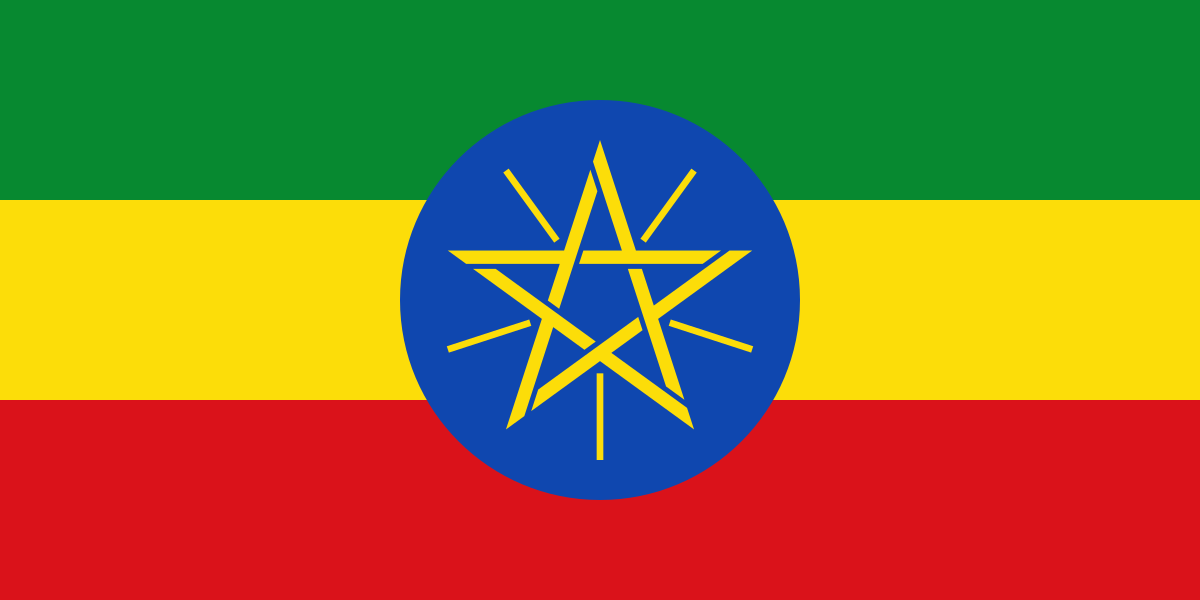
Ethiopia
ETThe cradle of humankind and one of the world's oldest civilisations — the only African country never colonised. The rock-hewn churches of Lalibela, the stelae of Axum, the Simien mountains and the volcanic Danakil Depression cover everything from biblical ruins to landscapes that look like another planet. Ethiopian food, built around injera, and the coffee ceremony are discoveries you will find nowhere else. The country keeps its own calendar, currently in the year 2018, and time runs differently here.
Where to go #
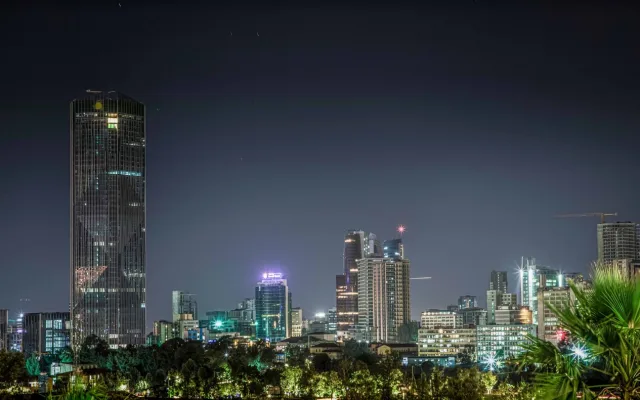
Addis Ababa
The capital of Ethiopia and headquarters of the African Union — the National Museum with Lucy, the Merkato and coffee ceremonies.
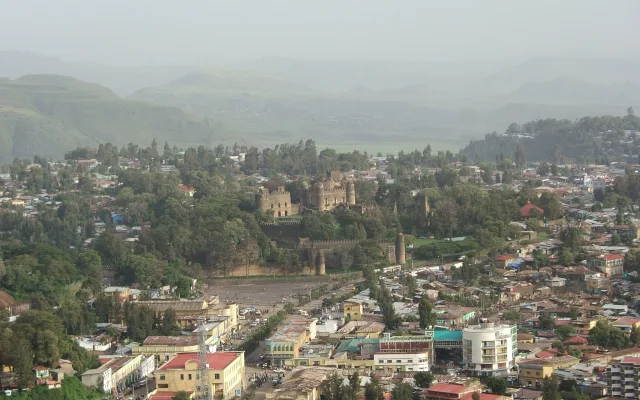
Gondar
Ethiopia's Camelot — the royal castle compound on the UNESCO list, and the angel-covered ceiling of Debre Berhan Selassie.
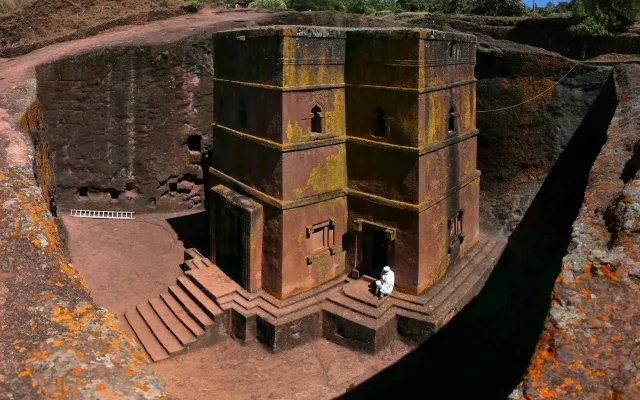
Lalibela
The eighth wonder of the world — eleven monolithic churches cut into rock in the 12th and 13th centuries, and a living place of pilgrimage.
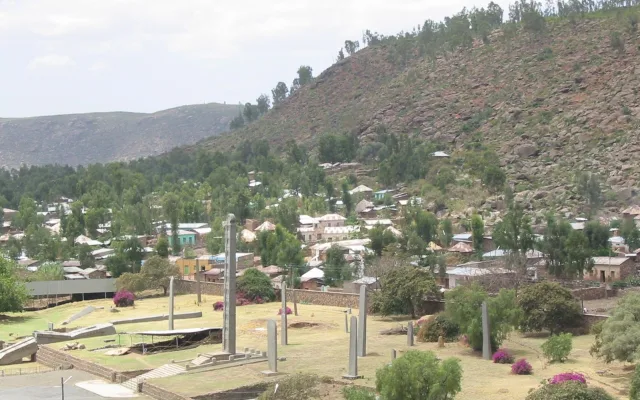
Axum
The ancient capital of the Aksumite kingdom — the UNESCO-listed stelae, the church of Mary of Zion and the supposed resting place of the Ark.
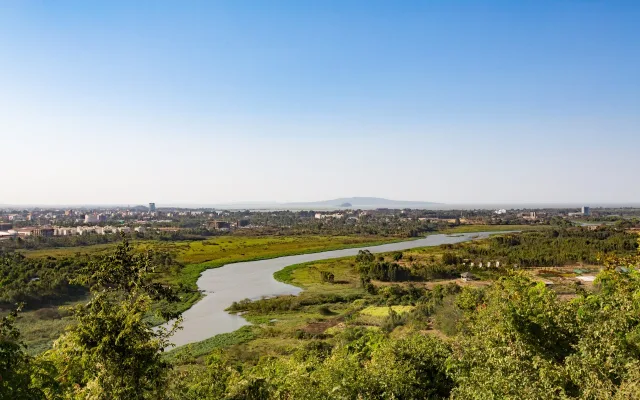
Bahir Dar
A town on the shore of Lake Tana — the outflow of the Blue Nile, the island monasteries and the Tis Issat falls.
What to see #
The rock churches of Lalibela: first on any list, especially the cross-shaped Bet Giyorgis cut twelve metres down into the stone. The 50 dollar ticket is valid for several days, which you will need to see the whole complex properly.
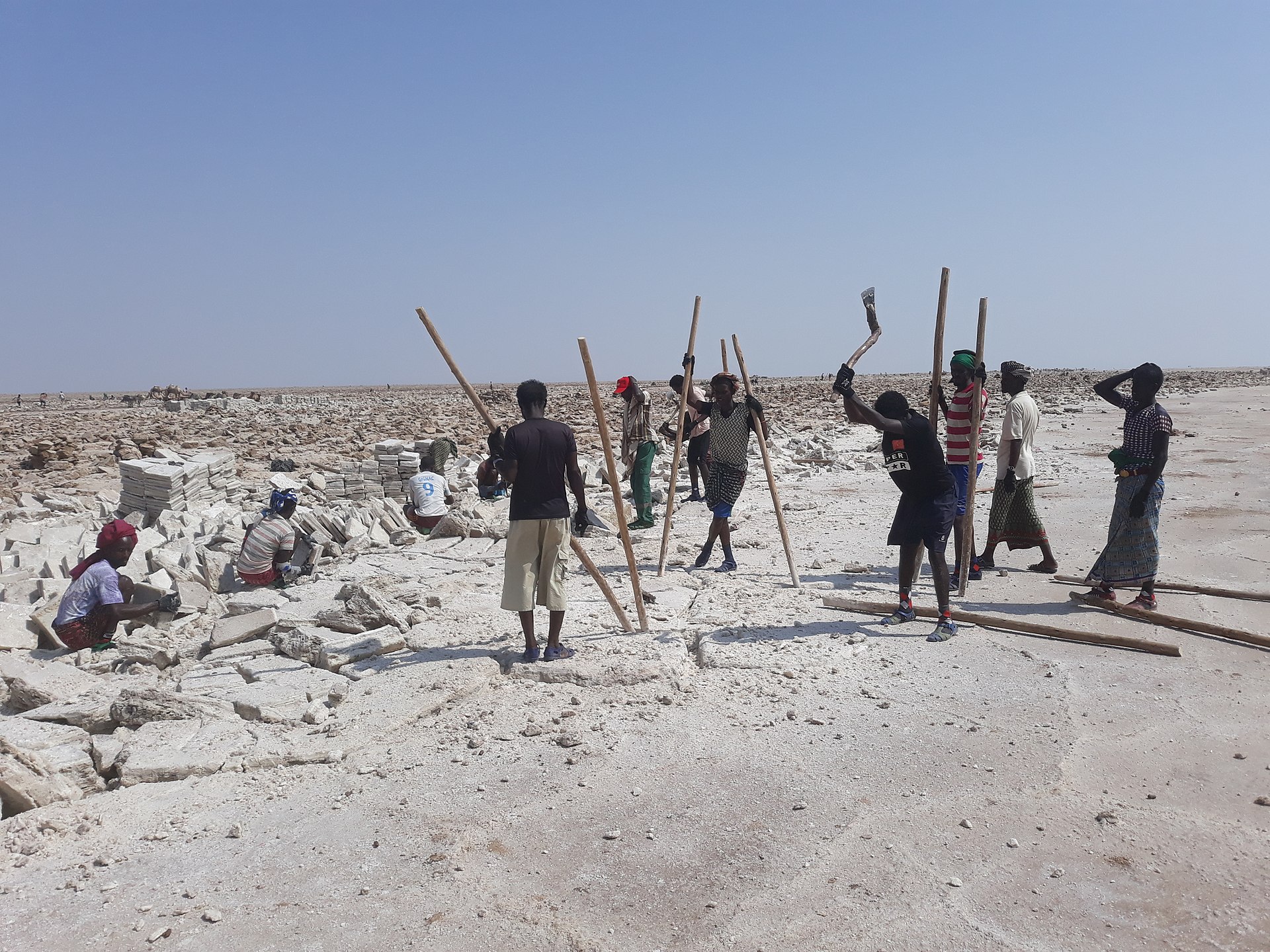
The Danakil Depression: genuinely alien country, with the sulphur pools of Dallol and the lava lake of Erta Ale. It can only be visited on an organised tour from Mekele or Semera, with a police escort, and it is one of the hottest places on the planet.
The Simien Mountains: superb trekking at up to 4,500 metres. Endemic gelada baboons sit unbothered a few metres from the path, which is not something you get anywhere else.
Lake Tana: hire a boat at Bahir Dar to see the source of the Blue Nile and the monasteries on the islands, where wall paintings several centuries old survive inside the round churches.
The Omo Valley: in the south, home to the Mursi, Karo and Hamer peoples, who still mark their bodies with scarring, paint and lip plates. Go with a good guide and an awareness that you are a visitor rather than an audience.
The coffee ceremony: less a sight than an hour-long ritual, from roasting the beans to the third cup. Accept when invited; refusing is what marks you as a tourist.
Prices #
Currency: the Ethiopian birr, around 156 to the US dollar. Change money at banks rather than on the street, where the parallel market carries real risk.
Cards: foreign cards are accepted only at a handful of top hotels and airline offices. Plan the entire trip on cash and treat any card payment as a bonus.
Which notes: bring US dollars in newer bills issued from 2013 onwards, unmarked and unstamped. Older or damaged notes get refused or heavily discounted.
ATMs: they exist in the cities and are frequently empty, especially at weekends. Withdraw in Addis before flying anywhere else.
Tipping: small amounts are expected for guides, drivers and hotel staff, and a guide for a day is genuinely underpaid without it.
| Item | Price (USD) |
|---|---|
| Injera with wat | 4 |
| Coffee in a cafe | 1 |
| Local beer | 2 |
| Water, 1.5 l | 0.5 |
| Dinner for two | 25 |
| Ride taxi trip | 4 |
| Budget guesthouse | 20 |
| Domestic flight | 90 |
| Lalibela entry ticket | 50 |
| Guide for a day | 25 |
| Fruit smoothie | 2 |
| Restaurant lunch | 12 |
| Museum ticket | 5 |
| Addis light rail | 0.2 |
| SIM card | 3 |
| National park entry | 20 |
Getting around #
Domestic flights: Ethiopian Airlines links every point you are likely to want, and it is by far the fastest way to move. If your international ticket is with them, domestic fares drop substantially, so book both together.
Buses: private companies run comfortable intercity coaches. Buy tickets at their offices the day before, and be ready for departures at five or six in the morning.
Taxis in Addis: the Ride app works well and fixes the price in advance. The old blue taxis require sustained haggling before every journey.
Minibuses: the cheapest transport in the country, with a conductor shouting the destination out of the door. Cramped, constantly stopping, and costing almost nothing.
Light rail: the capital has two lines that let you skip the traffic entirely. Buy at the station counter; at rush hour the carriages are packed solid.
Boats: motor launches cross Lake Tana to the monasteries for about 20 to 30 dollars for the day. Negotiate at the jetty and check there are life jackets on board.
Car with driver: the usual arrangement for groups heading south. Driving yourself is not advisable given the traffic and the state of provincial roads.
Where to stay #
Guesthouses: in the tourist towns, rooms run 15 to 25 dollars a night. Standards vary enormously, so ask to see the room and run the water before you pay.
Booking: the big platforms work poorly here and most budget places are simply not listed. Messaging owners directly, or finding a room on arrival, gets better results.
Facilities: hot water often runs to a schedule or depends on the sun. Power cuts are frequent in cheaper places, so keep a torch within reach.
Where to stay in Addis: Bole, near the airport, or the historic Piassa. Both have cafes and are comfortable to walk around in daylight, unlike the outer districts.
Lodges: the national parks, particularly the Simiens, have some beautiful eco-lodges. They earn their price in canyon views and silence, and need booking months ahead.
No hostels: the classic backpacker dorm barely exists here. What you get instead is a small room in a family-run place, with a private or shared bathroom.
What to eat #
Injera: the foundation of everything, a large sour pancake of teff flour spread with wat sauces. You eat it with your right hand, tearing pieces off and scooping with them; cutlery does not appear.
Kitfo: finely minced raw beef with spiced butter and chilli. If raw is a step too far, ask for leb leb, which is warmed through briefly rather than cooked.
Fasting days: Wednesdays and Fridays are meat-free across much of the country, and shiro, a chickpea puree, dominates. These are the best days of the week to be vegan here, with an enormous range of vegetable dishes.
Coffee: the ceremony takes an hour, from roasting the green beans to three cups of decreasing strength, often served with roasted barley or salted popcorn.
Tej: honey wine, poured from a round-bellied berele flask. Sweet, deceptive and considerably stronger than it tastes.
Where to eat: the best food hides in plain, unmarked places where locals eat lunch. For a big night in the capital, the restaurants with live music and dancing are worth it once.
Safety #
Pickpockets: in the crowds at Mercato and in the queues at Bole airport, keep your pockets watched. They work professionally here, so use a money belt for anything you cannot lose.
Photography: military sites, uniformed police and government buildings are off limits. In the southern valleys, a small payment per photograph of a person is the established norm; agree it before you raise the camera.
Water: bottled only, including for brushing your teeth. Skip ice, and wash and peel fruit yourself.
Regional situation: check the current position before travelling to border areas, and read your own government's travel advisory. The northern circuit is generally stable, but conditions in the country can change quickly.
Danakil: the expedition requires an armed escort and a licensed guide, and it is only run in groups. This is not somewhere to improvise.
Wildlife: do not feed the gelada baboons in the Simiens however placid they look. A sudden movement towards the troop leader is a bad idea.
Altitude: Addis sits high enough that arriving visitors feel it. Take the first day gently, drink water, and go easy on alcohol before you acclimatise.
Etiquette and culture #
The calendar: Ethiopia keeps its own reckoning, running seven years behind the Gregorian one, with thirteen months and a new year in September when the rains end.
The clock: hours are counted from sunrise, so six in the morning is zero, or twelve o'clock, depending on how it is phrased. Always confirm whether a time is local or international, especially for buses.
Religion: Ethiopian Orthodoxy is ancient and has its own rites. Remove your shoes to enter any church, and women should cover head and shoulders with a shawl.
Greetings: friends greet by touching shoulders. Hand anything over with your right hand, since the left is traditionally unclean.
Timkat: the January festival is the country's most spectacular, with crowds in white and replicas of the Ark carried through the streets under huge coloured umbrellas.
Self-appointed guides: in the towns you will be approached constantly by would-be helpers and children. A polite but firm no, repeated calmly, is what works.
Connectivity #
Operators: the market is split between Ethio Telecom and Safaricom. For travel around the country, take the former, whose coverage is far wider.
Buying a SIM: available at the airport with your original passport, taking about fifteen minutes. A month of data costs two or three dollars, which is close to free by any standard.
Coverage: 4G works in the cities and drops to slow 2G in the provinces. Hotel Wi-Fi is often nominal and confined to the reception area.
Blocks: messaging apps are occasionally switched off by the authorities without warning. Install and test a reliable VPN before you leave home rather than after.
Apps: download Maps.me for offline navigation, which handles mountain trails better than the alternatives, and preload Amharic in Google Translate.
eSIM: international eSIMs work but cost several times the local rate. Useful for the first few hours after landing and not much beyond that.
English: widely spoken in Addis and by anyone in tourism, less so in small towns, where a few words of Amharic go a long way.
Phrasebook #
| English | Amharic | Pronunciation |
|---|---|---|
| Hello | Selam | seh-LAHM |
| Thank you | Ameseginalehu | ah-meh-seg-in-AH-le-hu |
| Yes / No | Awo / Ay | ah-WOH / eye |
| Please | Ibakih | ih-BAH-kih |
| How much is it? | Sint new? | sint NEW |
| That's expensive | Wud new | wud NEW |
| Delicious | Tafach new | tah-FAHCH new |
| Water | Wuha | WOO-ha |
| Coffee | Buna | BOON-nah |
| Help | Irdata | ir-DAH-tah |
| Where is the toilet? | Metsedaja bet yet new? | met-seh-dah-JAH bet yet new |
| Foreigner (slang) | Ferenji | feh-REN-jee |
| Brother (slang) | Gashe | GAH-shay |
| My friend (slang) | Guadegnaye | gwah-deh-NYAH-yeh |
| No problem | Chigur yelem | chi-GUR yeh-LEM |
| The bill | Hisab | hee-SAHB |
| I don't understand | Algebagnim | al-geh-BAH-nyim |
| Sorry | Yiqirta | yih-kir-TAH |
| Nice! | Qonjo | KON-joh |
| Goodbye | Dehna hun | DEH-nah hoon |
| Welcome | Inkuan dehna metu | in-KWAN DEH-nah meh-TOO |
Good to know #
Getting there: Addis is Ethiopian Airlines' hub and one of the best-connected airports in Africa, with nonstops from London, Frankfurt, Paris, Brussels, Washington, Newark, Toronto and much of Asia. Buying the international and domestic legs on one ticket cuts internal fares sharply.
Baggage: if your connection in Addis is tight, carry valuables and a change of clothes in the cabin. Bags do not always make it across in time, and hand luggage in economy is limited to seven kilos.
Health: malaria exists in the lowlands but not in Addis, which is too high for the mosquitoes. If you are heading south or to the Omo Valley, start prophylaxis before you travel and carry repellent.
Plugs: European type C and F sockets. UK, US and Australian travellers need an adapter, and everyone needs a power bank, because the electricity supply cuts out regularly.
Drones: importing one requires a permit, and without it the kit is confiscated at customs. Unless you are a professional with paperwork, leave it at home.
When to go: October to March, the dry season, with comfortable temperatures. June to September brings heavy rain that washes out mountain roads.