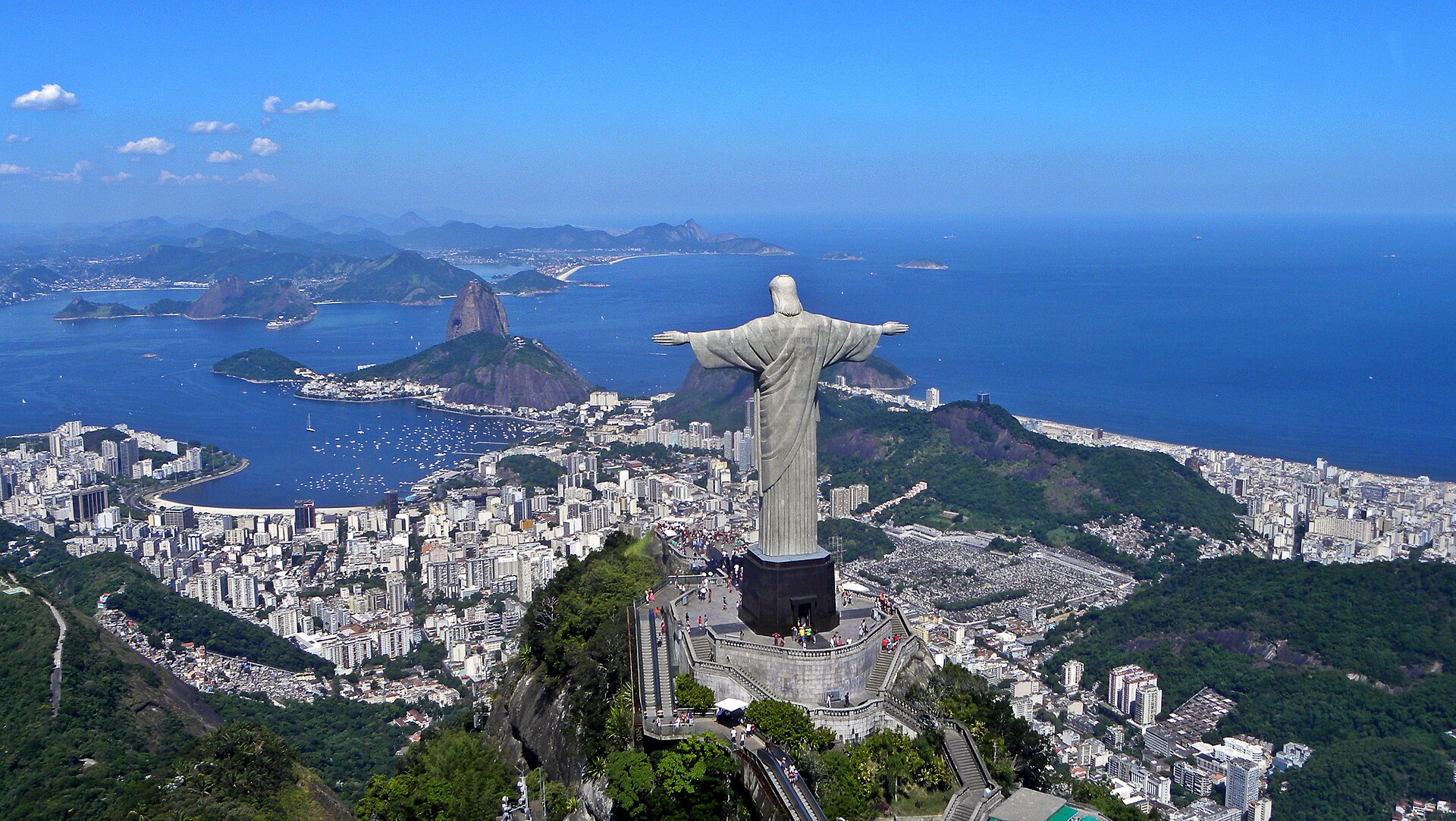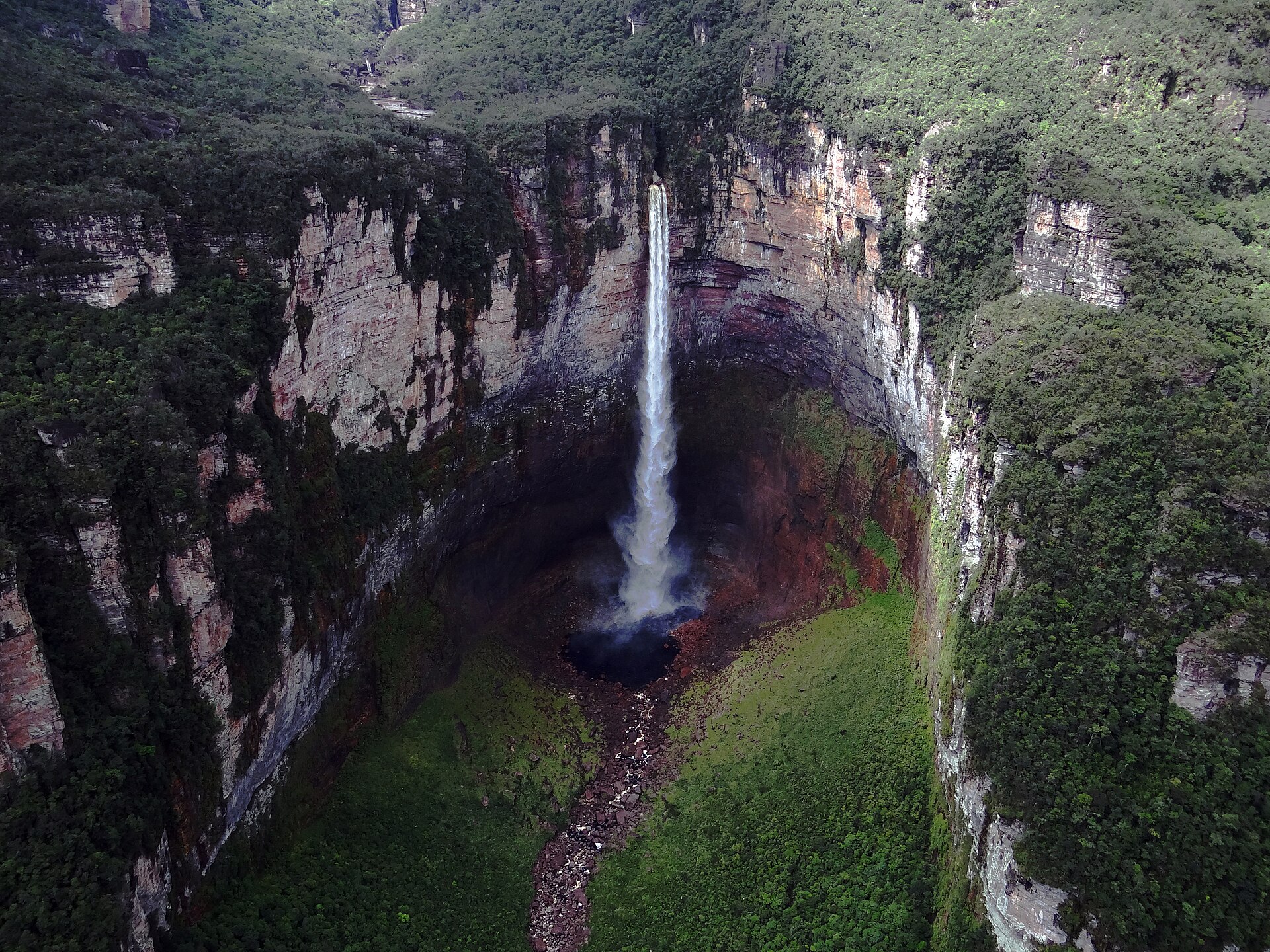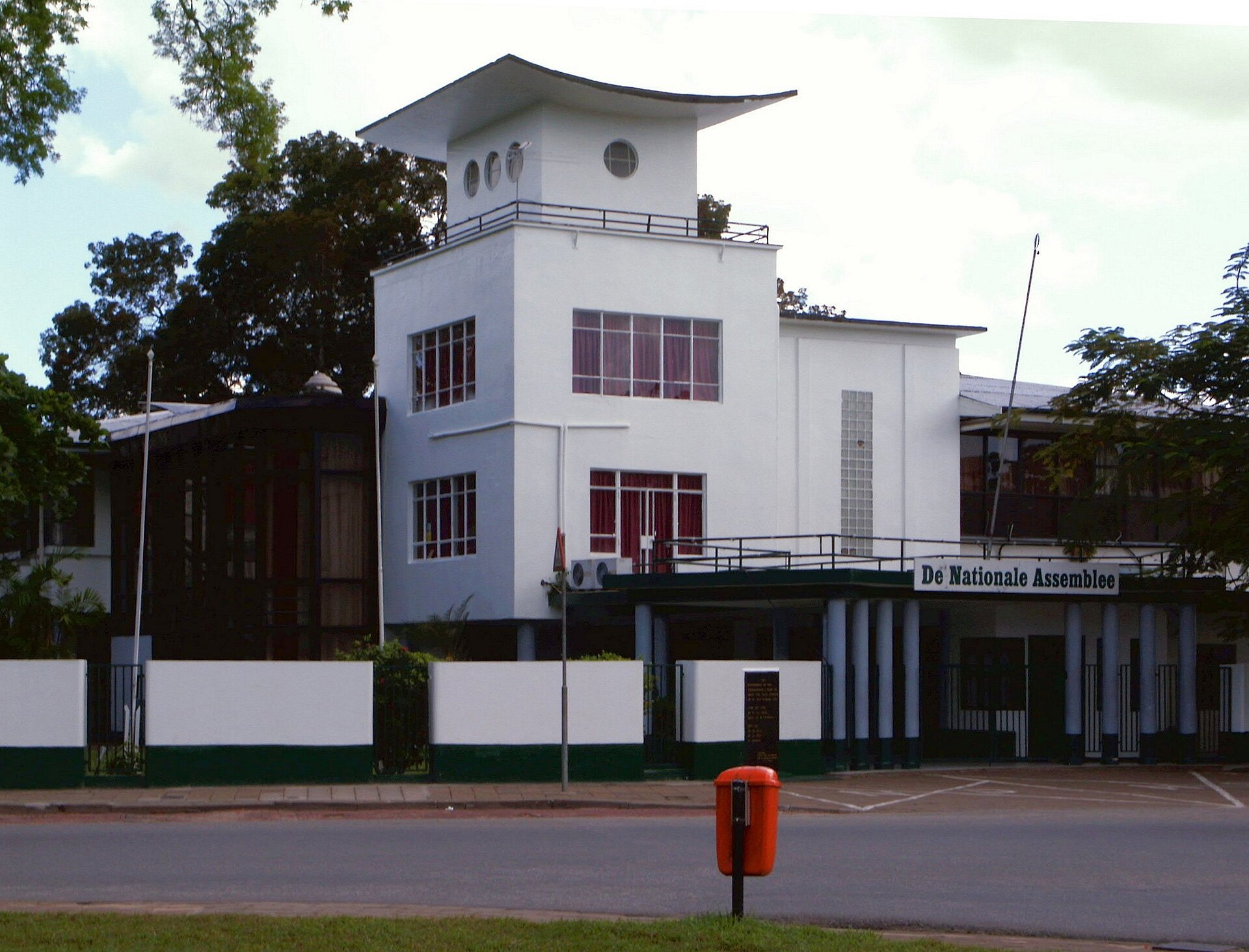

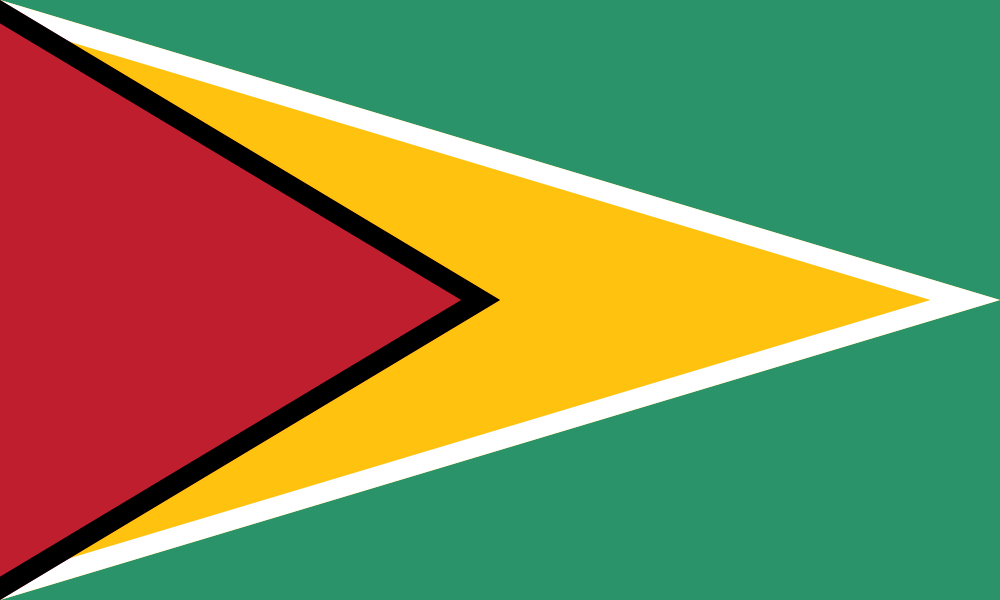
The only English-speaking country in South America, with untouched rainforest covering more than 80% of its territory. Kaieteur is the largest single-drop waterfall in the world by volume, nearly five times the height of Niagara. Guyana is a paradise for ecotourism: jaguars, giant otters, harpy eagles and hundreds of bird species. It is only beginning to open up to mass tourism, and keeps both its wildness and its Caribbean character.
Where to go
#Georgetown
The capital and the country's hub, worth a couple of days for the colonial atmosphere alone. You get extraordinary wooden Gothic architecture and loud markets with the ocean behind them. The city still runs on Dutch-built canals and keeps a Caribbean pace.
Bartica
Come here for the river trips, since the town sits where three large rivers meet. It is the gateway to the goldfields and has a real frontier feel. Life revolves around the landing and the boats carrying prospectors upriver.
Lethem
A border town in the south, where to go for the Rupununi savannahs and the crossing into Brazil. The atmosphere owes more to a western than to the coast. It is the ideal base for wildlife watching and for the famous rodeo.
Linden
A former bauxite town on the Demerara river, on the road into the interior. The odd blue lakes in its abandoned pits and the industrial landscape make it interesting. It works well as a stop on the way to the savannah.
Anna Regina
A quiet town on the Essequibo coast, surrounded by endless rice fields. It is a good base for exploring the many islands in the mouth of the great river. The unhurried spirit of old agricultural Guyana survives here.
Mahdia
A small settlement deep in the forest. You cannot do the falls in a day from here, but you can start a proper hike. People come for the genuine feel of wild jungle and to see the mining camps, and for being as far from anywhere as the country allows.
What to see
#What to see: Kaieteur Falls is the non-negotiable item, five times the height of Niagara. The easiest way in is a small plane from the capital, which takes about an hour. It is the most powerful single-drop waterfall on the planet.
Where to go: Orinduik Falls on the Brazilian border gives you the rare chance to swim in natural jacuzzis among jasper terraces. Operators often combine it with Kaieteur on the same flight, so you can cool off after the forest walk.
Worth a trip: The Iwokrama reserve draws people with its canopy walkway high in the treetops. It is the best place in the country to see a jaguar or a giant river otter in the wild. The night excursions, and the sound of the jungle after dark, stay with you.
In a day: In Georgetown itself, see St George's Cathedral, one of the tallest wooden churches anywhere. Stabroek market is next door, humming away under its 1881 clock tower. The Seawall promenade becomes the city's meeting place in the evening.
Mountains: Mount Roraima is the legendary plateau that gave Conan Doyle The Lost World. The climb takes time and preparation, but the view out over cloud below your feet earns it. It is the highest point in the country and usually wrapped in mist.
The coast: At Shell Beach you can watch four species of sea turtle lay eggs in the sand. This wild shoreline runs for 140 kilometres along the Atlantic. Night is the time to be there.
Prices
#Currency: The local money is the Guyanese dollar (GYD), though US dollars are accepted almost everywhere in the private sector. The rate is stable at roughly 209 to one USD. Small US notes are handy for taxis and guides.
Cards: Plastic works only in the larger chain hotels and expensive restaurants in the capital. The moment you leave Georgetown, cash is the only thing that counts. Visa and Mastercard are the realistic options, Amex almost never.
Exchange: The best rates come from the cambios on Water Street in the centre. Banks close early, usually at two in the afternoon, so do your banking in the morning. Always count the bundle before you step away from the counter.
Tipping: Restaurant bills often already carry a service charge, in which case nothing more is needed. Otherwise around ten per cent for good service is right. Jungle guides also expect a small reward at the end of a trip.
| Item | Price (USD) |
|---|---|
| Filled roti | 3.00 |
| Minibus ride | 0.80 |
| Taxi across the centre | 4.00 |
| Bottle of Banks beer | 2.50 |
| Street coconut | 1.00 |
| Cappuccino | 4.50 |
| Street portion of rice | 3.50 |
| Guesthouse per night | 45.00 |
| Flight to Lethem | 160.00 |
| Kaieteur tour | 320.00 |
| Litre of petrol | 1.10 |
| Lunch at a local cafe | 7.00 |
| SIM card with data | 5.00 |
| Water 1.5 litres | 1.20 |
| Dinner for two | 45.00 |
Getting around
#Minibuses: The cheapest way to move, packed and playing music at deafening volume. Every route has a number; zone 40, for instance, covers the centre of the capital. Expect no personal space, but it is the best way to feel the place.
Boats: Speedboats replace buses wherever the roads run out, particularly on the run to Bartica. You board at the jetties, the price is fixed and the ride is genuinely exhilarating. This is how you explore the river systems.
Domestic flights: Internal services from Ogle airport are what make the interior reachable. Trans Guyana Airways links the capital with Lethem and the jungle, and tickets are best bought ahead. The small aircraft give you the best views of the endless forest canopy.
Taxis: Cars with yellow plates and an H are your default for safe travel. There are no meters, so fix the fare firmly before you get in. After dark, a taxi is the only sensible way to get about.
Car hire: Driving yourself in Guyana is for the brave, given left-hand traffic and general road chaos. Away from the coast the roads are dirt and turn to swamp after a downpour. Most visitors hire a car with a local driver instead.
Getting there: Routes from Europe usually run through Panama City or one of the Caribbean islands, and Cheddi Jagan international is about an hour south of Georgetown. Anything routed through the United States needs American clearance even for a transit, so check that before booking.
Where to stay
#Guesthouses: The most affordable option for an independent traveller, a room for modest money. These are often family homes, with the owners downstairs and happy to give advice. It is a good way to see how ordinary Guyanese live.
City rooms: Georgetown has many old wooden buildings converted into hotels. The natural ventilation is excellent and the character is real, but sound insulation barely exists. Read reviews carefully so you do not land on a noisy street.
Eco-lodges: In the jungle you find lodges built from local materials with minimal comforts. They are expensive, because the price covers all meals and every guided excursion. In exchange you wake to howler monkeys.
Apartments: Booking sites list apartments with kitchens, which suits a longer stay. Cooking for yourself saves money and lets you buy tropical fruit and fish at the markets. These are usually in quiet gated residential areas.
Which district: In the capital, Kingston and Kitty are the calmest and safest places to stay. Avoid the dubious cheap places around Stabroek port, which can be very noisy. Check there are mosquito nets, because the insects here are serious.
Practicalities: Air conditioning is not universal and its presence pushes the price up noticeably. In the interior, electricity often comes from a generator on a schedule, so bring power banks. Guyanese hospitality tends to make up for what the plumbing lacks.
What to eat
#Pepperpot: The national dish, and something to eat on your first day. It is a dark, thick meat stew built on cassareep with cinnamon and cloves. It comes traditionally with homemade bread for dipping into the sauce.
Indian inheritance: Roti and a wide range of curries turn up on every corner for very little money. This is the legacy of indentured migration and it has become everyone's quick, filling meal. The flatbreads are always fresh and go a long way.
Street food: Phulourie, fried balls of split-pea flour, is the best thing to grab on the move, sold at markets straight from the pot with a sharp mango sauce. Buy from stalls with a queue and where the oil is clearly hot and busy.
Cook-up rice: The classic Saturday dish, rice with coconut milk, meat and several kinds of bean. It is heavy food that Guyanese love cooking for a crowd. Every household has its own secret spice mix for it.
Drinks: El Dorado rum is reckoned among the best in the world and is worth tasting in local bars. Fresh coconut water is sold on the street, opened with a machete in front of you. Local Banks beer does the job in the tropical heat.
Metemgee: A rich root-vegetable stew in coconut milk with salt fish or meat. This Creole dish will keep you going all day. The unusual combination captures the taste of the land of many waters.
Safety
#Georgetown: The capital needs attention, because street crime remains persistently high. Do not walk alone after sunset, even in the central districts; call a trusted taxi instead. Stay alert in market crowds.
Valuables: Leave expensive jewellery at home and do not display electronics in public. Use ATMs inside banks or hotels rather than on the street. Keep the bulk of your cash and your passport in a safe or a money belt.
The interior: Away from the cities the country is far safer in terms of crime, and people are notably welcoming. The risks in the jungle are natural ones: river currents, insects and snakes. Never head into the forest without an experienced local guide.
Wildlife: Jaguars and caimans do not seek out people, but you should watch where you put your feet in the forest. Always tell the lodge staff your route. Listen properly to the briefing before any river trip; the water is deceptive.
Local advice: Guyanese are sociable and will readily tell you which parts of the capital to avoid. If you feel you are attracting unwanted attention, step into the nearest shop. Trust your instincts and turn down offers from strangers.
Health: Drink bottled water only and use mosquito repellent consistently. Malaria is uncommon but prophylaxis and good insurance make for a calmer trip. The sun here is fierce, so sunscreen is not optional, and check your own government's travel advisory before you go.
Etiquette and culture
#A melting pot: The culture blends the traditions of Indian and African descendants with those of the indigenous peoples. Mosques stand beside Hindu temples and Anglican cathedrals. The result is an unusual range of festivals, music and custom.
Festivals: Mashramani in February is the big carnival, marking Republic Day. The streets fill with soca and calypso and people wear extraordinary costumes. Diwali and Holi are also celebrated on a large scale nationwide.
Talking to people: Guyanese are open and value courtesy, so greet the room when you walk in. English is official, but everyday speech is a lilting Creole. People are proud of their country and will happily tell you its history.
Attitude to nature: Guyana pushes a green identity hard and protects its forests carefully. Respect reserve rules, leave no litter and do not feed wild animals. Ecotourism here is a way of thinking, not just a business.
Photography: Always ask before pointing a camera at a person or their home. This matters especially in indigenous communities, where privacy is valued highly. Photographing military or government installations is prohibited outright.
Religion: Faith plays a large part in people's lives, so respect believers of every denomination. Dress modestly in places of worship and keep your voice down. Guyana's religious tolerance is genuinely something other countries could learn from.
Connectivity
#Mobile: Two operators dominate, GTT and Digicel, with offices easy to find in the capital. Bring your passport to buy a SIM; registration takes a few minutes. Coverage along the coast is excellent, mobile data included.
Internet: 4G is reliable in the towns and fine for maps and messaging. At lodges deep in the jungle there is often no signal at all, or only paid satellite Wi-Fi. Plan on a digital detox once you head inland.
Messaging: WhatsApp is the main channel for reaching guides, hotels and drivers. Almost every private-sector booking in Guyana happens through it. It also keeps a written record of what you agreed, which is useful.
Navigation: Google Maps works, though it does not always know the smaller suburban street names. Download the offline region so a lost signal does not leave you stranded. In the jungle, rely only on your guide's tracks.
Calls: Local calls are cheap; international rates can be steep. Use messaging apps for calls wherever there is a connection. Internet cafes still exist in the cities, though fewer every year.
Sockets: Hotels have US-style type A and B outlets or British type G, and voltage is 240. Buy a universal adapter before you travel, and note that in some lodges the only sockets are in a shared charging area.
Phrasebook
#| English | Guyanese Creole | Pronunciation |
|---|---|---|
| How are you? | How yuh do? | how yuh DOO |
| What's happening? | Wah gwaan? | wah GWAAN |
| Thank you | Tanks | tanks |
| Please | Please | pleez |
| How much is this? | How much fuh dis? | how much fuh dis |
| That's too expensive | Too dear | too DEER |
| Where is the hotel? | Weh de hotel deh? | weh de ho-TEL deh |
| Friend, mate | Pardna, bai | PAHD-na, bye |
| Help me! | Help me! | help mee |
| I don't understand | Me na understand | me na on-der-STAND |
| It's delicious | Real sweet | real sweet |
| Yes / No | Yeah / Nah | yeah / nah |
| All right, OK | Aright | ah-RIGHT |
| Left / Right | Left / Right | left / right |
| Drinking water | Wata | WAH-ta |
| Food | Food | food |
| See you later | Lata | LAH-ta |
| Safe travels | Walk good | wok good |
| Sorry | Sorry | SAH-ree |
| That's lovely | That nice | dat nice |
Good to know
#Electricity: Sockets are the American flat-pin type, and the supply runs at 240 volts, so check your chargers are rated for it. Some regions still get rolling blackouts.
Water: Never drink from the tap, even in good hotels; it will find you out. Bottled water is sold in every corner shop. Use it for brushing your teeth as well.
Consular help: Only a handful of countries maintain embassies in Georgetown, and many cover Guyana from Trinidad or further afield. Look up which mission handles your nationality and note the emergency number before you travel.
Weather: Two rainy seasons can wreck a plan by washing out the interior roads. The best window is February to April, once the downpours stop. That is also when the landscape looks its best and the tracks are drivable.
Airport: Cheddi Jagan, the main airport, is about an hour's drive south of the capital. A taxi into town is roughly 30 dollars and there is no scheduled bus. Arrange a transfer through your accommodation so someone meets you.
Souvenirs: Beyond the famous rum, look at indigenous woodwork and straw craft. Buying directly from the communities means the money stays there. Guyana is also known for good-quality gold and jewellery.
Frequently asked questions
#Most routings from Europe go through Panama City or one of the Caribbean islands into Cheddi Jagan international. Connections via the United States require American clearance even if you never leave the airport, so factor that in when you compare fares.
Just after the rains end, in September or March, when the volume of water is at its greatest. Skies also tend to clear then, which matters enormously for the sightseeing flight from Georgetown.
The fastest and most comfortable option is the Trans Guyana Airways flight, about an hour. The budget alternative is a minibus down the dirt road, which takes anywhere from 12 to 18 hours depending on conditions.
Walking after dark in the capital is strongly discouraged because of street robbery. For any movement at night, have your accommodation call a licensed taxi; that is simply the normal precaution here.
A yellow fever certificate is officially required if you are arriving from a country where the disease is endemic. Hepatitis A and typhoid are strongly advised, and for deep jungle trips ask your doctor about malaria prophylaxis.
The official cambios in central Georgetown give the best rates. ATMs dispense local currency but often charge heavily and do not always accept foreign cards, so bringing US dollars in cash is the safer plan.
Yes. From the border town of Lethem you cross the Takutu river bridge into Bonfim in Brazil. It is a modern crossing with a purpose-built interchange that flips traffic from driving on the left to driving on the right.
A standard package with the flight from Ogle airport runs about 300–350 USD per person. That normally covers the flight itself, a guide in the national park, entry fees and a light snack with drinking water.
Yes, but with restrictions. Registration is mandatory for a drone of any weight. Registration is mandatory for tourists. Rules for other countries are in the drone ranking by country.
Updated
The data on this page goes out of date. Visa rules and permitted stays, border requirements, prices and budgets, transport and local conditions all change fast, and we do not re-check every page every day. We show the date of our last check where we have one, but before you travel, verify with official sources: the country’s consulate, its immigration service, its e-visa portal and your carrier.