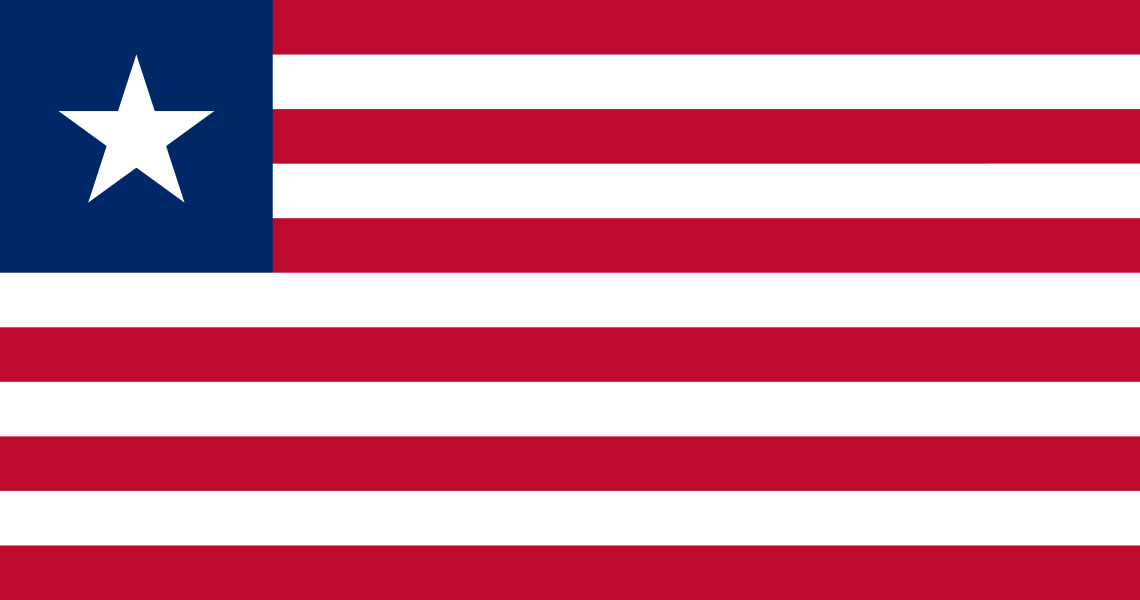
Liberia
LRThe oldest republic in Africa, founded in 1847 by freed American slaves. Liberia is tropical rainforest, an undeveloped Atlantic coast, Sapo National Park and a remarkable history in which African and African-American cultures were woven together. The country is rebuilding after two civil wars and slowly opening to travellers. English is the official language.
Where to go #
Monrovia
The one real city, where essentially all of the country's life is concentrated. Go to Waterside market for fabric, see the ruined Masonic temple and the memorial on Providence Island. Cee Cee and Sugar Beach are where you recover afterwards.
Robertsport
A quiet fishing village that became a magnet for surfers worldwide because of its empty left-hand breaks. Historic buildings survive here, and Lake Piso with its mangroves spreads out alongside. It is the best place in the country to slow down and live in a tent or a beach guesthouse.
Buchanan
The second port, usually used as a staging post on the way east. The town itself has attractive palm-lined beaches and a colonial air. It is the easiest place from which to plan a push into the remote forest districts.
Gbarnga
A town in the heart of the country, surrounded by rubber plantations that look like endless ranks of identical trees. People come to see the Kpatawee waterfalls and to feel what the real interior is like. It is an important junction if you are heading for the Guinean border.
Harper
The most authentic and hardest-to-reach town, out on the Ivorian border, where time appears to have stopped. Ruined mansions in an American Southern style and the lighthouse on Cape Palmas make a genuinely melancholy picture. Getting here punishes any vehicle, but the reward is total strangeness.
What to see #
Sapo National Park: An enormous block of untouched rainforest holding rare pygmy hippos and forest elephants. Worth the trip for a real adventure, since there are no roads inside and you move on foot or by canoe.
Providence Island: A tiny patch of land in the capital where the first ships carrying freed slaves landed. It is regarded as the cradle of the nation and now holds a historical memorial.
The surf at Robertsport: If you are wondering where to go for waves without crowds, this is it. The Fisherman's and Cotton Trees points deliver a consistent swell more or less year-round.
Firestone plantations: Vast rubber-tapping estates that have been running for a century. You can do a day here watching latex collected and take in the sheer scale of the operation.
Kpatawee waterfalls: A picturesque cascade forty kilometres from Gbarnga where you can swim in cool natural pools. It is a popular local picnic spot ringed by a solid wall of forest.
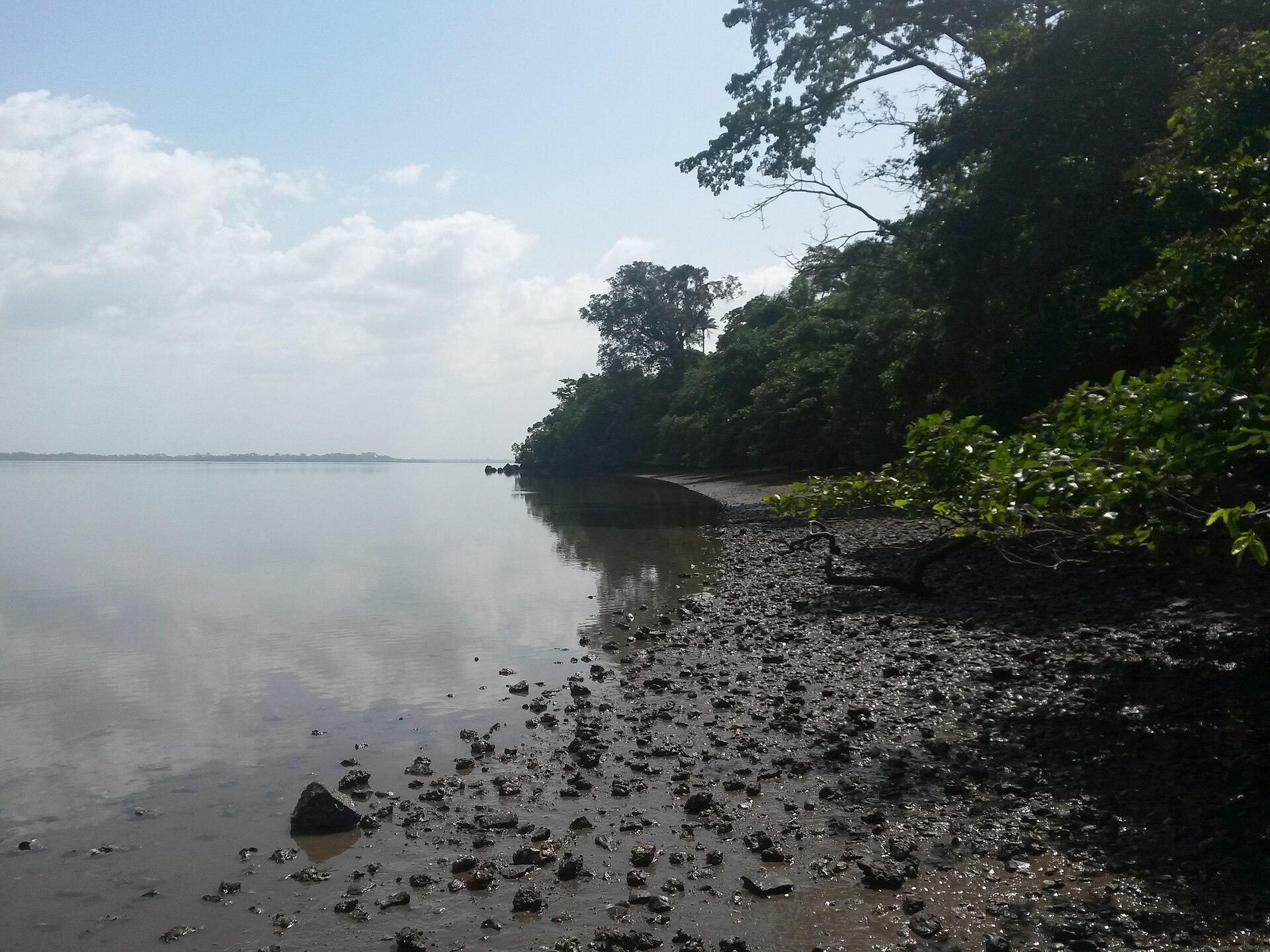
Lake Piso: A huge lagoon beside the ocean, ideal for birdwatching and for fishing with locals from traditional canoes. The water is warm and the shores are heavy with mangroves.
Prices #
Two currencies: Liberia officially runs on both the Liberian dollar (LRD) and the US dollar. Larger bills and accommodation are always settled in American money, while small change comes back in local notes.
Cash: This is a cash country where paper notes decide everything. Bring a stock of new small-denomination USD, ones, fives and tens, because finding change for anything larger is a constant struggle.
Cards: Payment terminals are rare even in the capital and ATMs barely exist. Counting on withdrawing cash is dangerous, so bring everything you need with you. A Wise or Revolut card is not a plan here.
Exchange: Change money at Ecobank branches or with licensed money changers in the markets. Street rates are often better, but count the bundles carefully, because inflation means very thick stacks.
| Item | Price (USD) |
|---|---|
| Street rice with sauce | 3.00 |
| Lunch in a local café | 8.00 |
| Restaurant dinner | 15.00 |
| Bottle of Club beer | 2.00 |
| 1.5L water | 1.00 |
| Guesthouse night | 25.00 |
| Motorbike taxi across town | 2.00 |
| Tuk-tuk (keh-keh) | 1.00 |
| Bush taxi to Robertsport | 7.00 |
| Taxi from the airport | 25.00 |
| SIM card with data | 5.00 |
| Surfboard rental | 10.00 |
| Surf lesson | 20.00 |
| National park entry | 10.00 |
Getting around #
Between towns: Bush taxis, meaning old saloons and minivans, are how you cross the country. They leave from the markets, Duala in Monrovia among them, and only once every seat is filled.
In the city: Three-wheeled keh-kehs and okada motorbike taxis are the simplest way around the capital. They are cheap and cut through traffic, but the riding is chaotic and demands some care.
Hire: Renting a car to drive yourself is effectively impossible. For trips into the interior, such as Sapo park, arrange a 4x4 with a local driver through your hotel.
Road conditions: Tarmac covers only a couple of main highways; everything else is dirt with deep holes. In the rainy season from May to October many routes turn into impassable swamp.
From the airport: Roberts International sits 65 km from Monrovia and taxis are the only way in. There is no fixed price, bargaining starts around 30 dollars, and the drive takes about an hour.
A local rule: If a government motorcade appears on the road, pull to the verge and stop immediately. Failing to do this leads to genuine trouble with the police.
Where to stay #
What exists: There are no conventional hostels; budget travellers use small city hotels and private guesthouses. Room quality often does not match the price and interiors will be very plain.
Electricity: The municipal grid is unreliable, so a generator is critical. When booking, ask which hours the power runs and whether the room actually has air conditioning.
Booking: The popular platforms know only a couple of expensive hotels in the capital. Most places have to be found through Facebook or booked on the phone number painted on the sign.
Surf lodges: Robertsport accommodation is its own category: beach huts or raised platforms for tents. The atmosphere is excellent and you will meet like-minded and well-travelled people.
Price and comfort: The cheapest rooms at 15 to 20 dollars give you minimal facilities and generator noise under the window. Relative comfort with hot water starts around 50.
Security: Choose places with a guard at the entrance and solid locks on the doors. In the provinces, guesthouses attached to religious missions are the safest bet.
What to eat #
The foundation: Almost every meal in Liberia is a large mound of rice under a thick and very hot sauce. The local "country rice" has a reddish tint and a distinctive aroma.
The classics: Try palm butter, an oily stew of palm fruit with fish or meat. Cassava leaf, cooked from ground manioc leaves with oil, is equally popular and just as filling.
On the move: Street sellers do jollof rice and fried plantain everywhere. It is the cheapest way to eat, a couple of dollars a portion, and it keeps you going all day.
Hygiene: Tap water quality is very poor, so drink only bottled. Wash fruit and vegetables carefully and skip ice in drinks at the cheaper places.
Seafood: Along the coast, especially in Robertsport, you will always find fresh snapper or barracuda on the grill. It comes with hot pepper and cassava and it is excellent.
Drinks: For something non-alcoholic, hunt down homemade ginger beer, which is fiery and genuinely reviving. Markets also sell sweet palm wine tapped from the trees that morning.
Safety #
The picture: Liberia has a high crime rate, so basic precautions matter constantly. Do not display expensive electronics or thick stacks of cash in public.
After dark: Walking around Monrovia once the sun is down is strongly inadvisable. Take a taxi for any movement between hotel and restaurant, even if it is only a couple of blocks.
Higher-risk areas: Avoid Waterside market alone and stay out of the outlying informal settlements. Pickpockets work the crowds and identify foreigners instantly.
Health: Malaria is a real and constant threat and prophylactic tablets are not optional. Take out solid insurance that will pay to fly you out, because local healthcare is in poor condition.
Checkpoints: Roadblocks where documents are checked are common. Always carry your original passport with the visa, stay polite, and give officers no opening to ask for a bribe.
Photography: Photographing military sites, government buildings, bridges and the airport is completely forbidden. Always ask permission before pointing a camera at a person.
Etiquette and culture #
A historical blend: The culture is a unique fusion of the traditions of African-American settlers and indigenous peoples. It shows in everything from the architecture of the old mansions to hipco music.
Kolokwa: English is the official language, but the street speaks Kolokwa, an English-based creole. It is hard to follow at first, though Liberians switch to standard English easily when they see you struggling.
Secret societies: In rural areas the Poro and Sande societies still carry real influence. These are closed brotherhoods with their own rituals, and foreigners are better off not asking locals about them.
Faith: Liberians are devout and most identify as Christian. Sunday service is a vivid event full of singing, and dropping in for the atmosphere is well worth it.
Football: Football is the national passion and the default conversation. George Weah remains a national hero, and discussing recent matches will get you talking to almost anyone.
Dress and respect: Liberians like to look sharp and value bright lappa fabrics. Marked deference to elders is expected, while aggression or shouting is considered the height of bad manners.
Connectivity #
Operators: Two players dominate, Lonestar MTN and Orange. 4G is solid in Monrovia and the larger towns, but in the forest and along the highways the signal often vanishes entirely.
Buying a SIM: Get one at an official office or from street vendors in yellow or orange vests. Registration needs your passport and takes about ten minutes.
Data: Packages are inexpensive, around 5 to 10 dollars for a substantial allowance. Speeds can disappoint though, particularly during the evening peak.
eSIM: Services that let you activate a data plan before departure are a convenient option and save you hunting for an operator office the moment you land.
Hotel Wi-Fi: Wireless in hotels is a lottery. Even where a router exists, the connection may be dead because of power problems or an unpaid provider bill.
Messaging: WhatsApp is what everyone uses. Liberians run businesses and personal calls through it, so it is the best way to reach drivers and guesthouses.
Phrasebook #
| English | Liberian English | Pronunciation |
|---|---|---|
| Hello | Hello | heh-LOH |
| How are you? | How you doin'? | how yoo DOO-in |
| I'm fine | I fine-o | ah FINE-oh |
| Thank you | Tank you-o | tank YOO-oh |
| Yes / No | Yah / Na | yah / nah |
| How much is it? | How much da one? | how much da WAN |
| That's too expensive | Da too dear-o | da too DEER-oh |
| Very tasty | Da sweet-o | da SWEET-oh |
| Where is...? | Whe' da...? | weh da |
| Help me! | Hep me-o! | hep MEE-oh |
| I don't understand | I na understand | ah na un-da-STAND |
| My friend | My pekin | mah PEH-kin |
| Fine, alright | Yah, da fine | yah, da FINE |
| Goodbye | Bye-bye-o | bye-BYE-oh |
| Let's go | Le' we go | leh wee GOH |
| Food (slang) | Chop | chop |
| White foreigner | Kwi | kwee |
| Slowly | Small-small | SMALL-small |
| Trouble, argument | Palava | pa-LAH-va |
| No problem | No palava | noh pa-LAH-va |
Good to know #
Consular help: Many countries keep no mission in Monrovia at all and cover Liberia from Abidjan or Accra. Find out which applies to your passport and save those contacts before you travel, because you will not sort it out on arrival.
Vaccinations: Beyond yellow fever, which is mandatory for entry, hepatitis A, typhoid and meningococcal jabs are strongly advised. Carry repellent and alcohol hand gel throughout.
Power: Sockets are the American types A and B at 220 volts, an unusual combination. Buy a universal adapter and a serious power bank, because charging opportunities are short and infrequent.
Emergencies: The single number 911 works very unreliably. In a serious situation, go directly to a large hotel with its own security or to an international organisation's office.
Apps: Download Google Maps offline packs and a translation app. Your operator's own app is useful too, for watching your data balance before it runs out at the worst moment.
Opening hours: Shops generally run from 8am to 9pm. Banks close early, around 15:00 to 16:00, and almost nothing official operates at weekends.