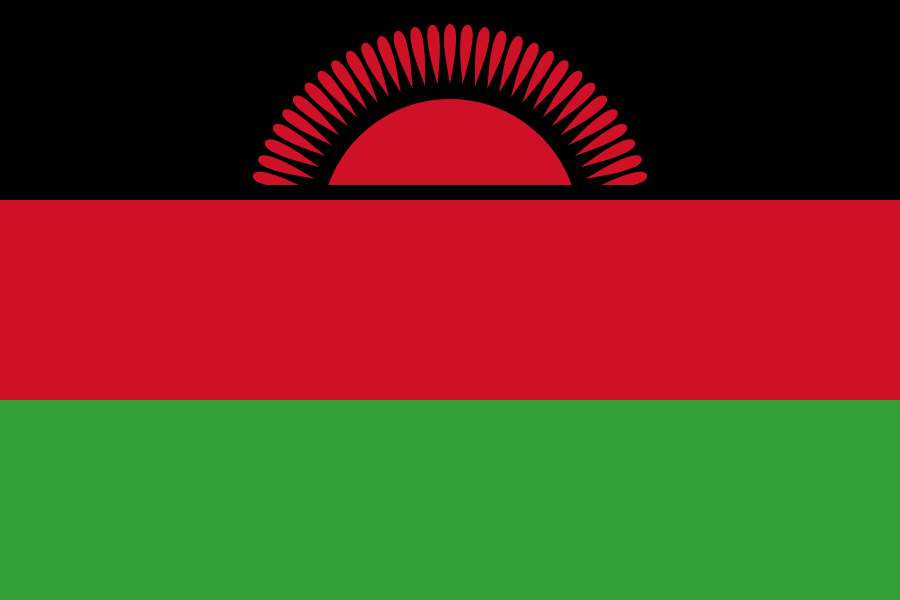
Malawi
MWThe Warm Heart of Africa, so called for the extraordinary friendliness of its people. The centrepiece is Lake Malawi, the third largest in Africa, with clear water and hundreds of species of cichlid. The country offers safari, mountain trekking, freshwater diving and unhurried time on the beach — all at prices that will please even the most frugal traveller.
Where to go #
Lilongwe
The modern capital is the main entry point, and a day covers the Old Town with its lively markets and the Wildlife Centre. It is the place to buy everything you need before heading into the country proper. The city splits in two: a noisy trading zone and a quiet green quarter of government buildings.
Blantyre
Worth a trip to this commercial centre for the old colonial architecture and atmospheric open-air markets. It is busier than the capital and serves as the base for climbing the Mulanje massif. Here you feel the real rhythm of working Africa, among nineteenth-century churches.
Nkhata Bay
Come here if you like a slow life in the bays of the lake's northern shore. It is the ideal place to get stuck for a week in one of the legendary guesthouses right on the water. This port town has the best diving and the best evening fires shared with other travellers.
Mzuzu
The largest city in the north is mostly a transit hub, but a day here is pleasant for the cool highland climate. It is a good place to plan routes to the high plateaus and remote missions. The city is known for its university and an enormous central market with cheap, good food.
Zomba
The former capital sits at the foot of its own plateau, full of waterfalls and streams. It has kept a British-era feel and is excellent for walking. The climb to the top of the plateau opens up huge views over the valleys and into neighbouring Mozambique.
Cape Maclear
People come to this fishing village for the best snorkelling and golden sunsets on the southern lake. Life moves slowly and the clear water shows you hundreds of fish straight off the beach. It lies inside a national park and is among the most beautiful spots on the whole Nyasa shore.
What to see #
What to see: Lake Malawi is the reason most people come, offering diving among hundreds of species of bright cichlids. Visibility reaches thirty metres, which makes the dives memorable even for beginners.
Where to go: Liwonde National Park is the best place for a safari, with elephants and hippos seen from a boat on the Shire river. Entry costs around ten dollars, making it one of the most affordable parks in the region.
Worth the trip: Mount Mulanje rises above the tea plantations and draws anyone who likes multi-day treks. It is the highest point in Central Africa and demands real fitness plus warm clothing for nights in the huts.
Doable in a day: the Zomba plateau delivers views over endless valleys and icy streams stocked with trout. There are mysterious clefts in the rock and picturesque waterfalls surrounded by dense growth.
What to see: Majete reserve is notable for having fully restored its Big Five populations. It is a rare chance to see lions, leopards and rhino in their own habitat without crowds.
Where to go: Likoma Island, surrounded by Mozambican waters, hides an enormous stone cathedral and empty beaches. Reaching it on the legendary Ilala ferry is an adventure in itself.
Worth the trip: the Chongoni rock art covers more than a hundred ancient sites among granite hills. The paintings are thousands of years old and give a rare window into Stone Age life here.
Prices #
Currency: the Malawian kwacha, trading around 1,740 to the dollar in early 2026. Change money at banks or licensed bureaux in the larger cities.
Cash: bring US dollars, and only notes issued after 2013, since older designs are taken at a poor rate. Small denominations are useful for minor costs and for tipping guides.
Cards: you can pay by card only in the expensive chain hotels and the capital's big supermarkets. The rest of the country runs on paper money, so do not count on a terminal working in the provinces.
ATMs: withdrawing is a lottery of empty machines and technical faults. Standard Bank branches usually have the lowest fees and the best odds of actually dispensing cash.
Tipping: ten percent in restaurants that have table service, and a few dollars a day for a safari guide or boat operator.
| Item | Price (USD) |
|---|---|
| Chambo fish dinner | 6.00 |
| Nsima with beans | 1.50 |
| Carlsberg Green beer | 1.80 |
| Water 1.5 l | 0.40 |
| Coffee in a city cafe | 3.00 |
| Hostel dorm bed | 10.00 |
| Guesthouse room | 15.00 |
| City minibus | 0.50 |
| Intercity bus | 8.00 |
| Taxi ride | 5.00 |
| National park entry | 10.00 |
| SIM card with data | 1.00 |
| Kayak hire per hour | 5.00 |
| Mandasi doughnut | 0.15 |
Getting around #
Getting there. Lilongwe and Blantyre are reached through Addis Ababa, Nairobi, Johannesburg or Dar es Salaam, so from Europe or North America you connect once or twice. Overland entry from Zambia, Tanzania and Mozambique is straightforward, and many travellers fold Malawi into a longer southern Africa route.
Minibuses. The mass form of travel, leaving only when every seat is filled. Expect to be squeezed, expect loud music, and expect a stop in every village along the way.
Coaches. For Lilongwe, Blantyre and Mzuzu, pick a company like AXA. They run to a timetable, have luggage holds and are considerably safer than the minibuses.
The ferry. The legendary Ilala works its way up and down the lake, linking north and south. It is less a transport service than a floating market and the best way to see life in the remote lakeshore communities.
Taxis. City cars have no meters, so agree the fare before you get in. Haggling is expected, particularly if you pick a car up outside a hotel.
Boda-bodas. The motorbike taxis are the fastest way through rush hour. Helmets are rarely offered to passengers, so the ride carries genuine risk.
Bicycles. In Livingstonia or on the Zomba plateau you can hire a bike for your own exploring. The roads are quiet and the views justify stopping at every bend.
Car hire. Main roads between cities are in decent condition, but secondary routes wash out in the rains. Driving at night is strongly discouraged because of livestock on the road.
Where to stay #
Guesthouses. The most affordable option for an independent traveller, offering basic comfort. Rooms normally have a mosquito net and a fan, which matter more than anything else in this climate.
Camping. The lakeshore has many places to pitch your own tent or rent one ready-made. It is the best way to live close to the water and fall asleep to the sound of it.
Backpacker places. Nkhata Bay and Cape Maclear hold the best of them, with shared kitchens and bars. It is easy to find people to split a boat hire or a safari trip with.
City hotels. Lilongwe and Blantyre have decent options for the night before a flight home. Book online in advance rather than paying the walk-in rate at the desk.
Lodges. Staying inside the national parks costs more but lets you watch animals from the veranda. Many include full board and professional guiding.
Missions. In remote areas such as Livingstonia you can stay at former church communities. They are wonderfully authentic, full of history, with panoramic views over Lake Nyasa.
Booking. Popular lakeside places fill up fast in the dry season, so message owners directly on WhatsApp. That is often the only reliable way to hold a room for your dates.
What to eat #
Nsima. The staple is a very thick maize porridge. You eat it with your hands, tearing off pieces and dipping them into vegetable relishes or meat sauces.
Fish. Try chambo, the local tilapia, caught in the lake itself. It is usually grilled whole over coals and served with a mountain of chips or with nsima.
Street food. Markets and bus stations always sell mandasi, sweet doughnuts fried in hot oil. They are the cheapest and fastest breakfast on a long journey.
Water. Never drink from the tap, even in the capital's better hotels, because the infection risk is real. Buy bottled water and check the factory seal before paying.
Drinks. The country brews an excellent light lager under Carlsberg licence for very little money. The local black tea is worth attention too, since Malawi is a major exporter.
Chips mayai. The chip omelette arrived from the neighbours and became a national favourite. Filling, safe and available at practically any roadside stall.
Indian influence. The bigger cities have excellent curry, samosas and biryani, the legacy of a long-established Indian community that brought its spices with it.
Safety #
Theft. The country is among the calmest in the region, but pickpockets work the busy markets. Keep valuables in a money belt and do not display large sums in front of anyone.
Malaria. This is the main threat to your health and prophylaxis is genuinely essential. Sleep under a net and use strong repellent from late afternoon onwards.
Bilharzia. Parasites live in still water near the shore, so swim where the water moves and is deep. Diving and snorkelling away from the reeds is generally considered safe.
Night travel. Moving between towns after dark is a very bad idea given the total absence of lighting. Animals and livestock wander onto the road and serious crashes follow.
Wildlife. On safari and at lakeside camps, remember that hippos and crocodiles kill people. Never approach for a photograph and always follow your guide's instructions.
Money scams. Changing money on the street invites short-counting and forged notes. Count kwacha yourself and hand over nothing until you have checked the whole amount.
Police. Attitudes to foreigners are friendly, but roadside document checks are frequent. Carry a good copy of your passport and leave the original in the hotel safe.
Etiquette and culture #
Warmth. Malawians are open and kind, which is why the country calls itself the warm heart of Africa. You will often be greeted with a shout of "mzungu", which is not an insult but a statement of fact.
Greetings. The handshake is an important daily ritual and can last a while. Supporting your right elbow with your left hand while shaking is a mark of real respect.
Dress. Society remains conservative, so avoid revealing clothing in villages. Cover knees and shoulders and you avoid a great many disapproving looks.
Photography. Always ask before pointing a camera at a person or their goods. Photographing bridges, military sites and government buildings can bring serious trouble.
Religion. Christianity runs deep, and a Sunday service with full-throated singing is an extraordinary thing to witness. Along the lake, older Islamic traditions are strongly felt too.
Gule Wamkulu. If you are lucky enough to see the masked ritual dances, count it a privilege. This is the secret society of the Chewa people, and its performances remain wrapped in mystery.
Time. Nobody hurries here and punctuality is a flexible idea. Take the slower rhythm as part of the trip rather than something to fight.
Connectivity #
SIM cards. Airtel and TNM are the main operators, with sales points at every airport and in every market. You need your original passport and a few minutes for registration.
Coverage. Data is stable in the cities and along the main roads, but drops out in the hills and on the lake. Download offline maps before you need them.
Internet. Free Wi-Fi in cheaper guesthouses is rare and usually crawls. Mobile data is cheap and far more reliable than anything the hotel provides.
Electricity. Rolling blackouts are common and can last several hours. A good power bank and a head torch belong in every independent traveller's bag.
WhatsApp. It is the main channel in the country, used to arrange everything from a room booking to a boat hire, with hotels and drivers alike.
Sockets. The British three-pin type G plug is standard, so an adapter is compulsory. You can buy one locally, but it is easier to bring your own.
Language. English is official and widely spoken in the towns, so communication is easy. A couple of words of Chichewa will win over anyone you meet.
Phrasebook #
| English | Chichewa | Pronunciation |
|---|---|---|
| Hello | Moni | MO-nee |
| How are you? | Muli bwanji? | MOO-lee BWAN-jee? |
| I'm fine | Ndili bwino | n-DEE-lee BWEE-no |
| Thank you | Zikomo | zee-KO-mo |
| Thank you very much | Zikomo kwambiri | zee-KO-mo kwam-BEE-ree |
| Yes | Inde | EEN-deh |
| No | Ayi | AH-yee |
| How much is it? | Ndi zingati? | ndee zin-GA-tee? |
| That's expensive | Ndi kokwera | ndee ko-KWEH-ra |
| Water | Madzi | MA-dzee |
| Food | Chakudya | cha-KOO-dya |
| Help! | Thandizeni! | tan-dee-ZEH-nee! |
| Friend | Bwenzi | BWEN-zee |
| Foreigner, white person | Mzungu | m-ZOON-goo (slang) |
| Malawi is great | Malawi ndi yabwino | ma-LA-wee ndee ya-BWEE-no |
| No problem | Palibe vuto | pa-LEE-beh VOO-to |
| Okay, all right | Chabwino | cha-BWEE-no |
| Sorry | Pepani | peh-PA-nee |
| Safe journey | Pitani bwino | pee-TA-nee BWEE-no |
| Let's go! | Tiyeni! | tee-YEH-nee! (slang) |
Good to know #
Entry rules. Most visitors need a visa, available online in advance or on arrival at the airport and main land borders for many nationalities, so check what applies to your passport before booking. You need six months of passport validity and two blank pages, and a yellow fever certificate if you are arriving from an endemic country.
Your embassy. Very few countries maintain a mission in Lilongwe, and most cover Malawi from Lusaka or Pretoria. Note the right contact details before you leave home.
Maps. Install Maps.me, which marks footpaths and small guesthouses that other services miss. It keeps you found in the hills and around Livingstonia.
Insurance. Choose a policy with strong coverage including evacuation. Specialist medicine is limited here, and serious cases are flown to South Africa.
Luggage. For cramped minibuses, take a soft backpack rather than a hard wheeled case. It goes on the roof or under a seat far more easily when the aisle is full.
When to go. The dry season from May to October is the best window, with sunny weather, passable roads and far fewer mosquitoes than the hot rainy months.
Laundry. Most guesthouses will wash clothes for a token sum. Everything dries fast in the sun, but iron or check garments for putzi fly larvae before wearing them.