Palau
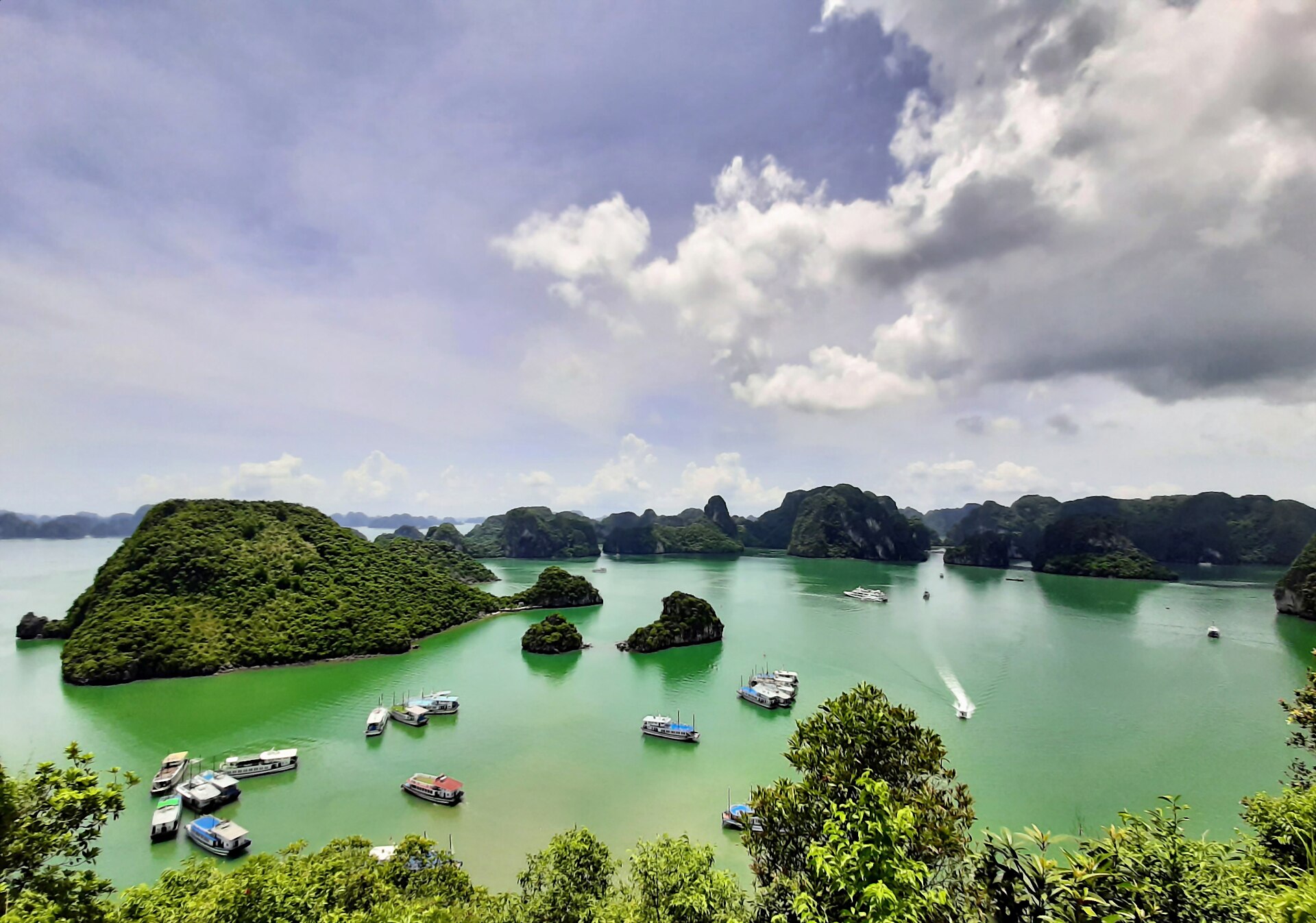
PWAn archipelago of more than 340 islands in the western Pacific and one of the finest places on earth for diving and snorkelling. The UNESCO-listed Rock Islands, Jellyfish Lake, the underwater walls of Blue Corner and the manta rays of German Channel draw divers from all over. Palau was the first country to turn 80% of its waters into a marine sanctuary. Most nationalities need no visa, and the $100 environmental fee is already included in the air ticket.
Where to go #
Koror
The centre of everything, holding nearly all the hotels, dive shops and supermarkets. It is the base almost every independent traveller uses, because the boats to every island leave from here. The bars are pleasant in the evening and the markets busy through the day.
Melekeok
A small settlement on Babeldaob that shows you the quiet side of Palauan life. It draws people who want to be away from the commercial bustle of Koror. You can walk the shoreline and watch families going about an unhurried day.
Ngerulmud
The tiny official capital, with an improbably grand Capitol building sitting in the middle of the jungle. It is an architectural symbol with almost nobody in it and a great deal of space. Most visitors stop for the photograph and for the strangeness of the silence.
Peleliu
An island with a harsh military history, still holding wrecked equipment and wartime caves. That tragic past sits oddly alongside wild beaches and genuinely excellent diving. Give it two days if you want to find the memorials scattered through the forest.
Kayangel
The northernmost atoll, with a turquoise lagoon and white sand. There is no mobile signal and no infrastructure to speak of, only calm and unspoiled nature. It is the place for a complete reset, staying in a simple guesthouse a long way from anything.
What to see #
What to see: the Rock Islands, hundreds of limestone mushroom-shaped islets rising out of impossibly blue water. Rent a kayak and you can find a cove where nobody else has been all day.
Where to go: Jellyfish Lake remains extraordinary, despite the population fluctuating with the climate. Swimming in silence among thousands of stingless golden jellyfish is not replicable anywhere else on the planet.
Worth a trip: the Milky Way is an open-air natural spa. The white clay from the bottom does genuine things for your skin, and floating in that opaque turquoise water looks frankly surreal.
Do it in a day: take a car on Babeldaob to reach the Ngardmau waterfall. The walk through the jungle takes half an hour and ends at a big cascade with a cool pool underneath it.
For divers: the legendary Blue Corner draws sharks, Napoleon wrasse and huge schools of fish. The currents demand a reef hook, which lets you hang on the lip of a bottomless wall and watch it all go past.
Wartime diving: the wreck of the Japanese vessel Iro Maru impresses even people who have seen a lot of wrecks. Coral has taken it over and thousands of fish live in it, but the sense of a moment frozen in time is intact.
Prices #
Currency: the US dollar is the only money in use. Nothing else is accepted, so bring dollars with you rather than paying to convert twice.
Cards: Visa and Mastercard work in the larger hotels and restaurants in Koror, and Amex rarely does. Small shops, taxis and anything on the outer islands take cash only.
ATMs: the machines are concentrated in the commercial centre and there are not many. Keep a supply of small notes for souvenirs, museum entry and roadside food.
Tipping: not obligatory, but appreciated for good service. Rounding up, or adding around ten percent in a restaurant, is what people do.
Fees to budget for: the permits are the real cost of a Palau trip, with a Rock Islands permit and a separate Jellyfish Lake permit on top of your boat fare. Factor those in before you decide how many days on the water you can afford.
| Item | Price (USD) |
|---|---|
| Lunch in a local café | 10.00 |
| Dinner for two in a restaurant | 55.00 |
| Supermarket bento box | 8.00 |
| Cup of coffee | 3.00 |
| 0.33L local beer | 4.00 |
| 1.5L bottled water | 2.00 |
| Car hire per day | 60.00 |
| Taxi across town | 8.00 |
| Rock Islands permit | 50.00 |
| Jellyfish Lake permit | 100.00 |
| Full-day snorkelling tour | 170.00 |
| Two-tank dive | 160.00 |
| Guesthouse per night | 90.00 |
| Litre of petrol | 1.30 |
Getting around #
Getting in: flights arrive from the Asian hubs, with several services a week from Taipei, Manila and Seoul, and seasonal links from Japan and Guam. From Europe or North America that means two or three connections, so give yourself a spare day at each end.
Taxis: cars work without meters and are found at hotels or called by phone. A trip around Koror usually has a set price, but agree it with the driver before you get in.
Car hire: the best way to see Babeldaob in a single day. The roads there are in good condition, there is almost no traffic, and the loop road takes in every major sight on the main island.
Between islands: everything happens by fast boat. The transfer is usually included in the price of an excursion, though you can arrange a private charter at the port for the more distant atolls.
On foot: central Koror is compact enough to walk between shops and cafés. Just respect the heat, wear a hat and carry water, because the humidity does the damage rather than the temperature.
Airport logistics: get to your accommodation by taxi or book a transfer through your hotel. There is no public bus network at all, so plan the journey from the terminal before you land.
Driving: traffic keeps right. Drivers are courteous, speeding and overtaking are considered unnecessary, and the roads are unusually calm as a result.
Where to stay #
In town: Koror has plenty of small hotels, and it is the practical choice if you want to be near restaurants, the big supermarkets and the dive operators.
Guesthouses: the cheapest option, usually a simple room with air conditioning and a shared kitchen. The owners are welcoming and frequently help arrange boat trips at better prices than an agency.
Dive resorts: specialist operations sell packages combining accommodation with daily boat dives. If diving is your only reason for coming, this often works out cheaper than paying for both separately.
On the outer islands: the small atolls have secluded cabins right on the sand. That buys total quiet, no neighbours and an ocean view from the window of a very basic hut.
Booking: the usual online platforms work reliably. For the December to April high season, reserve two or three months ahead, because the total number of rooms in the country is small.
In the room: sockets are the flat-pin American type A and B. Bring an adapter, although many tourist properties keep a box of them at reception.
What to eat #
Seafood: the foundation of the local diet and the country's pride. Sashimi from tuna landed that morning is reason enough to walk into any Japanese restaurant in Koror, and the quality is consistently high.
Bento boxes: a legacy of the Japanese period, sold ready-made in every supermarket. It is the cheapest and easiest way to eat properly without sitting down in a restaurant.
The unusual: the brave should try fruit bat soup, simmered whole in coconut milk with ginger. The flavour is very particular, and it is one of those dishes people order for the story.
Betel nut: locals chew it constantly, which stains teeth and gums red. Do not be alarmed by the red marks on the pavement; it is simply part of everyday life here, and it is not blood.
Drinks: try the local Red Rooster craft beer, which is light and works well in the heat. Fresh coconut water is sold in the nut at the markets and opened in front of you.
Taro: the local root crop that stands in for potato. It is fried, stewed in coconut milk or made into fritters with shrimp, and it is more filling than it looks.
Safety #
Crime: levels are extremely low and Palau is considered one of the safest places anywhere. Walking around in the evening is fine, and people frequently leave doors and cars unlocked.
The ocean: the real danger is strong underwater current. However good a swimmer you are, follow the guide's briefing and never dive an unfamiliar site alone.
Sun: equatorial ultraviolet is aggressive and will burn you in twenty minutes through cloud. Use only reef-safe mineral sunscreen, which is what the law here requires.
Crocodiles: saltwater crocodiles live in the mangroves and some of the bays on Babeldaob. Do not swim independently in murky water or in thickly vegetated shoreline away from the established beaches.
The law: importing or using vapes is strictly banned and carries very large fines. Touching coral or taking shells home as souvenirs is equally prohibited and enforced.
Health: medical care is limited to a single hospital in Koror, and serious cases are flown to the Philippines. Comprehensive insurance with evacuation cover is essential, and it is worth checking your own government's travel advisory before you book.
Etiquette and culture #
The bai: these are traditional men's meeting houses, decorated with distinctive carved panels. Every element of the decoration carries a legend or a piece of clan history passed down to the next generation.
Storyboards: the woodcarving art that has become a symbol of Palau, with entire mythological scenes cut into a single board. Some of the most authentic pieces are carved by inmates in the national prison, and they are sold openly.
Matrilineal society: clan status and property frequently pass down the mother's line. Women hold a decisive role in major decisions and in how resources are shared within a family.
Etiquette: take your shoes off before entering a private house or a traditional building. Islanders are extremely hospitable, and a greeting and a smile get you a long way very quickly.
Celebrations: a family's first birth is marked on an enormous scale. The new mother is traditionally bathed in medicinal herbs and covered in turmeric as part of a large purification ceremony.
Chewing betel: this is a social ritual rather than a habit. People offer it to friends and acquaintances, and a conversation over betel nut can run for hours across generations.
Connectivity #
Language: almost everyone speaks fluent English, which is an official language here. You will have no difficulty being understood in hotels, shops or taxis anywhere in the country.
Mobile: there is a single operator, PNCC. You can buy a SIM at the airport on arrival or at the main office in Koror, and you need your passport to register it.
Internet: free wifi exists in many hotels in town, but the speed is modest. For reliable maps and messaging, buy a local data package with 4G coverage.
Coverage: the signal is good in Koror and in the settlements on Babeldaob. The moment you head out to the distant islands it disappears entirely, so download offline maps first.
eSIM: a virtual SIM is a good way to start the trip connected from the moment you land, without hunting for a shop selling plastic ones.
Calling home: messaging apps are stable and WhatsApp is what everyone uses. Make calls over the internet, because international roaming here is punishing.
Phrasebook #
| English | Palauan | Pronunciation |
|---|---|---|
| Hello | Alii | ah-LEE |
| Goodbye | Mechikung | meh-chee-KOONG |
| Thank you | Sulang | soo-LANG |
| Please | Adang | ah-DANG |
| Yes | Choi | choy |
| No | Ng diak | ung dee-AHK |
| Friend | Sechelei | seh-cheh-LAY |
| How are you? | Ke ua ngerang? | keh wah ngeh-RANG |
| Good | Ungil | oo-NGEEL |
| Delicious! | Ungil el kall! | oo-NGEEL el kahl |
| How much is it? | Tela cheral? | teh-LAH cheh-RAHL |
| Sorry | Ak kmo sori | ahk kmoh SOH-ree |
| I don't understand | Ak di mechiuaiu | ahk dee meh-chee-wah-EE-oo |
| Water | Ralm | rahlm |
| Sea, ocean | Daob | dah-OHB |
| Fish | Ngikel | ngee-KEL |
| Island, village | Beluu | beh-LOO |
| Beautiful | Klebkall | kleb-KAHL |
| Food | Kall | kahl |
| Let's go (slang) | Mcho | m-CHOH |
| What are you up to? (slang) | Ng ngerang? | ung ngeh-RANG |
| Betel nut | Buuch | booch |
Good to know #
Entry paperwork: everyone arriving completes the Palau Entry Form online within 72 hours of the flight and keeps the QR code to show at the border. You also sign the Palau Pledge, a stamp in your passport committing you to treat the environment carefully, and it is a legal undertaking rather than a gesture. The $100 Pristine Paradise environmental fee is already built into your air ticket.
Power: the supply is 110 volts with flat-pin American sockets. Bring an adapter for anything European, British or Australian, or buy one locally.
Sunscreen: by law only mineral formulas without reef-damaging chemicals may be used. If you could not find one at home, the WCTC supermarket always stocks reef-safe options.
Environment: never touch marine life and never stand on coral while snorkelling. Fines for environmental damage are enormous and the rangers around the Rock Islands enforce them seriously.
Opening hours: most shops close by eight or nine in the evening. On Sundays the town goes quiet and many places do not open at all, so buy what you need in advance.
Preparation: download offline maps, since connectivity in transit is patchy. Road navigation is simple, but signposts to waterfalls and farms do not appear at every turning.