
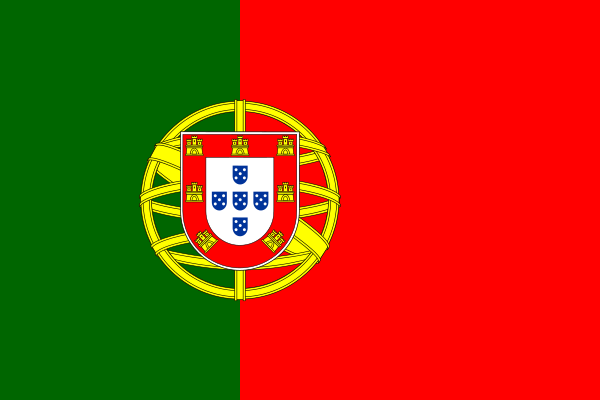
Safety in Portugal
A rating built from four independent indices, plus scams, laws and what to do when something happens
Rating calculated from the indices below
Indices checked on 10.08.2026
Position in global indices
Save these before you fly
The general picture
Overall: Portugal ranks among the calmest countries in the world, and walking alone late in the evening is entirely comfortable in the cities.
Pickpockets: The main risk is tram 28 in Lisbon and the main railway stations. Keep an eye on your backpack and do not leave a phone on a cafe table.
The Atlantic: The ocean here is treacherous, with strong rips that can carry you out fast. Swim only on beaches with lifeguards on duty and pay attention to the flags.
Street hustles: On the viewpoints people will try to sell you dubious goods. Walk past politely and calmly, and nothing further will happen.
Driving on Madeira: The switchbacks demand total concentration and turn slippery after rain. Take an automatic if you are not confident with a manual on a steep hill start.
Healthcare: The system is good, but without insurance any doctor's visit costs real money. Bring an EHIC or GHIC card if you are eligible, and a policy if you are not.
Police: Officers are generally friendly and speak English, so approach them without hesitation if you need help. Check your own government's travel advisory before you travel.
How tourists get scammed
Portugal is one of the calmest countries in Europe. Violent crime is rare and schemes are few, but Lisbon and Porto have theirs.
Tram 28. Lisbon's most scenic route and its most productive for thieves. They work the climb into Alfama, when the carriage is packed and swaying. Backpack in front, wallet out of your pocket.
"Hashish" sellers in Baixa. On Rua Augusta and around, men offer drugs. What they sell is oregano, bay leaf and similar — so it is not even drug dealing but ordinary fraud. There is no need to answer; they move on immediately.
The restaurant couvert. Bread, olives and pâté brought before you order are chargeable. This is lawful and stated in small print on the menu. If you do not want them, just say so — sending them back needs no explanation.
ATMs. Euronet machines on tourist streets give deliberately poor rates and charge fees. Use bank machines — Multibanco.
Car hire. Portuguese motorways are tolled and in many places have no booths: payment is electronic via a transponder. Without one, penalties reach the rental firm with a surcharge. Take the transponder from the start.
What gets you fined or jailed
Drugs. Portugal decriminalised possession of small personal quantities in 2001 — this is not legalisation. The drug is confiscated and you are referred to a commission that imposes an administrative measure. Selling and transporting remain criminal, and tourists are detained precisely at the point of purchase.
Alcohol. Street drinking is not permitted everywhere: central Lisbon and Porto restrict takeaway glass and noisy groups after certain hours.
Beach flags are law, not advice. A red flag means swimming is prohibited, and ignoring it is fineable. The Atlantic here is cold with strong rip currents, and lifeguards work only in season and only on patrolled beaches.
Drones. Registration under EASA rules; flights over cities and people are prohibited.
Smoking. Banned indoors, in playgrounds and on a number of beaches.
Driving. Speeding fines are issued automatically. Lisbon and Porto have restricted-access zones, and parking in the centre is a sport of its own.
Documents. Carry a passport copy. The original is needed for car hire and hotel check-in.
Health: vaccines, medicines, care
Vaccinations. None.
Water. Tap water is drinkable nationwide, Madeira and the Azores included.
The ocean is the main danger. The Atlantic coast is beautiful and deceptive: cold year-round, with heavy surf and rip currents that pull you out within a minute. Drowning is the leading cause of tourist deaths in Portugal. Swim only on lifeguarded beaches and only under a green or yellow flag. At Nazaré and Guincho in big-wave season, nobody enters the water at all.
Sun. UV in the south and on the islands is harsh, and the ocean wind creates a deceptive coolness in which people burn unnoticed.
Wildfires. July and August, especially in the centre and north. The alert system sends SMS messages. If a warning arrives, leave at once.
Healthcare. The public system is decent but queued. Emergency care on 112 is available to everyone; further treatment is billed to foreigners. Private clinics in Lisbon, Porto and the Algarve work well. Insurance is needed.
Pharmacies. Farmácia with a green cross, with duty pharmacies open around the clock on a rota.
Police: how to handle them
Portugal ranks in the upper part of the Corruption Perceptions Index. There is no street bribery.
Who handles what. The PSP polices the cities. The GNR, the National Republican Guard, covers highways and rural areas. The 112 number connects you to whichever you need.
Tourist police. Lisbon has a station specifically for foreigners at Praça dos Restauradores, in the Palácio Foz. Reports are taken in English and help with documents is given. It is considerably faster than an ordinary station.
Reporting theft. Your insurer needs a queixa. In Portugal it can be filed online through the police website, saving hours.
Traffic police. The GNR enforces speed actively, issues fines on the spot and requires immediate payment — a foreigner without a local address may not be given time to pay later. Cash or a card will be useful.
Attitude. Portuguese police are well disposed toward tourists and speak English in the cities.
Emergency number is 112 for all services.
What else to check
The rating is built from open international indices and foreign-ministry advisories; links to the primary sources are in the cards above. Conditions change faster than annual reports come out — check current travel advice before you go.