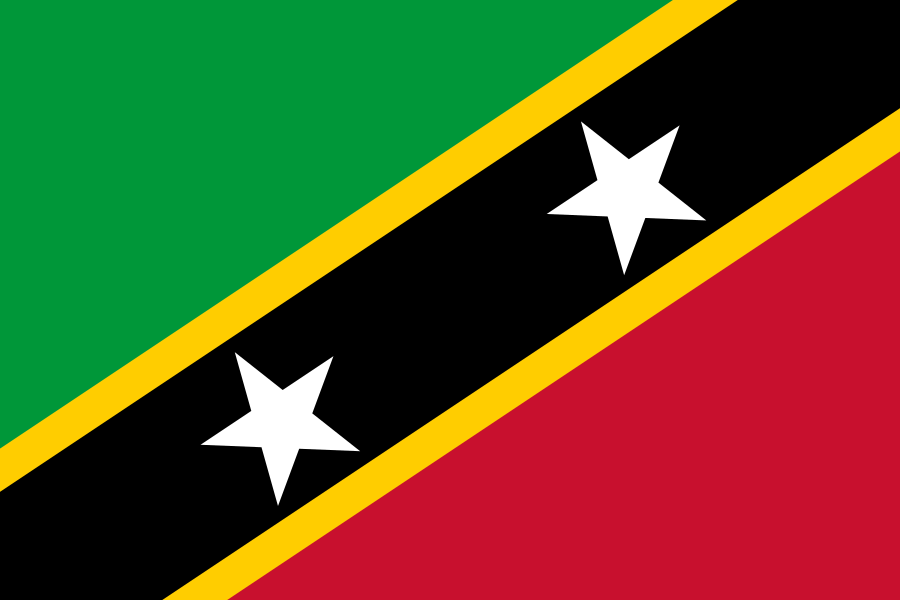
Saint Kitts and Nevis
KNThe smallest state in the western hemisphere — two volcanic islands whose sugar plantations have become world-class resorts. St Kitts holds the UNESCO-listed Brimstone Hill fortress and the only scenic railway in the Caribbean, while Nevis draws people with idyllic beaches and quiet. It is one of the most expensive but best-kept countries in the region, known for its citizenship-by-investment programme.
Where to go #
Basseterre
The capital and main port, where the cruise ships dock and where everything actually happens. Worth a trip for the colonial architecture around Independence Square and the duty-free shopping in Port Zante. It is also the practical base for stocking up on groceries and finding transport to anywhere on the island.
Charlestown
The compact capital of Nevis has kept an old-British atmosphere and suits walking better than driving. Come here to see the house where Alexander Hamilton was born and to soak in the mineral hot springs. The whole town can be covered on foot in a couple of hours.
Frigate Bay
The most popular resort strip on St Kitts, and the one place where you can swim in two different oceans in a single day. All the island's evening life is concentrated here, in the bars and restaurants along the shore. Rooms cost more, but the beaches and nightlife are on your doorstep.
Newcastle
A quiet village in the north of Nevis that pulls in independent travellers with its wild beaches and complete calm. The nearby Lovers and Oualie shorelines are where to go for genuine solitude. This is the spot to slow down to the real Caribbean rhythm.
Sadlers
A small settlement in northern St Kitts, worth the drive for the views over the Black Rocks. These are the frozen lava flows of an ancient volcano, with Atlantic swells smashing into them. Few tourists make it up here, so you get the scenery in silence.
Christophe Harbour
An upmarket district at the southern tip of the island with a modern marina built for very large yachts. The panoramic views across the narrows to Nevis through that clear water are the best on St Kitts. Food prices are inflated, but it is worth driving out for sunset photos.
What to see #
Brimstone Hill Fortress: This is the main thing to see on the islands, a fort they call the Gibraltar of the West Indies. Entry to the hilltop citadel runs 15 USD, and the panorama taking in five neighbouring islands more than justifies it.
Sugar train: Take the ride along the old railway built to haul cane from the plantations. The full loop takes three hours and costs around a hundred dollars, running past abandoned estates, high trestle bridges and dense jungle.
Mount Liamuiga: Where to go for serious hiking is the crater of this sleeping giant. The steep climb through cloud forest needs solid boots and a local guide, but the view down to the crater lake with clouds beneath your feet stays with you.
Romney Manor: You can easily do this in a day, watching batik being hand-dyed and wandering the gardens around a four-hundred-year-old saman tree. It is the best place on the island for genuine souvenirs and for understanding the old plantation estates.
Black Rocks: Near Sadlers, take a look at the strange volcanic formations along the ocean. The hardened coal-black lava makes a harsh landscape that contrasts sharply with the white sand and turquoise water down south.
Nevis Peak: Climbing this dormant volcano of nearly a thousand metres takes a full day of daylight. The trail is frequently slick and very steep, which makes it a serious undertaking even for people who are physically fit.
Prices #
Currency: The local money is the East Caribbean dollar, pegged to the US dollar for decades. The official rate is 2.7 to 1, and US dollars are accepted in almost any shop, with change handed back in local notes and coins.
Cards: Visa and Mastercard go through without trouble in the big Basseterre supermarkets, chain hotels and pricier restaurants. For bus fares, market food and boat crossings, though, you always want a stash of cash on you, and Amex is far less useful here.
ATMs and withdrawals: You can withdraw from bank branches in the centre of the capital or in Charlestown on Nevis. Avoid standalone machines in odd locations, and remember your own bank's conversion and cross-border fees, which a Wise or Revolut card cuts down considerably.
Tipping: Many places already write a service charge of ten or fifteen per cent into the bill. If it is not there, leave the same amount for the server, and simply round up for taxi drivers.
| Item | Price (USD) |
|---|---|
| Lunch at a local cafe | 18.00 |
| Dinner for two at a restaurant | 85.00 |
| Cappuccino | 4.00 |
| Local Carib beer | 3.00 |
| Bottle of water, 1.5l | 1.50 |
| Filled roti from a stall | 7.00 |
| Minibus ride | 2.50 |
| Taxi within Basseterre | 12.00 |
| Ferry between the islands | 15.00 |
| Fuel | 11.50 |
| Brimstone Hill entry | 15.00 |
| Fridge magnet | 5.00 |
| Night in a guesthouse | 80.00 |
| Car hire per day | 55.00 |
Getting around #
Minibuses: The cheapest and most characterful way for an independent traveller to move. Vans with green number plates run the ring roads from early morning until evening, and a trip across the island rarely tops three US dollars.
Ferries: The islands are well connected, with the crossing from Basseterre port to Charlestown taking about forty minutes. Tickets run 10 to 15 USD, and there is no need to book ahead since you buy at the window before departure.
Water taxis: If you want speed, take one of the fast boats from Cockleshell Bay. The hop to Nevis takes only ten minutes, though it costs roughly 20-25 USD per person for that short run.
Car hire: Renting gives you real freedom, but remember they drive on the left here. On top of your own national licence, every rental office will make you buy a mandatory local permit costing around 24 USD.
Taxis: There are no meters, and fares on all the popular routes are strictly fixed. Always confirm with the driver which dollar he is quoting in before you get in, or you can end up paying more than twice what you expected.
Timing: Public transport largely stops running once the sun goes down or the cruise ships leave. If you are planning a late dinner at the other end of the island, arrange a taxi in advance or have your own car.
Where to stay #
Town hotels: Basseterre has small colonial-style hotels that are very convenient for exploring on foot. This is the best choice if you plan to use the ferries and get around by scheduled buses.
Guesthouses: The most affordable option for independent travellers is a room in a local family's house. Many are listed on the usual online platforms and come with home comforts, kitchen access and genuinely useful logistical advice.
Apartments: The Frigate Bay resort area has plenty of owner-let apartments. Having your own stove saves a serious amount of money, since eating in the tourist restaurants on these islands is expensive.
Beach places: On Nevis, look at the small bungalows in the quiet stretch around Oualie beach. There is none of the big-resort pomp, but you wake to the sound of surf and eat breakfast on a terrace facing St Kitts.
Old plantations: Some historic estates have been converted into exclusive boutique hotels, and the prices reflect it. On a budget, treat them as somewhere to visit for an afternoon rather than a place to sleep.
Seasonality: From mid-December through April, room rates nearly double as North American visitors arrive. Aim for May or June instead, when even the most popular guesthouses have real discounts.
What to eat #
National dish: Try the salt cod stewed down with onion, peppers and ripe tomatoes. It is the traditional filling breakfast, served in local cafes with fried dumplings and chunks of breadfruit.
Goat: The thick goat water stew is the pride of Nevis, simmered for hours in huge pots. It comes out rich and heavily spiced, often with green papaya or a splash of Caribbean rum thrown in for aroma.
Seafood: Large lobster is treated as ordinary food here rather than a rare luxury. The freshest catch is found in simple shacks along the shore, where they grill mahi-mahi over open flame while you wait.
Street food: For a fast, cheap fill, roti is ideal, a flatbread wrapped around fragrant curried potato and meat. Go carefully with the local chilli sauces, which can be extreme for anyone not used to them.
Drinks: The most popular local soft drink is Ting, made from grapefruit juice. For alcohol, work through the Brinley range, particularly the coconut, vanilla and mango rums.
Beach bars: For the legendary Killer Bee cocktail, head to Sunshine's on Nevis. The recipe for this strong rum punch is a closely guarded secret, but one glass is usually enough to fix your evening.
Safety #
Overall: These islands are among the calmest and friendliest in the region, and Nevis in particular has a reputation for being exceptionally safe. There is no aggression here, and locals treat visitors with warm curiosity and are quick to point you the right way.
Petty theft: Despite the general calm, do not leave wallets, bags or phones unattended on public beaches. Opportunists will take advantage of the window while you are out swimming.
After dark: At night it is better to avoid the emptier edges of Basseterre and poorly lit side streets. The centre of the capital and the main tourist areas are patrolled and perfectly fine for an evening walk.
Animals: Thousands of wild green monkeys live on the islands and sometimes come down to the roads. Do not try to pet or hand-feed them, since they bite, and for hygiene reasons leave the stray dogs alone too.
Sun and heat: The Caribbean sun is deceptive, and you can burn badly even on a cloudy or windy day. Use high-factor sunscreen and drink plenty of clean water to avoid heatstroke.
On the road: The minibus drivers move fast but handle their vehicles brilliantly. If you are driving yourself, be extremely alert on the narrow mountain roads, where herds of goats and donkeys wander freely.
Advisories: It is worth a glance at your own government's travel advisory before you book, mainly for hurricane-season guidance between June and November.
Etiquette and culture #
Carnival: The cultural high point of the year is Sugar Mas, which runs through late December. The streets of Basseterre fill with dancers on tall stilts and steel-pan orchestras hammering out rhythm.
Colonial legacy: The island culture is a blend of British tradition and African roots. It shows up everywhere, from strict dress standards in churches to the male population's total devotion to cricket.
Personal space: Keep a reasonable distance in conversation and avoid unnecessary touching. Islanders value politeness highly and expect a proper greeting before you get to whatever you actually want.
Religion: People here are notably religious, and Sunday service is a major social occasion. Dress modestly on that day so you are not drawing looks while you tour the old stone churches.
Sugar history: Nearly every old estate, and the railway itself, traces back to sugar production. That industry shaped the landscape of both islands, and the local museums lay the story out in detail.
Culturama: If you land on Nevis in late July you will hit this vivid festival of local arts. It is the best time to catch folk dancing, costumed shows and proper home-style Caribbean cooking.
Connectivity #
Language: English is the official language, so an independent traveller will have no difficulty at all. The local Creole, however, can sound like something entirely unfamiliar for the first few days.
Mobile: The main operators are Digicel and Flow. You can buy a SIM at the airport on arrival or in the offices downtown, and registration usually requires showing your passport.
Internet: Free Wi-Fi is in almost every guesthouse and cafe, and the speed is fine for staying in touch. For constant access while moving around, activating an eSIM before you fly is the easiest solution.
Dialling code: The international code is +1-869. Mobile coverage is stable across the territory, with 4G reaching nearly every settlement apart from the thick jungle in the interior.
Etiquette: Always open any conversation with a proper good morning or good afternoon. A bare hi, or diving straight into your question, reads here as poor manners and a lack of interest in the other person.
Post and payphones: Old phone boxes that run on prepaid cards still stand on the streets. The post office in Basseterre is not just for postcards either, it is a standard landmark for arranging to meet someone.
Phrasebook #
| English | Kittitian Creole | Pronunciation |
|---|---|---|
| Hello | Hello | huh-LOH |
| Good morning | Good mornin' | good MAWR-nin |
| How's it going? | Wha' gwan? | wah GWAHN |
| Everything's fine | Everyt'ing cool | EV-ry-ting cool |
| Thank you | T'ank you | TANK yoo |
| Please | Please | pleez |
| How much? | How much? | how MUCH |
| Where's the ferry? | Where de ferry? | wear duh FEH-ree |
| Help | Help | help |
| It's delicious | It sweet | it SWEET |
| Friend, mate | Bredren | BRED-ren |
| Sister, female friend | Sistren | SIS-tren |
| Goodbye | Later | LAY-tuh |
| I don't understand | Me na get it | mee nah GET it |
| Too expensive | It dear | it DEER |
| Beer | Beer | beer |
| Water | Water | WAH-tuh |
| Yes | Yes | yes |
| No | No | noh |
| All good, no worries | Irie | eye-REE |
| Beach | Beach | beech |
| Let's go | Le' we go | leh wee GOH |
Good to know #
Getting there: St Kitts has a small international airport, and most itineraries route through Miami, New York, Charlotte or Atlanta from North America, or through London with a connection on the Caribbean side. Regional carriers hop in from Antigua, St Maarten and San Juan, and winter brings extra seasonal services as demand peaks.
Plugs: Hotels most often have British type G sockets with three flat pins. Buy an adapter before you travel, since local shops stock them rarely and price them for tourists.
Time zone: The islands run on UTC-4 all year, four hours behind GMT. Adjusting is easy enough as long as you do not try to climb a volcano or circle both islands on day one.
Water: Tap water is officially considered safe to drink, but bottled is the safer bet. It sells in any supermarket for about a dollar fifty for a 1.5 litre bottle.
Health: No specific vaccinations are required for entry, but travel insurance with strong coverage genuinely matters here. Healthcare for foreigners is paid, and serious injuries often mean being flown to another country for treatment.
Sun: The UV index in the Caribbean is off the scale even in shade or under cloud. A brimmed hat and decent sunglasses are survival kit rather than fashion, and without them you will be suffering within the hour.