Switzerland
CHA country where even budget travel costs what comfortable travel costs in South-East Asia — but every franc is repaid in views that stop the breath. Switzerland is the Alps, lakes of impossible blue, chocolate, watches, the most punctual trains in the world and 65,000 km of waymarked footpaths. Four languages, faultless infrastructure and the sense of having walked into a perfect postcard.
Where to go #
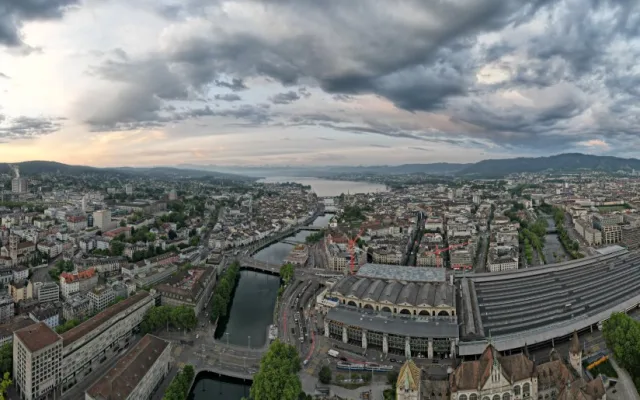
Zurich
The financial capital of Europe — the lake, the old Lindenhof and shopping on Bahnhofstrasse.
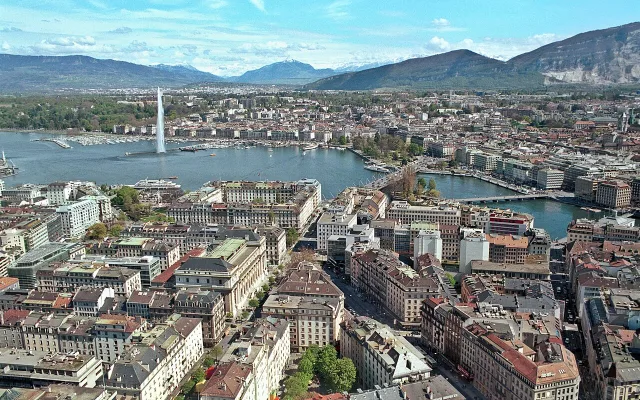
Geneva
Lake Geneva, the Jet d'Eau fountain, the UN's European headquarters and expensive chocolate.
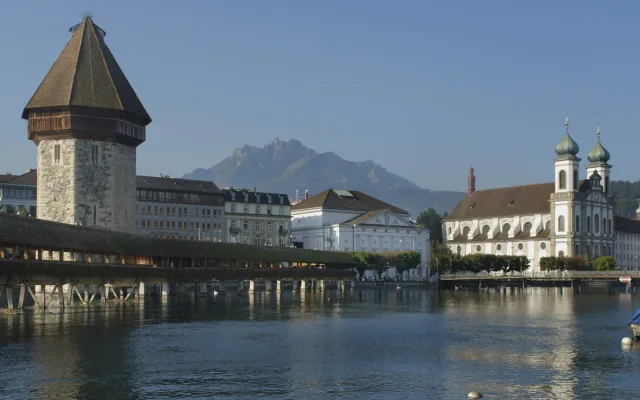
Lucerne
A scenic city at the foot of the Alps, with the wooden Kapellbrücke, a crystal-clear lake, and views of snow-capped peaks.
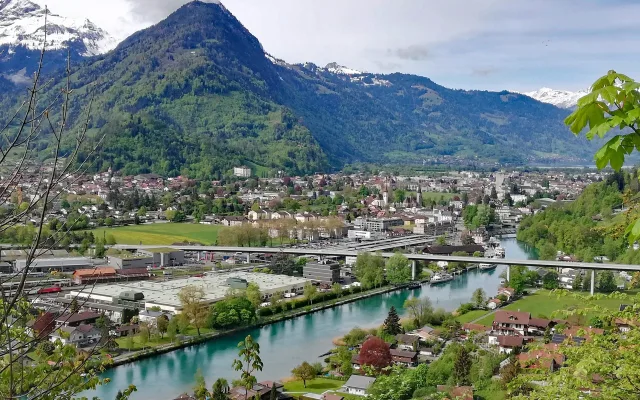
Interlaken
Adventure capital of Switzerland, nestled between two lakes: skydiving, hiking to Jungfraujoch, and whitewater rafting in mountain rivers.
What to see #
Jungfraujoch: Worth the trip to Europe's highest railway station for the ice caves and the glacier view, though the undiscounted ticket is genuinely expensive.
Mount Pilatus: Where to go for a steep ride on the cogwheel railway and a panorama over Lake Lucerne. Come back down by cable car for the full loop.
The Matterhorn: The famous pyramid is the reason people come to Zermatt. The best view is from the Gornergrat platform, reached by the old rack railway.
Rhine Falls: An easy day trip from Zurich to the most powerful waterfall in Europe, where you can take a boat out to the rock in the middle of the torrent.
Chillon Castle: Where to go for history and romance on the shore of Lake Geneva. It looks like an illustration lifted from a book of chivalric romances.
Jet d'Eau: Geneva's signature fountain throws water a hundred metres into the air. Best appreciated during a walk along the lakefront promenade.
Panoramic trains: The Bernina Express over the passes and viaducts is one of the most beautiful railway journeys anywhere, and worth planning a day around.
Prices #
Currency: The Swiss franc is the national currency, and paying in euros in shops loses you money on the exchange rate every time.
Cards: Visa and Mastercard are accepted essentially everywhere, and paying by phone is the fastest way to settle a bill. American Express is taken at hotels and larger restaurants but less reliably elsewhere.
Cash: Carrying wads of francs isn't wise, but keep a hundred on you for mountain huts and small village kiosks, some of which still take nothing else.
Exchange: Change dollars at a post office or a bank rather than the airport, where the rate and commission are worst. A Wise or Revolut card avoids the problem altogether.
Costs: Switzerland is one of the most expensive countries in the world, and everything from a coffee to a cable car reflects that. Budget generously or plan to self-cater.
| Item | Price (USD) |
|---|---|
| Cafe lunch | 30 |
| Restaurant dinner | 55 |
| Portion of fondue | 40 |
| Coffee in the centre | 6 |
| Beer in a bar | 8 |
| Takeaway sandwich | 13 |
| Hostel night | 60 |
| Three-star hotel | 200 |
| Tram ticket | 5 |
| Three-day rail pass | 290 |
| Mountain ascent | 100 |
| Castle ticket | 17 |
| Bar of chocolate | 5 |
| Supermarket meal deal | 12 |
Getting around #
The SBB system: Everything from trains to funiculars runs as one interlocking machine, on a shared timetable and a single through ticket. It's the best public transport network on earth and it is worth using.
Swiss Travel Pass: The right answer if you want freedom of movement and no queuing at ticket desks. It covers trains, boats, buses and many mountain railways.
Half Fare Card: If your journeys are occasional, this card costs about 120 francs and halves every fare for a month. Do the arithmetic before you buy the full pass.
Panoramic trains: The famous expresses like the Glacier Express run through the most spectacular country, but a window seat carries a supplement.
Guest cards: Many hotels issue guests a card making local trams and buses free within the town. Ask at check-in, because they don't always volunteer it.
Supersaver tickets: Look for the black percentage icon in the app. Those fares are tied to a specific departure but cost considerably less.
Boats: The ships on Lake Thun and Lake Brienz aren't just excursions, they're proper transport and they're included in your pass.
Flying in: Zurich and Geneva have direct flights from most European hubs plus New York, Chicago, Dubai and Doha, and both airports sit minutes from the city centre by train.
Where to stay #
Guesthouses: Small chalets on the edge of town give you real alpine character without paying a premium for a central address.
Hostels: The Swiss Youth Hostels network is spotless and the breakfasts are better than at plenty of hotels. Book early in the mountains.
Self-catering: Look for places with kitchen access. Cooking from supermarket ingredients cuts your budget here more than any other single decision.
Tasch instead of Zermatt: Staying in the neighbouring village saves a great deal on the room while keeping you connected to the Matterhorn lifts by shuttle train.
Tourist tax: Expect a few francs per night added to the room rate. It usually entitles you to free local transport, so ask for the card.
Book early: Popular spots like Grindelwald sell out six months ahead in season, so independent planning needs to start a long way out.
Typically Swiss Hotel: This label means timber, warmth and local farm produce on the breakfast table, and it's a reliable marker of quality.
What to eat #
Cheese fondue: The signature dish, best eaten at an old restaurant, though portions are enormous and designed for two people minimum.
Rosti: Grated potato fried into a cake with various toppings is the most dependable way to eat well for a sensible price.
Restaurant costs: An ordinary lunch runs to 30 or 40 francs, which is why many travellers switch to sandwiches and hot counters at supermarkets.
Free water: Don't buy plastic bottles. Every public fountain runs clean alpine water that you can drink for nothing.
Chocolate: Go into a Laderach shop for the nut slabs, which are a completely different thing from supermarket bars and make the best gift home.
Raclette: Melted cheese over potatoes, and it pairs best with a local white wine of a kind that almost never leaves the country.
Bakeries: In the morning you can pick up a fresh croissant or a filled savoury pastry, which makes a good cheap breakfast on the move.
Safety #
Mountain weather: Conditions in the Alps change within minutes, so even a straightforward summer hike needs proper boots and a warm windproof layer.
Drinking water: Fill your bottle at any town fountain. The water is cleaner and better than anything sold in a shop.
Quiet hours: Noise after ten at night is genuinely forbidden, and on Sundays you shouldn't even play music loudly in an apartment building.
Emergency numbers: Dial 112 for anything serious. For mountain rescue, REGA operates helicopters and answers on 1414.
Driving fines: If you hire a car, stick to the speed limits obsessively, because cameras are everywhere and the penalties are enormous.
Theft: Crime levels are extremely low, though it's still sensible to watch your bags at the main stations in the big cities.
On the trail: Check your phone's charge before setting out and download a proper topographic map app. Signal in the valleys is patchy.
Etiquette and culture #
Four languages: The country divides into German, French and Italian-speaking regions plus Romansh, and the differences run well beyond language into how life is lived.
Punctuality: Trains arrive to the second, so turning up on the platform at the last moment is a reliable way to miss one.
Direct democracy: People vote on significant questions several times a year, which makes politics a normal topic of everyday conversation.
Sundays: Almost everything closes, silence becomes absolute and the towns feel abandoned until Monday morning.
Tipping: Service is already included in the total, so leaving extra isn't expected. Rounding the bill up is plenty.
Neutrality: It's a foundation of national identity and the reason the country has stayed an island of stability in the middle of a changing continent.
Swiss army knife: Buying a Victorinox is close to obligatory, but remember you can't carry it in hand luggage on the flight home.
Connectivity #
Roaming: Switzerland is outside the EU roaming zone, so data here is expensive even for European visitors. Check your plan before you land.
Local SIMs: Swisscom or Sunrise give reliable coverage even in tunnels and high in the mountains, where hotel wi-fi runs out.
eSIM: The quickest way to get online without finding a shop. Download the app, pick a plan and you're connected on arrival.
Free wi-fi: SBB stations and trains have hotspots, though activating them often requires a code sent by SMS to a working number.
Go digital: Keep tickets and bookings on your phone, since paper versions are steadily being phased out here.
Power bank: Bring a compact one. Navigation in the mountains drains a battery fast and there are no sockets on the trail.
Language: English is spoken throughout the tourist areas, but in small villages in the German-speaking part an offline translator earns its keep.
Phrasebook #
| English | Swiss German | Pronunciation |
|---|---|---|
| Hello (local) | Grüezi | GRUE-tsi |
| Thank you | Merci | mehr-SEE |
| Please | Bitte | BIT-teh |
| Yes / No | Ja / Nei | yah / nay |
| How much is it? | Was kostet das? | vas KOS-tet dahs |
| The bill, please | Die Rechnung, bitte | dee REKH-nung BIT-teh |
| Where's the station? | Wo ist der Bahnhof? | vo ist dair BAHN-hof |
| That's delicious! | S'isch guet! | shish GOOT |
| Cheers! | Proscht! | prosht |
| Goodbye | Uf Widerluege | oof VEE-der-loo-eg-eh |
| Sorry | Entschuldigung | ent-SHOOL-di-gung |
| Help | Hilfe | HIL-feh |
| Beer (small) | Stange | SHTAHN-geh |
| Coffee with milk | Schale | SHAH-leh |
| Great (slang) | Urguet | oor-GOOT |
| Shop | Lädeli | LED-eh-lee |
| Bread roll | Mütschli | MUETSH-lee |
| Cheese | Chäs | khehs |
| Mountain | Bärg | bairg |
| Good morning | Guete Morge | GOO-teh MOR-geh |
| Do you speak English? | Redet Sie Englisch? | RED-et zee ENG-lish |
| I don't understand | Ich verstah nöd | ikh fer-SHTAH nurd |
Good to know #
SBB app: The single most useful tool for a traveller here, selling every ticket and telling you which platform your train leaves from.
Mountain weather: Use MeteoSwiss, which gives the most accurate forecasts by altitude, which matters enormously when planning an ascent.
Route planning: SchweizMobil is indispensable if you want to walk or cycle the country's marked panoramic routes.
Mountain rescue: Save 1414 in your phone. That's REGA, the professionals who will come for you if you're injured on a trail.
Connectivity: Buy a local SIM on arrival, because roaming here costs a fortune and will drain your balance within a day.
Cheap groceries: Denner and Aldi have the lowest food prices if you're cooking for yourself in a guesthouse.
Museums: Remember that a Swiss Travel Pass also gets you into around five hundred museums across the country for nothing.