 Города и дороги
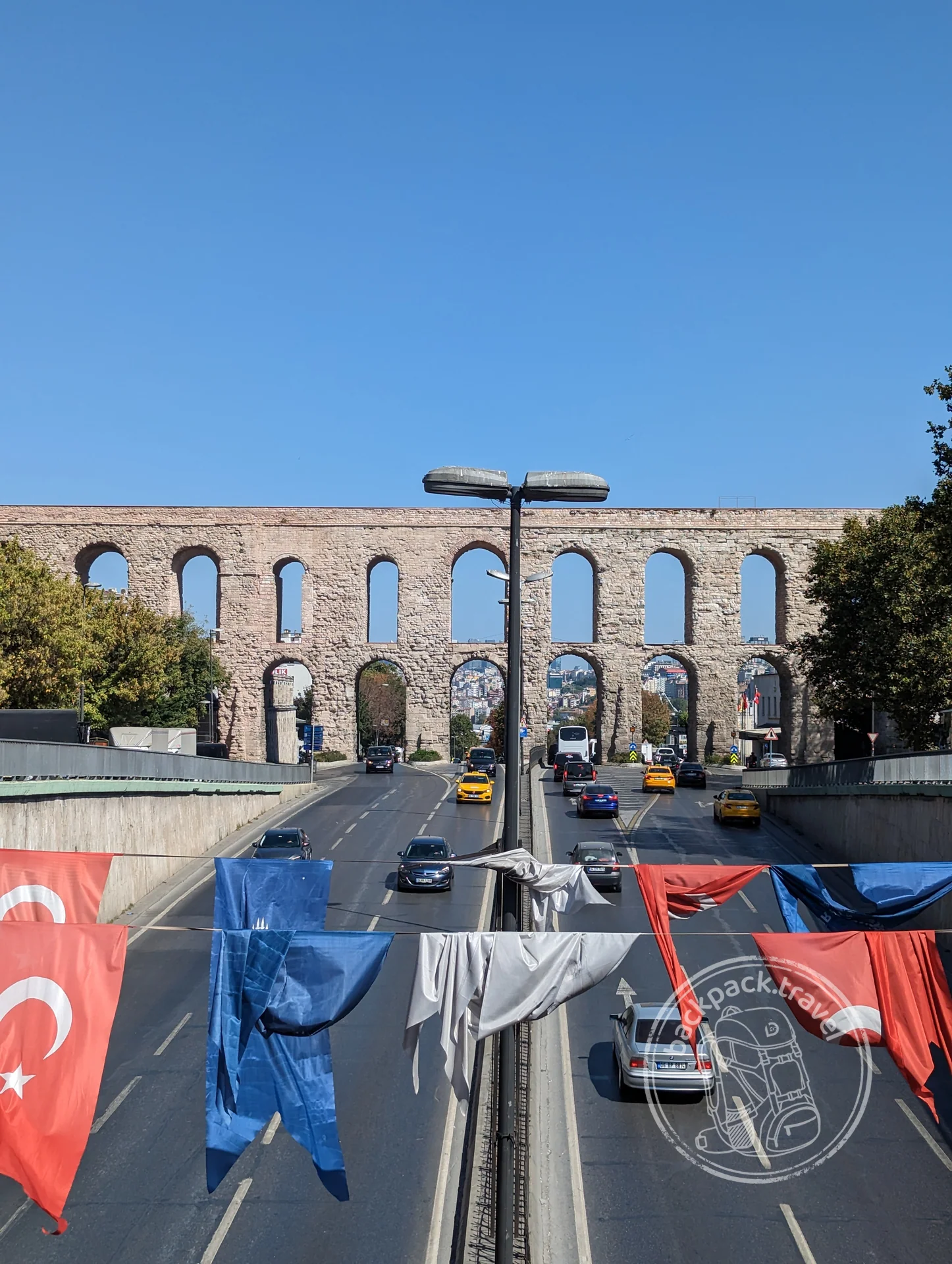
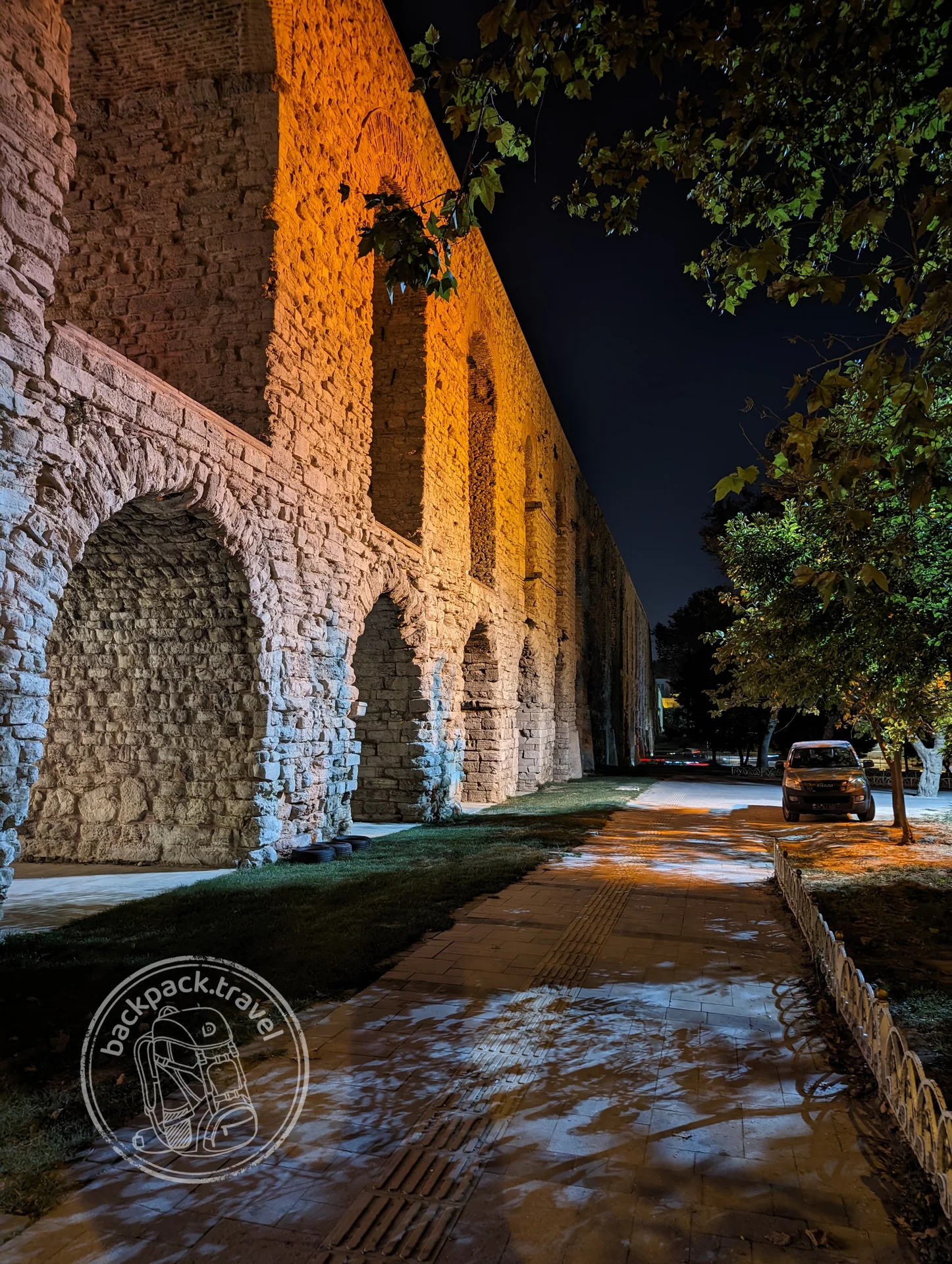
The Valens Aqueduct is thrown across the valley between two hills of the historic peninsula and remains the most conspicuous Roman structure in Istanbul. Construction was completed in 373 under the emperor Valens, although the water-supply system of which it formed part had taken shape earlier and ran for many dozens of kilometres from the forests of Thrace. The two-tier arcade is built of dressed stone with courses of brick; the surviving stretch is about nine hundred and seventy metres long and rises almost twenty metres at its highest point. After 1453 the Ottomans did not abandon the aqueduct but incorporated it into their own water-supply network, repairing it under Mehmed II and Suleiman the Magnificent, and water ran through it right up to the nineteenth century. Today Ataturk Boulevard passes beneath the arches, and cars dive through openings that have barely changed in fifteen hundred years. On the southern side the Sehzade Mosque comes almost right up to the aqueduct, and on the northern side the districts of Fatih begin, so the structure reads not as a museum exhibit but as part of the everyday fabric of the city.
- Address
- Kovacılar Sokağı, Istanbul
Lists and awards
On the map
Reviews (0)
No reviews yet. Be the first!
Updated