 Города и дороги
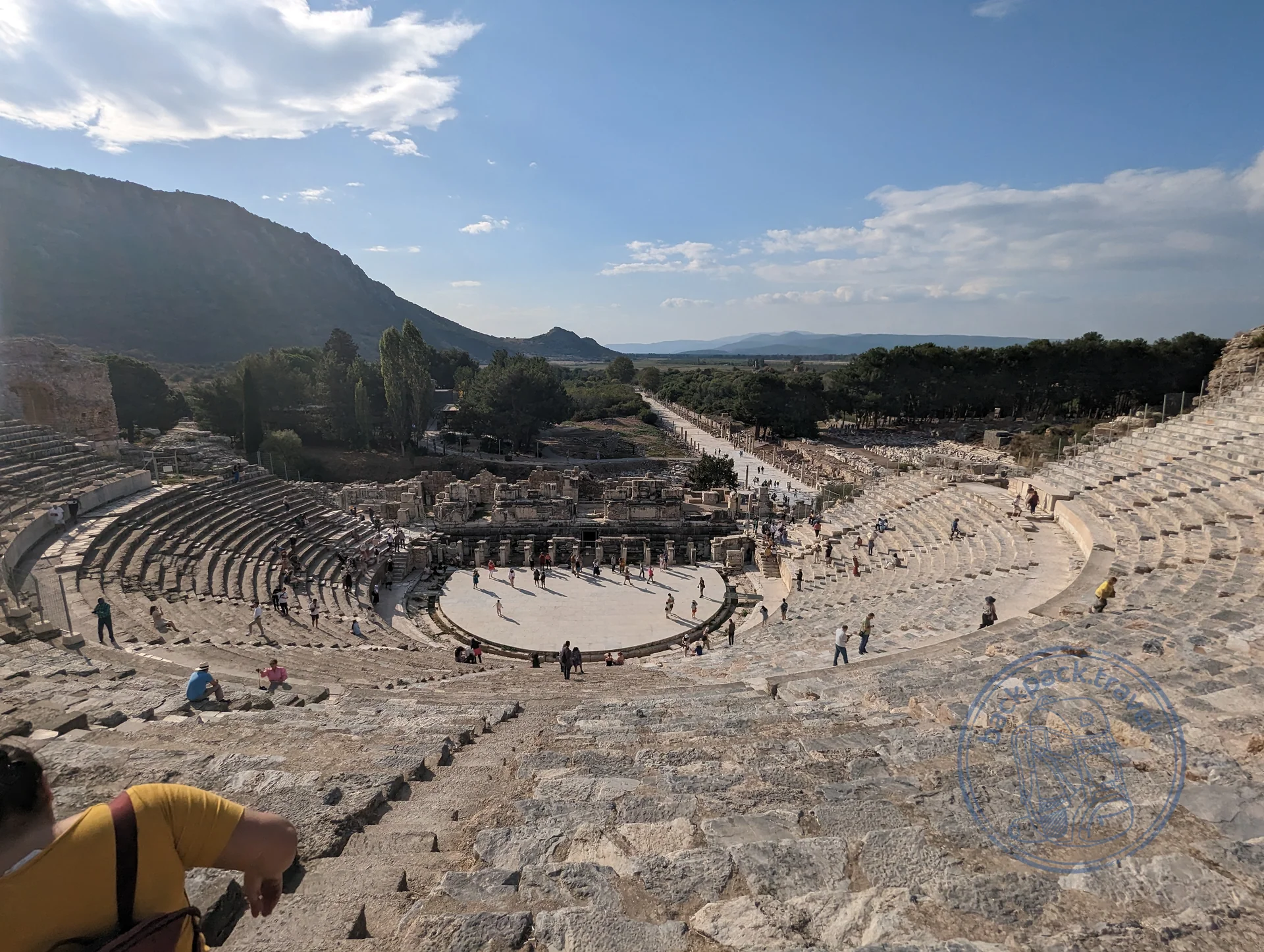
The Great Theatre of Ephesus is cut into the western slope of Mount Panayir and remains the largest ancient theatre in Asia Minor. The first building appeared in Hellenistic times under Lysimachus, in the 3rd century BC, while its present shape took form under the Roman emperors from Claudius to Trajan, when the rows of seats were built up to three tiers. The capacity is estimated at about twenty-four thousand places, the diameter of the bowl exceeds a hundred and fifty metres, and the height from the orchestra to the top row reaches thirty metres. The stage building was three storeys high, with columns, niches and statues; its lower tier and the foundations have survived. Besides performances, assemblies of the citizens were held here, and according to the Acts of the Apostles it was in this theatre that a crowd of silversmiths staged a protest against the preaching of the Apostle Paul. From the theatre the Arcadian Way leads to the former harbour, a wide paved street with a colonnade that in late antiquity was lit by lamps. The acoustics of the bowl have survived, and concerts are sometimes held on the site. The upper rows are closed to climbing, but even from the middle of the bowl you can see how the mountain slope works as the support for the whole structure.
- Address
- Marble Street, Selçuk
Lists and awards
On the map
Reviews (0)
No reviews yet. Be the first!
Updated