 Города и дороги
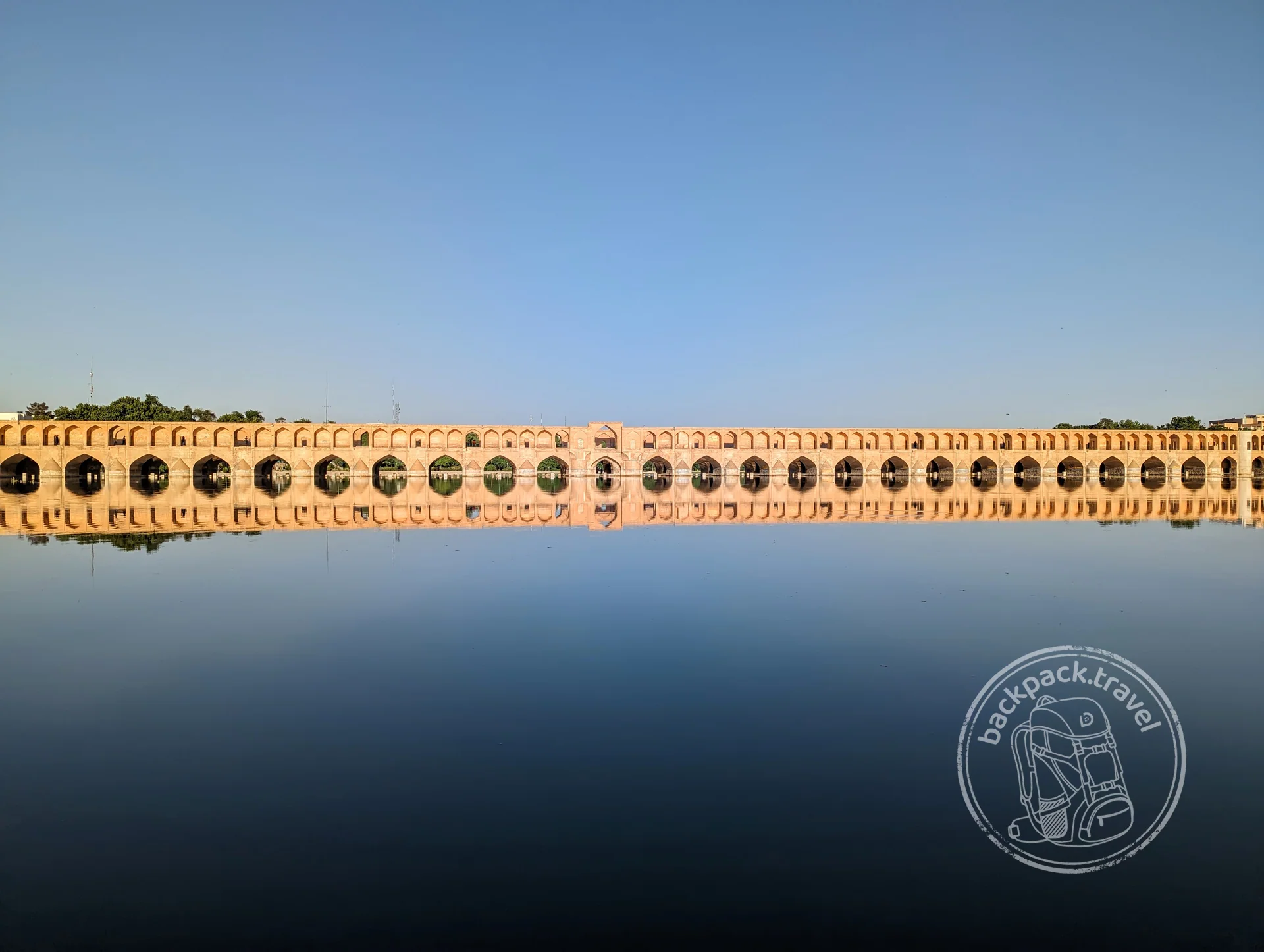
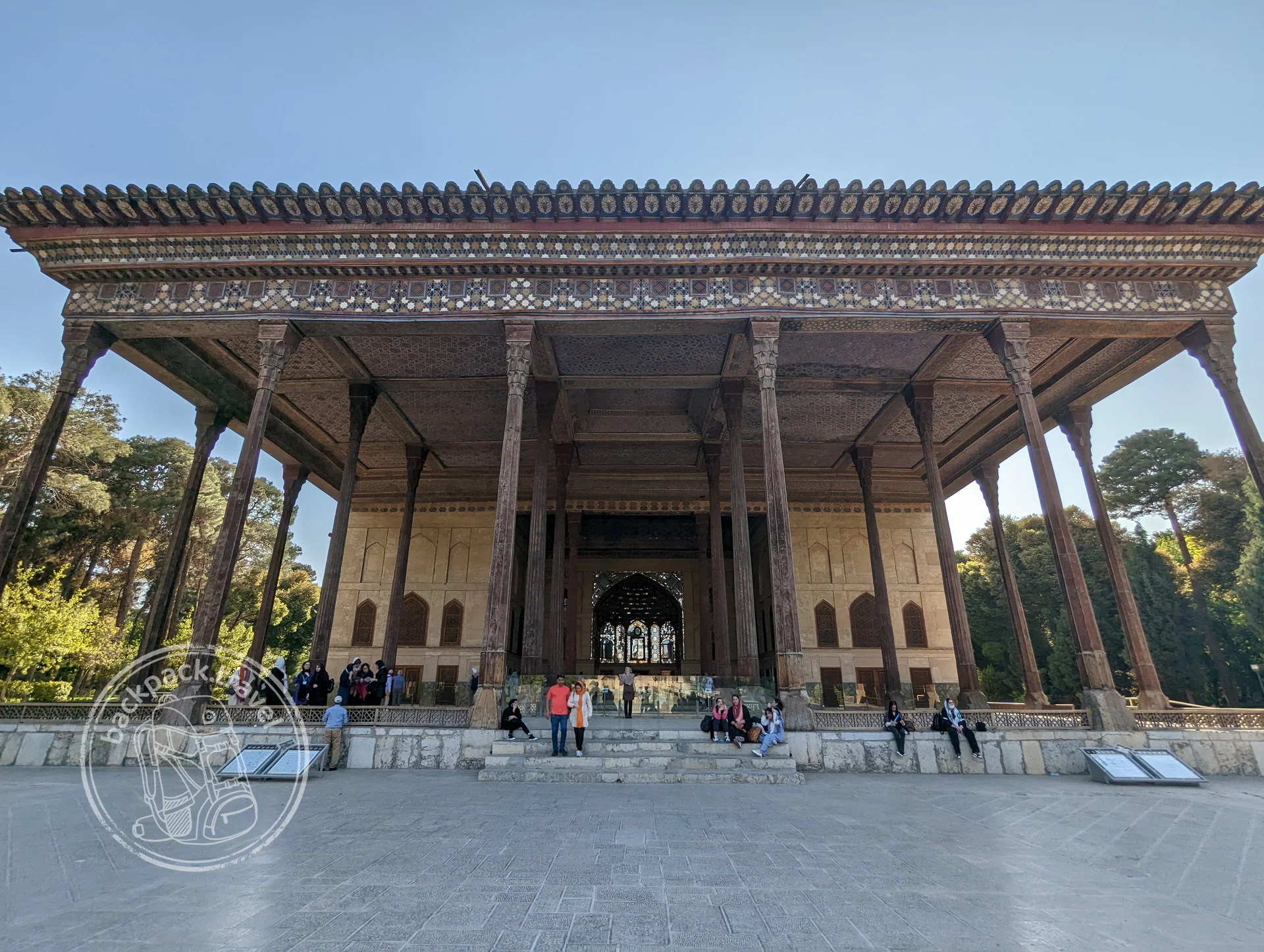
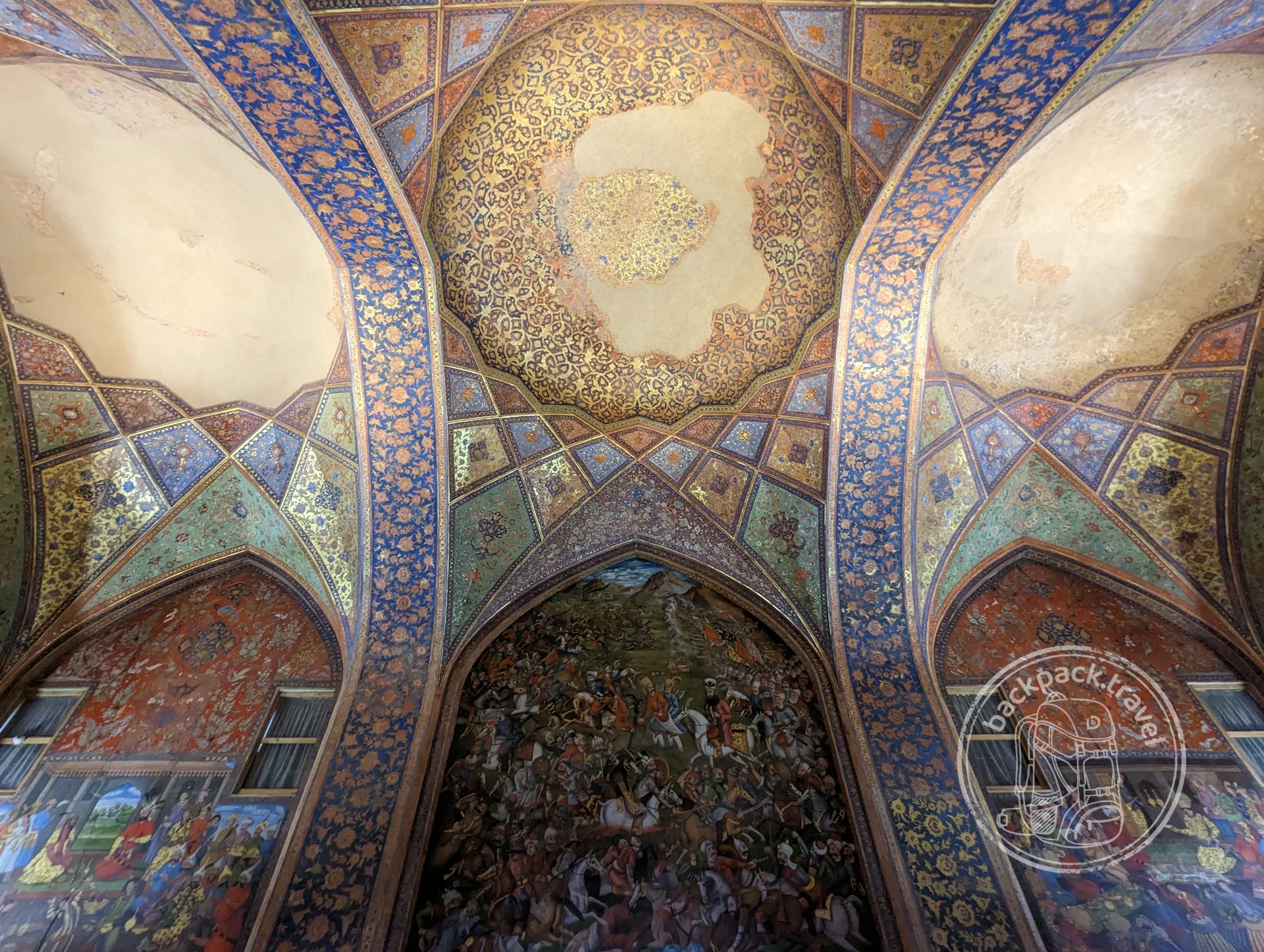
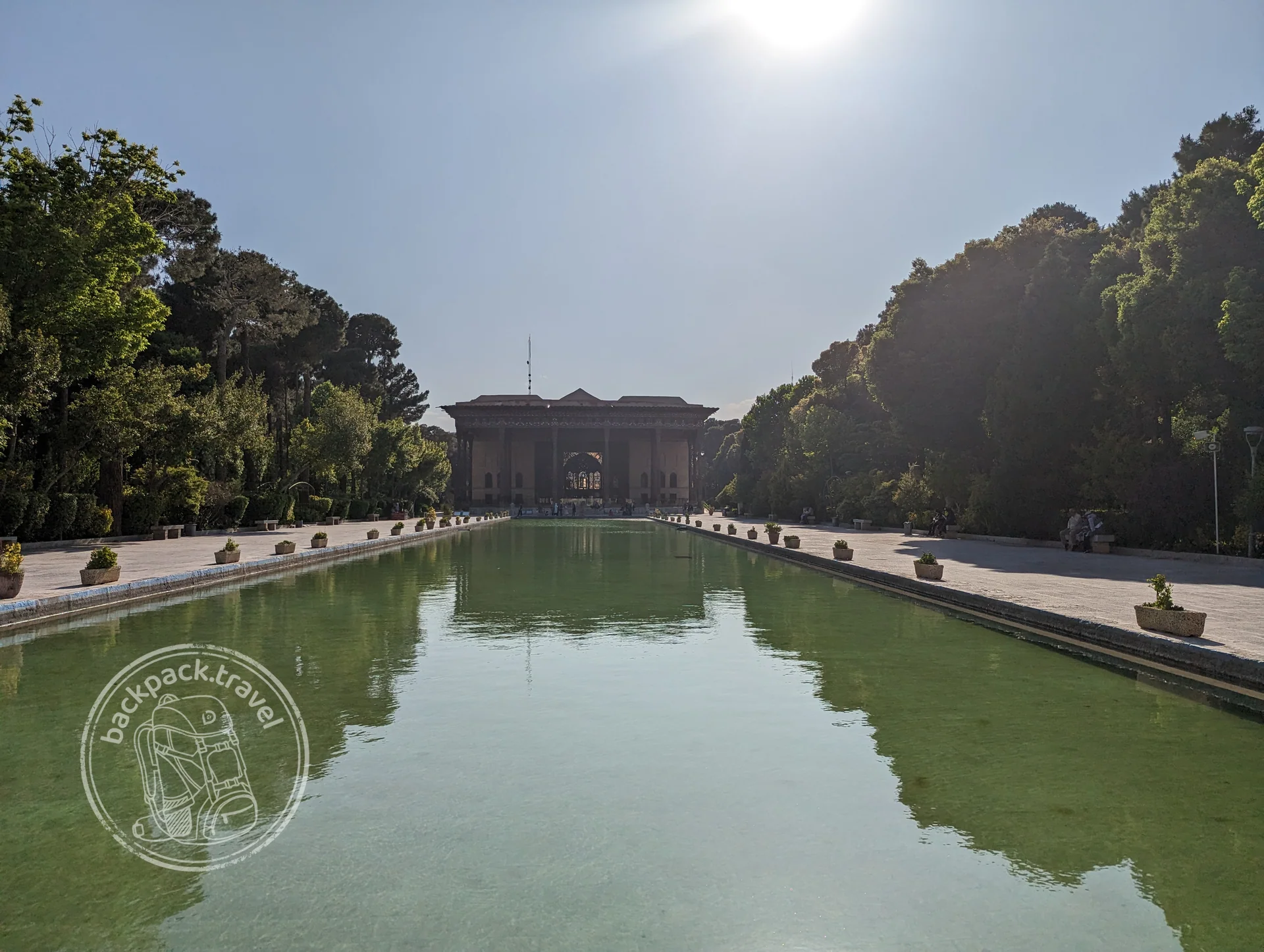
A reception pavilion built under Shah Abbas II in the middle of the seventeenth century in the middle of a garden with a long pool. The name translates as "forty columns", although the entrance portico has twenty of them: the second twenty are supplied by the reflection in the water, and this play with counting is considered part of the design. The columns are hewn from whole plane and chinar trunks, some of them set on stone bases in the shape of lions, and the ceiling of the portico is assembled from painted wooden beams. The main hall is occupied by six large historical canvases: the reception of the Uzbek khan, the Battle of Chaldiran, the meeting with the Indian ruler Humayun. They were painted at different times, and the styles differ noticeably — from flat Persian miniature to almost European perspective. Some of the paintings were whitewashed over in the nineteenth century as too free, and uncovered again in the twentieth. The garden around it is on the World Heritage List as one of the nine Persian Gardens.
- Address
- Bagh Goldasteh, Isfahan
Lists and awards
On the map
Reviews (0)
No reviews yet. Be the first!
Updated