 Города и дороги
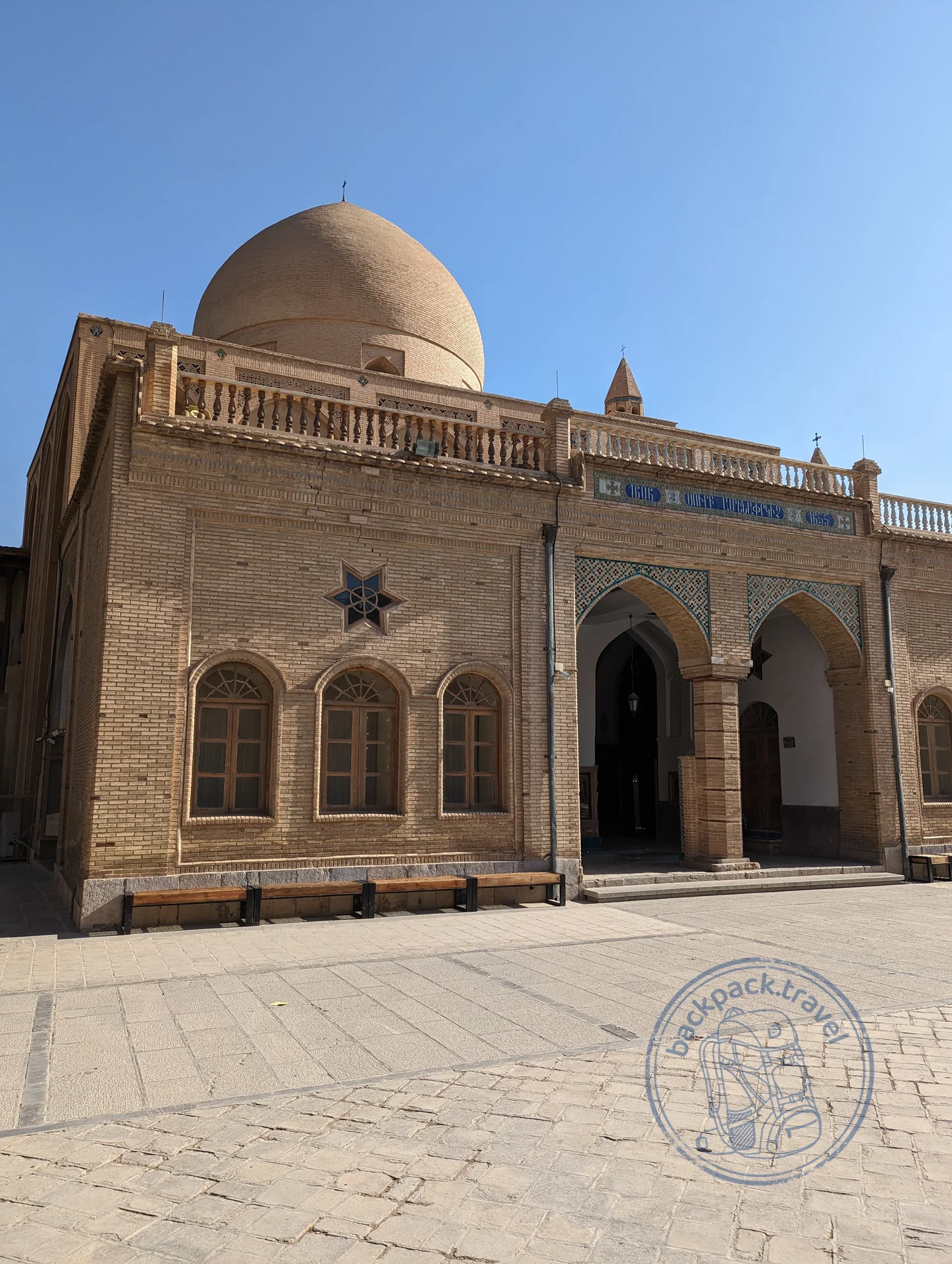
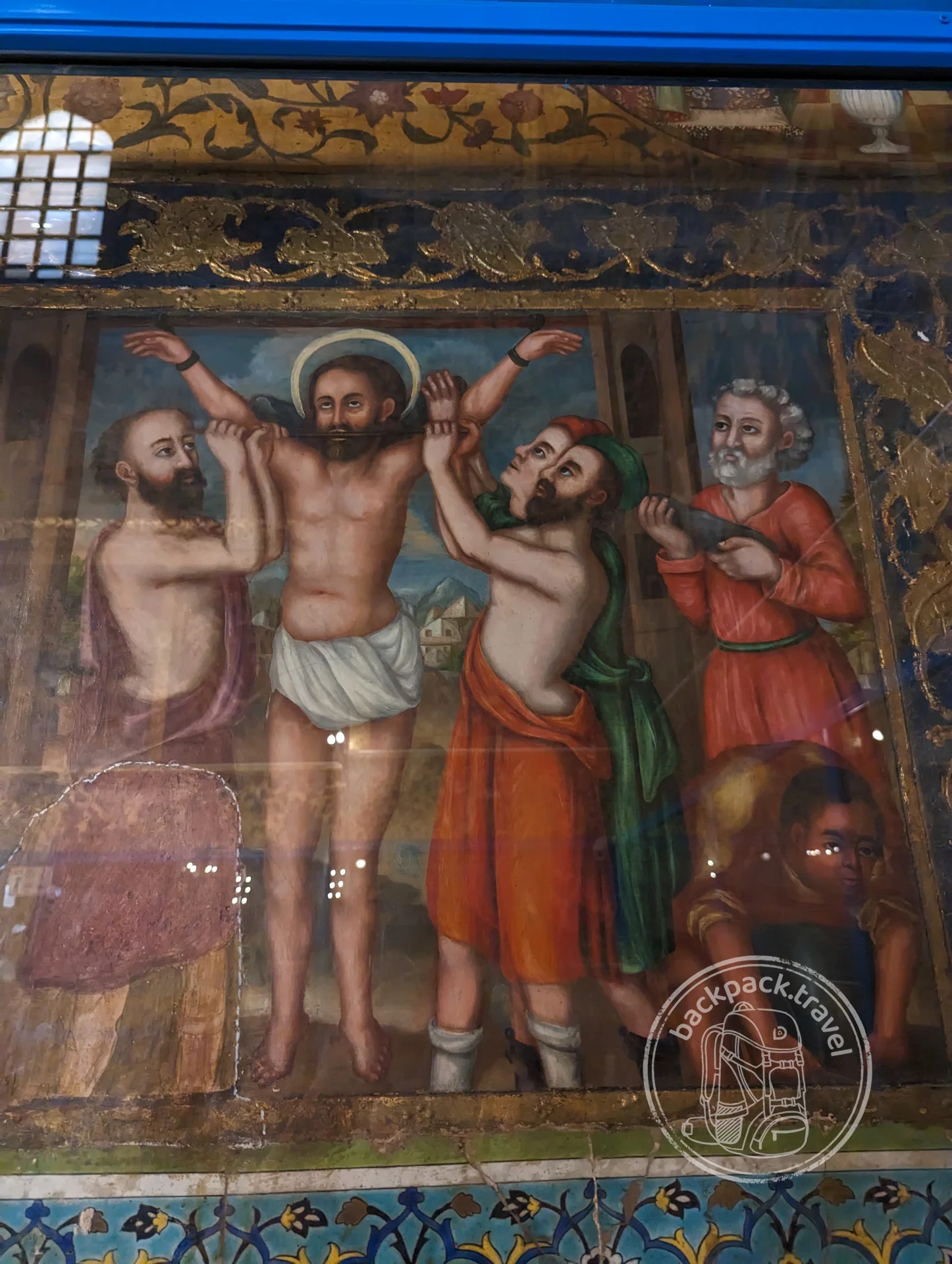
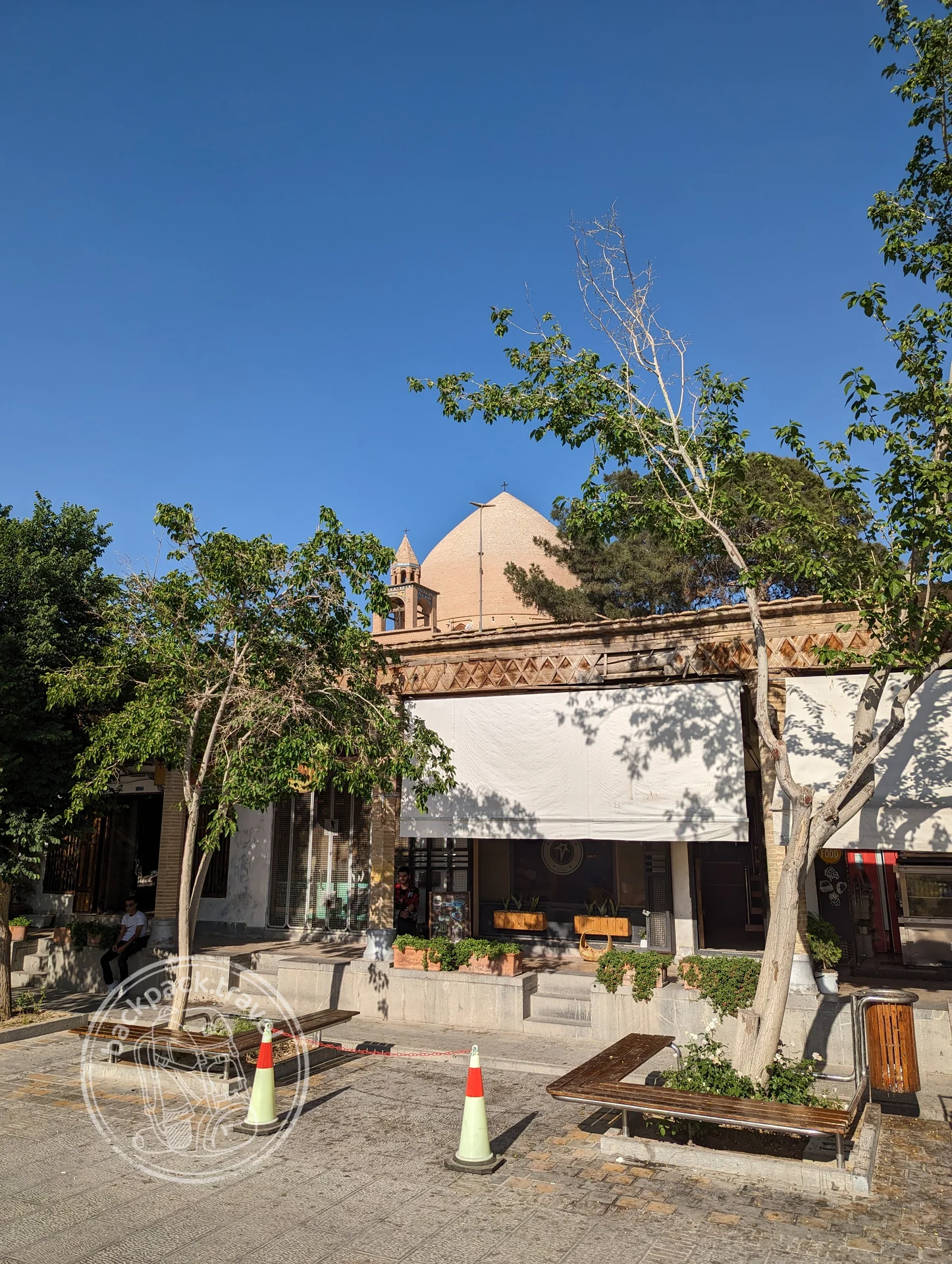
The Armenian cathedral of the Holy Saviour in the New Julfa quarter, built between 1655 and 1664. The quarter came into being after Shah Abbas I resettled the inhabitants of Armenian Julfa on the Araxes to Isfahan, counting on their trading connections and their crafts; the community kept the right to build churches and hold services. From the outside the cathedral looks like an Iranian building — blank brick walls, a low dome on a drum, none of the Gothic verticality. Inside it is the other way round: the walls are covered from top to bottom with painting in the European manner, the scenes running in tiers from the creation of the world at the bottom to the Last Judgement beneath the dome, while the lowest register is given over to scenes of martyrdom rendered with naturalistic directness. The gilding and the plant ornament across the vaults are borrowed from the Persian tradition instead. Attached to the cathedral are a museum with manuscripts and a printing press from the middle of the seventeenth century, and a memorial to the victims of the 1915 genocide.
- Address
- Ershad, Isfahan
Lists and awards
On the map
Reviews (0)
No reviews yet. Be the first!
Updated