 Города и дороги
The Sultanahmet Mosque, known everywhere as the Blue Mosque, was built between 1609 and 1617 for Sultan Ahmed I, under the direction of Sedefkar Mehmed Agha, a pupil of the great Sinan. It was conceived as an answer to the Hagia Sophia opposite: it was set on the southern side of the ancient hippodrome and turned towards it with its main courtyard, so that the two domes read as one panorama.
Domes and minarets
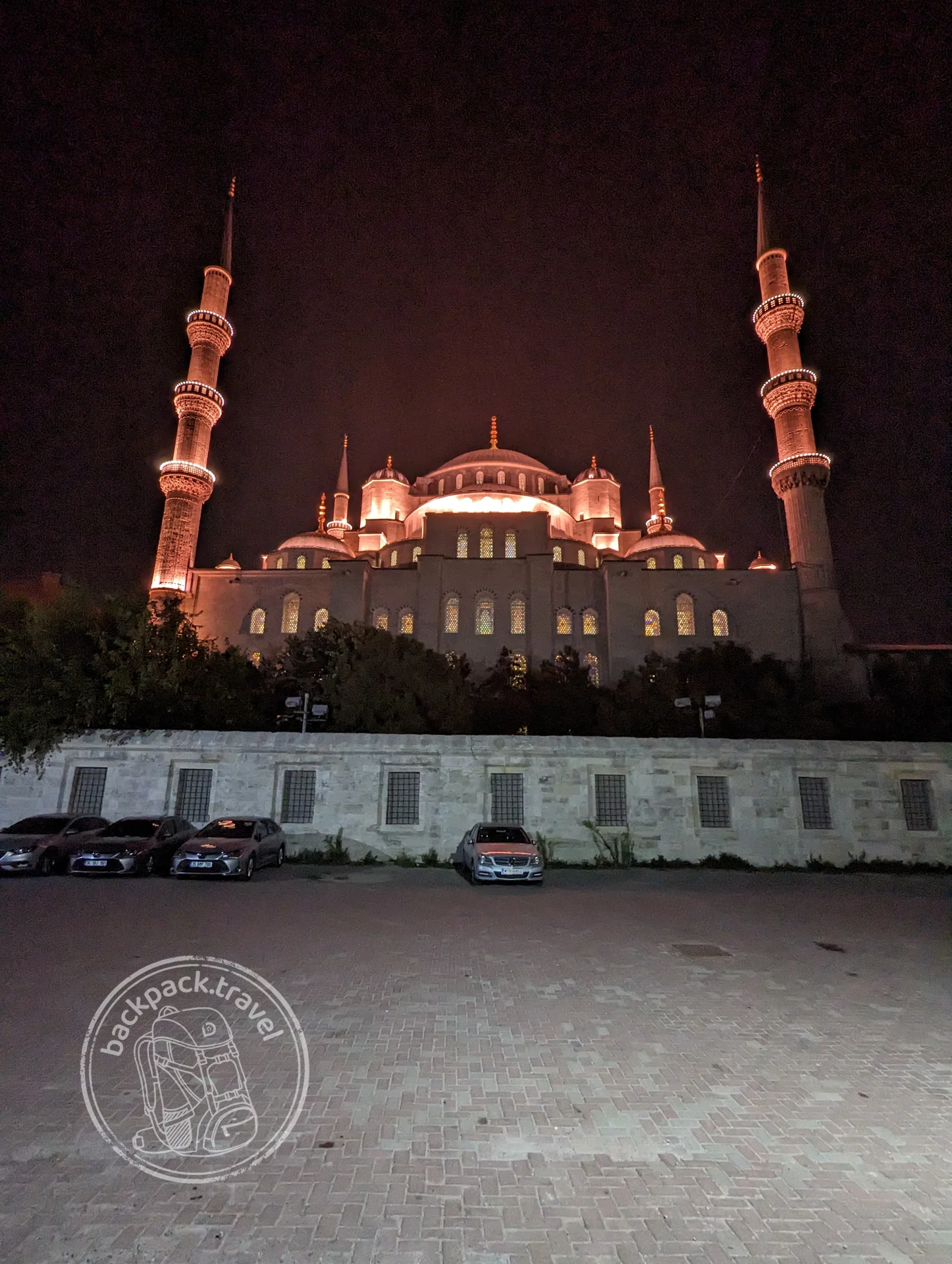
A cascade of half-domes rises to a central dome about twenty-three and a half metres across. Six minarets made the mosque an exception: imperial mosques normally had four, and only the Sacred Mosque in Mecca had six. By tradition, when this caused offence, Ahmed I paid for a seventh minaret to be added in Mecca.
Where the name comes from
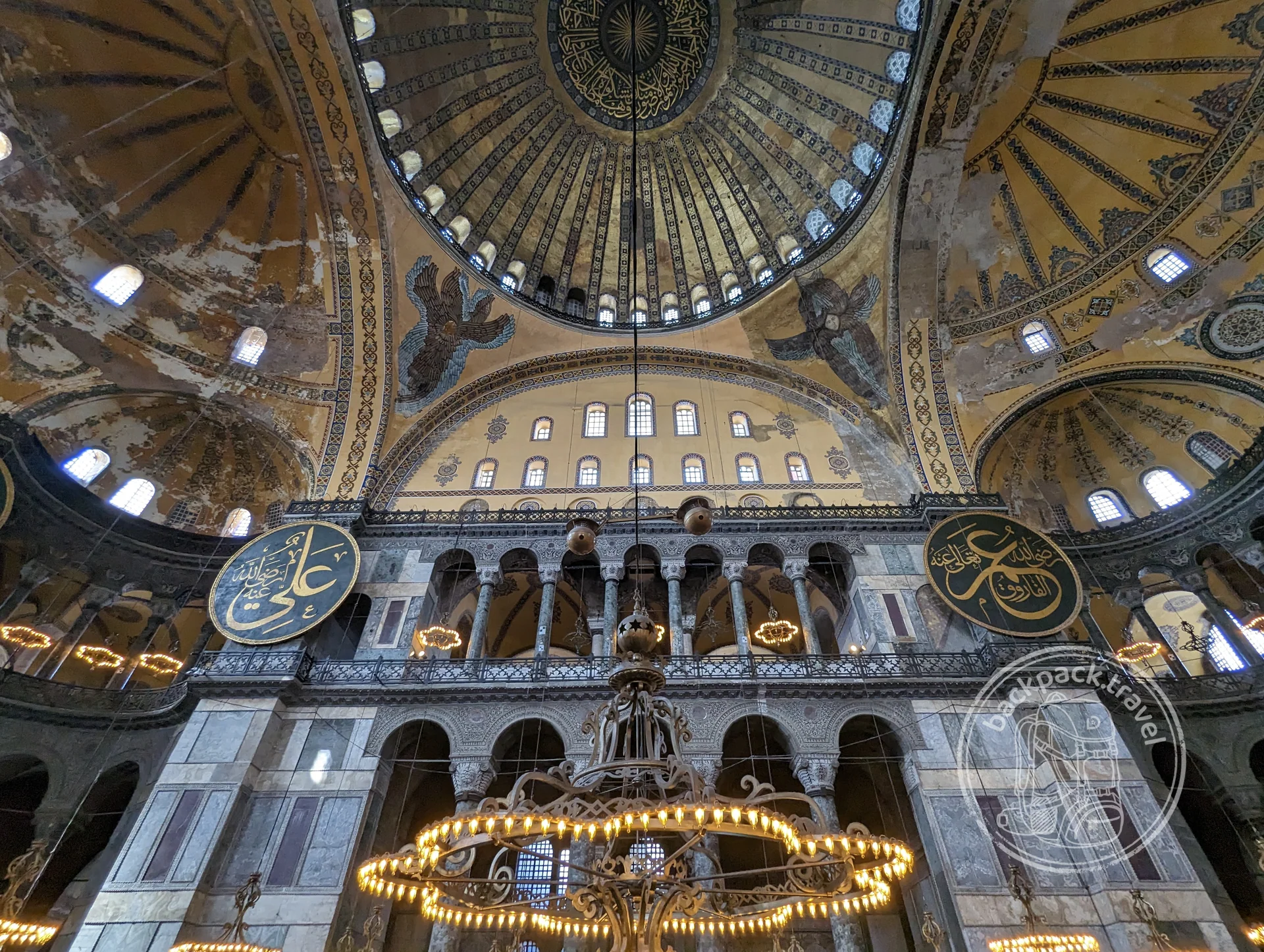
The popular name comes from the interior: more than twenty thousand Iznik tiles in blue and turquoise cover the gallery walls and the upper levels. Light comes through over two hundred windows, originally filled with coloured Venetian glass. By day the interior reads as grey-blue rather than vivid; the blueness shows in the tilework up close, not in the overall impression.
The complex
The mosque was never meant to stand alone: it came with a madrasa, a hospital, a caravanserai, a kitchen for the poor and the tomb of Ahmed I. Some of these buildings survive around the courtyard.
Visiting
Entry is free and no ticket is needed. The mosque is in use, so it closes to visitors during the five daily prayers and for most of Friday morning. Shoes come off at the door and women cover their hair; scarves are handed out at the entrance. The facades are lit at night, and the silhouette with its six minarets is visible from the water and from the neighbouring hills.
- Address
- Sultanahmet, Istanbul · tram T1 to Sultanahmet
- Opening hours
- Daily from 8:30, closed for five prayers; Fri to 14:30
- Prices
- Free
Lists and awards
On the map
Reviews (0)
No reviews yet. Be the first!
Updated