 Города и дороги
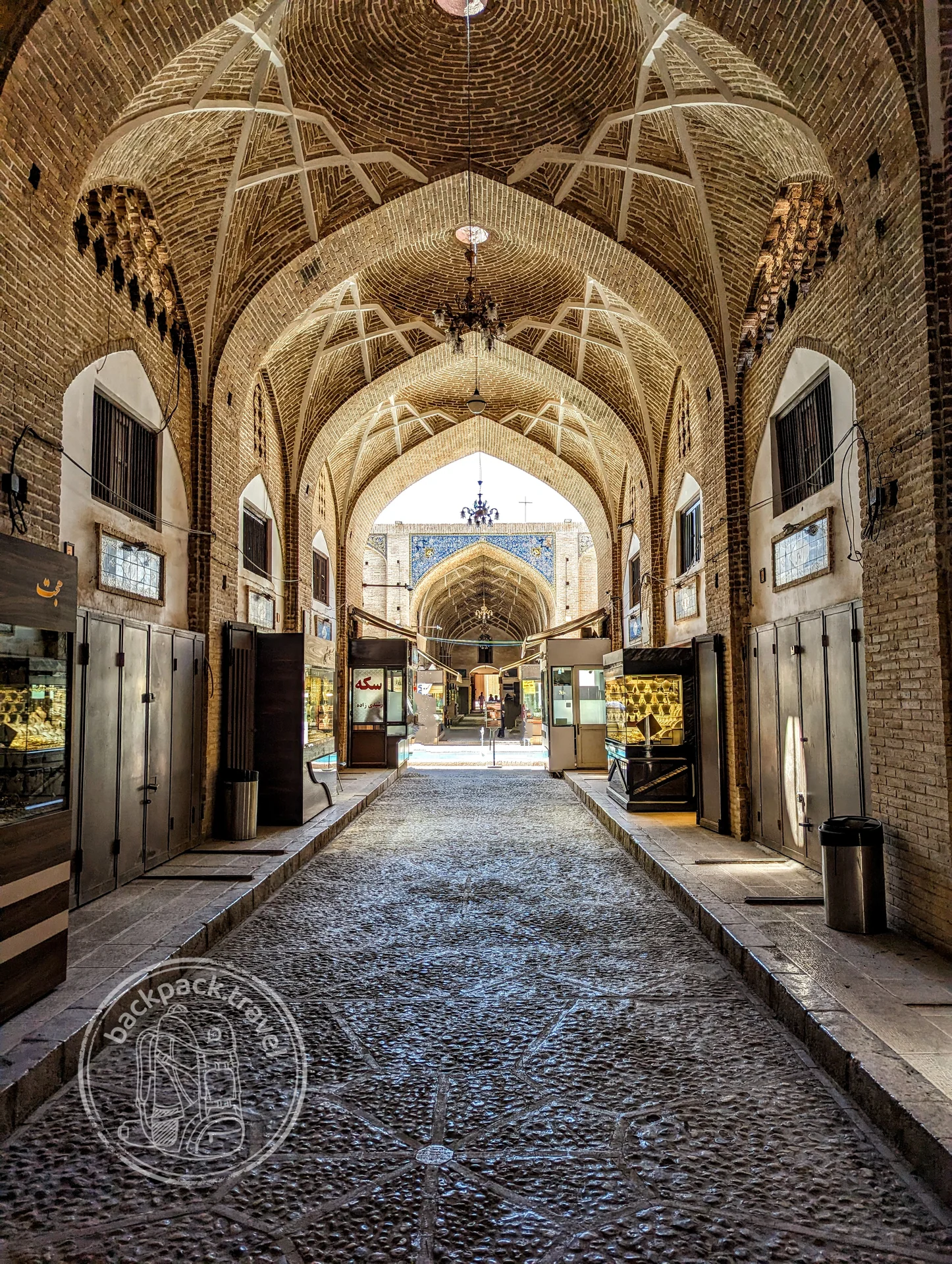
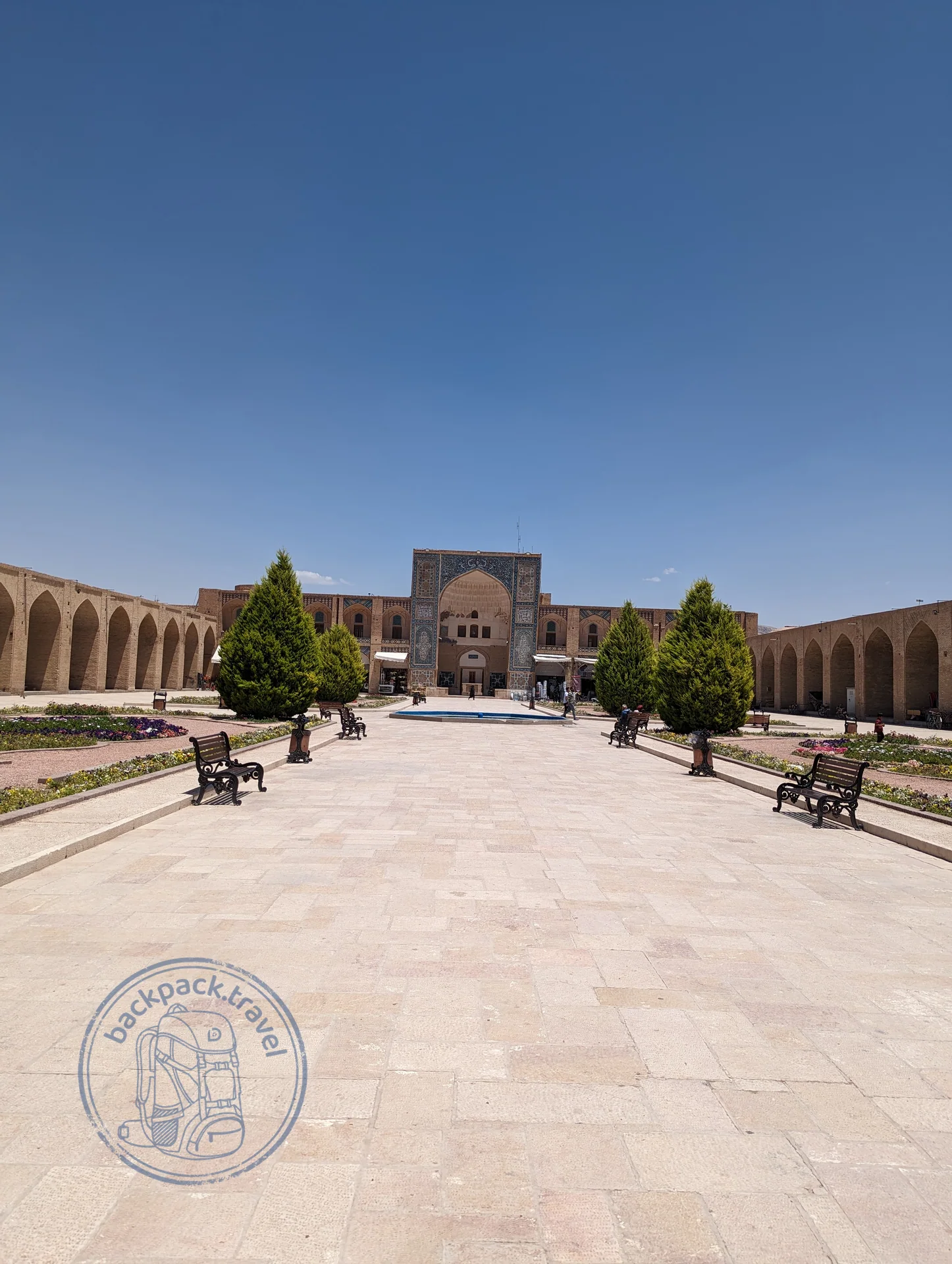
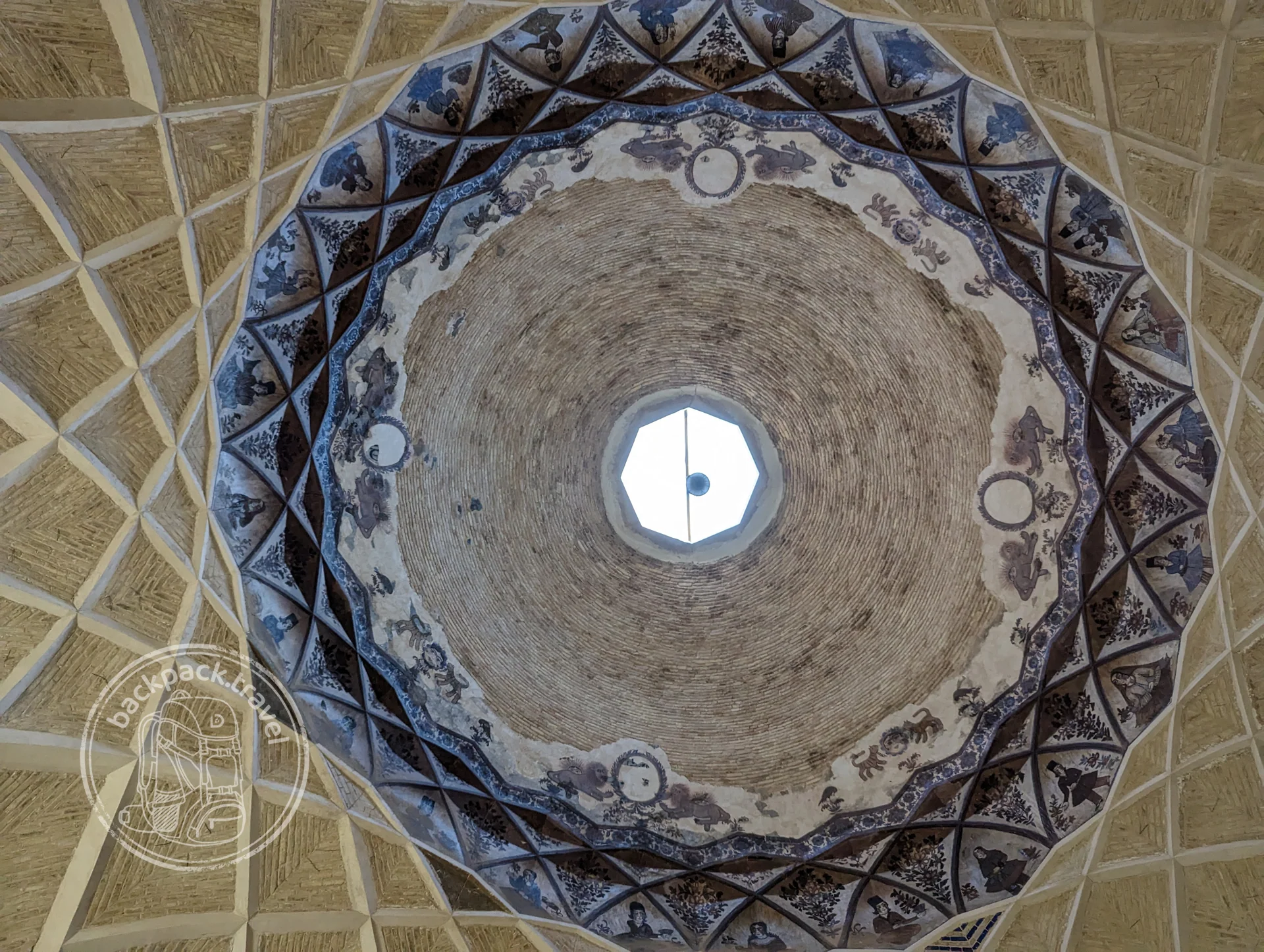
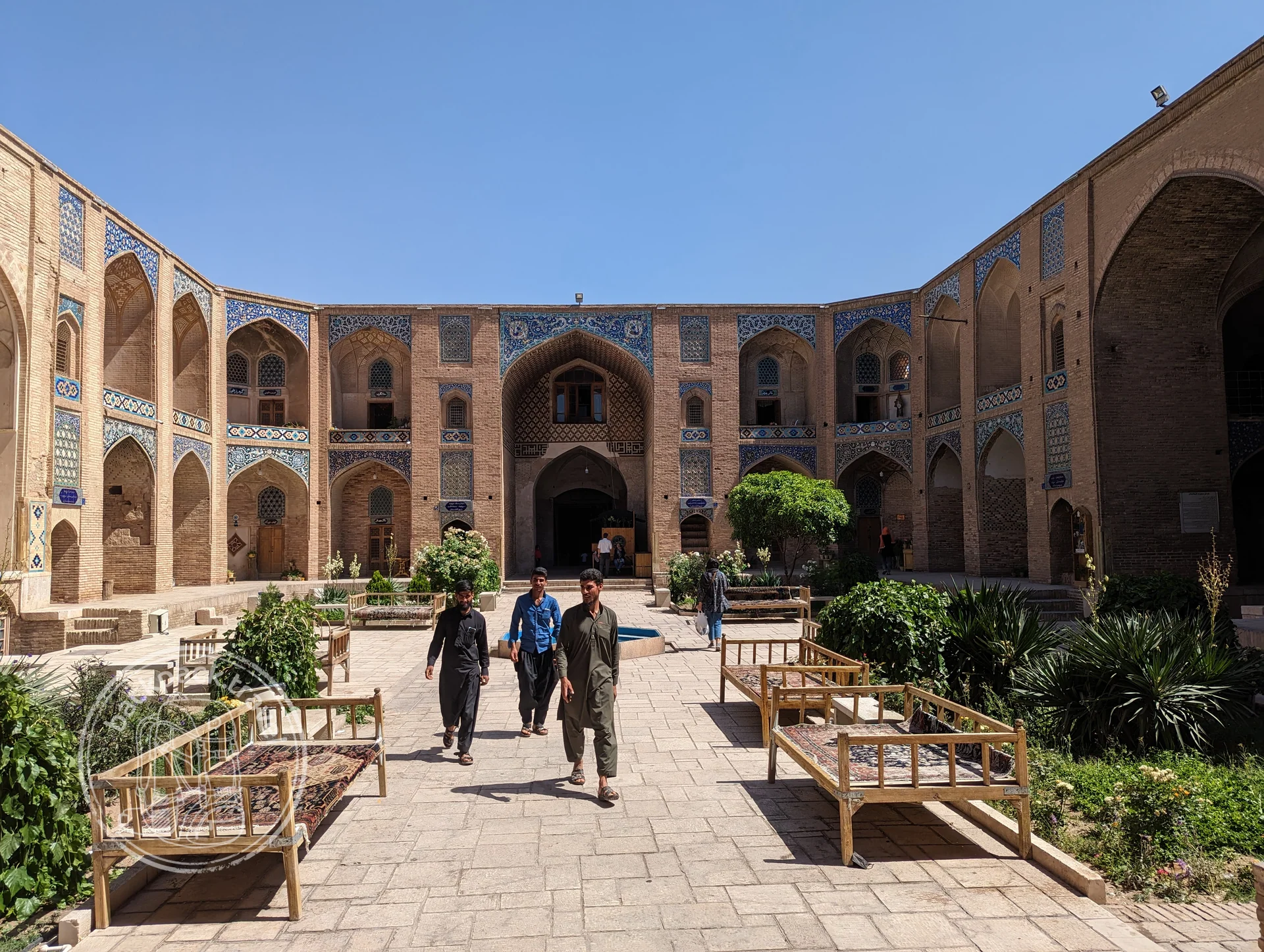
The Ganjali Khan Complex is the heart of old Kerman, built up between 1596 and 1631 under the governor Ganj Ali Khan, who ruled the province in the name of Shah Abbas I. Around a rectangular square about a hundred metres long are gathered a bathhouse, a caravanserai, a mint, a madrasa, a mosque, a water reservoir and rows of shops connected to the city bazaar. The square is enclosed by arcades of fired brick, and tiled panels with plant ornament survive above the entrances. The layout is attributed to the Yazd master Mohammad Soltani, and it repeats the principle of the Isfahan maidans of the Safavid era: an enclosed court around which all the city's functions are placed at once. The bathhouse works as a museum: under its domes with their octagonal light openings seventeenth-century painting has survived, and wax figures are set out in the halls to show the bathing ritual. The mint is occupied by a coin collection, and the caravanserai is given over to shops and workshops. On the spot it is easy to see how light works in this kind of architecture: by day the openings under the domes give an even, diffused illumination, and no lamps are needed in the bath.
- Address
- غربی۱, Kerman
On the map
Reviews (0)
No reviews yet. Be the first!
Updated