 Города и дороги
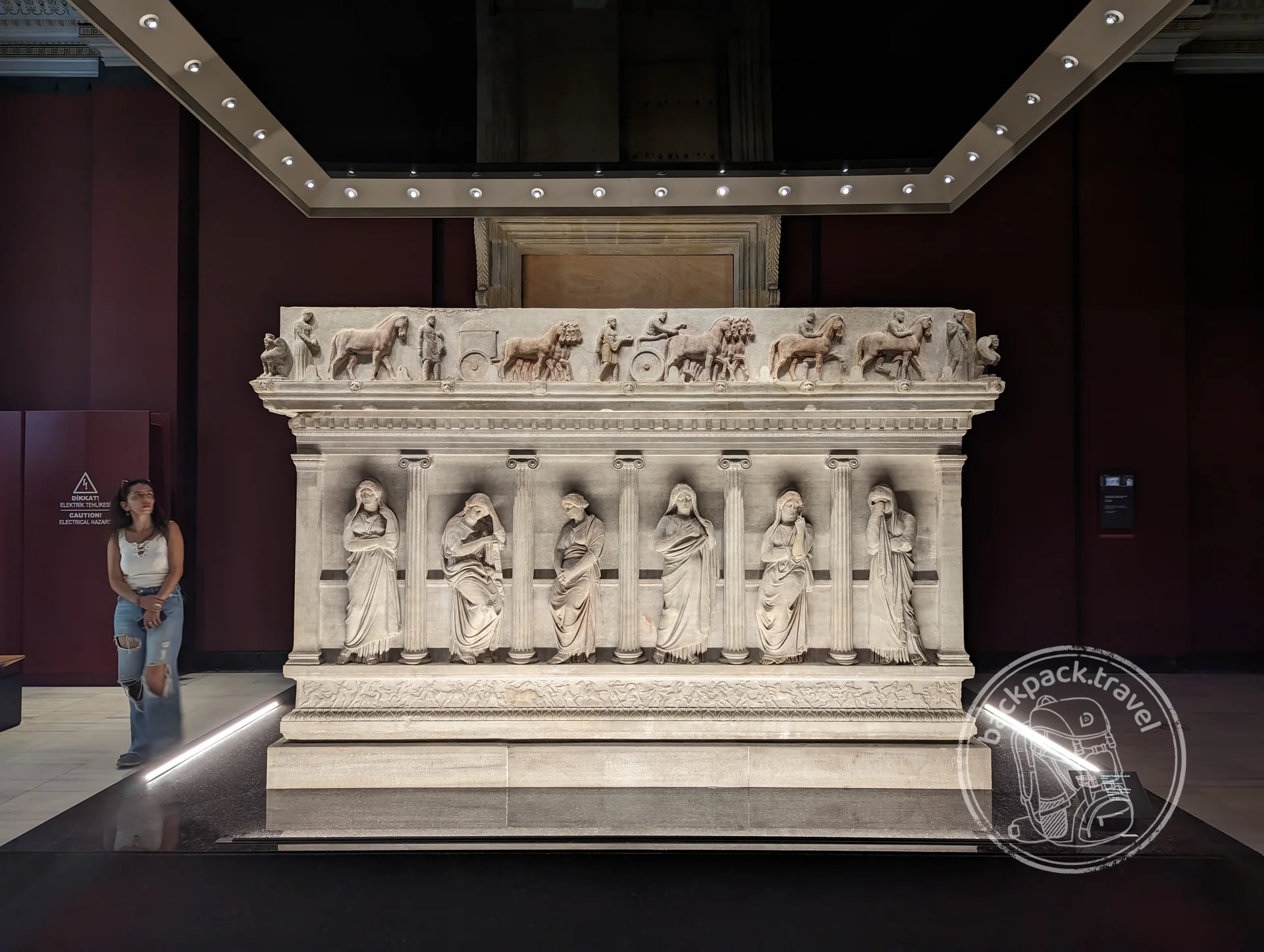
The Istanbul Archaeological Museums occupy three buildings in Gulhane Park, by the lower gate of Topkapi Palace. The foundation of the collection was laid by the painter and archaeologist Osman Hamdi Bey, who in the 1880s secured a ban on the export of antiquities from the Ottoman Empire and himself excavated the royal necropolis at Sidon. The main block, in the neoclassical style, was built in 1891 specifically for the sarcophagi brought from there. The most famous of them, the so-called Alexander Sarcophagus of the late fourth century BC, is a marble chest in the form of a temple, covered with high reliefs of battle and hunting scenes on which traces of the original paint survive. Alexander the Great has nothing to do with the burial; most probably the sarcophagus held the Sidonian king Abdalonymus. Beside it are displayed the Sarcophagus of the Mourning Women and the Lycian Sarcophagus. The neighbouring blocks are occupied by the Museum of the Ancient Orient, with material from Mesopotamia and the Hittite cities, and by the Tiled Pavilion of 1472, one of the oldest secular buildings of Ottoman Istanbul.
- Address
- Osman Hamdibey Yokuşu Sokağı, Istanbul
On the map
Reviews (0)
No reviews yet. Be the first!
Updated