 Города и дороги
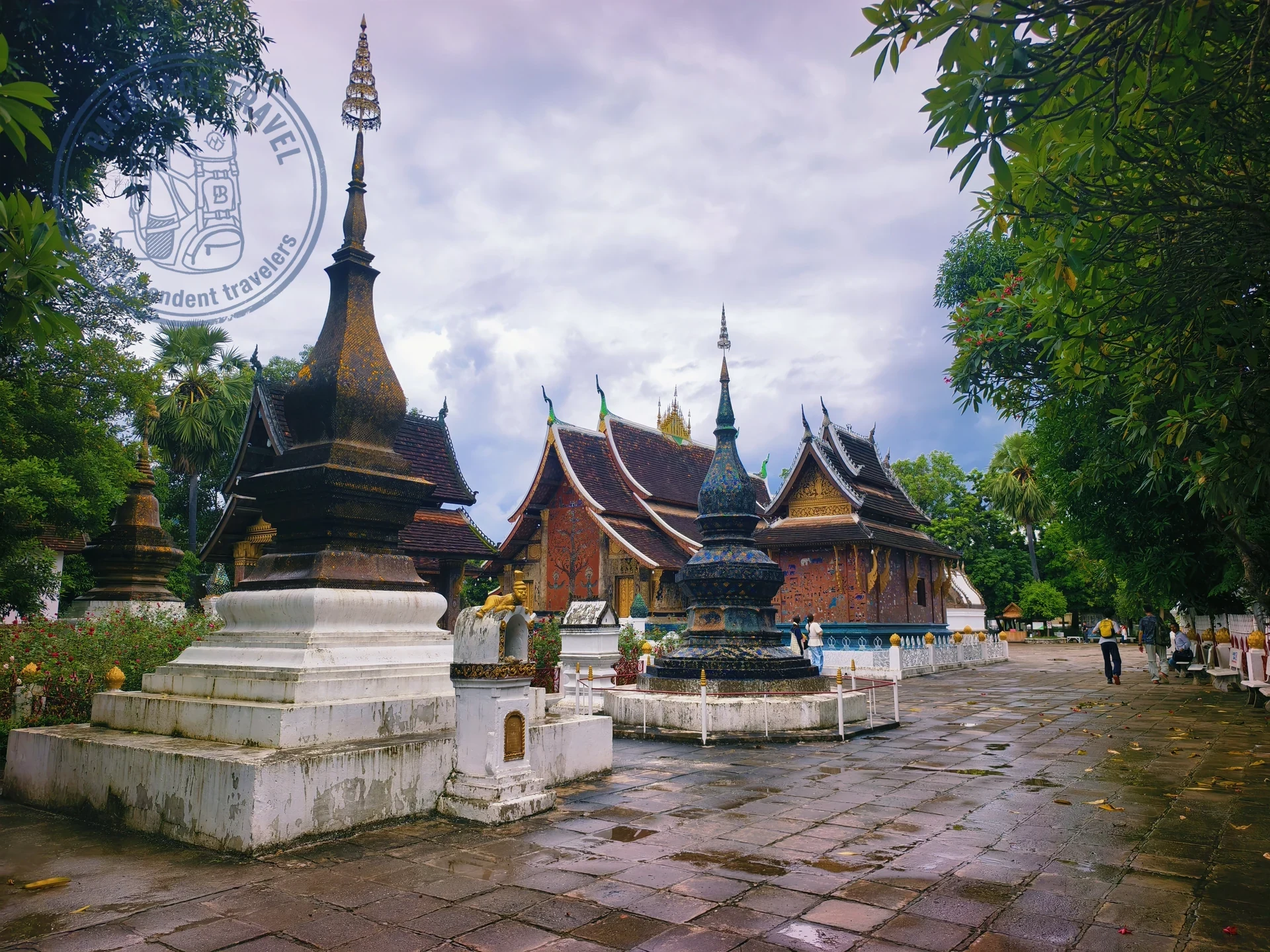
Wat Xieng Thong stands beside the Mekong at the tip of Luang Prabang’s historic peninsula, near the confluence with the Nam Khan. King Setthathirath founded the monastery in 1559–1560. It is regarded as one of the city’s leading examples of traditional Lao architecture. Begin at the sim, the main ceremonial hall. Its broad, tiered roof sweeps low toward the ground, while a gilded Dok So Fa ornament rises along the ridge. Carved details and serpent decorations at the roof edges are worth viewing from several sides; the building’s silhouette changes as you walk around it.
Inside the sim, look for gilded decoration and paintings drawn from Buddhist stories and local traditions. A vivid glass mosaic depicting a Bodhi tree covers the rear façade. The neighboring chapels use small pieces of colored glass to form scenes of everyday life and Luang Prabang folklore. One chapel is associated with a reclining Buddha image, another with a standing Buddha. Walk around the whole group of buildings to see how glass, gilding and carved wood distinguish each part of the complex.
The Royal Funerary Chariot Hall is another important building. Constructed in 1962, it houses an elaborately carved and gilded royal carriage and funerary urns associated with the royal family. The grounds also include the Tripitaka library, stupas and other monastic buildings. Restoration in 2015 focused on glass mosaics and roof decorations, while retaining the main structure of the buildings.
The temple is an easy walk along the old town’s main street. The local tourism portal estimates about ten minutes on foot from its information center. Wear clothing that covers shoulders and knees. Remove shoes and headwear where requested, keep your voice low and do not interrupt worship. Follow signs about photography; women should avoid touching monks. Check opening hours and admission at the entrance.
- Address
- Wat Xieng Thong, Luang Prabang, Laos
On the map
Reviews (0)
No reviews yet. Be the first!
Updated