Mérida
Description
The White City of the Yucatán — the peninsula's cultural capital, with cenotes in the surrounding region, the Lucas de Gálvez market, and the Maya ruins of Uxmal.
Wiki
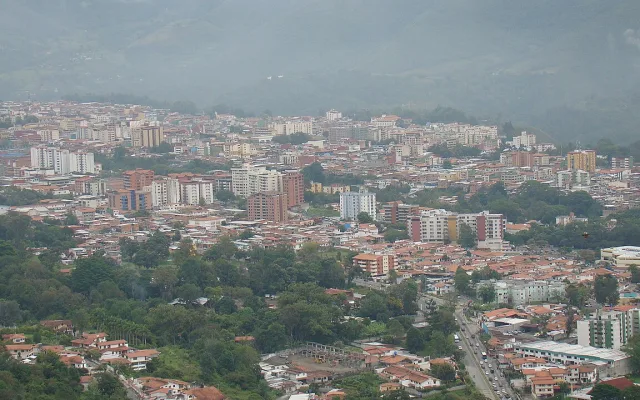
The capital of the Mexican state of Yucatán and one of the safest and most culturally rich cities in Latin America — population around 990,000. The "White City" (La Ciudad Blanca) is known for its Spanish limestone buildings from the 16th to 19th centuries, erected on the ruins of the Maya capital Th'ó (Tihó). The city grew wealthy in the late 19th century, which gave it magnificent belle époque mansions. It is the main gateway to the archaeological zones of Chichen Itzá, Uxmal and the cenotes of Yucatán.
Top Sights
- Plaza Grande (Plaza de la Independencia) — the main square, with a cathedral (1598, the oldest on the American mainland) and a Governor's Palace with murals.
- Paseo de Montejo — the "Yucatecan Champs-Élysées," lined with the mansions of late-19th-century sisal magnates.
- Casa de Montejo — a 16th-century conquistador mansion, now a museum.
- Gran Museo del Mundo Maya — the largest museum of Maya culture in Latin America.
- Mercado Lucas de Gálvez — the main market, with traditional Yucatecan dishes.
- Barrio de San Juan and Barrio de Santa Ana — historic neighbourhoods with colourful houses.
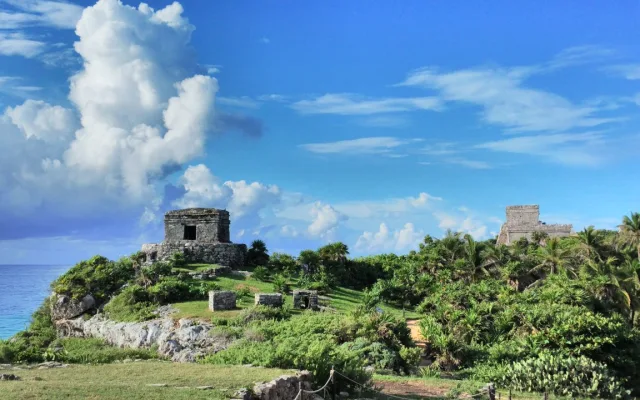
- Chichen Itzá — a UNESCO World Heritage Site two hours away, home to El Castillo, the great Maya pyramid and one of the New Seven Wonders of the World.
- Uxmal — less visited but equally impressive Maya ruins 1.5 hours away, also a UNESCO site.
- Cenotes — karst sinkholes and underground lakes scattered across Yucatán. The best — Cenote Suytun, Ik Kil, Dzitnup, Hubiku — are a few hours from Mérida.
- Celestún — a nature reserve 100 km away, home to thousands of pink flamingos year-round.
- Progreso — a beach resort 30 minutes away for a day by the ocean.
Food and Prices
The local cuisine is Yucatecan: cochinita pibil (pork slow-cooked in banana leaf with achiote), papadzules, sopa de lima, castacán, recado negro, marquesitas (a dessert). Lunch at a local eatery from 100–205 MXN ($6–12), dinner at a restaurant 310–685 MXN ($18–40). Local tequila and mezcal 70–120 MXN ($4–7). A litre of petrol around 21 MXN ($1.20), a city taxi 70–170 MXN ($4–10), city bus 12 MXN ($0.70). ADO coaches connect the main towns. Prices are as of 2026.
Getting There and Around
Manuel Crescencio Rejón International Airport (MID), 8 km from the centre, is served by Aeromexico, Volaris and Viva Aerobus, with direct flights from Houston and Miami. A taxi to the centre costs 205–255 MXN ($12–15). From Cancún — ADO coach, 4 hours, 430–600 MXN ($25–35). Around the city — on foot, by taxi or Uber. To Chichen Itzá — ADO coach, 2 hours.
When to Go
November–March is dry, 22–30 °C, and ideal. Summer (April–October) brings 30–38 °C and high humidity. Hurricane season runs June–November, with the greatest risk in August–October. Carnaval de Mérida takes place in February–March. The equinox at Chichen Itzá (20–21 March and September) produces a famous play of light in which the shadow of a serpent appears to descend the pyramid.
Updated