Description
Birthplace of tequila and mariachi — Mexico's second-largest city, with baroque cathedrals, the Tlaquepaque craft district, and Lake Chapala nearby.
Wiki
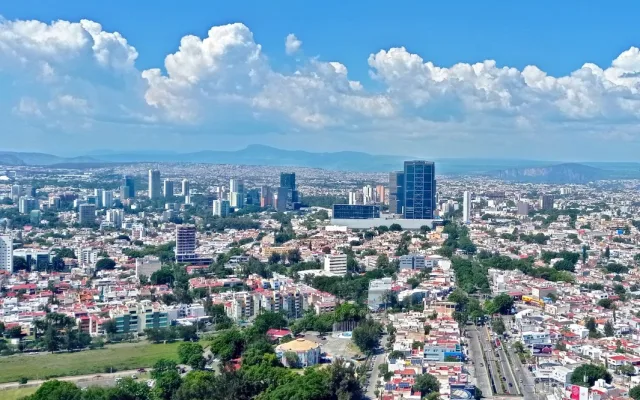
Guadalajara is the capital of Jalisco state and one of Mexico's cultural capitals — the city that gave the world tequila, mariachi music, and the charreada tradition. Set on the Atemajac highland plateau in western Mexico, it combines colonial architecture with the face of a modern business and technology hub.
Overview and Climate
The city proper is home to around 1.4 million people; together with the suburbs of Zapopan, Tlaquepaque, Tonalá, and Tlajomulco, the metropolitan area approaches 5 million — making it the country's second-largest urban area. An elevation of nearly 1,570 metres above sea level produces a mild, even climate that locals call "eternal spring". Daytime temperatures stay comfortable year-round, with a pronounced rainy season in summer. Beyond its cultural heritage, Guadalajara is a major business and IT cluster — international technology companies have offices here, earning the region the nickname "Mexico's Silicon Valley".
Historic Centre
The centre has been built up since the 16th century and still retains the look of a Spanish colonial city. At the heart of it stands the Cathedral, with its two yellow neo-Gothic spires, built from the late 16th century through the 19th and surviving several earthquakes. Surrounding it is a series of linked plazas: Plaza de Armas with its ornate French bandstand, Plaza de los Laureles and the adjoining Rotonda de los Jaliscienses Ilustres, honouring distinguished natives of the state, and the grand Plaza Tapatía, which joins the historic districts into a single pedestrian axis.
Sights
- Hospicio Cabañas — a former orphanage from the early 19th century, a neoclassical masterpiece and a UNESCO World Heritage Site. Its dome is decorated with monumental frescoes by José Clemente Orozco, including the famous "Man of Fire".
- Palacio de Gobierno — also features Orozco murals dedicated to the independence struggle and the figure of the priest Miguel Hidalgo.
- Teatro Degollado — a grand 19th-century opera house in the neoclassical style.
- Mercado San Juan de Dios (Mercado Libertad) — one of the largest covered markets in Latin America: three floors of food, crafts, leather, spices and souvenirs.
- Tlaquepaque — a charming district of artisans and galleries: ceramics, blown glass, papier-mâché work, the shady Jardín Hidalgo square, and the El Parián pavilion where mariachi bands play.
- Tonalá — a neighbouring village of potters with a large market on Thursdays and Sundays.
- Zapopan — home to a revered basilica housing the image of Our Lady of Zapopan.
Day Trips
Several rewarding destinations lie within one to two hours of the city. The town of Tequila, 60 km away, is the birthplace of the drink that bears its name and a UNESCO site surrounded by vast blue agave fields; tours visit distilleries and include the Mundo Cuervo routes. Lake Chapala, about 50 km away, is Mexico's largest natural lake; the villages of Ajijic and Chapala on its shores have long attracted artists and foreign retirees for their mild microclimate and relaxed pace of life.
Jalisco Cuisine
Local food is among the most distinctive in the country. The signature dish is the torta ahogada — a birote roll filled with shredded pork and "drowned" in a spicy tomato sauce with chile de árbol. Also worth trying are birria (spiced braised meat, typically goat or beef, served with broth and tortillas), a hearty pozole of hominy corn, and for dessert the delicate baked custard jericalla. Street food, family-run fondas, and markets let you explore the cuisine cheaply; the Tlaquepaque tourist district has many restaurants with live music.
Getting There and Around
Miguel Hidalgo y Costilla International Airport (GDL) is about 20 km south of the centre and receives flights from Mexican carriers (Aeroméxico, Volaris, VivaAerobus) and international airlines. Getting around is easy on the light metro (Tren Ligero) and the underground-surface Línea 3, as well as the Macrobús express buses; fares are very cheap. Taxis and ride-hailing apps operate throughout the city. For three days, a sensible itinerary runs: day one — the historic centre with the Cathedral, Hospicio Cabañas and the market; day two — the craft districts of Tlaquepaque and Tonalá; day three — a trip to Tequila or Lake Chapala. Cash is handy for markets and small shops; cafés and stores generally accept cards.
A rough guide to costs: lunch at a family-run fonda is 120-200 pesos (about $7-12), dinner at a restaurant 350-600 pesos ($20-35), a light-rail ride 9.50 pesos ($0.55), and a taxi across the centre 70-120 pesos ($4-7). Prices are as of 2026.