Description
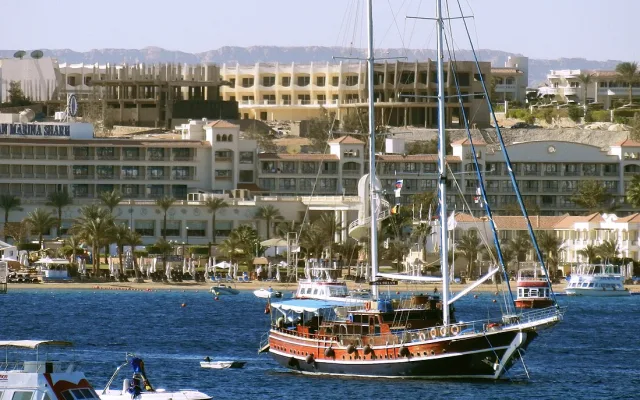
Sharm el-Sheikh is a resort town on the Red Sea, known for the coral reefs of Ras Muhammad National Park, its diving and beaches such as Naama Bay.
Wiki
Sharm el-Sheikh is Egypt's largest seaside resort, on the southern tip of the Sinai peninsula where the Gulf of Aqaba meets the open Red Sea. Once a fishing village, over a few decades it has grown into a town of about 60,000 people and one of the best-known diving capitals on the planet, with charter flights arriving year-round.
Geography and climate
The town stretches for tens of kilometres along the coast and consists of several distinct zones: the historic Old Market (Hadaba), touristy Naama Bay, modern Sharks Bay near the airport, and the upmarket bays of Nabq and Ras Nasrani to the north. The shoreline is cut by bays with fringing coral reefs that begin literally a few metres from the water's edge.
The climate is hot desert. The sun shines more than 350 days a year and rain is all but absent. From November to April the weather is comfortable (air 22–28 °C, water around 21–24 °C), while from June to August the heat becomes extreme — 40 °C and above. The Red Sea is warm and very salty, remarkably clear and rich in marine life.
History
The name translates roughly as "the bay of the sheikh". Until the 1960s there was only a small fishing camp here. After the wars between Egypt and Israel the peninsula changed hands several times and was finally returned to Egypt in 1982. Rapid development followed: hotels were built, infrastructure laid, and the airport became international. By the 2000s Sharm el-Sheikh was the shop window of Egyptian tourism — international summits and conferences were held here, earning it the nickname "the city of peace".
Main sights
- Ras Muhammad National Park — a reserve at the very southern tip of Sinai, where two continental shelves meet. Sheer coral walls, mangroves, a salt lake and the famous dive sites of Shark Reef and Yolanda Reef.
- Naama Bay — the heart of resort life, with a promenade, restaurants, shops and nightlife.
- The Old Market — a colourful eastern bazaar with spices, shishas, papyrus, leather goods and souvenirs; historic mosques and a more authentic town atmosphere are here too.
- Soho Square — a modern pedestrian quarter with dancing fountains, an ice rink, cafés and evening shows.
- Tiran Island — a stretch of the strait on the Saudi border with four classic reefs: Jackson, Woodhouse, Thomas and Gordon.
- The wreck of the SS Thistlegorm — a British ship sunk in 1941, one of the world's finest wreck dives.
Diving, snorkelling and beaches
The underwater world is the main reason to come to Sharm el-Sheikh. Coral gardens, moray eels, eagle rays, turtles, barracuda and shoals of tropical fish are reachable even for beginners straight from the shore. The town has dozens of dive centres offering internationally certified courses and trips to more distant reefs. Many beaches are separated from deep water by a coral plateau, so entry is often via a jetty.
Nearby, set aside time for day trips: Dahab, 100 km away, is a relaxed alternative to Sharm and a capital of windsurfing, kiting and freediving, with the famous Blue Hole about 130 metres deep. Pilgrimage and nature routes include Mount Sinai (2,285 m), climbed for sunrise, and St Catherine's Monastery at its foot.
Food
Local cooking combines Egyptian and wider Arab traditions. Try koshari, falafel (ta'ameya), ful medames, kebabs and shawarma, and on the coast fresh grilled fish and seafood. Popular drinks are black tea with mint (shai), strong coffee and freshly squeezed juices. Meals end with eastern sweets — baklava, konafa and Turkish delight.
Practical information
- Getting there: Sharm el-Sheikh International takes scheduled and charter flights; transfers to hotels take 10–30 minutes.
- Visas: most visitors get one on arrival or online; simplified rules apply for holidays confined to the Sinai resorts.
- Money: the Egyptian pound; dollars and euros are widely accepted in hotels and markets, and haggling in the bazaar is expected.
- How long: five days is about right — enough for the beach, snorkelling on the reefs, a boat trip to Ras Muhammad or Tiran, and one excursion inland.
- Worth knowing: the sun is fierce, so protect your skin and head; water shoes help when swimming over coral, and touching the reefs or marine life is forbidden.