 Города и дороги
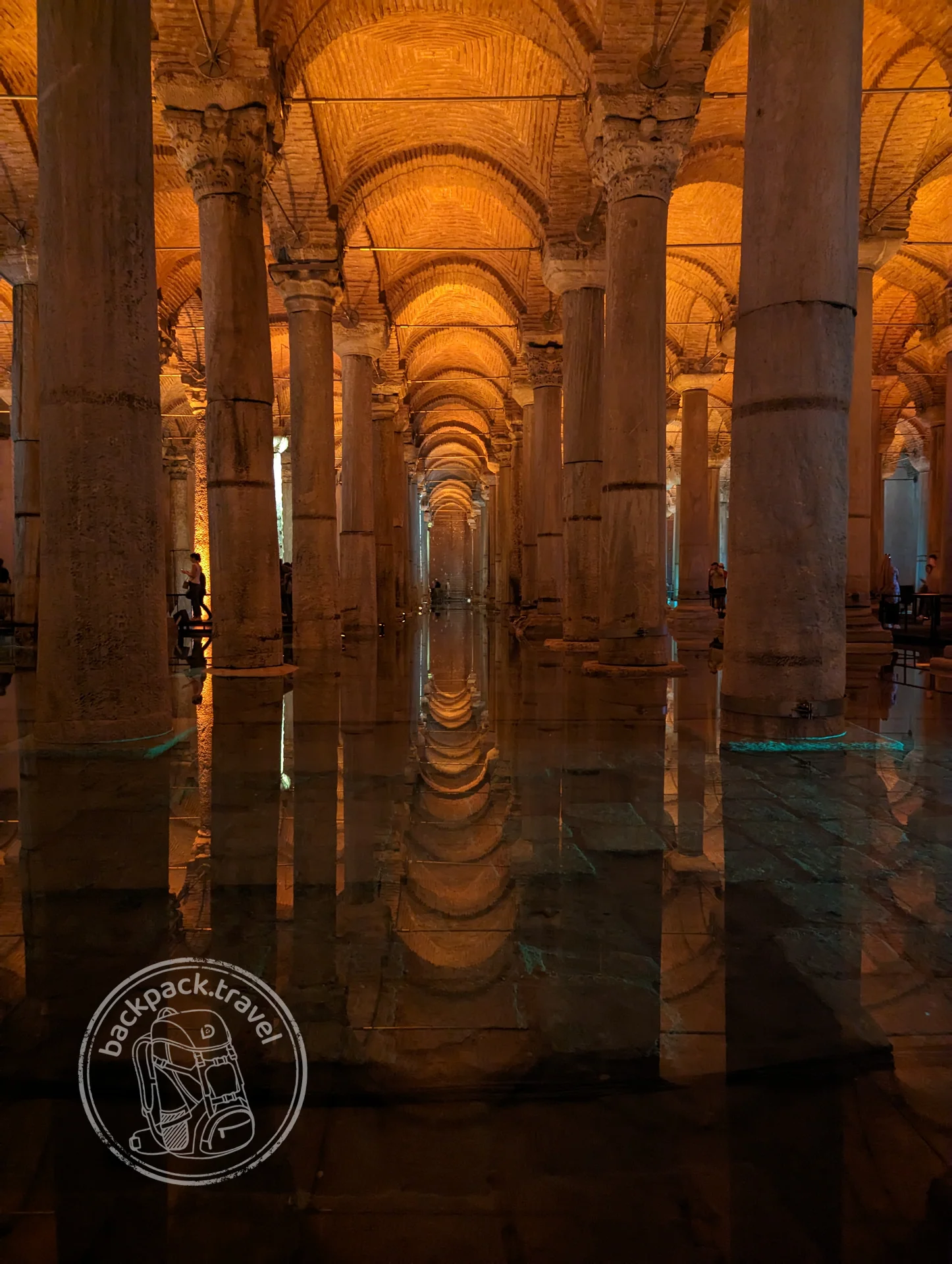
The Basilica Cistern is the largest of the underground reservoirs of Byzantine Constantinople. It was built under Justinian I around 532 on the site of a square with a basilica, which is where the name comes from.
The hall
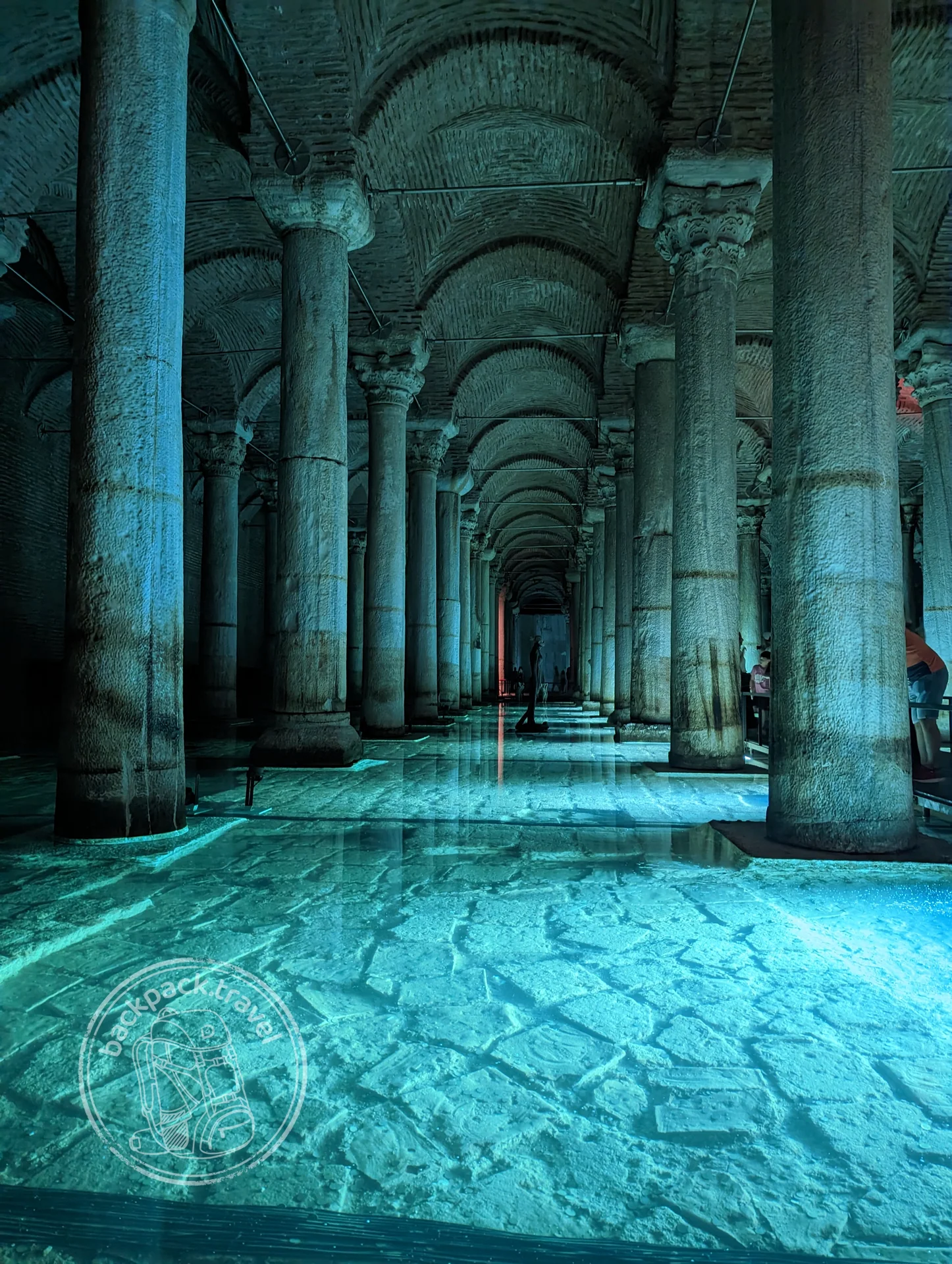
The chamber, a hundred and forty metres long and seventy wide, is roofed with brick vaults carried on three hundred and thirty-six columns, twelve rows of twenty-eight. Almost all of them were reused from earlier buildings, so the shafts and capitals match neither in material nor in order: marble stands beside granite, Corinthian capitals beside plain ones. The capacity is put at around eighty thousand cubic metres.
How it worked
Water arrived by aqueduct from the forests north-west of the city and supplied the palace quarter. Under the Ottomans the cistern was used for a time to water the gardens of Topkapi, and then largely forgotten. It was described anew in the sixteenth century, when it turned out that local people were lowering buckets into their cellars and pulling up fish.
The Medusas
In the far corner, under two columns, lie blocks carved with the head of Medusa: one laid on its side, the other upside down. Why they were set that way is unknown, with explanations ranging from the purely practical, that the block simply fitted the height, to the apotropaic. It is the most photographed spot in the hall.
Today
After restoration the cistern has new lighting, walkways suspended above the water and contemporary installations. Separate evening sessions with concerts are held here on their own ticket. It is cool and damp below even in the heat, and the walkway floor is slippery in places.
- Address
- Yerebatan Caddesi 1/3, Istanbul · tram Sultanahmet
- Opening hours
- Daily 9:00–18:30; evening session 19:30–22:00
- Prices
- 1950 TL by day, 3000 in the evening; card only
Lists and awards
On the map
Reviews (0)
No reviews yet. Be the first!
Updated