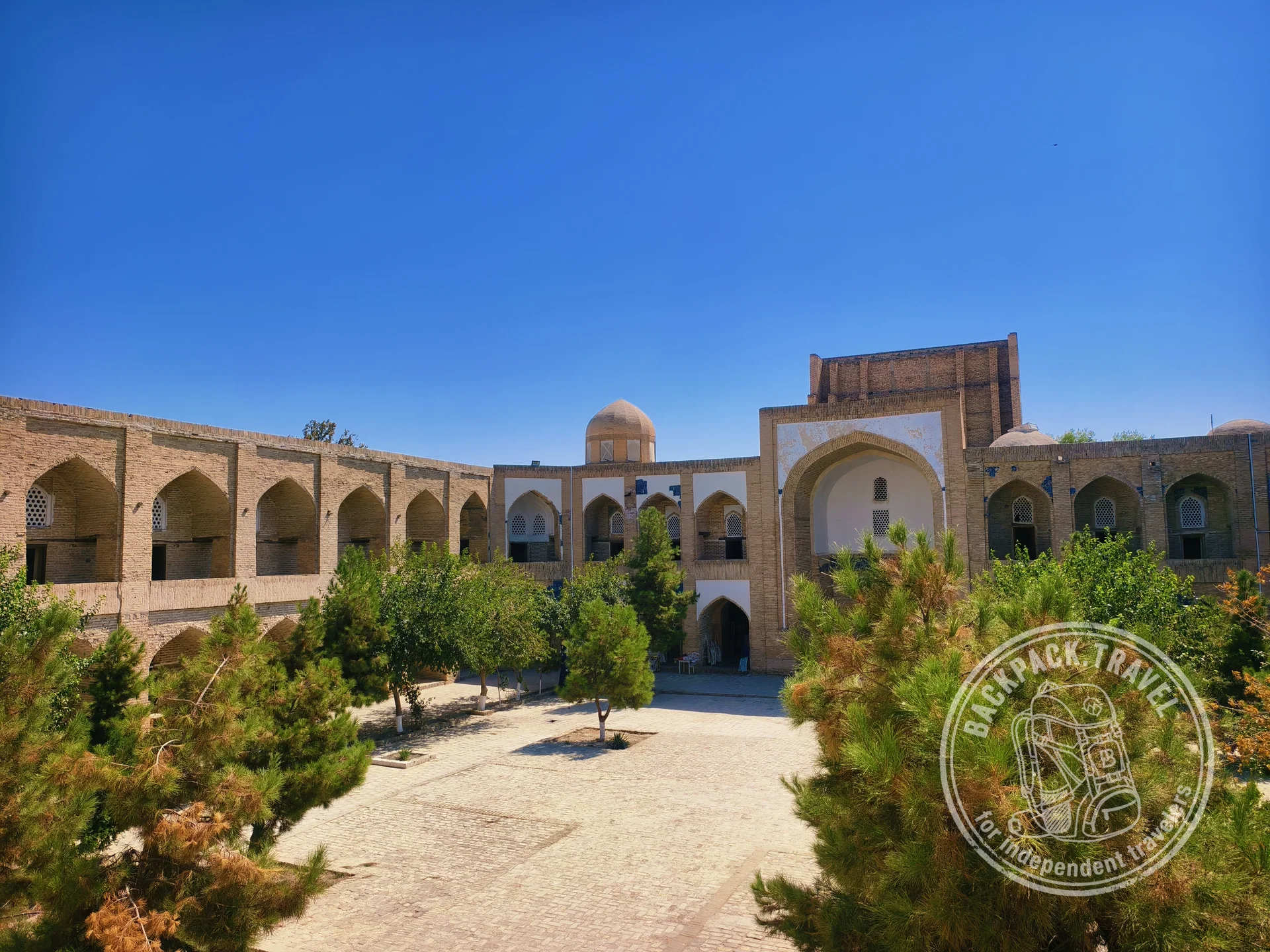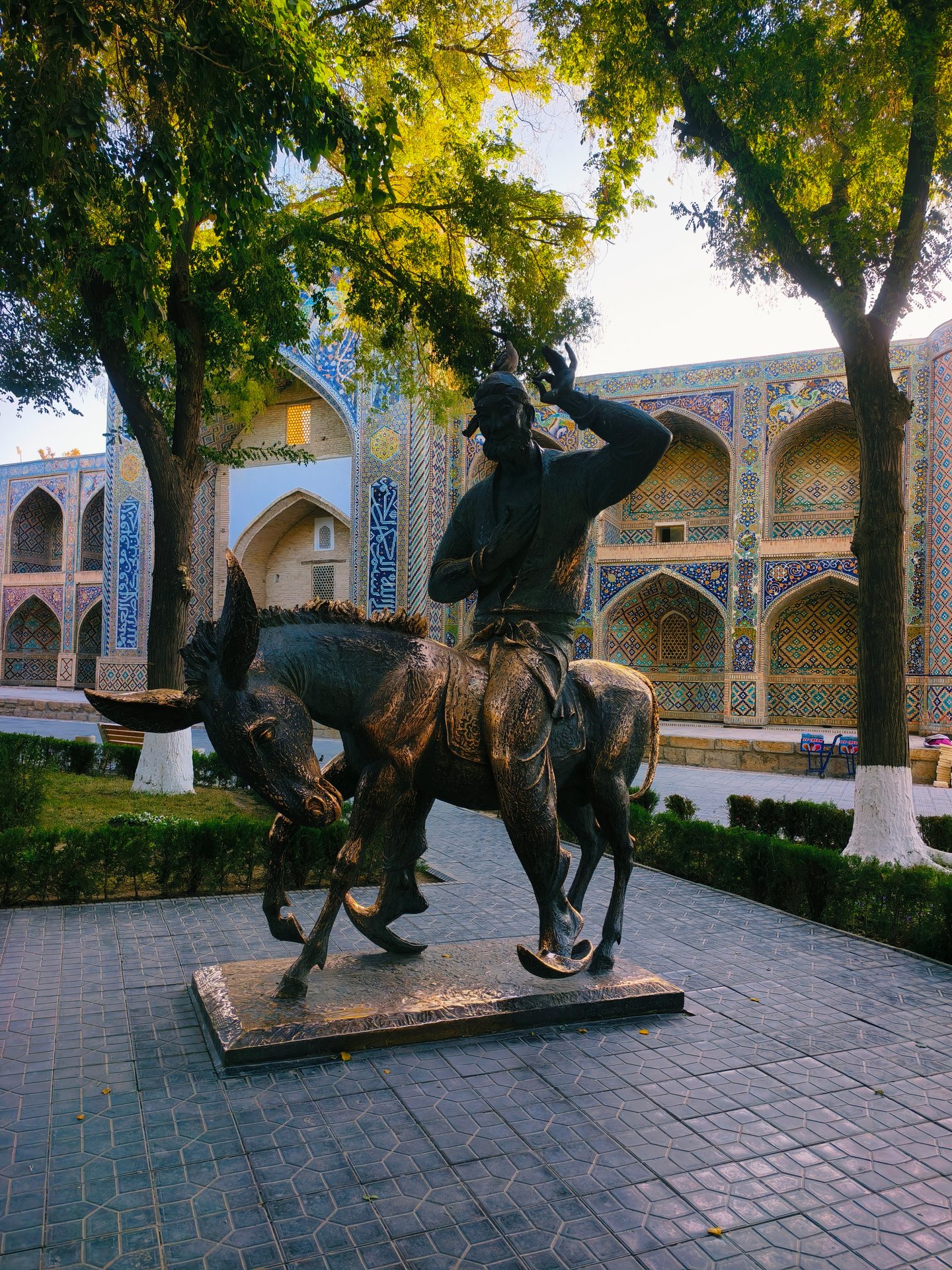
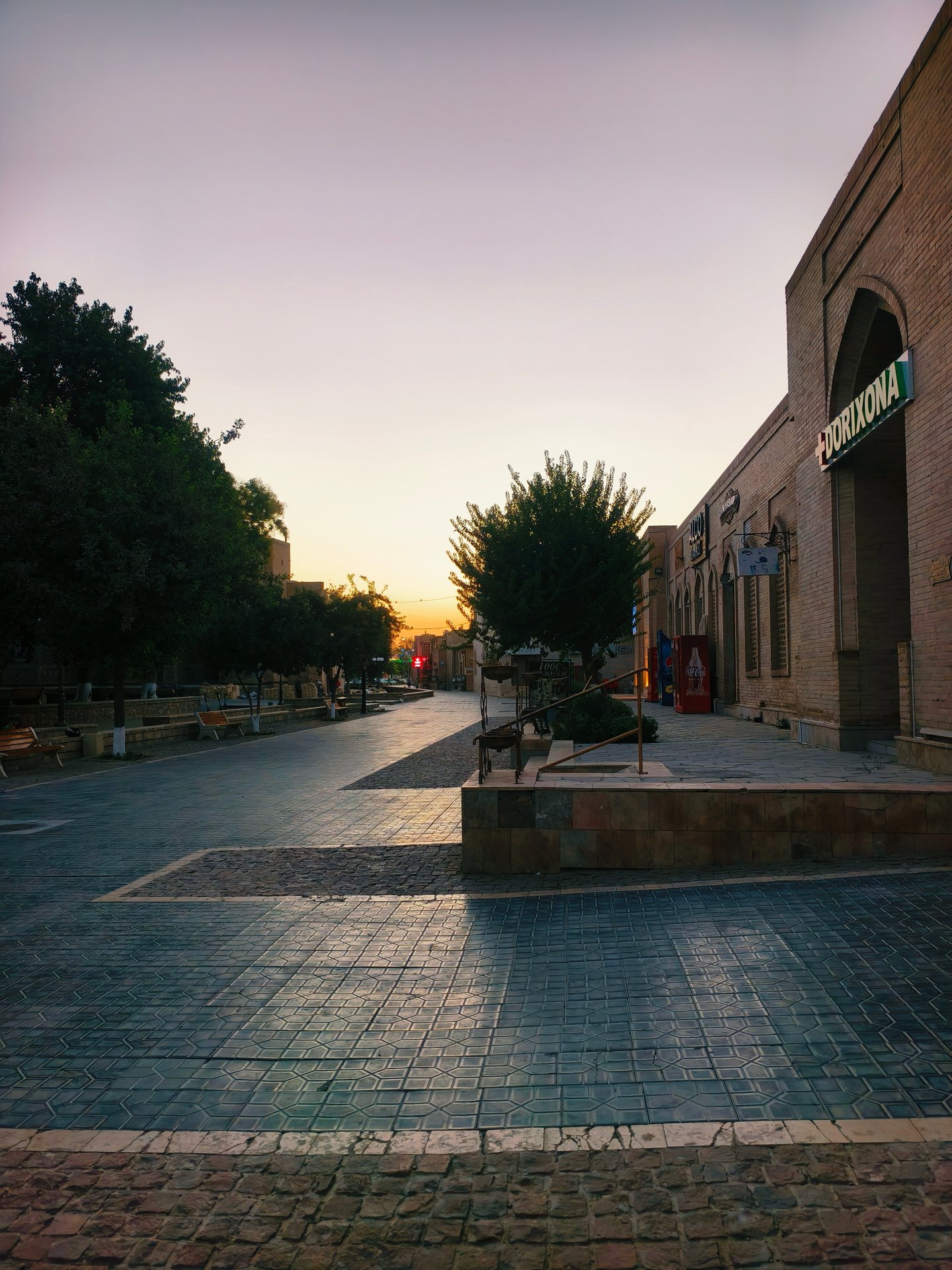
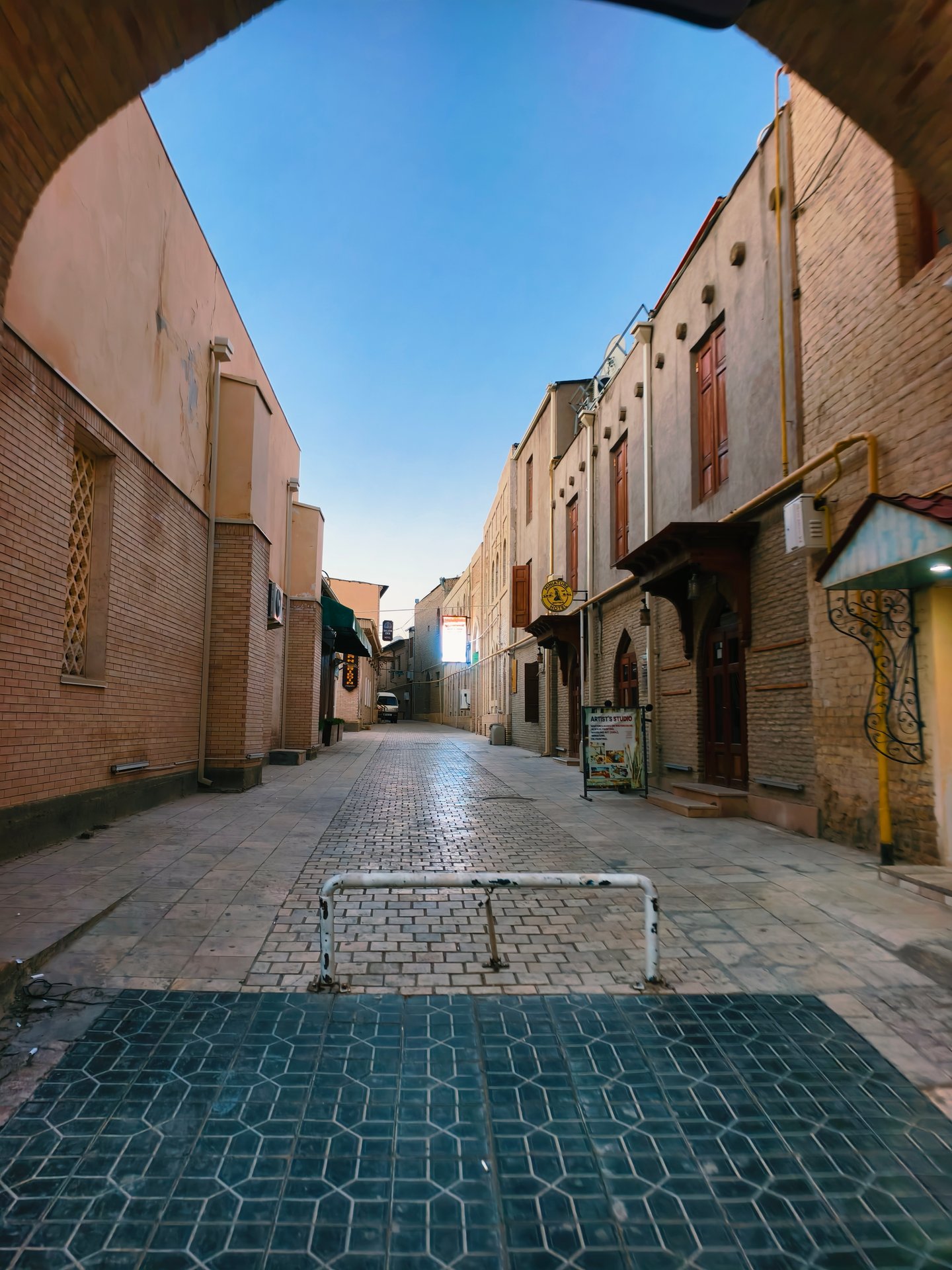
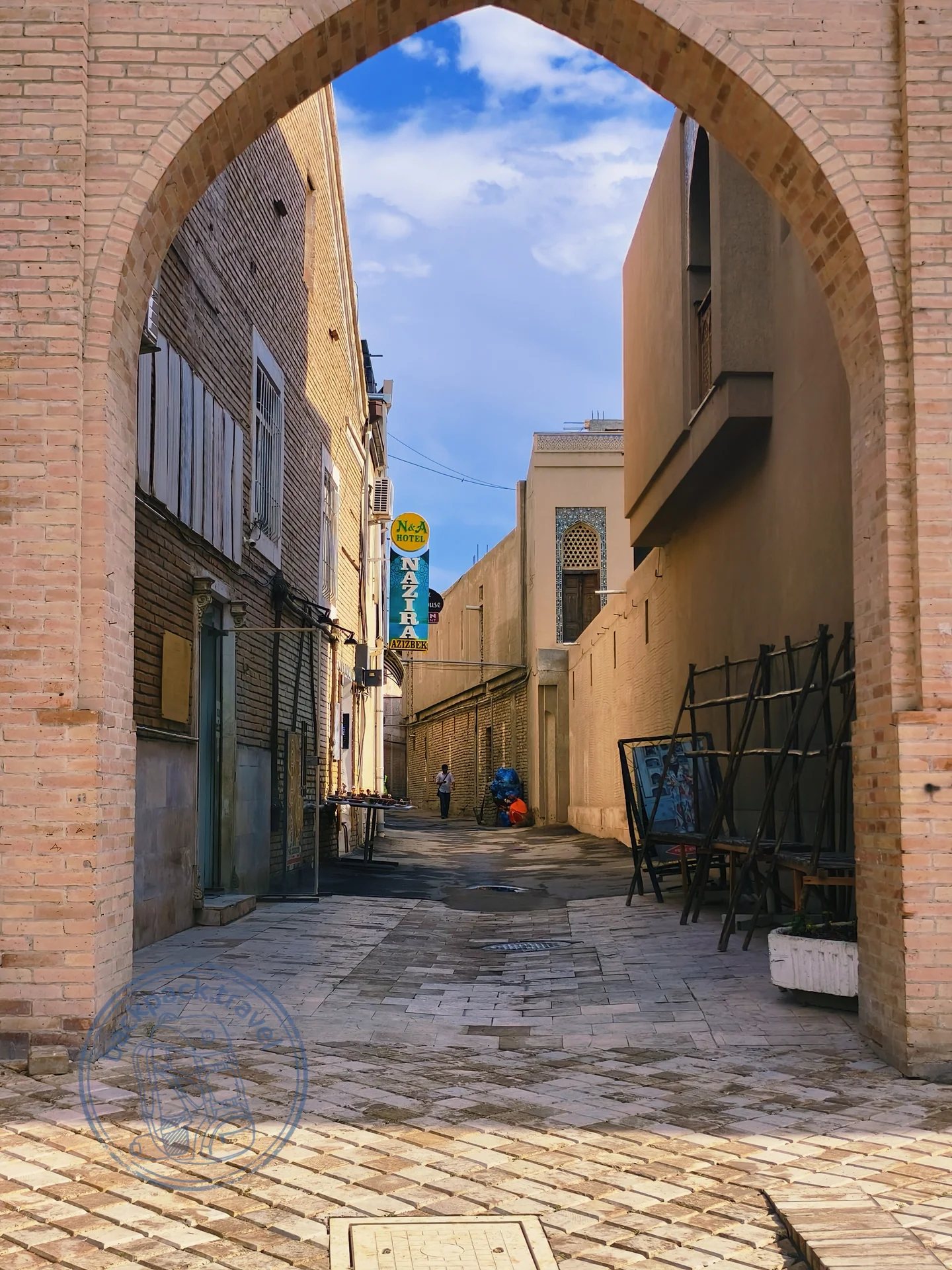
A spacious hauz (pool) of 1620 surrounded by madrasas and a khanaka of the 16th-17th centuries and by century-old mulberry trees: this is Bukhara's main square and the heart of its street life. The name itself means "by the pool" in Tajik. The pool was dug under the dignitary Nadir Divan-Begi: the basin is roughly forty by thirty-six metres and about five metres deep, its banks faced with stone steps, and it holds more than four thousand cubic metres of water. About the choice of the site there is a story of a Jewish widow who refused to sell her house and traded it for a plot for a synagogue: the Jewish mahalla begins right here, a couple of lanes away. The ensemble did not come together at once: the Kukeldash Madrasa was built first, back in 1569, on the northern side, and then the khanaka and the Divan-Begi Madrasa were added. There were close to a hundred such pools in the old city, but in Soviet times almost all of them were filled in: the standing water spread guinea worm (rishta), and the epidemics ended along with the hauzes. Lyab-i Hauz survived, although after the war it was drained for a time and turned into a sports ground, and later filled again. In the centre of the square stands a monument to Khoja Nasreddin. In the evening life here is in full swing: cafes right by the water, musicians and tourists from many countries.
- Address
- Lyab-i Hauz Square, Bukhara
- Opening hours
- 24 hours
- Prices
- Free
Lists and awards
On the map
Reviews (0)
No reviews yet. Be the first!
Updated