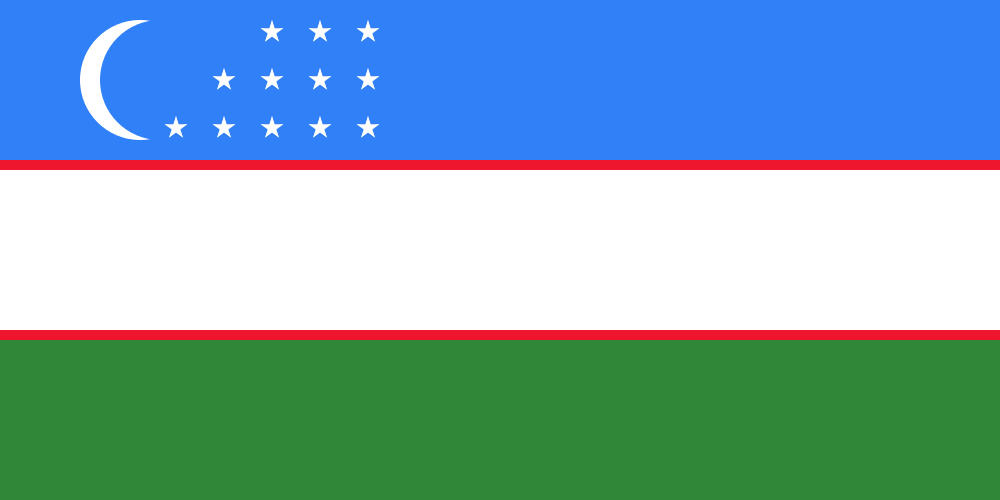
Uzbekistan
UZThe heart of the Silk Road — a country of turquoise domes, monumental madrasas and bazaars that have been trading for a thousand years. Samarkand, Bukhara and Khiva are three jewels worth crossing half the world for. Uzbekistan is opening up to tourism fast: new hostels, high-speed trains, e-visas — and prices that make your eyes widen. Plov costs 25,000 UZS (about $2), a hostel bed 85,000 UZS ($7) and entry to the UNESCO mosques 60,000 UZS ($5).
Where to go #
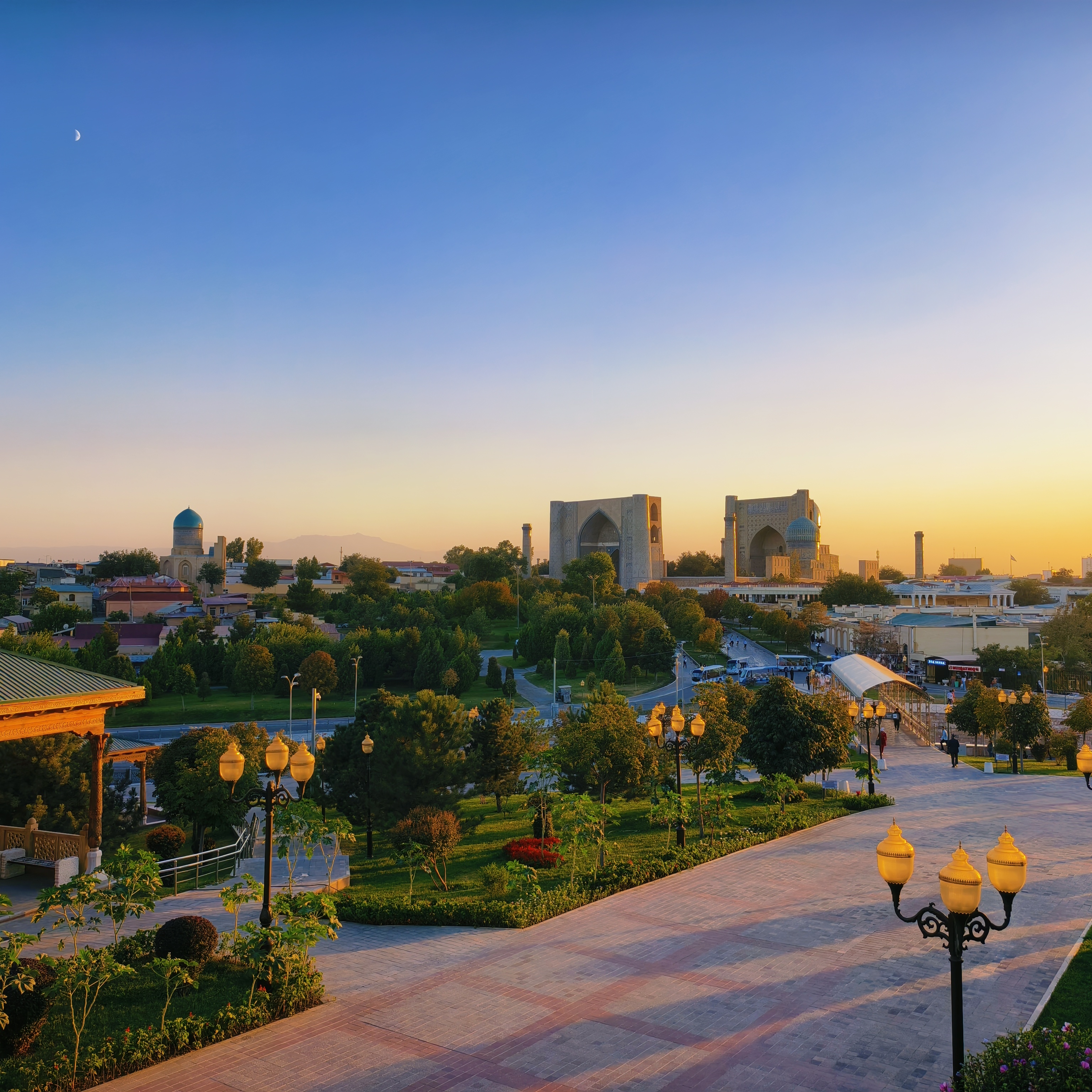
Samarkand
The jewel of the Silk Road and Timur's capital: the Registan, the Shah-i-Zinda necropolis, Gur-e-Amir and Ulugh Beg's observatory.
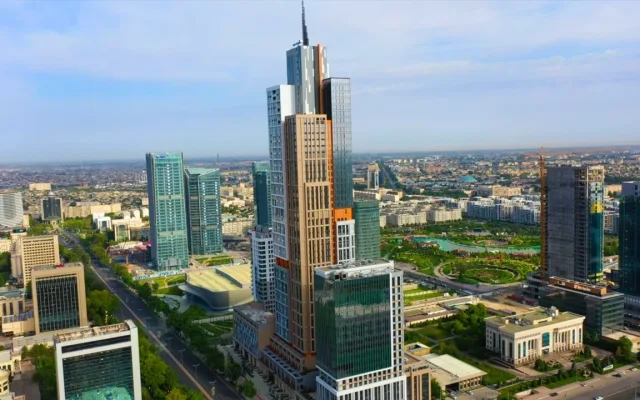
Tashkent
Uzbekistan's capital and the country's main gateway: an ornate metro, the Chorsu bazaar and Soviet modernism next to glass towers.
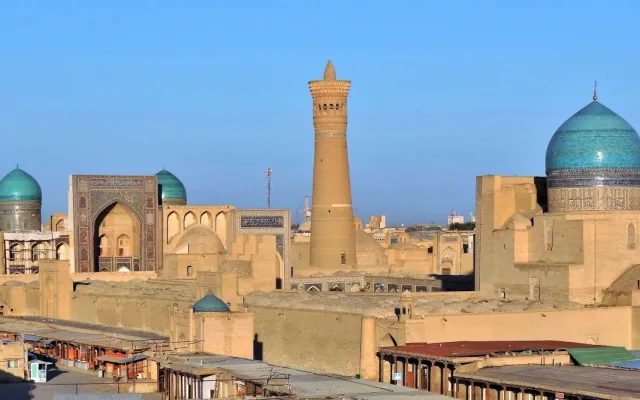
Bukhara
An open-air museum of madrasahs and trading domes: the Ark citadel, the Samanid mausoleum and the Poi-Kalyan ensemble, all walkable.
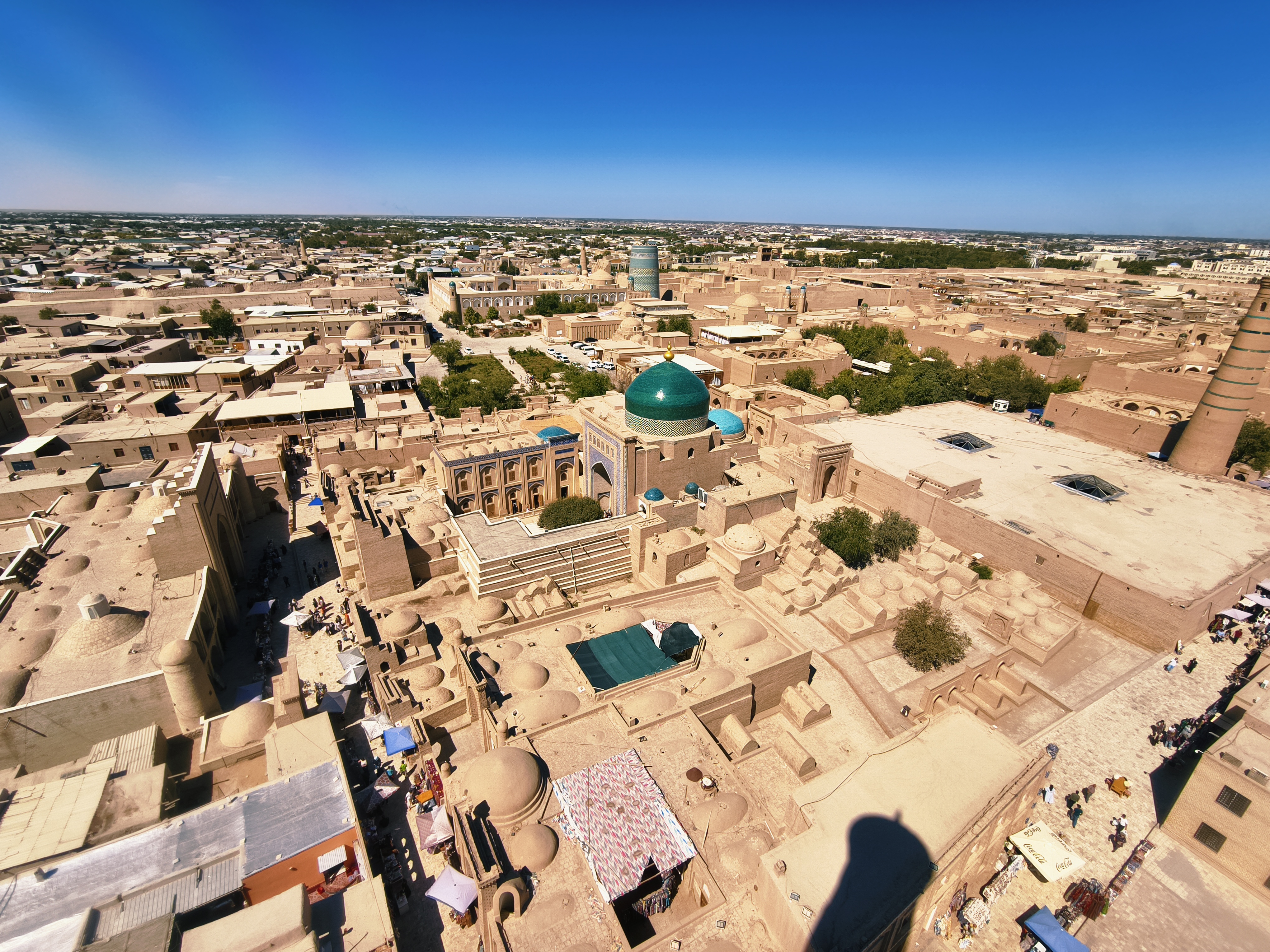
Khiva
The best-preserved medieval town in Central Asia: the walled Ichan-Kala, a UNESCO site packed with minarets, madrasahs and khans' palaces.
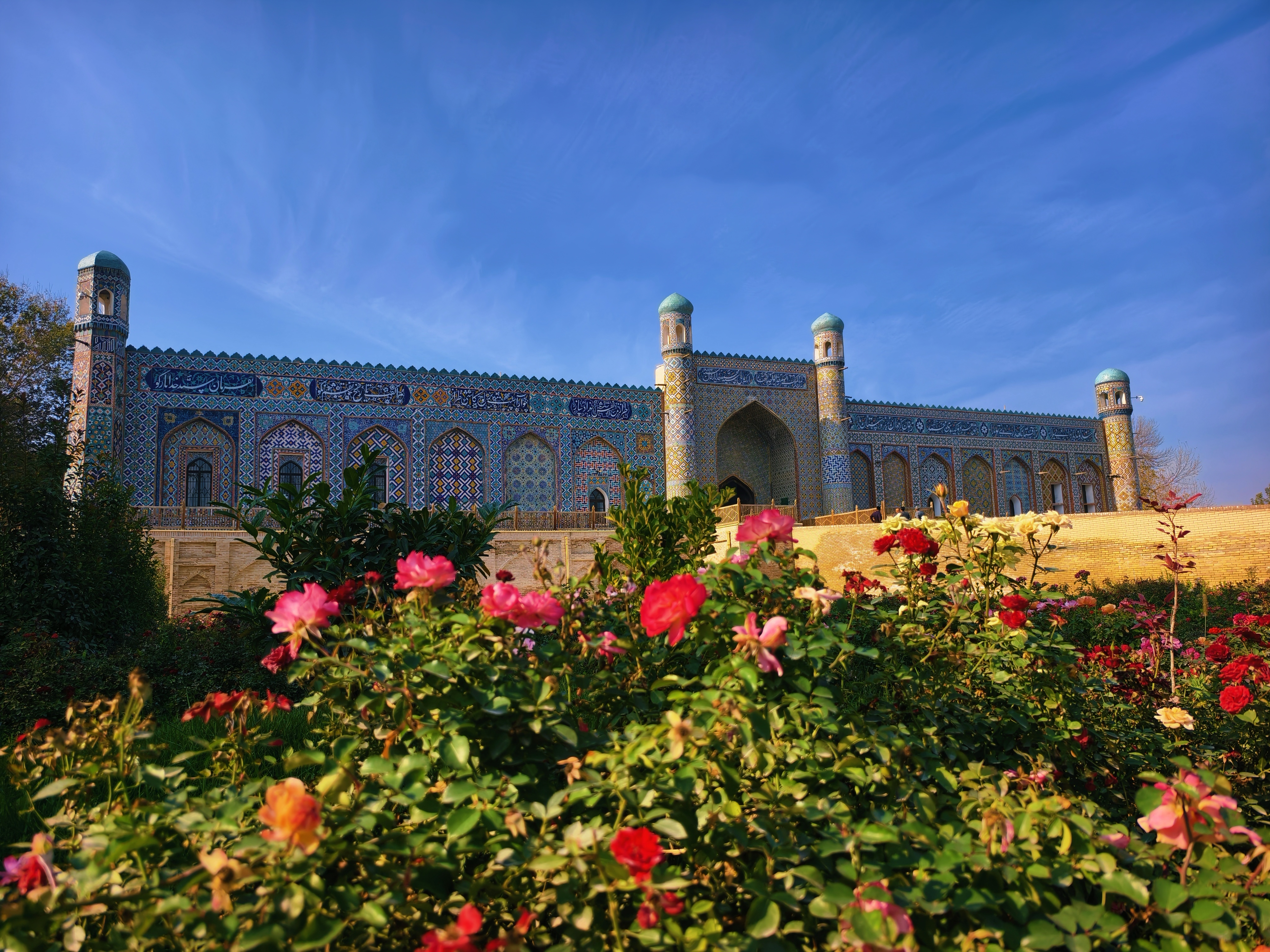
Kokand
A working Fergana Valley town with the best-preserved khan's palace in Central Asia, a timber-columned Friday mosque and craft quarters that still function.
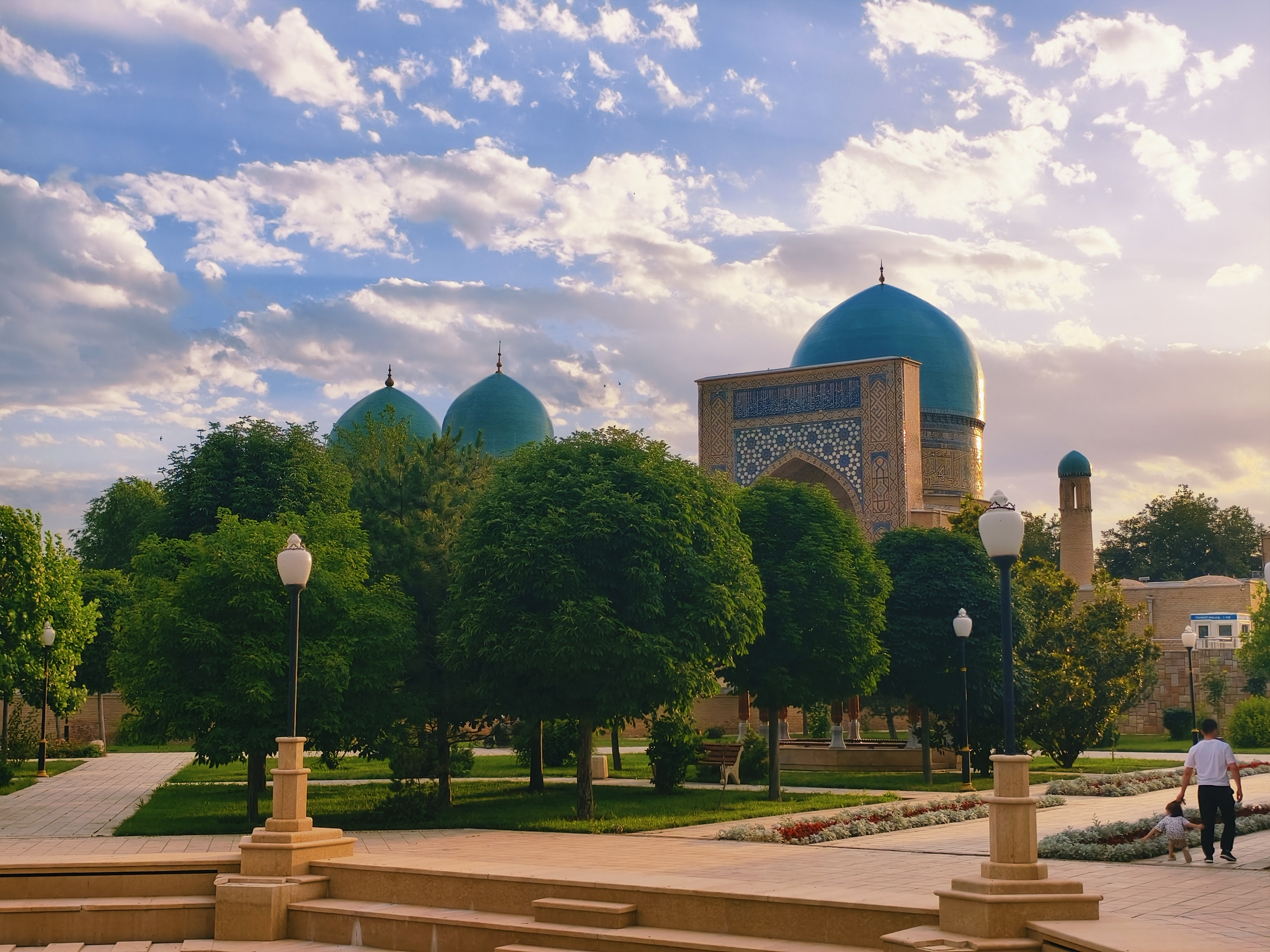
Shahrisabz
The birthplace of Tamerlane and a UNESCO site: the Ak-Saray Palace, the Dorut Tilovat complex and medieval mosques, 90 km from Samarkand.
What to see #
Registan: The heart of Samarkand, where everyone comes to see the three enormous madrasas facing each other. In the evening there is a light show that turns the ancient walls into a modern installation.
Shah-i-Zinda: A street of mausoleums covered in the most intense turquoise glazework you will ever see. Come early to get your photographs before the tour groups and pilgrims arrive.
Ichan-Kala: Khiva's inner city behind its mud walls, where every building is a monument. A single ticket covers all the museums, but wandering the lanes costs nothing at all.
The Ark: Bukhara's citadel, residence of the emirs for centuries. The museums inside are a little dry, but the walls themselves and the view over the square in front justify the visit.
Chorsu: Tashkent's huge bazaar under its blue dome, piled with spices and sweets. Head for the cooked-food row alongside the market for the real Tashkent street food.
The metro: Tashkent's underground is an art form in itself, all columns and chandeliers. Kosmonavtlar and Alisher Navoi are the most beautiful stations, and a ride costs next to nothing.
Prices #
Currency: The local money is the som, and in 2026 the rate is around 12,200 som to one US dollar. Change money at bank branches or the official exchange desks in hotels rather than on the street.
Bring cash: Carry US dollars or euros in clean, unmarked notes; worn or stamped bills get refused. Dollars are the easiest currency to change and generally get a better rate than euros.
Cards: Visa and Mastercard are taken in the larger Tashkent hotels and in supermarket chains, and increasingly in city restaurants. In Khiva, at the bazaars and anywhere rural, only cash works, so top up before you leave a big city.
Tipping: Most restaurants already fold 10-15% service into the final bill. If there is no service line, leaving around 10,000 som directly with the waiter is the right gesture.
ATMs: Machines dispensing som are common in Tashkent and Samarkand and rarer elsewhere; some also dispense dollars. Expect your own bank's foreign transaction fee on top, which a Wise or Revolut card largely avoids.
| Item | Price (USD) |
|---|---|
| Plov at the bazaar | 2.50 |
| Skewer of shashlik | 1.50 |
| Cup of coffee | 2.00 |
| Non flatbread | 0.40 |
| Taxi ride | 1.80 |
| Tashkent metro | 0.20 |
| Afrosiyob train | 25.00 |
| Hostel per night | 12.00 |
| Guesthouse room | 25.00 |
| Registan ticket | 5.00 |
| Khiva ticket | 12.00 |
| Litre of petrol | 0.90 |
| Bottle of water | 0.30 |
| Kilo of almonds | 6.00 |
| SIM card with data | 7.00 |
Getting around #
Getting there: Tashkent connects to Istanbul, Dubai, Frankfurt, Seoul and Delhi, so most travellers from Europe or North America route through Istanbul or Dubai. Some itineraries work better flying straight into Samarkand or Urgench so you do not have to double back to the capital at the end.
Fast trains: The Afrosiyob between Tashkent, Samarkand and Bukhara is the best way to move around. Seats disappear weeks ahead, so book on the railway's own site as soon as the 45-day window opens.
Slower trains: If the fast service is sold out, take a regular train such as the Sharq. It adds a couple of hours, costs less and usually still has availability.
City taxis: Yandex Go works perfectly in Tashkent and Samarkand and saves you haggling with the freelancers outside stations, who quote three or four times the real fare.
Shared cars: The rail line between Bukhara and Khiva is still developing, so many people cross the desert by shared taxi. You find them at designated ranks or book through an app.
Domestic flights: Uzbekistan Airways is useful when you need to get from Tashkent to Urgench for Khiva quickly. The flight takes ninety minutes and saves a whole day of hard driving.
Minibuses: Between smaller towns marshrutkas leave when they fill up. It is the cheapest option going, but comfort is minimal and the air conditioning is frequently decorative.
Where to stay #
Guesthouses: The most rewarding place to stay is a family-run mehmonkhona. In Bukhara and Khiva these often occupy old houses with carved wooden columns and interior courtyards.
Hostels: The bigger cities now have plenty of modern hostels with decent beds and a 24-hour reception. Good for keeping costs down and for finding people to share onward transport with.
Boutique hotels: In the historic cores of Samarkand and Bukhara you can sleep in a converted madrasa. It costs more than a standard room but buys you a night in a cell looking out at an ancient minaret.
Booking: Use the big international platforms or the local sites. In the high seasons of April and October, the best value places go a month ahead.
What's included: A substantial breakfast with kaymak, bread and fruit is almost always included. Wifi in old buildings can be slow, because thick clay walls block the signal.
Location: In Tashkent stay near a metro station; in Bukhara and Khiva stay inside the old town. That saves commuting time and lets you walk the empty streets at sunrise, which is when both cities are at their best.
What to eat #
Plov: The dish worth planning a trip around. Every region does it differently: Tashkent's is dark and oily, Samarkand's is layered, and Bukhara cooks oshi sofi in copper cauldrons.
Timing: Proper plov at the specialist centres and chaikhanas is served at lunchtime only, roughly 11:00 to 14:00. Turning up in the evening is pointless, because the cauldron will be scraped clean.
Street food: Eat samsa straight from the tandoor, and shashlik wherever the queue is longest. A line of locals is the only quality guarantee you need.
Chaikhana: Not just a cafe but a place to sit for an hour. Order a pot of green tea with every meal. Do not drink tap water anywhere in the country; buy bottled.
Bazaars: At Chorsu or the Siyob market you can fill up on samples alone. Sellers happily hand over halva and nuts to try, and the polite convention is to buy at least a small amount afterwards.
Sweets: Uzbek halva and navat crystal sugar go with the tea. Restaurant portions are enormous, and one dish is often plenty for two people.
Safety #
Overall: Uzbekistan is one of the calmer countries anywhere to travel in. There is a visible tourist police presence, and officers will genuinely help a foreigner find an address or flag a taxi.
Pickpockets: Thieves work the most crowded places, Chorsu bazaar in Tashkent above all. Wear your backpack on your front and keep nothing valuable in a back pocket.
Heat: The real health risk is the summer. In July shade temperatures reach forty degrees easily, so wear a hat, use sunscreen and plan your sightseeing around the middle of the day.
Document checks: Police may stop you to see your passport and your registration slips. Carry the originals or good copies at all times and the conversation stays short.
Haggling: At markets and with freelance drivers the first price for a foreigner is always inflated. This is not a scam, it is the culture, so bargain calmly and expect to halve it.
Stomach: Wash your hands before eating and avoid places with no running water. Upset stomachs are common here, mostly because the food is richer and oilier than most visitors are used to.
Etiquette and culture #
Hospitality: People are sincerely pleased to see visitors and may invite you in for tea straight off the street. Refusing outright is impolite; better to come in for five minutes, drink a bowl and thank your hosts.
Dress: This is a secular country, but cover shoulders and knees at mosques and shrines. Women should drape a light scarf over their hair as a mark of respect.
Greetings: Greet older people first, with your right hand touching your heart. It is a gesture of deep respect and is noticed, particularly in villages and in the mahalla neighbourhoods.
Tea: Tea is poured in small amounts, barely covering the bottom of the bowl. The idea is that the guest stays longer and the tea never cools. A brim-full bowl is a hint that it is time to leave.
The bazaar: Trading is a social ritual as much as a transaction. Sellers like to joke and tell stories, and talking with the old men at the market is a fine cultural experience even if you buy nothing.
Navruz: The March new year festival is the biggest celebration of the year, with communal cooking of sumalak. If your trip coincides, expect an endless stream of invitations to sit down and eat.
Connectivity #
Language: Russian is the regional lingua franca and is understood almost everywhere by anyone over thirty. English is growing fast among young people in Tashkent and Samarkand and throughout the tourism trade, but a few words of Uzbek will win you more goodwill than either.
Local SIM: Buy a SIM at the airport or an operator's office. Beeline and Mobiuz cover the cities well, though there is nothing at all on the desert highways.
eSIM: If your phone supports it, load a Yesim or Airalo profile before you fly. That way you can order a taxi the moment you land instead of queueing at the airport.
Telegram: Uzbekistan runs on Telegram. Food orders, hotel bookings, news and guides all happen there, so install it before you arrive.
Apps: Yandex Go for taxis, Google Maps for navigating the lanes of Bukhara, and the UzRailway app for train tickets.
Wifi: Almost every cafe and hotel has free wifi, though stability varies. For calls or work, rely on 4G, which is fast and very cheap.
Phrasebook #
| English | Uzbek | Pronunciation |
|---|---|---|
| Hello | Assalomu alaykum | as-sa-LO-mu a-lay-KUM |
| Thank you | Rahmat | rah-MAT |
| Please | Iltimos | il-ti-MOS |
| How much is it? | Qancha? | kan-CHA |
| Expensive | Qimmat | kim-MAT |
| Discount | Chegirma | che-gir-MA |
| Delicious | Mazali | ma-za-LEE |
| Yes / No | Ha / Yo'q | ha / yook |
| Straight on | To'g'ri | tug-REE |
| Left | Chapga | chap-GA |
| Right | O'ngga | ung-GA |
| Tea | Choy | choy |
| Water | Suv | soov |
| Bread | Non | non |
| Friend, brother | Aka / Do'st | a-KA / doost |
| Beautiful | Chiroyli | chi-roy-LEE |
| Where's the toilet? | Hojatxona qayerda? | ho-jat-ho-NA ka-yer-DA |
| Slang: great | Zo'r | zoor |
| Slang: no argument | Gap yo'q | gap yook |
| Slang: come here | Buyoqqa kel | bu-yok-KA kel |
Good to know #
Registration slips: This is the one piece of paperwork that matters. Hotels and hostels register you electronically and hand you a slip with a QR code at checkout. Keep every slip until you have flown out, because border officers can ask you to account for each night of your stay, and gaps mean a fine. If you sleep with friends or camp, you must register yourself with the migration office within three working days.
When to go: April, May, September and October are the sweet spots. Warm but not scorching, and the markets are stacked with the new harvest.
Plugs: Sockets are European Type C and F at 220 volts, so travellers from the UK, US or Australia need an adaptor.
Navigation: Google Maps and 2GIS both know the big cities well. In Khiva the GPS gets confused inside the clay labyrinth of Ichan-Kala, so navigate by the tall minarets, which are visible from everywhere.
Luggage: Leave room in the case for souvenirs. Rishtan ceramics, silk scarves and spices weigh a surprising amount, and resisting a Central Asian bazaar is close to impossible.