Description
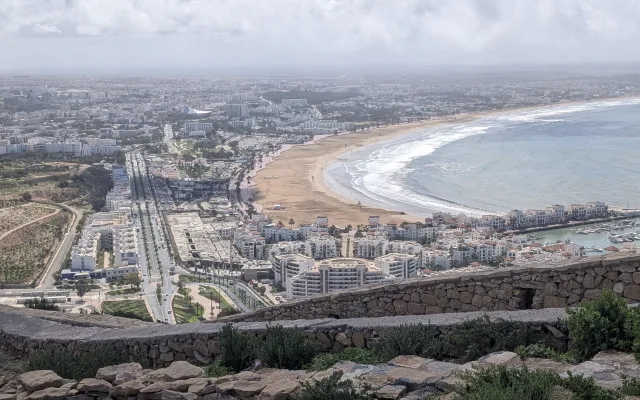
Morocco's main beach resort — a long beach, a seafront promenade and a mild Atlantic climate.
Wiki
Agadir is Morocco's largest seaside resort, spread along the Atlantic shore at the mouth of the Sous river, at the foot of the High Atlas foothills. It looks like a young city: after the devastating earthquake of 1960 it was rebuilt to modern town-planning schemes, so it lacks the old medina familiar from other Moroccan cities but has generous layout, wide avenues and the longest beach promenade in the country.
History and character
Until the middle of the twentieth century Agadir was a modest port and fishing settlement with a hilltop fortress founded in the sixteenth century. On the night of 29 February 1960 an earthquake wiped the historic centre from the map in seconds and took thousands of lives. The rebuilt city was deliberately made secular, resort-oriented and European in feel — hotels along the shore, cafés, parks and the Talborjt business quarter. Today Agadir combines the role of beach destination, working fishing port (one of the country's biggest for sardines) and centre for processing citrus and argan.
Main sights
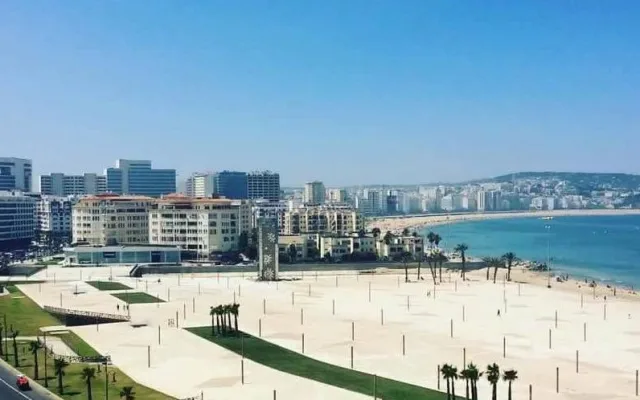
- The city beach — about 10 km of golden sand with a gentle entry into the water. A pedestrian promenade (the Corniche) runs along the shore with restaurants and walking areas.
- Agadir Oufella kasbah — the ruins of an old fortress on a hill nearly 240 m high. It offers the best panorama of the bay and port; a cable car runs to the top. On the slope, an Arabic inscription reads "God, Country, King".
- Souk El Had — a large covered market, one of the biggest in the region: spices, argan oil, leather, ceramics, textiles, dried fruit and local sweets.
- The earthquake memorial and Medina Polizzi — a corner of traditional Moroccan architecture in clay and stone, recreated by craftsmen.
- Paradise Valley — a scenic oasis in the High Atlas about an hour away: palm groves, waterfalls and natural rock pools.
- Taghazout — a surf village 20 km north, the recognised capital of Moroccan surfing with a string of well-known point breaks.
Things to do
Besides swimming and sunbathing, Agadir offers plenty on the water: surfing, kite- and windsurfing, quad-bike rides across the dunes and camel treks along the coast. Day trips into the mountains to Paradise Valley and Imouzzer (the Valley of the Almonds) are popular, as are visits to historic Taroudant with its ramparts and to coastal Essaouira. Nature lovers should look in on Souss-Massa National Park to the south, home to rare bald ibises and migrating birds.
Food
Local cooking is built on the ocean and on Berber tradition. Try tagine with chicken and preserved lemon, fish tagine, Friday couscous, and fresh grilled fish and seafood straight at the fishing port. Characteristic dishes include the Berber omelette taktouka and harira soup, along with anything made with argan oil and amlou — a paste of almonds, honey and argan. Meals end, as always, with sweet mint tea.
Indicative prices: lunch at a local café €6–8, a seafood dinner €15–25, a litre of petrol about €1.20, a petit taxi across town €2–4, quad-bike hire from €40 a day.
Transport
Al Massira International (AGA) lies about 25–30 km to the south-east and takes Ryanair, easyJet, Transavia and seasonal charters from Europe. A taxi to the centre costs about €15–20, and there is a bus (around €3). Within the city, walking along the promenade or taking a small petit taxi is easiest; for longer trips people use grand taxis and buses. A bus to Taghazout costs about €4, a taxi around €15.
When to go
The climate is mild and sunny all year — hence the talk of some 300 clear days. The best beach season is April to October, when the air warms to 22–28 °C and the ocean holds at 19–22 °C. Surfing is best from October to March, when powerful Atlantic swells reach the coast. Winter days are comfortable (18–22 °C), but evenings and nights are noticeably cooler and the water bracing.
How long to allow
About five days covers the resort: a couple for the beach and promenade, one for the kasbah, the market and the city quarters, and two more for trips out to Taghazout, Paradise Valley or the neighbouring towns. That pace lets you combine unhurried time by the ocean with active forays into the mountains and the Berber hinterland.