Morocco
MAA kingdom on the seam between Africa and Europe, where the labyrinths of the medinas smell of spice and the sunset turns the Sahara gold. Marrakesh, Fez, blue Chefchaouen — every city is its own fairy tale. For 280 MAD (about $30) a day you sleep in a riad with a mosaic courtyard and eat tagine on the roof. Morocco is sensory overload in the best sense, and within reach of a modest budget.
Where to go #
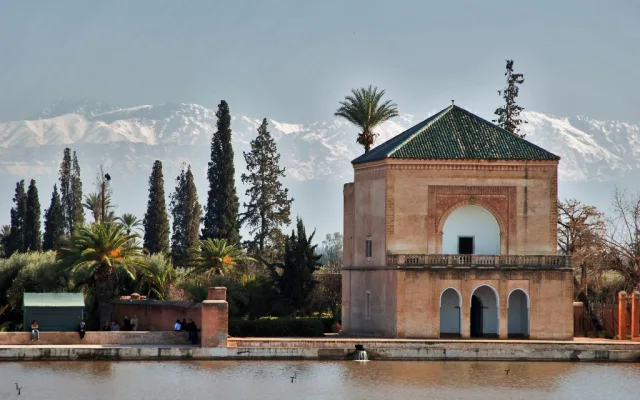
Marrakech
The Red City — Jemaa el-Fna square, the medina, the souks and the palaces.
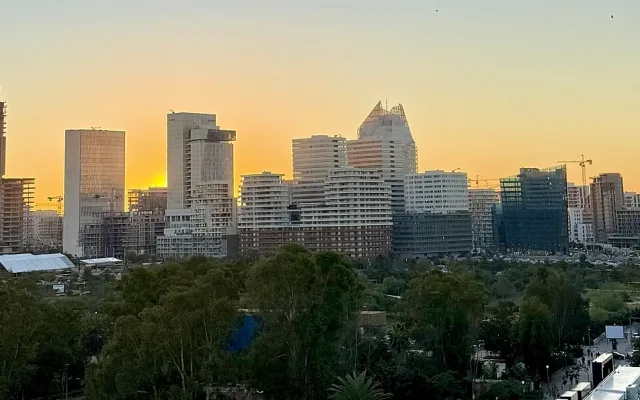
Casablanca
The economic capital of Morocco — the Hassan II Mosque and the seafront boulevard.
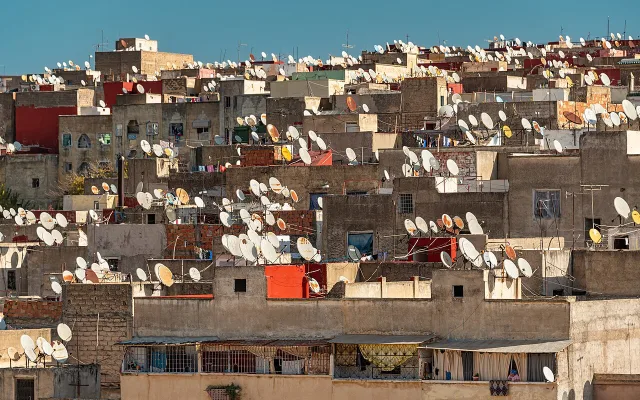
Fez
The UNESCO-listed medina of Fez — a labyrinth of lanes, the Chouara tanneries and Al Qarawiyyin, the oldest university in the world.
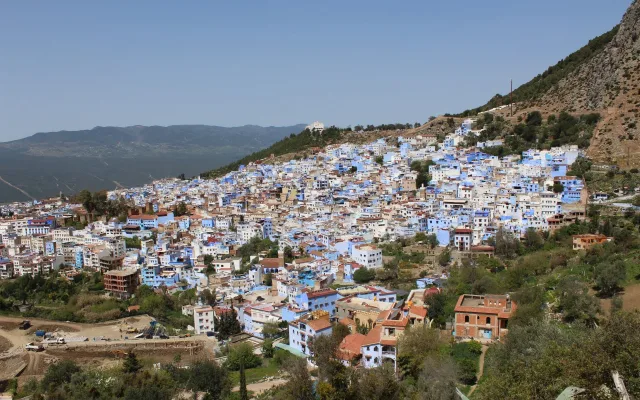
Chefchaouen
The blue city in the Rif mountains — whitewashed lanes painted blue, a clifftop Spanish mosque and mountain treks.
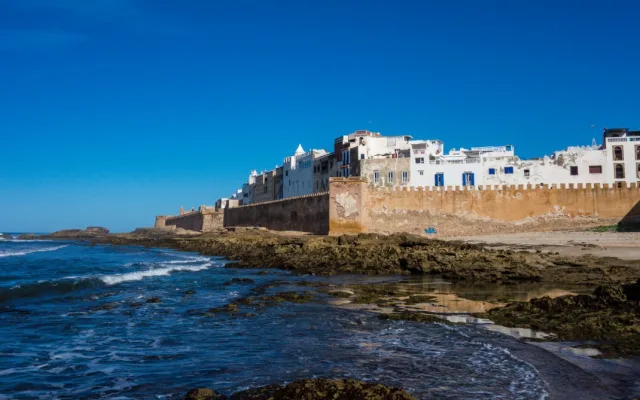
Essaouira
The white city of wind on the Atlantic — ramparts, a fishing port, kitesurfing and the Gnawa festival.
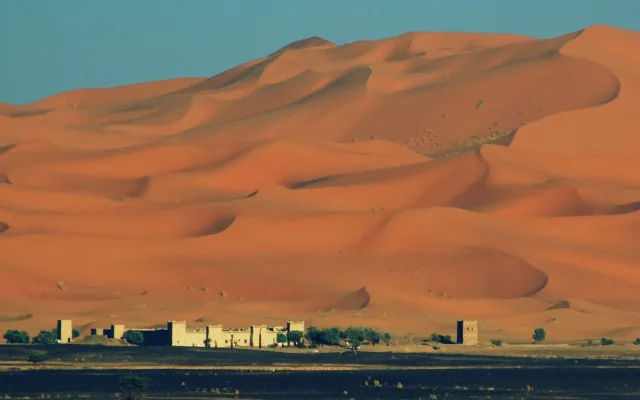
Merzouga
The gateway to the Sahara — the great dunes of Erg Chebbi, a night in a desert camp and sunrise from a crest.
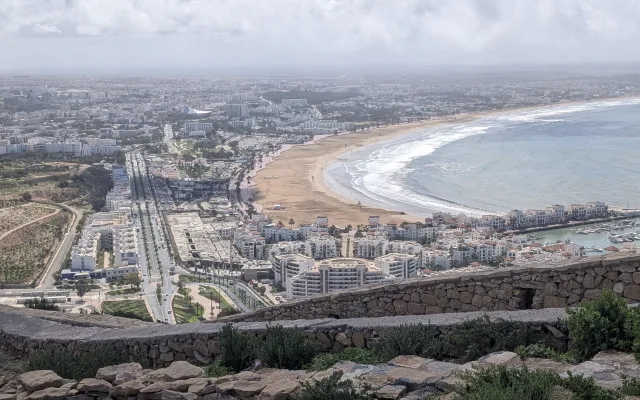
Agadir
Morocco's main beach resort — a long beach, a seafront promenade and a mild Atlantic climate.
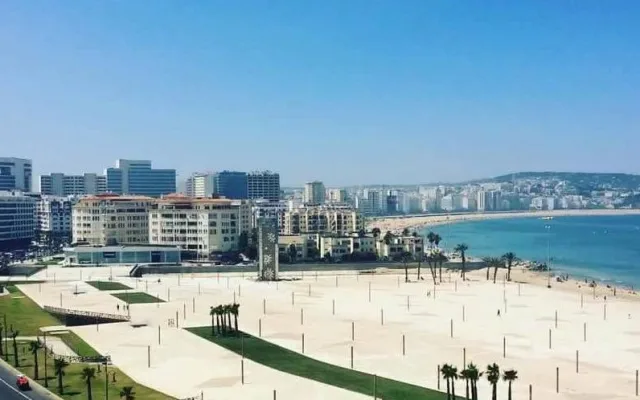
Tangier
The gateway between Africa and Europe — the medina, the American Legation and views across the Strait of Gibraltar.
What to see #
The Fez medina: the largest pedestrian zone in the world, where losing yourself among thousands of craft workshops is a matter of minutes rather than hours. Visit the Chouara tanneries to see leather worked exactly as it was in the Middle Ages.
Jemaa el-Fna: Marrakech's main square, which turns into an enormous open-air restaurant every evening. Have the fresh orange juice, listen to the storytellers and watch the street acrobats work the crowd.
The Sahara: the golden dunes of Erg Chebbi near Merzouga are what justifies the long drive inland. A night in a Berber camp under a sky with no light pollution tends to be the strongest memory anyone takes home.
Aït Ben Haddou: the ancient earthen ksar on the road to the sand, and the backdrop to dozens of Hollywood productions. Walking its narrow lanes feels biblical, and from the top of the hill you look out over the oasis below.
Jardin Majorelle: the cobalt-blue villa in Marrakech surrounded by cacti and bamboo. It is arguably overrated given the queues, but the Yves Saint Laurent aesthetic still pulls photographers from everywhere.
Hassan II Mosque: the only major religious building in the country that non-Muslims can enter, on a guided tour. The minaret rises straight out of the ocean, and the retractable roof and heated floors are impressive pieces of engineering.
Prices #
Currency: the Moroccan dirham (MAD) is stable, and for quick mental arithmetic you can divide a dirham price by ten for a rough figure in dollars.
Cash: cash runs this economy, and cards are taken only in chain hotels and large supermarkets. In the medina, in taxis and in small shops you need notes, so keep a working supply on you at all times.
Exchange: change money at banks or official bureaux de change in town, since airport rates are traditionally poor. Keep your exchange receipts, because dirhams cannot legally be taken out of the country and you may want to convert back.
Cards and ATMs: foreign Visa and Mastercard work in ATMs across the cities, with Bank of Africa and Attijariwafa the most reliable, and Amex is rarely accepted. Always decline the machine's own currency conversion, and a Wise or Revolut card keeps the rate honest.
Haggling: this is a required ritual in the souks, where the opening price for a visitor is inflated several times over. Start at about a third of what is asked, and do it as conversation rather than combat.
| Item | Price (USD) |
|---|---|
| Tagine in a café | 4.00 |
| Couscous lunch | 6.00 |
| Fresh orange juice | 0.50 |
| Mint tea | 0.80 |
| Dinner for two | 18.00 |
| Bottle of water | 0.40 |
| Casablanca-Fez train | 12.00 |
| City bus fare | 0.50 |
| Petit taxi ride | 2.50 |
| Souk fridge magnet | 1.00 |
| Leather babouches | 12.00 |
| Entry to a medersa | 5.50 |
| Litre of petrol | 1.40 |
| Local hammam | 3.00 |
| Night in a guesthouse | 28.00 |
Getting around #
Getting in: Morocco is one of the easiest countries in Africa to reach. Budget carriers fly into Marrakech, Fez and Agadir from across Europe for very little, Royal Air Maroc runs long-haul services from New York and Montreal into Casablanca, and there is a ferry from Spain across the Strait of Gibraltar to Tangier.
Trains: the rail network links the main cities in comfortable carriages, and the Al Boraq high-speed line covers Casablanca to Tangier in about two hours. Book ahead on the official site or at station machines.
Buses: CTM and Supratours are excellent for anywhere the railway does not reach. Modern air-conditioned vehicles, fixed departure times and online booking with seat selection make them painless.
Car hire: the country genuinely opens up when you drive it yourself. Local agencies are plentiful and often ask for far smaller deposits than the international chains, and an ordinary hatchback handles most routes.
Taxis: small petit taxis run on the meter, and you should insist it is switched on when you get in. For intercity hops, grands taxis leave once six passengers have filled the car.
Navigation: GPS regularly fails in the medinas because of the density and the narrow lanes. Use offline maps such as Maps.me, and do not be afraid to ask a shopkeeper, who will point you the right way for nothing.
Roads: the main motorways are tolled and in very good condition. Atlas mountain roads are winding and demand care, especially in winter when passes get fog or ice.
Where to stay #
Riads: traditional courtyard houses in the medina converted into small hotels. Staying in one is the best way to feel the place, though the sound insulation in these buildings is frequently non-existent.
Guesthouses: the budget option for independent travellers, usually with a shared roof terrace where breakfast appears: warm flatbread, honey and mint tea.
Desert camps: in the Erg Chebbi dunes you can choose between simple tents and comfortable glamping with a shower. Remember that desert nights are cool even in summer and can drop below freezing in winter.
City hotels: the modern districts of Casablanca and Rabat have conventional hotels. Useful if you need reliable internet for work, a lift and secure parking for a hire car.
Booking: in the peak seasons of March to May and September to November, the best riads in the medina go two months ahead. Use the aggregators, which let you lock a price and pay on arrival.
Winter: old houses have no central heating and get genuinely cold at night. Choose somewhere with reversible air conditioning, or ask your hosts for extra camel-wool blankets.
What to eat #
Tagine: meat stewed with vegetables and spices in the conical clay pot. It is everywhere and it is cheap, and the best versions are usually in plain roadside cafés where Moroccans themselves stop for lunch.
Couscous: traditionally a Friday dish in family homes, served as fine semolina with meat and seven kinds of vegetable. Portions are enormous, so one between two people is often the sensible order in a restaurant.
Street food: try harira, the thick lentil and tomato soup, and msemen, the layered griddle bread. Watch how fresh things look and choose the stalls with a queue of locals rather than the ones with a menu in four languages.
Drinks: mint tea is called Berber whisky and is drunk from small glasses at any hour. It comes extremely sweet, so if you would rather it was not, ask for the sugar on the side.
Pastry: pastilla is the celebration pie, layering savoury pigeon or chicken with cinnamon and sugar. Also look for gazelle horns, the honeyed almond biscuits that go with strong tea.
Breakfast: the typical spread is several kinds of bread with olive oil, honey and amlou, the almond and argan paste. It is enough carbohydrate to get you through a long morning lost in the Fez medina.
Safety #
Persistence: the main irritation is fake guides and self-appointed helpers. If someone insists the road ahead is closed, ignore it, because it is a manoeuvre to steer you into a dead end or a carpet shop.
Scams: in the squares, women may take your hand to apply henna and then demand payment for it. Keep your hands to yourself in crowds and say "la, shukran" firmly and keep walking.
For women travellers: avoid very revealing clothing away from the beach resorts. Covered shoulders and knees noticeably reduce unwanted attention and make walking through conservative neighbourhoods easier.
Theft: pickpocketing happens in market crowds as it does in any large city. Watch your daypack, keep nothing in a back pocket and do not leave a phone on a café table.
Water: do not drink from the tap. Buy bottled and use it for brushing your teeth too if your stomach is at all sensitive.
Police: the main tourist centres have a dedicated Brigade Touristique. Officers are generally friendly towards foreigners and will step in over a taxi dispute or an aggressive trader, and it is worth checking your own government's travel advisory before travelling to remote southern regions.
Etiquette and culture #
Religion: Islam shapes the rhythm of the day, with the call to prayer five times over. Non-Muslims may not enter working mosques, with the single exception of the Hassan II Mosque in Casablanca.
Etiquette: the left hand is considered unclean, so take food, pass money and give gifts with the right. It is a small thing that signals respect and is noticed immediately.
Ramadan: during the holy month, city life slows to a stop until sunset. Travelling then is interesting, but expect many cafés closed during the day and transport running to different patterns.
Photography: always ask before photographing people, particularly women and villagers. Many object to a camera outright, and the street performers on the squares will charge you for the frame.
Friday: the most important day of the week, when many medina shops close over the midday prayer. It is also when every household and restaurant makes its proper couscous.
Dress: Morocco remains conservative, and modest clothing earns you a warmer reception. Covered shoulders and knees are both a courtesy and sensible protection from the sun.
Connectivity #
Languages: Arabic and Amazigh are official, but daily life happens in the Darija dialect. French remains a strong second language and is understood almost everywhere, particularly in the north and in business.
English: in the main tourist centres and in riads, staff speak it well enough. Even so, a handful of words in French or Arabic transforms how you are treated in the souks.
SIM cards: buy a Maroc Telecom SIM at the airport, since it has the most reliable coverage in the mountains. Orange and Inwi also work well, and data bundles are cheap and set up against your passport in five minutes.
eSIM: if you would rather skip the counter, an international eSIM from Airalo or similar covers Morocco and works from landing. It costs more than a local package but saves the queue.
Messaging: WhatsApp voice calls are sometimes blocked on local networks without a VPN, though text and voice notes go through without trouble. Install a VPN before you fly if calling home matters.
Sociability and apps: Moroccans love to talk and to invite you for tea, but be aware that unusually persistent friendliness from a stranger on the street often ends at a shop that pays commission. Install offline maps for the medinas and use the Careem app for taxis in Casablanca and Rabat to avoid arguments about the fare.
Phrasebook #
| English | Arabic (Darija) | Pronunciation |
|---|---|---|
| Peace be upon you | السلام عليكم | sa-LAAM a-LAY-kum |
| Thank you | شكرا | shoo-KRAN |
| No, thank you | لا شكرا | laa shoo-KRAN |
| How's it going? | لاباس؟ | la-BASS |
| All good, thank God | لاباس، الحمد لله | la-BASS ham-doo-li-LAH |
| Please | عافاك | a-FAAK |
| How much is it? | بشحال؟ | bish-HAAL |
| That's really expensive! | غالي بزاف! | GHAA-li b-ZEF |
| Yes | إيه | ee-YEH |
| No | لا | laa |
| Where is...? | فين كاين...؟ | feen KAA-yen |
| I don't understand | ما فهمتش | ma-FHEM-tsh |
| Help! | عاونوني! | aaw-NOO-ni |
| Sorry | سمح لي | SMEH-li |
| The bill, please | الحساب عافاك | l-HSAAB a-FAAK |
| Water | الما | l-maa |
| Delicious! (slang) | بنين! | b-NEEN |
| Goodbye | بسلامة | b-slaa-MA |
| OK, fine (slang) | وخا | WAA-kha |
| A little / a lot | شوية / بزاف | shweeya / b-ZEF |
| Mate, bro (slang) | خويا | KHOO-ya |
| I'm just looking | غير كنشوف | gheer kan-SHOOF |
Good to know #
Sockets: Morocco uses the European round-pin types C and E at 220 volts, so continental travellers need no adapter while British, North American and Australian ones do.
Alcohol: it is sold only in licensed bars, restaurants and the dedicated sections of large supermarkets such as Carrefour. Drinking in public places is against the law.
Drones: bringing a drone into the country as a private individual is strictly prohibited. Customs will confiscate it and issue a substantial fine, so leave it at home rather than testing the rule.
Pharmacies: they work well in the cities and pharmacists often give genuinely useful advice. Most medicines are sold without prescription, but bring anything you take regularly with you.
Time: Morocco runs on GMT+1, and the clocks go back an hour for Ramadan, which quietly rearranges transport timetables. Check departure times again during that month.
Consular help: most countries have an embassy in Rabat and a consulate in Casablanca or Marrakech. Note down the address and number for your own nationality before you leave, in case of a lost passport.