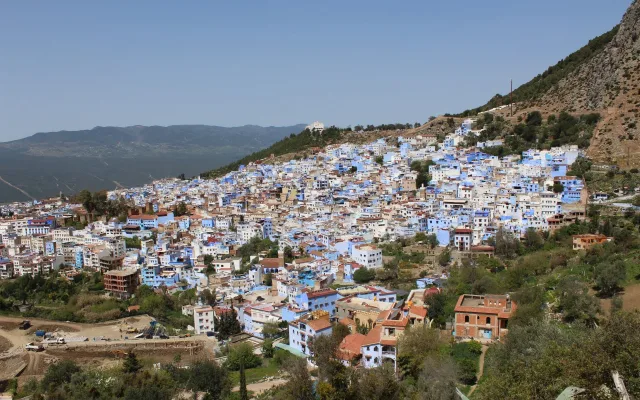
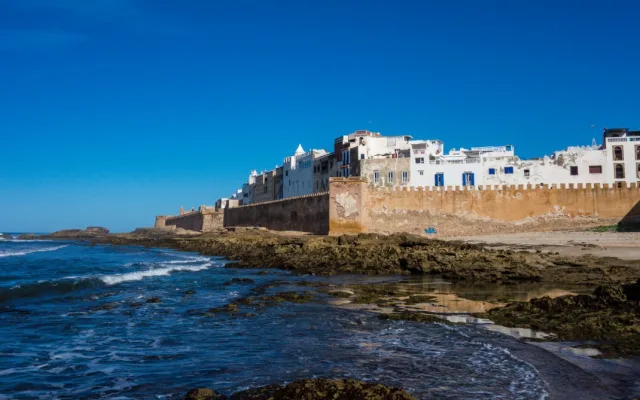
Description
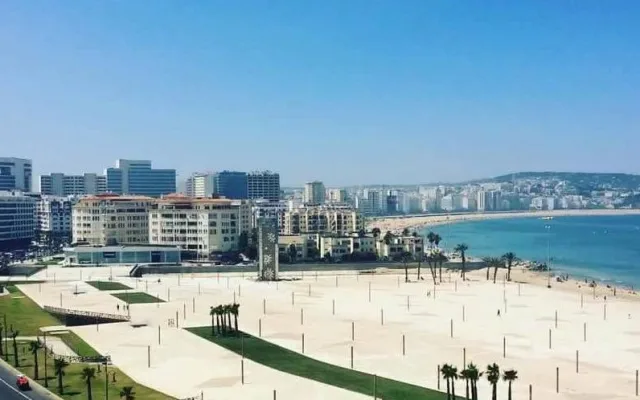
The gateway between Africa and Europe — the medina, the American Legation and views across the Strait of Gibraltar.
Wiki
The gateway to Africa, closer to Spain than to Rabat: Tangier was for centuries a transit point, a nest of spies and a refuge for the Beats, and that eclecticism still reads in its streets. The city was long regarded as Morocco's grubby front door, but after the rebuilding of the seafront and the port it has been transformed, and it now makes an excellent starting point for a journey through the country or a short excursion from southern Spain.
Why come, and for how long
Two days covers Tangier itself without rushing: a day for the medina with the Kasbah and the American Legation, a second for Cape Spartel with the Caves of Hercules and the clifftop cafés. Chefchaouen, Tetouan or Asilah are separate days, each a trip in its own right.
The city's real value for the independent traveller is its compactness and its connections. It is a convenient place to start: there is a high-speed train to Rabat and Casablanca, a ferry to Europe and a network of buses across the north. Many people use Tangier as an airlock — they arrive by air or sea, spend a night, and move on.
Getting there and getting around
- From Spain. The fast ferry runs from Tarifa straight into Tanger Ville port in the centre — about 45 minutes, with border control often handled on board. Ferries from Algeciras are cheaper and more frequent, but arrive at the cargo port of Tanger Med some 40 km to the east, from which you need a shuttle or a taxi. For a day trip, take Tarifa.
- Ibn Battouta airport is about 15 km from the centre. There is no city express — take a taxi (agree the fare in advance) or an app with a fixed rate.
- By train. Tanger Ville station is the terminus of the Al Boraq high-speed line to Casablanca via Rabat. Buy tickets ahead online or at the counter; popular departures sell out.
- Within the city the centre is walkable: the medina, the port and the new town sit close together. Petit taxis (small, on the meter or by agreement) are useful for getting to Café Hafa and the outskirts. For Cape Spartel and the caves it is easier to take a taxi for half a day with waiting time.
What is genuinely worth seeing
The medina and the Kasbah are the heart of the city: a maze of whitewashed lanes, with the strait and, in clear weather, the Spanish shore visible from the terraces above the port. Getting lost is no great risk — the quarter is small and everything leads back to the gates and the squares.
The American Legation is a rarity worth going in for: the only US national historic landmark outside the United States, in the first American diplomatic building, a gift from a Moroccan sultan. Inside is an intimate museum with art, maps and a room devoted to Paul Bowles.
The Grand Socco and the Petit Socco are two squares for watching life: the first churns with traffic and trade, the second is a tight courtyard of the old bohemia, good for a coffee. Café Hafa, on the cliffs above the ocean, is for the atmosphere and the sunset with a mint tea; go in the afternoon.
Outside the city are Cape Spartel (the north-western tip of Africa, with a lighthouse) and the Caves of Hercules with their famous opening shaped like Africa. People usually do the two together, towards sunset. It is beautiful but touristy and crowded — do not expect solitude.
Where to stay
- The medina and Kasbah — for atmosphere: riads in old houses, everything on foot, but hard going with a suitcase over stairs and through lanes, and noisy at night.
- The new town around the Grand Socco — the compromise: next to the medina but easier logistically, with more cafés and shops.
- The seafront — modern hotels looking onto the strait, convenient for a short night before a ferry or a train.
Food and prices
The cooking is standard Moroccan: tagine, couscous (traditionally on Fridays), the thick soup harira, and flatbreads. But Tangier is a coastal city, and the fish accent is strong: fresh fish and seafood by the port and in the markets. Look for local eating houses rather than the places with touts outside the medina, which are dearer and worse.
Food feels inexpensive if you stick to street and family places: a filling lunch comes to a modest sum, and tea and pastries to very little. Tourist cafés at the viewpoints charge a mark-up for the view, not for the quality.
Safety and common mistakes
Tangier is safer than its old reputation, but pickpockets and pushy "helpers" do turn up in the medina. Things to bear in mind:
- Fake guides. Young men offer to "show you the way" and take you to shops for a commission. Refuse politely but firmly; if you want a guide, hire an official one.
- Taxis. In a petit taxi insist on the meter or agree the fare before getting in, or you will be quoted a tourist rate.
- The port. Do not confuse Tanger Ville (the centre) with Tanger Med (out of town) when buying ferry tickets — the mistake costs forty kilometres and extra expense.
- Drugs. Northern Morocco is hashish country, and street offers are often part of a scam or a set-up. Ignore them.
- Money. The dirham cannot be bought or taken out of the country — change money on arrival, and keep cash for taxis, markets and small cafés.
The best time is spring and autumn: comfortable weather and fewer visitors. Summer is hot and busy; winter is windy and damp off the Atlantic.