Description
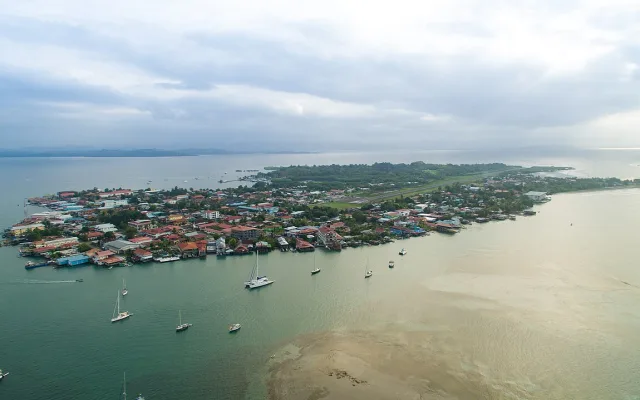
Caribbean archipelago with Star Beach and Red Frog Beach — snorkelling, surfing and a laid-back island vibe.
Wiki
Bocas del Toro is a Caribbean archipelago in north-western Panama, close to the Costa Rican border, known for turquoise water, mangrove forests, coral reefs and an unhurried island pace. The provincial capital, the small town of Bocas Town on Isla Colón, is the gateway to dozens of islands, beaches and snorkelling and surfing spots.
Getting to Bocas del Toro
By plane
The fastest option is to fly from the capital. Bocas Town has Bocas del Toro Airport (BOC), which handles short domestic flights from Panama City (about one hour). This is the most convenient choice for travellers short on time — the airport sits right in town on Isla Colón.
By bus
Overnight buses run from Panama City to the town of Almirante (or Changuinola) on the Caribbean coast — the journey takes around 10 hours. From Almirante, you need to transfer to water transport to reach the islands.
By car
The mainland part of the archipelago is accessible by car via the Pan-American Highway and then towards the coast. The islands themselves have no road connection to the mainland, so cars are left at guarded parking facilities in Almirante.
Shuttle transfer
Tourist shuttles from Boquete, David and Costa Rican beach towns (Puerto Viejo) are popular. They drop passengers directly at the dock for an onward boat connection — convenient for cross-border itineraries.
Ferry
Water taxis and ferries link the mainland to the islands. Fast boats from Almirante to Bocas Town take about 30 minutes; a car ferry carries vehicles at a slower pace. Numerous water taxis run between the islands themselves.
Where to stay in Bocas del Toro
Luxury hotels
On remote islands and headlands there are eco-luxury hotels and boutique overwater resorts with private docks and panoramic views of the Caribbean Sea.
Mid-range hotels
Bocas Town has a good selection of comfortable hotels, many housed in characteristic wooden stilt buildings right above the lagoon.
Budget accommodation
There are plenty of hostels for budget travellers, including some with bars and a social atmosphere — the town is popular with the backpacker crowd.
Guesthouses and apartments
On Isla Colón, Isla Bastimentos and Carenero, guesthouses and apartments are available for rent, often right on the water.
Eco-camps
Quieter islands have eco-lodges and campsites surrounded by jungle, aimed at travellers seeking closeness to nature.
Things to do in Bocas del Toro
Sights
The main draw is Bocas Town itself, with its colourful wooden buildings, cafés and docks. Nearby Carenero island is just a few minutes by boat.
Nightlife and entertainment
The town has a relaxed but lively nightlife scene: bars built over the water, beach parties and music venues all contribute to the archetypal laid-back Caribbean vibe.
Nature reserves
The Isla Bastimentos Marine National Park — one of the oldest in Panama — lies within the archipelago, with coral reefs, mangrove forests and beaches where sea turtles nest.
Water activities
The archipelago offers snorkelling and diving on the reefs, surfing (with swells peaking in certain months), kayaking through the mangroves and boat trips to Dolphin Bay. The most famous beaches are Starfish Beach (Playa Estrella), where starfish dot the shallows, and Red Frog Beach, named after the tiny red poison-dart frogs found there.
Background and useful facts
History and culture
The province takes its name from the island sighted during Christopher Columbus's voyages. In the early 20th century the region experienced a banana boom driven by American companies, which shaped its architecture and multicultural character. The population is mixed: descendants of Afro-Caribbean workers, indigenous Ngäbe people and speakers of a local Caribbean creole.
Local food
The cuisine is Caribbean in character: dishes cooked with coconut milk, fresh fish and seafood, coconut rice, fried plantains and hot sauces. The town has many cafés with international menus as well.
Practical tips
Allow around four days to take in the different islands. Get around by water taxi, carry cash (ATMs are scarce), protect yourself from sun and insects, check boat schedules in advance and bear in mind that the rainy season can disrupt plans on the water.