 Города и дороги
Description
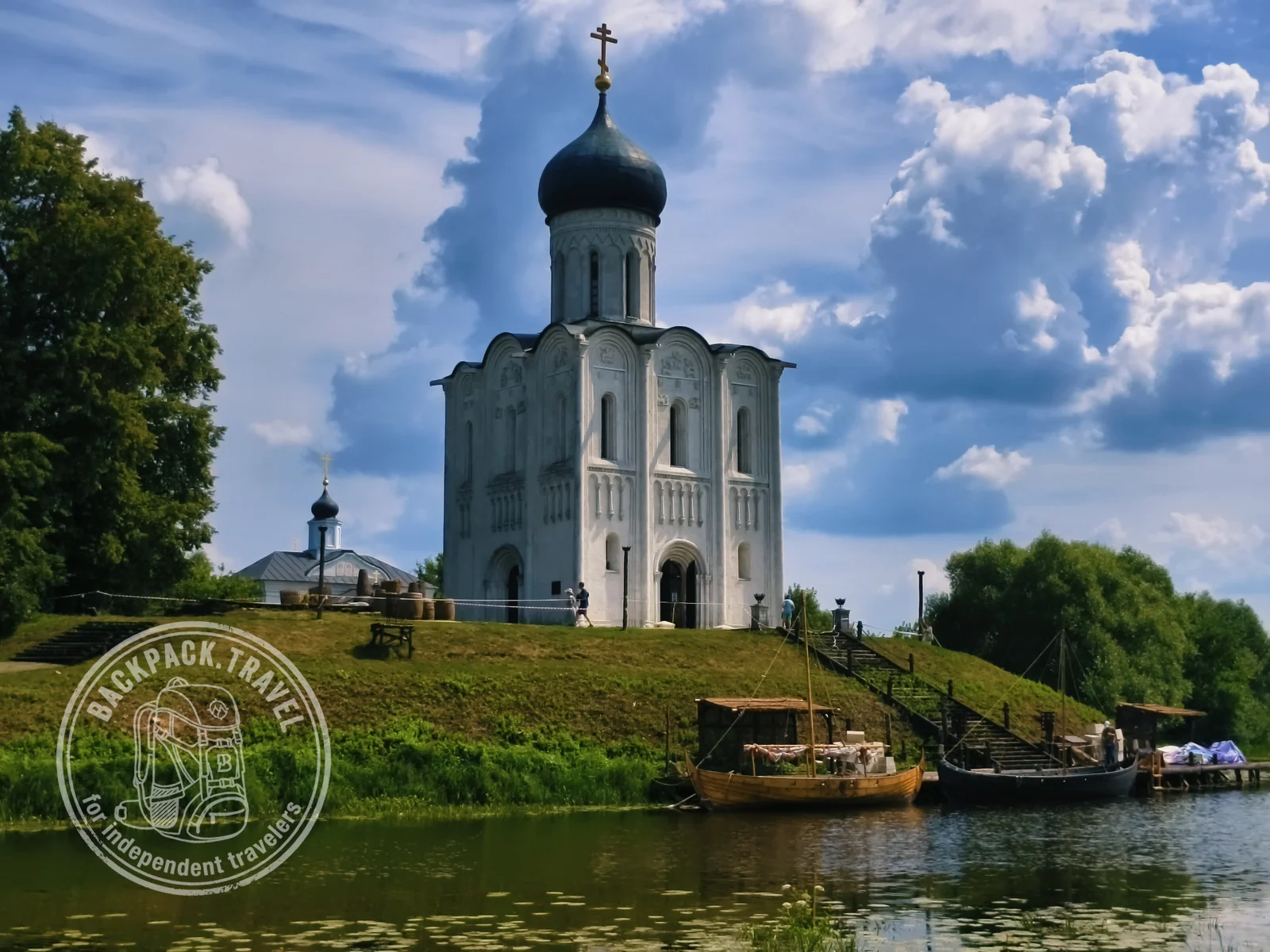
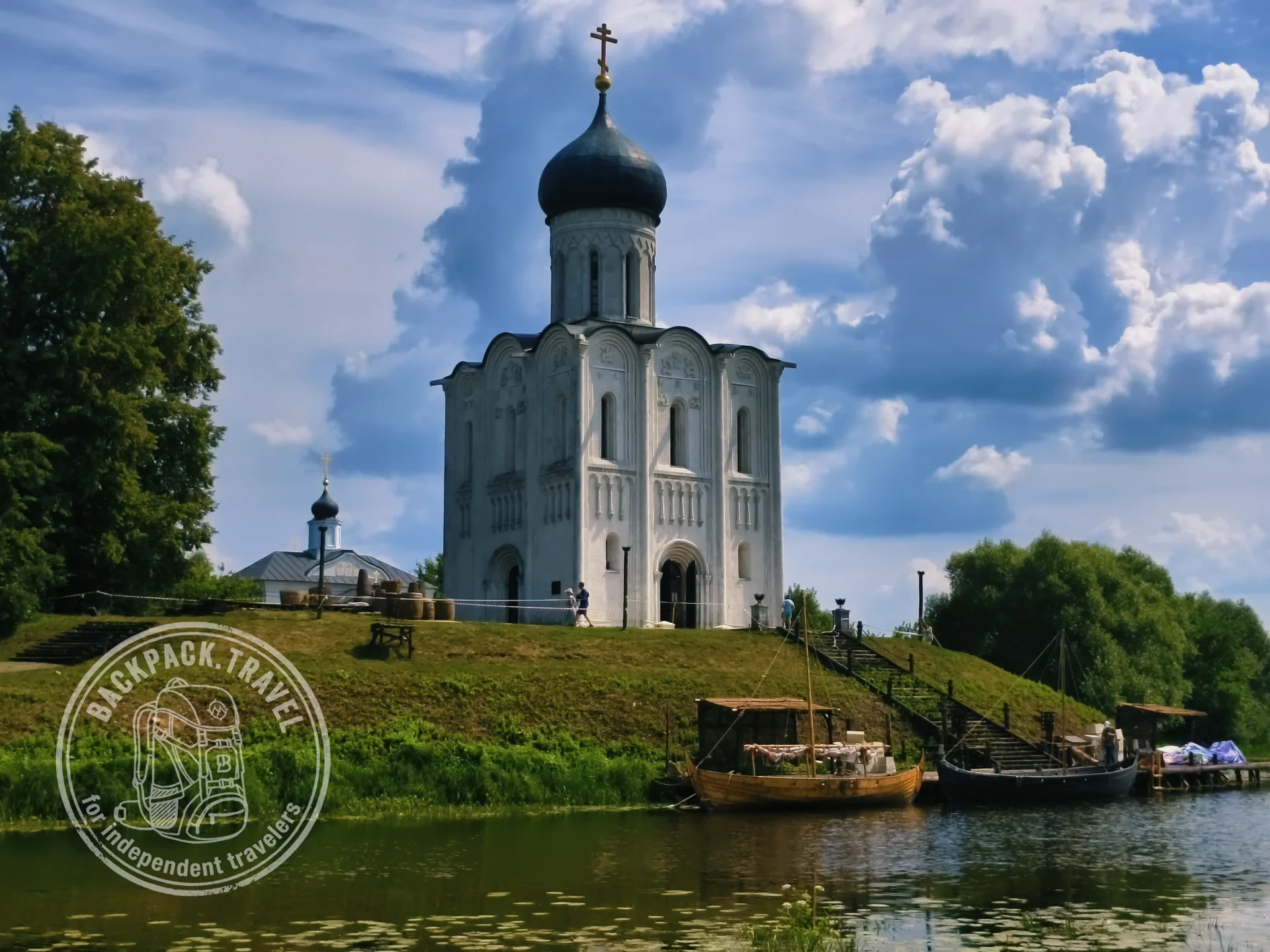
A village near Vladimir, home to the Church of the Intercession on the Nerl, one of the summits of pre-Mongol architecture. A path a kilometre and a half long leads to it across the meadow, and cars are not allowed.
Wiki
Bogolyubovo is a village about ten kilometres from Vladimir, and people come here for the Church of the Intercession on the Nerl, one of the principal monuments of pre-Mongol Rus. The second reason is the monastery on the site of the princely residence of Andrei Bogolyubsky.
The Church of the Intercession on the Nerl
A white-stone, single-domed church on an artificial mound at the confluence of the Nerl and the Klyazma. The chronicle date is 1165, and its construction is associated with Andrei Bogolyubsky's victory over the Volga Bulgars and with the memory of his son Izyaslav, who died on that campaign. It is on the UNESCO list as part of the White Monuments of Vladimir and Suzdal.
Bear the following in mind in advance:
- The church is small. The impression it makes rests on its proportions, on the carving of the facades and on the way it stands in an empty field. There is nothing to see inside: the interior has been lost and the opening hours drift.
- A paved path about a kilometre and a half long leads to the church across the Bogolyubovo meadow: cars are not allowed and the meadow is protected. It takes some twenty minutes each way, with no shade.
- In spring the meadow floods and the church ends up on an island; during high water people are ferried across by boat. That is the most striking view, and also the most unpredictable.
The Bogolyubsky Monastery
It stands by the highway, on the site of Andrei Bogolyubsky's castle, where conspirators murdered him in 1174.
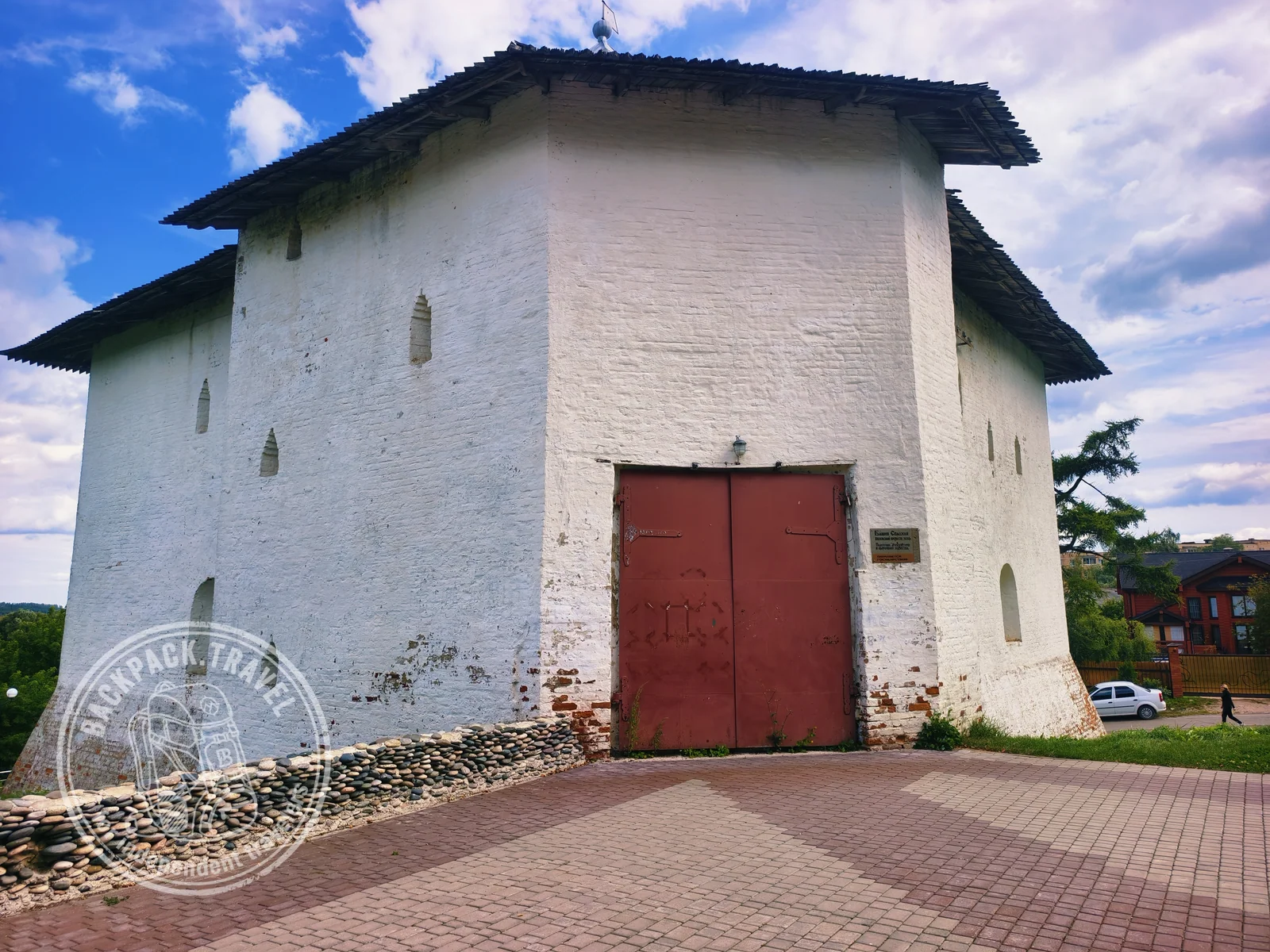
- The stair tower with its passage is a fragment of the twelfth-century princely palace, built into later structures. It is very nearly the only surviving secular building of pre-Mongol Rus, and that is exactly where its value lies rather than in any outward effect.
- The Cathedral of the Bogolyubskaya Icon of the Mother of God was built in 1855–1866 to a design by Konstantin Ton and dominates the village. It has nothing to do with the twelfth century.
The monastery is active and is a convent, so modest clothing is required.
How much time to allow and how to get there
Bogolyubovo is seen together with Vladimir and does not call for a trip of its own: buses and suburban trains run from the city to the Bogolyubovo platform, and the path to the church starts right at the station.
An hour and a half to two hours goes on the path, the church and the walk back. Three hours is more like it if you go slowly and look into the monastery. From Vladimir this is half a day including the journey both ways, and there is no reason to stay the night in Bogolyubovo itself.
The best time is from May to September. In hot weather set out in the morning, and in winter bear in mind that the path is not always cleared.
Who will not enjoy it
This is a trip for exactly one building, and the building is a modest one. If you are expecting a rich interior, a museum or at least some facilities, there will be none of that: a souvenir kiosk, a field and the church. A kilometre and a half across an open meadow in each direction irritates a good many people. For anyone indifferent to early Russian architecture, it is more honest to stick to Vladimir, where the same meanings come at less effort.